19 Aubergine Kitchen Ideas That Will Transform Your Home in 2026
Published: 28 Jul 2026
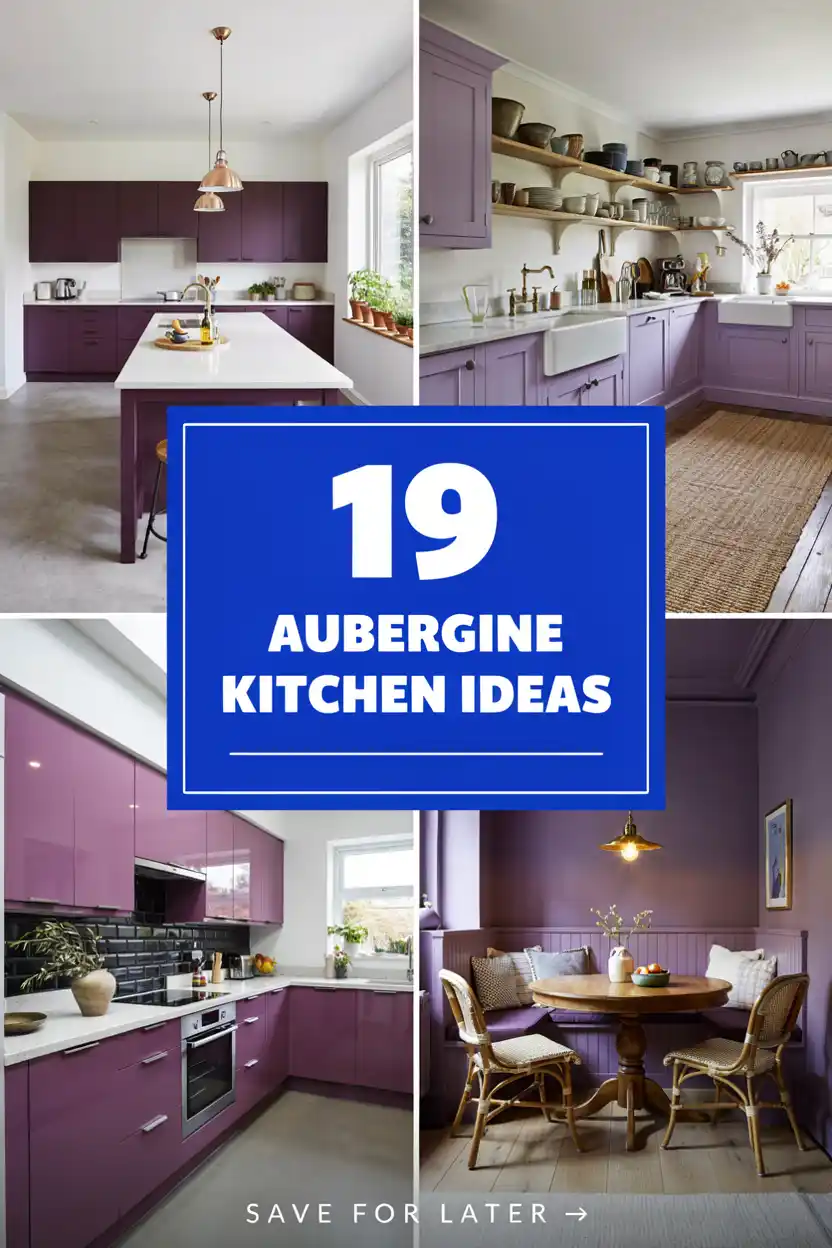
Aubergine kitchen ideas have moved from bold design statement to one of the most requested colour choices in modern renovations, and it is easy to see why. This deep, moody purple-brown sits between black and burgundy, giving a kitchen a rich, editorial look without feeling cold or clinical. It works beautifully for homeowners who want a space that feels warm at night, sophisticated during the day, and completely different from the beige and white kitchens that dominate most homes.
Whether you are renovating a small galley kitchen, refreshing a farmhouse layout, or designing a brand-new open-plan space, Aubergine can be adapted to fit almost any budget and style. This article walks through nineteen Aubergine kitchen ideas, covers who this colour scheme suits best, breaks down real costs, compares materials, and answers the most common questions people search for before committing to the look.
Is an Aubergine Kitchen Right for You?
Aubergine is a striking choice, but it is not the right fit for every kitchen or every homeowner. Here is a quick breakdown of what to weigh before you commit.
Pros
• Creates a warm, sophisticated look that photographs beautifully and stands out from typical white or gray kitchens
• Pairs well with brass, gold, copper, and matte black hardware for an elevated, custom feel
• Hides fingerprints, water spots, and everyday smudges better than pure white or pale cabinetry
• Works as an accent (island only, lower cabinets only) so you can commit to as much or as little colour as you like
• Holds resale value well when balanced with neutral countertops, walls, and flooring
Cons
• Can make a small, low-light kitchen feel darker or more closed in if not balanced with lighter elements
• Custom or lacquered aubergine cabinetry typically costs more than standard white or gray finishes
• Bold colour trends can feel dated sooner than neutral palettes if not paired with timeless finishes
• Matte finishes in this colour can show grease and cooking residue if not cleaned regularly
• Repainting or replacing aubergine cabinetry later is a bigger job than swapping out neutral decor
1. Aubergine Shaker Cabinets with Brass Hardware
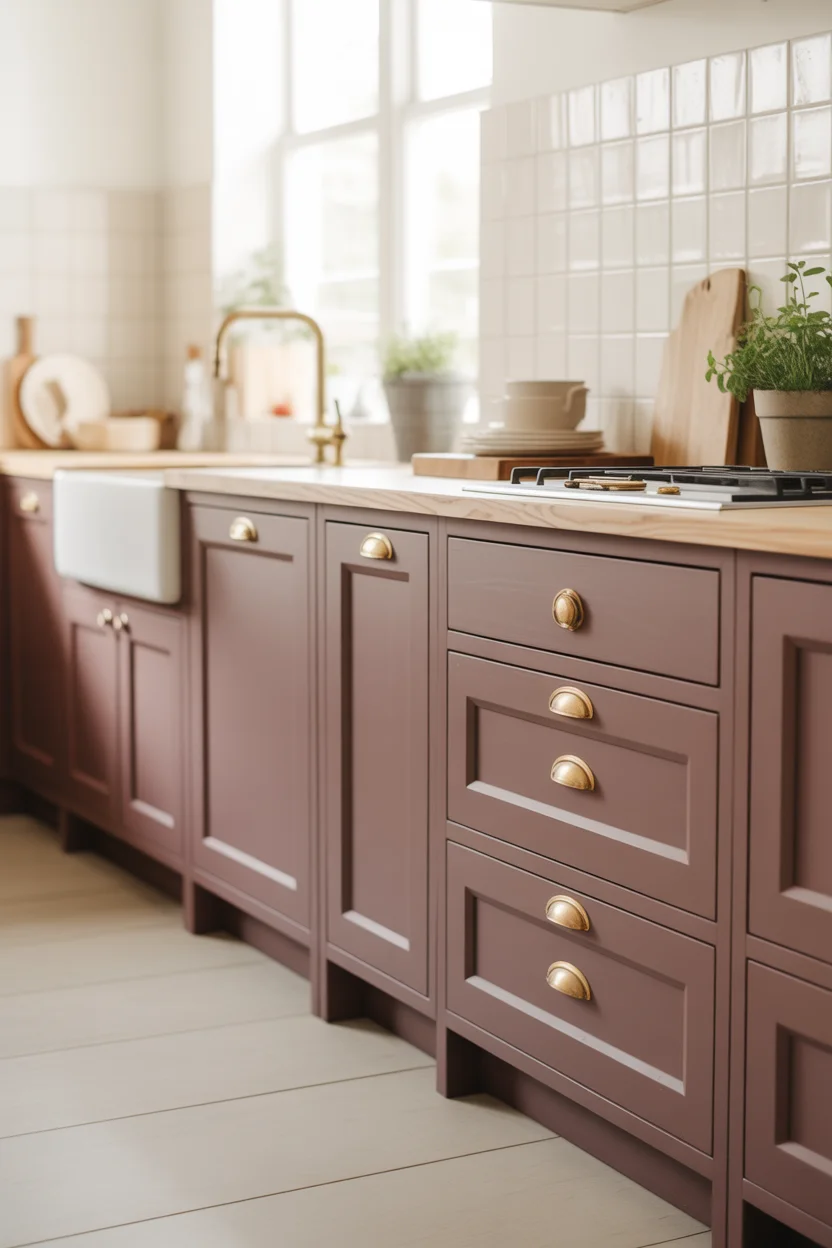
Shaker cabinetry is the safest entry point into an aubergine kitchen because the simple recessed panel lets the colour do the talking without extra visual noise. Painted in a soft matte aubergine and finished with warm brass hardware, this look feels classic rather than trendy, which is why it photographs so well in real estate listings and design portfolios alike.
White or light quartz countertops and a plain tile backsplash keep the space feeling bright even with dark lower cabinets, making this an ideal option for kitchens that get decent natural light but not an abundance of it. It suits homeowners who want a bold colour without a bold cabinet shape, and it works equally well in traditional and transitional homes.
2. Two-Tone Aubergine and White Kitchen
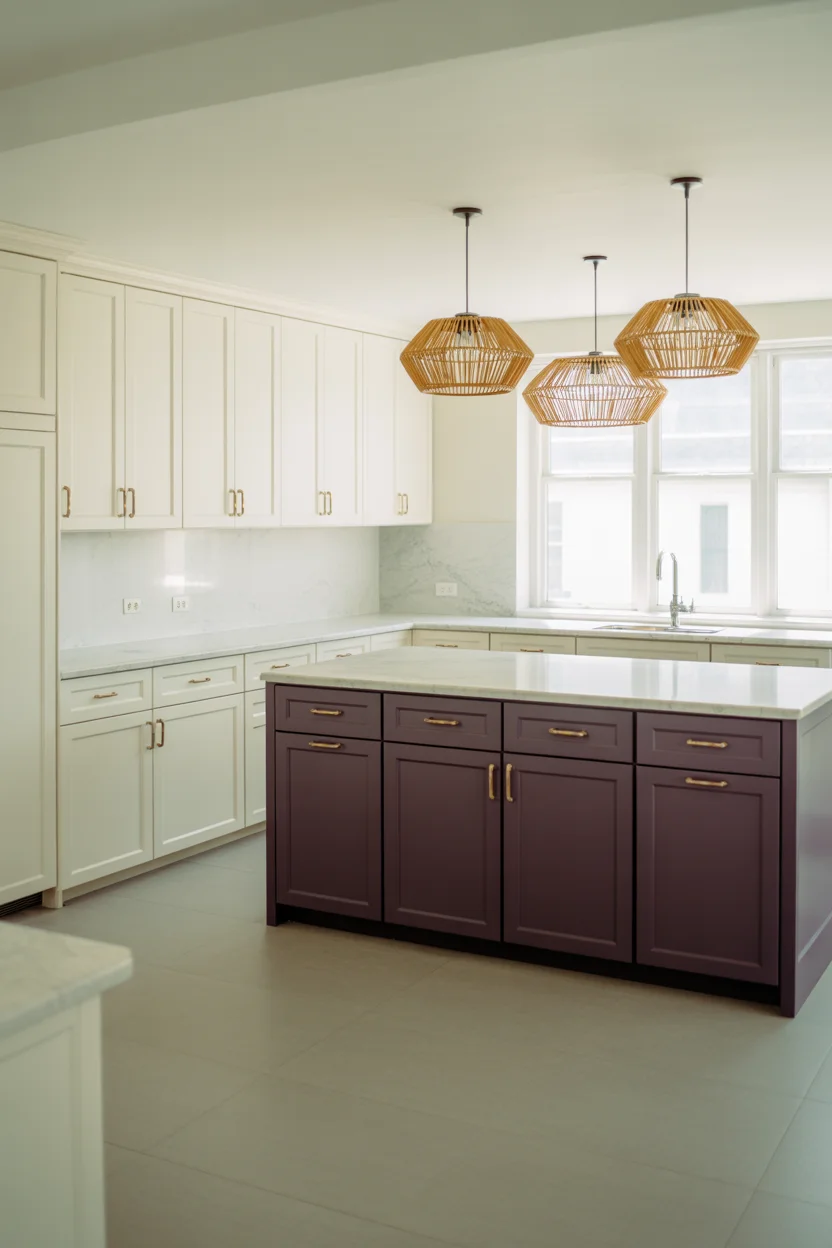
Two-tone kitchens remain one of the most popular layouts for a reason: they let you enjoy a dramatic colour without darkening the whole room. Keeping the upper cabinets white while the lower cabinets and island go aubergine grounds the space visually and keeps sightlines open, which is especially helpful in open-plan homes.
This approach suits families and anyone cooking often, since the lighter uppers keep the kitchen feeling bright and functional while the aubergine lowers add personality at eye level, where guests actually notice it. It is also one of the more budget-friendly ways to try aubergine, since only half the cabinetry needs the premium finish.
3. Aubergine Kitchen Island as a Colouring Piece
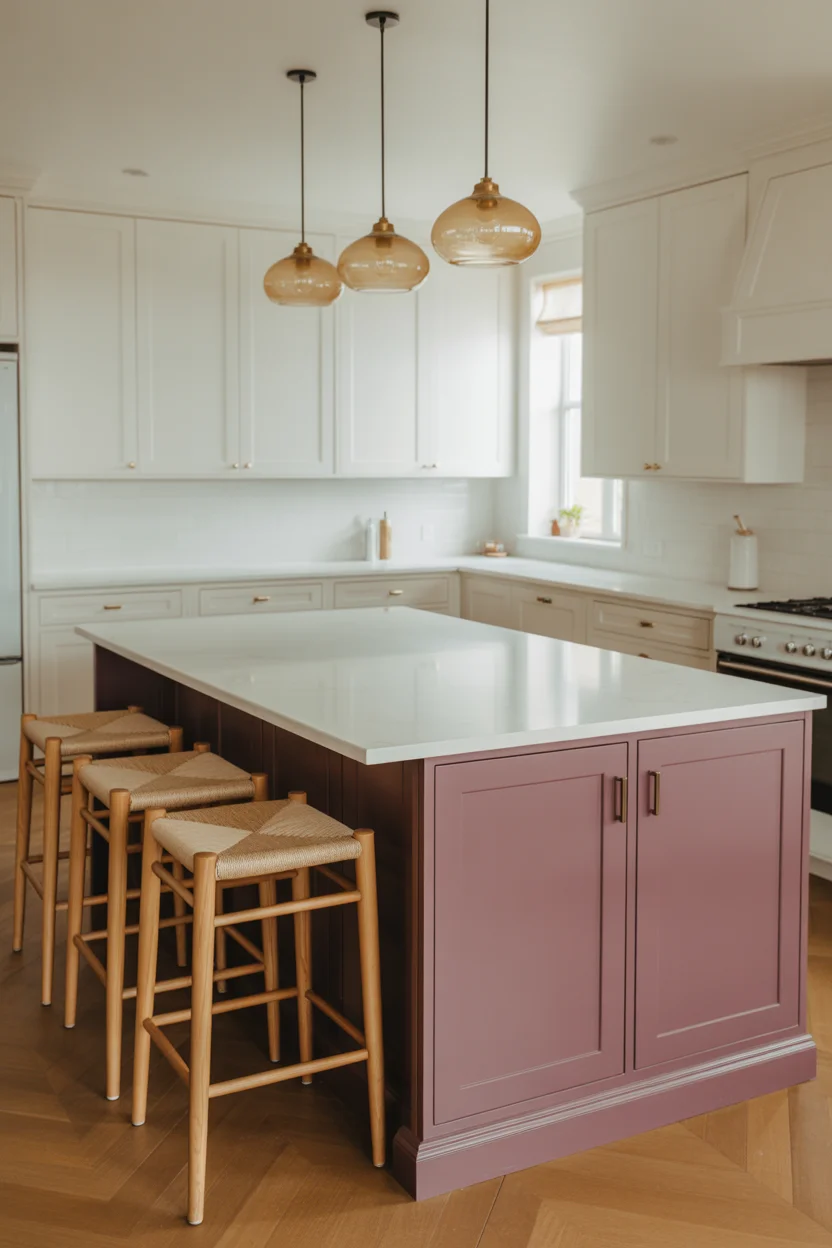
Making only the island aubergine is a low-commitment way to test the color before painting an entire kitchen, and it instantly creates a focal point in an otherwise neutral space.
This approach is especially popular in open-plan kitchens where the island is visible from the living or dining area. It suits homeowners who want a statement piece without repainting all their cabinetry, and it’s easy to update later if tastes change.
4. Aubergine and Sage Green Combo
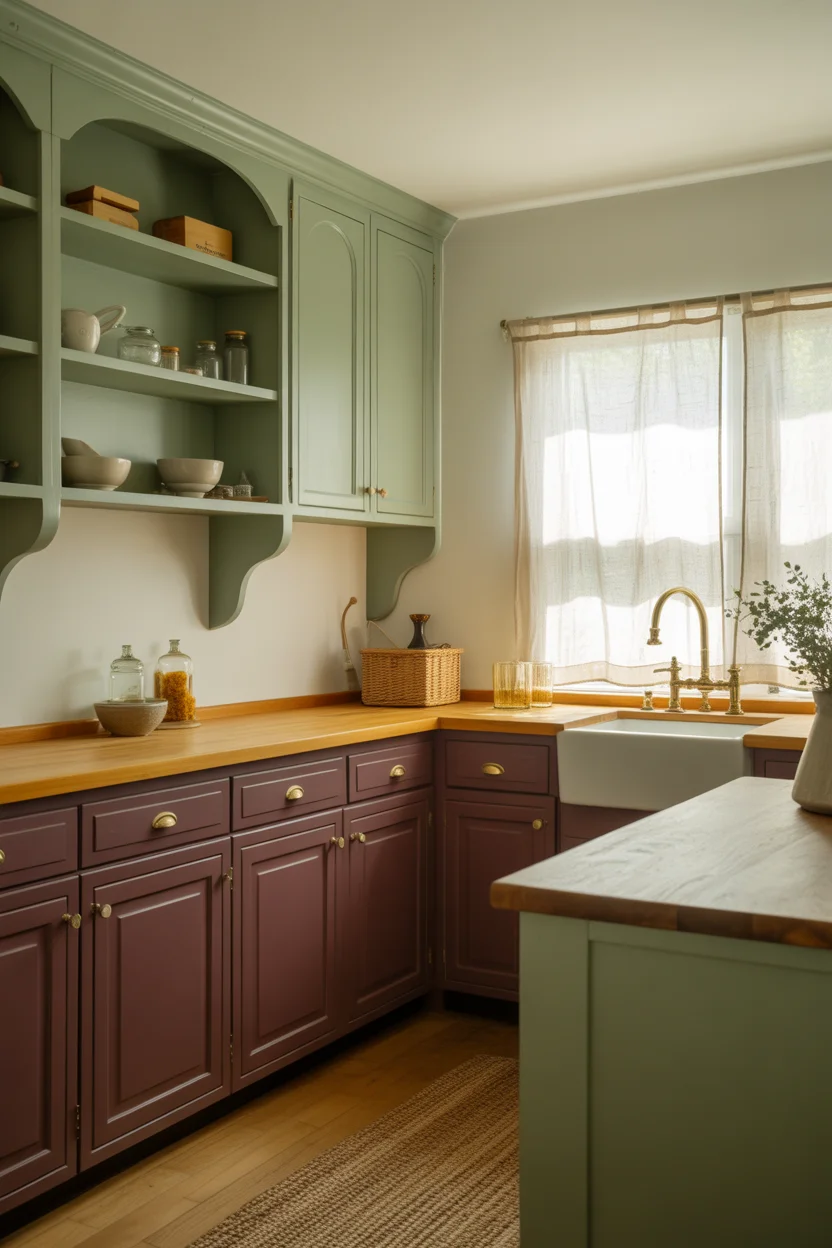
Aubergine and sage green share an earthy, muted quality that makes them surprisingly easy to combine, unlike more saturated purple and green pairings. Together they create a garden-inspired palette that feels calm rather than clashing, especially when balanced with warm wood tones and brass fixtures.
This combination is ideal for cottage, farmhouse, and modern country kitchens where homeowners want colour without the space feeling overly formal. It works particularly well in kitchens with good natural light, since both tones are on the deeper side and benefit from daylight to keep the room feeling colour-fresh rather than heavy.
5. Aubergine Backsplash Tile
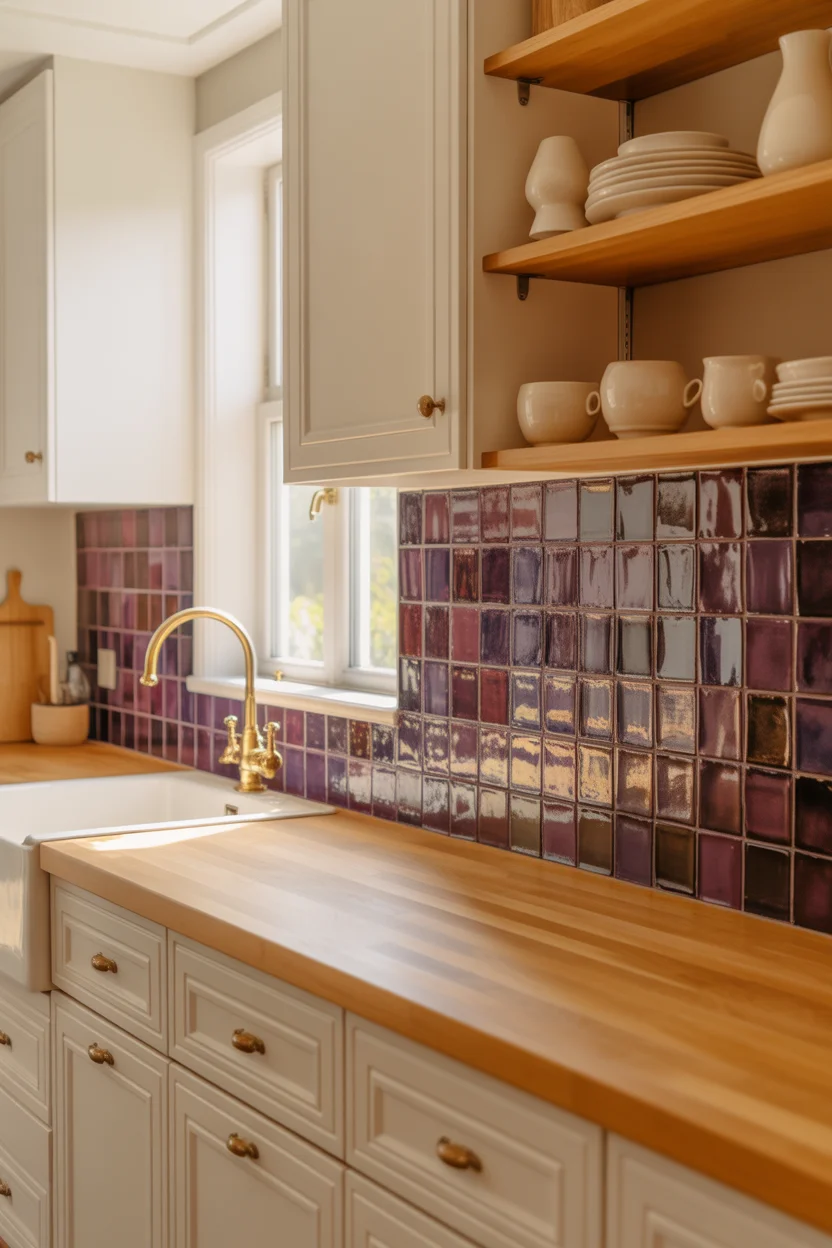
For homeowners who love the color but aren’t ready to commit to full cabinetry, a backsplash is the perfect middle ground — it adds texture and richness at eye level while keeping cabinets neutral and easy to resell.
This idea works particularly well with handmade zellige or subway tile, which adds depth through glaze variation. It’s best suited to kitchens that already have simple white or wood cabinetry and want one bold, textural feature.
6. Aubergine Kitchen with Gold Accents
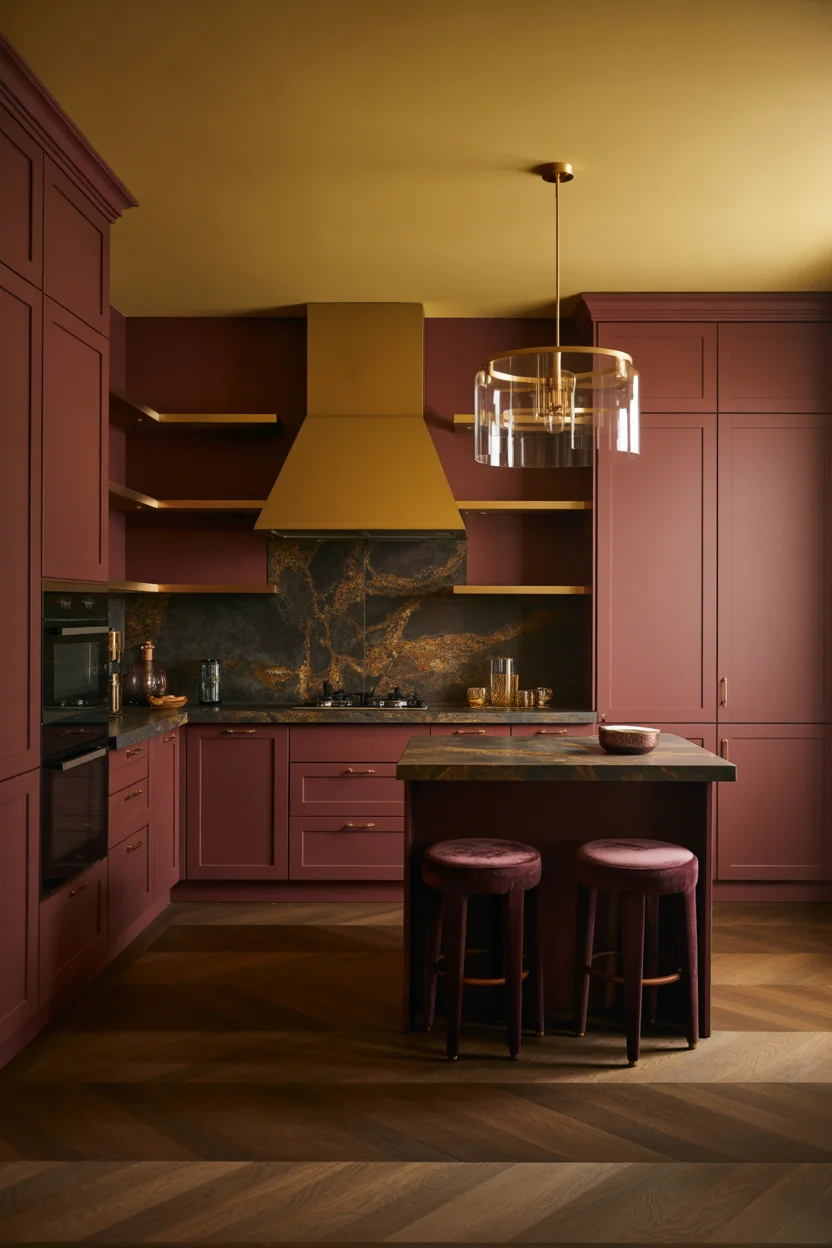
Gold accents push an aubergine kitchen firmly into luxury territory, turning what could be a simple colour choice into a full design statement. The warmth of polished or brushed gold complements the purple-brown undertones of aubergine far better than cooler metals like chrome or stainless steel.
This idea suits homeowners designing a formal or entertaining-focused kitchen, particularly in larger homes where the room doubles as a showpiece. It pairs naturally with stone countertops that have warm veining, and it is a strong choice for anyone drawn to art deco or glam-inspired interiors.
7. Aubergine Walls with White Cabinets
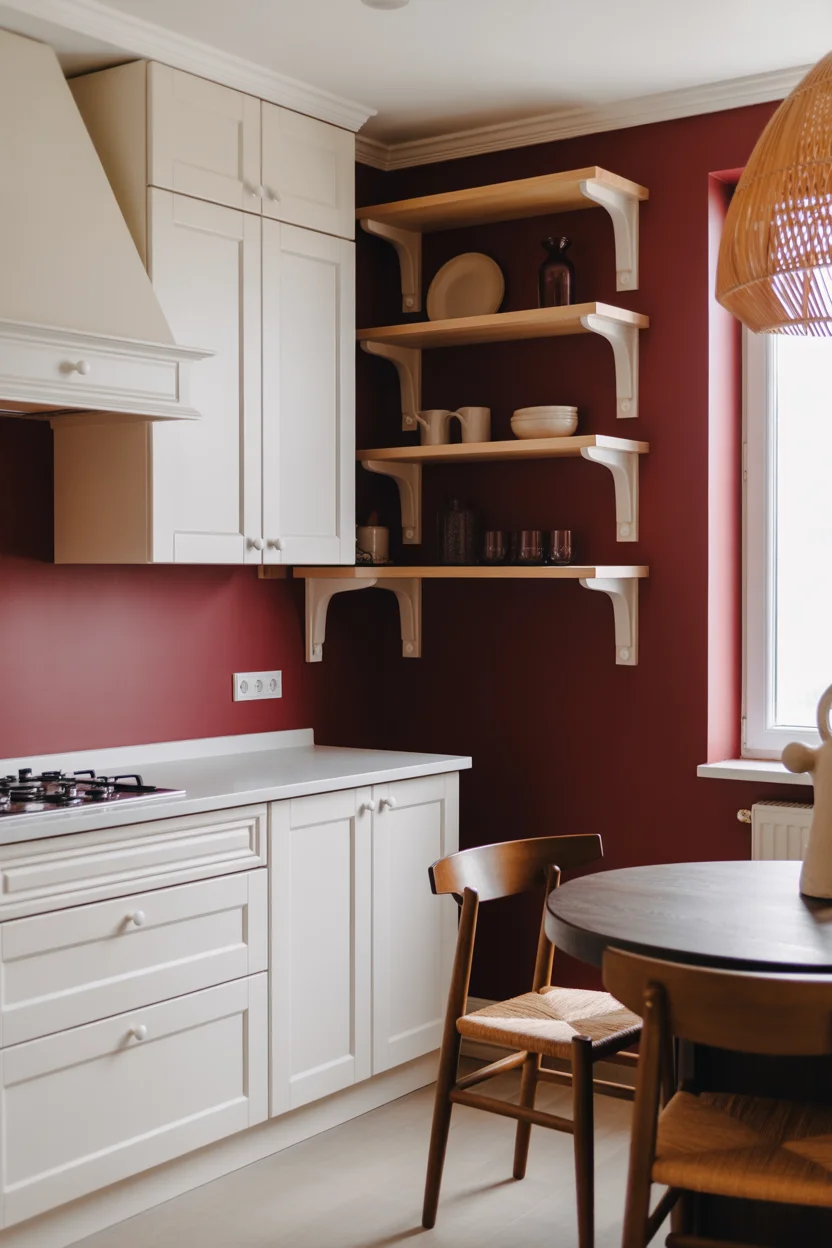
Painting the wall instead of the cabinets is one of the most budget-friendly ways to bring aubergine into a kitchen, since paint is far cheaper than refinishing cabinetry.
This approach suits kitchens with an adjoining dining or breakfast nook, where the colour can wrap around and create a cozy, enclosed feel. It’s ideal for renters or anyone who wants a lower-commitment way to test the colour.
8. Aubergine Subway Tile Backsplash
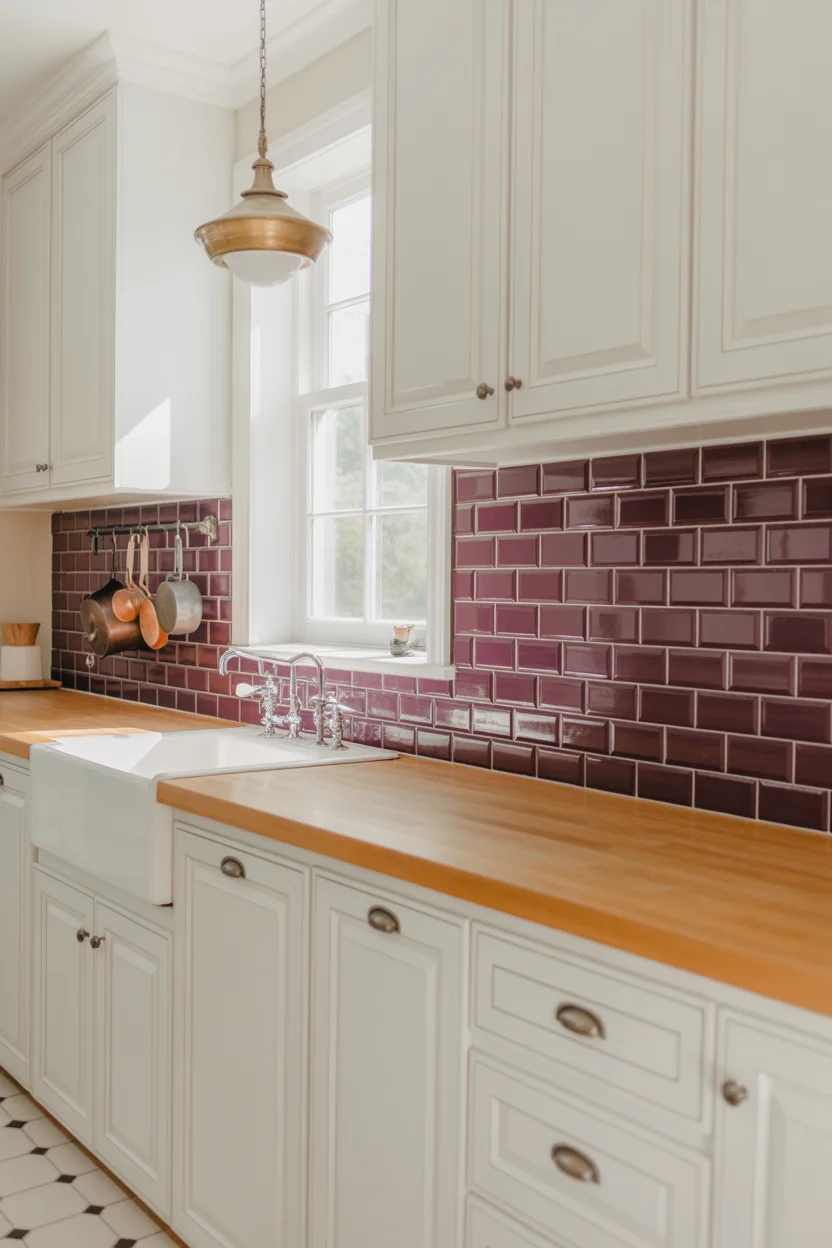
A tiled backsplash is one of the lowest-commitment ways to bring aubergine into a kitchen, since tile is easier to update than cabinetry and covers a relatively small surface area. Against white or cream cabinets, the colour becomes a focal accent rather than the dominant feature of the room.
This idea works especially well for homeowners who love the colour but are not ready to paint their entire cabinet run, or for rental-friendly renovations where full cabinet replacement is not an option. It suits classic, cottage, and transitional kitchens where a subway pattern already fits the overall style.
9. Aubergine Kitchen Island Only
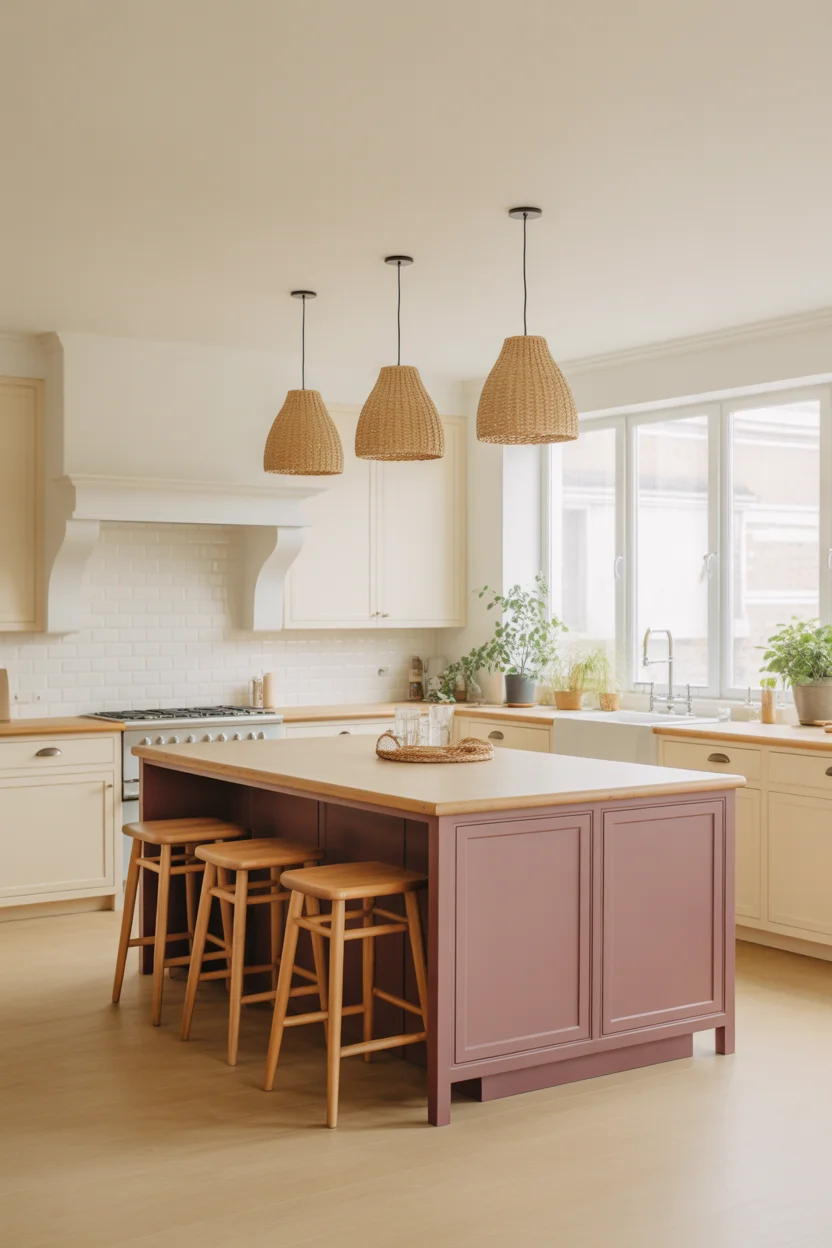
Painting only the island aubergine is one of the most popular ways to try this trend because it delivers a strong visual statement without darkening the whole kitchen. The rest of the cabinetry stays light and neutral, keeping the room bright while the island becomes an unmistakable focal point.
This approach is ideal for open-plan kitchens where the island is visible from the living or dining area, since it acts almost like a piece of furniture. It also suits homeowners who may want to change their accent colour again in a few years, since repainting one island is a far smaller project than repainting an entire kitchen.
10. Aubergine Bar Stools and Seating
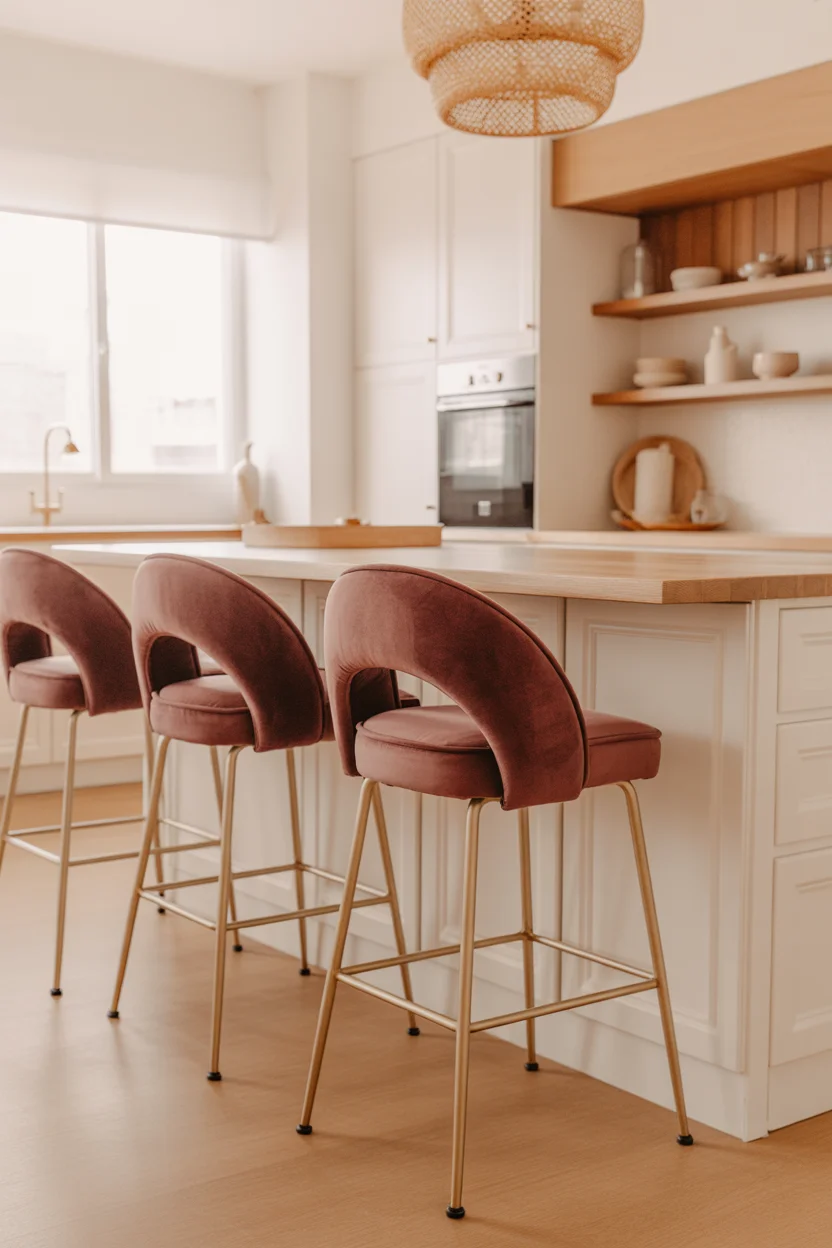
Furniture and seating are one of the easiest ways to bring aubergine into a kitchen without any permanent renovation, since stools and chairs can be swapped out entirely as trends change.
This idea works in almost any kitchen style, from farmhouse to modern, a colour ideal for renters, budget-conscious homeowners, or anyone who wants to test the colour commitment-free.
11. Aubergine Open Shelving Kitchen
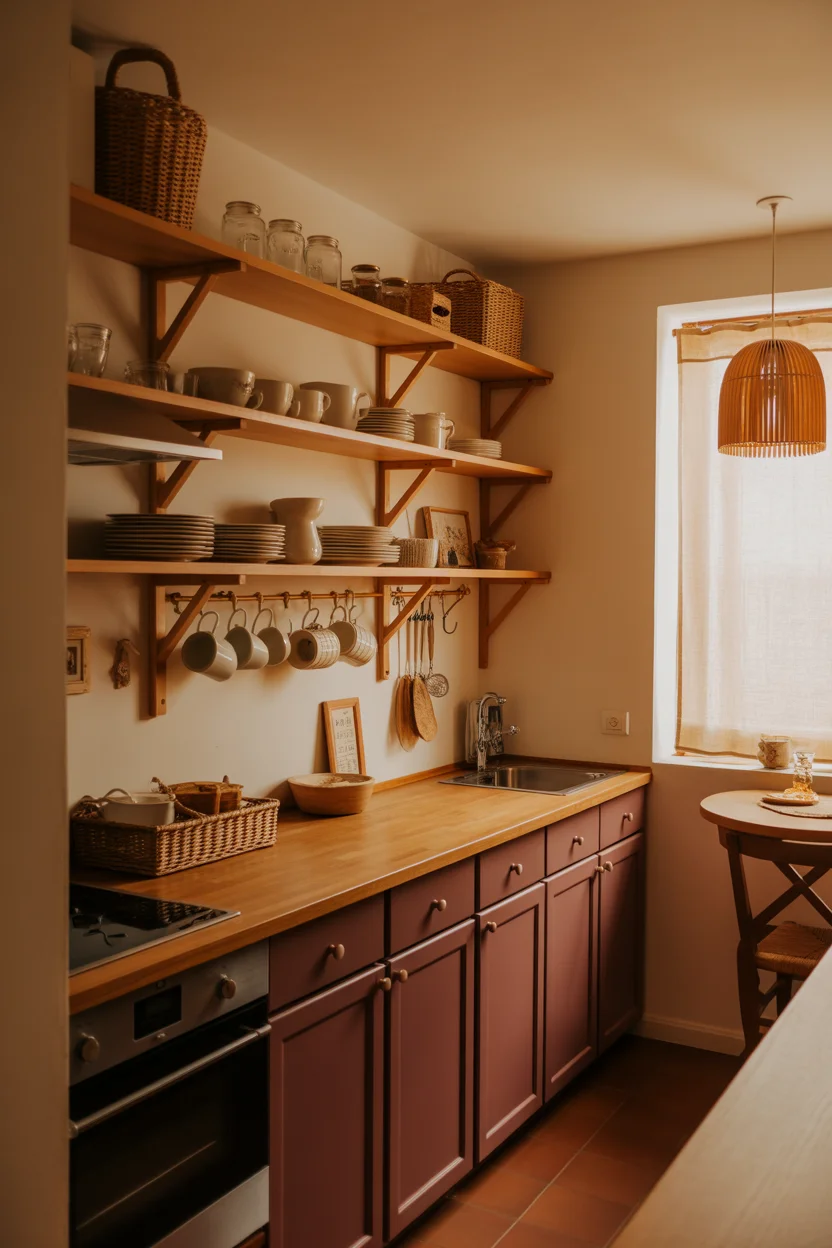
Open shelving softens the boldness of aubergine cabinetry by breaking up solid colour with the visual texture of dishware, jars, and everyday objects. It also makes a kitchen feel more personal and lived-in, since the shelves display the homeowner’s actual belongings rather than closed cabinet fronts.
This idea is best suited to homeowners who keep a tidy, curated kitchen, since open shelving requires more visual discipline than closed storage. It works particularly well in farmhouse, cottage, and eclectic kitchens where a mix of textures and collected objects is already part of the design language.
12. Velvet Aubergine Bar Stools Accent
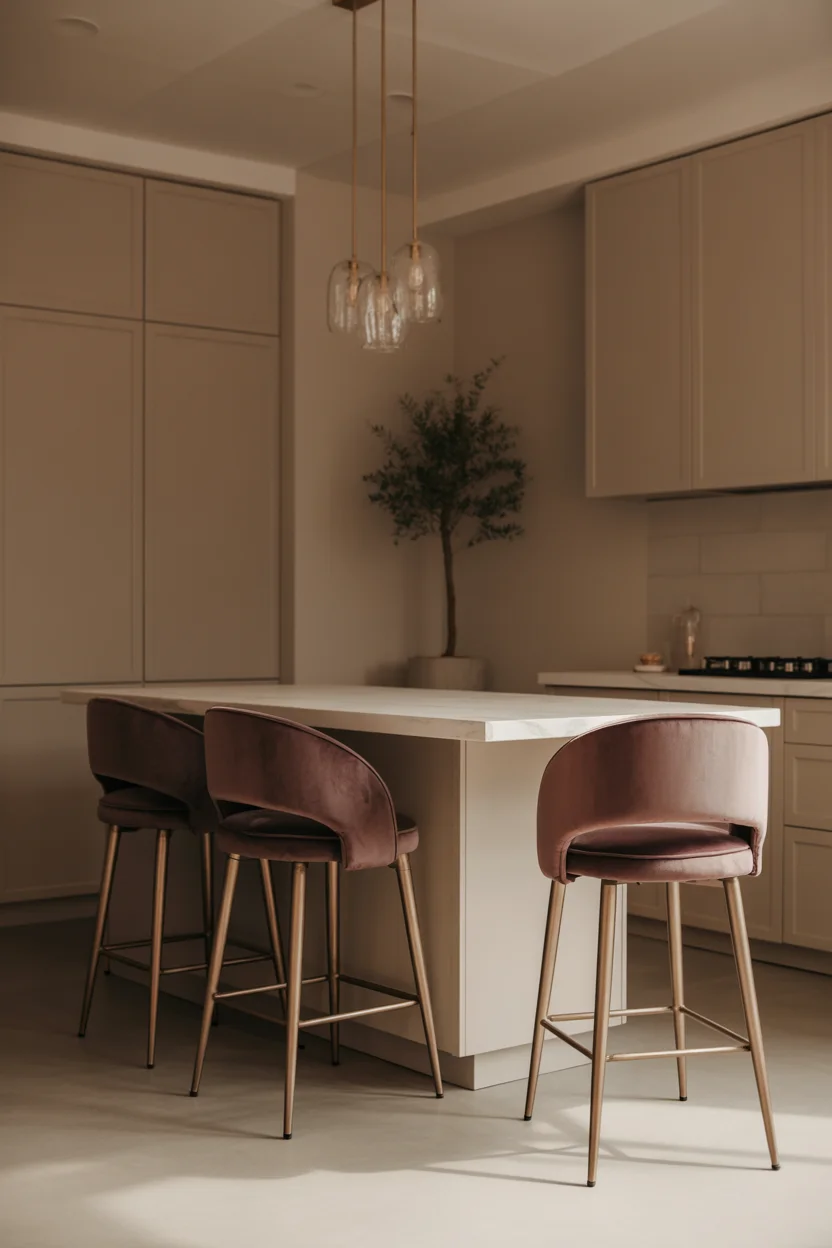
For homeowners who love the colour but are not ready to commit to cabinetry or walls, velvet aubergine bar stools offer a low-risk, high-impact way to bring the trend into a neutral kitchen. The soft texture of velvet also adds a tactile, luxurious quality that painted surfaces cannot replicate.
This idea works in virtually any kitchen style, from minimalist to traditional, since furniture and soft furnishings are the easiest elements to swap out later. It is an especially good fit for rented kitchens or anyone testing the colour before deciding whether to invest in a full aubergine renovation.
13. Aubergine Kitchen with Marble Countertops
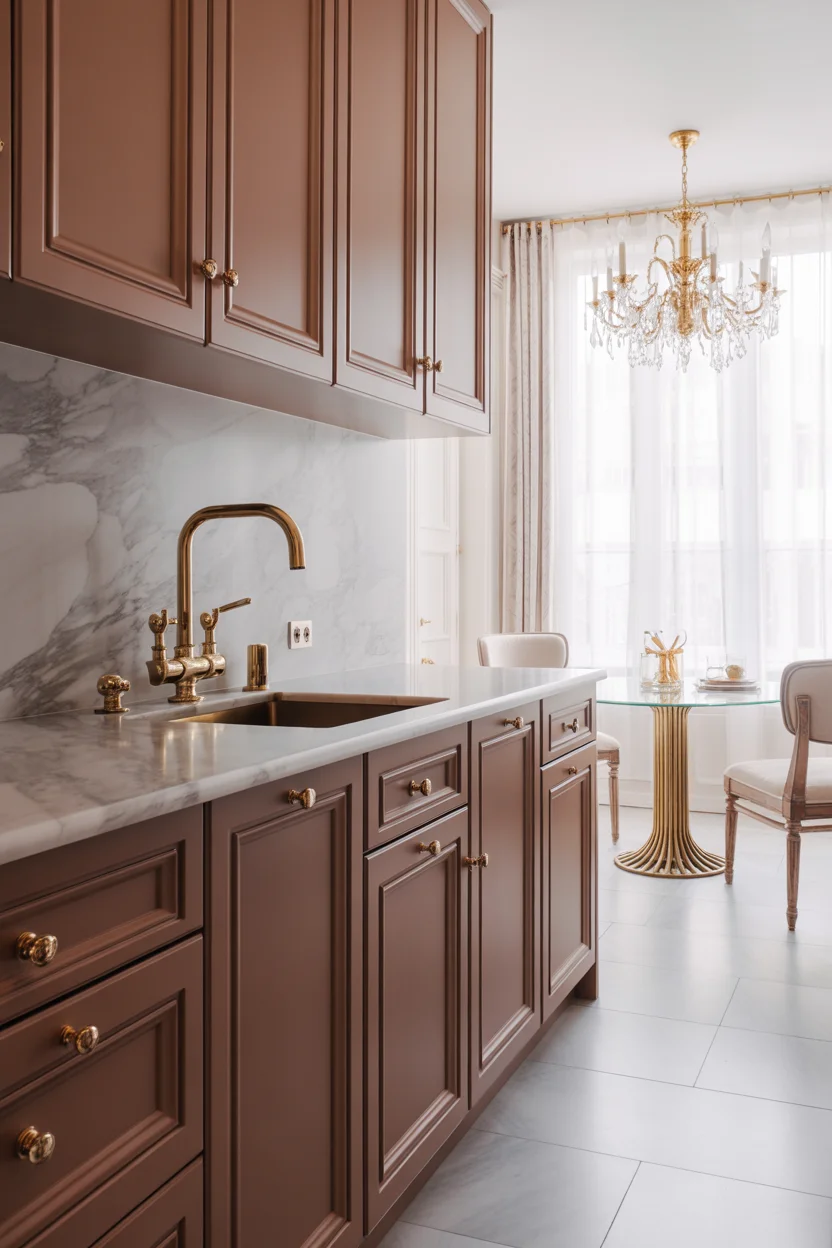
Marble’s cool white tones and soft veining create a natural counterbalance to the depth of aubergine cabinetry, keeping the kitchen feeling bright and elegant rather than heavy. This pairing has a timeless, almost old-world quality that suits traditional and transitional homes especially well.
This idea is best suited to homeowners with a higher renovation budget, since natural marble and custom cabinetry both carry a premium price tag compared to quartz or laminate alternatives. It appeals to anyone designing a formal kitchen meant to feel elevated and enduring rather than trend-driven.
14. Scandinavian Aubergine Kitchen
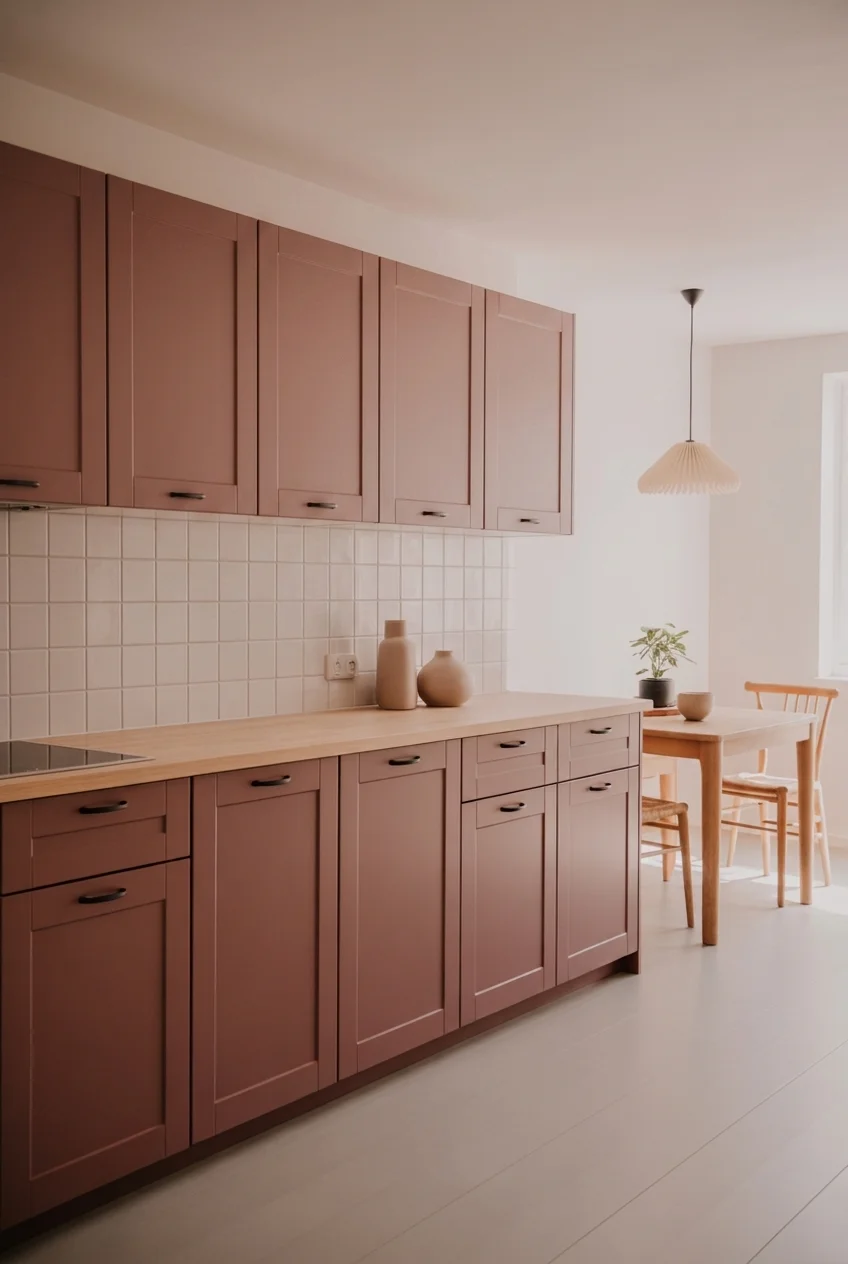
A Scandinavian approach to aubergine strips the colour down to its simplest form, using flat-panel cabinetry, minimal hardware, and plenty of negative space to keep the look calm rather than dramatic. Light wood and white surfaces do most of the work to keep the room feeling airy.
This idea suits homeowners who love bold colour in theory but prefer a restrained, functional kitchen in practice. It works particularly well in smaller kitchens, since the minimalist styling and light countertops prevent the aubergine cabinetry from making the room feel cramped.
15. Aubergine Farmhouse Kitchen
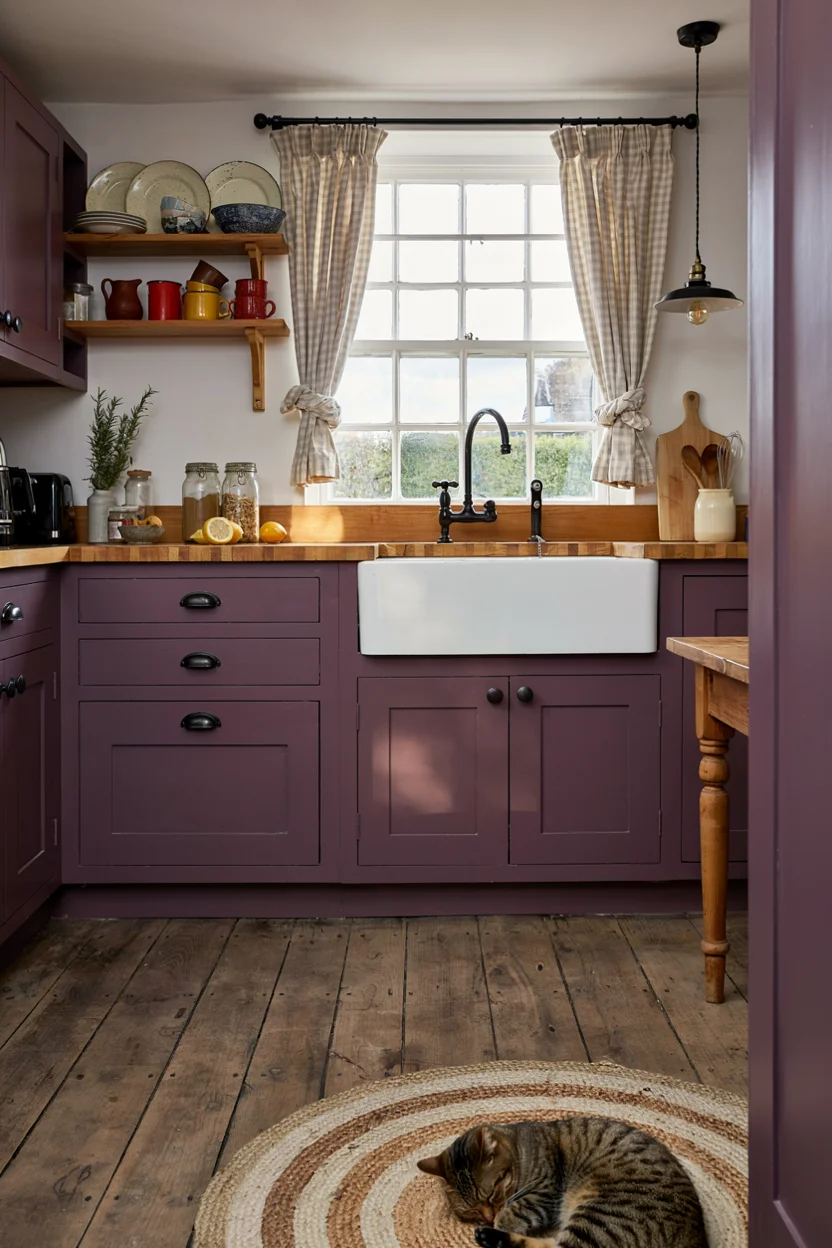
Farmhouse style softens aubergine with rustic textures like butcher block, wrought iron, and reclaimed wood, turning a bold modern colour into something that feels homey and traditional. The apron-front sink and warm wood tones keep the space grounded and welcoming rather than formal.
This idea suits homeowners in older homes or country-style properties who want to update their kitchen without losing its character. It is especially popular with families, since farmhouse kitchens are typically designed for gathering, and the deep colour adds warmth without feeling precious or high-maintenance.
16. Aubergine Kitchen with Copper Fixtures
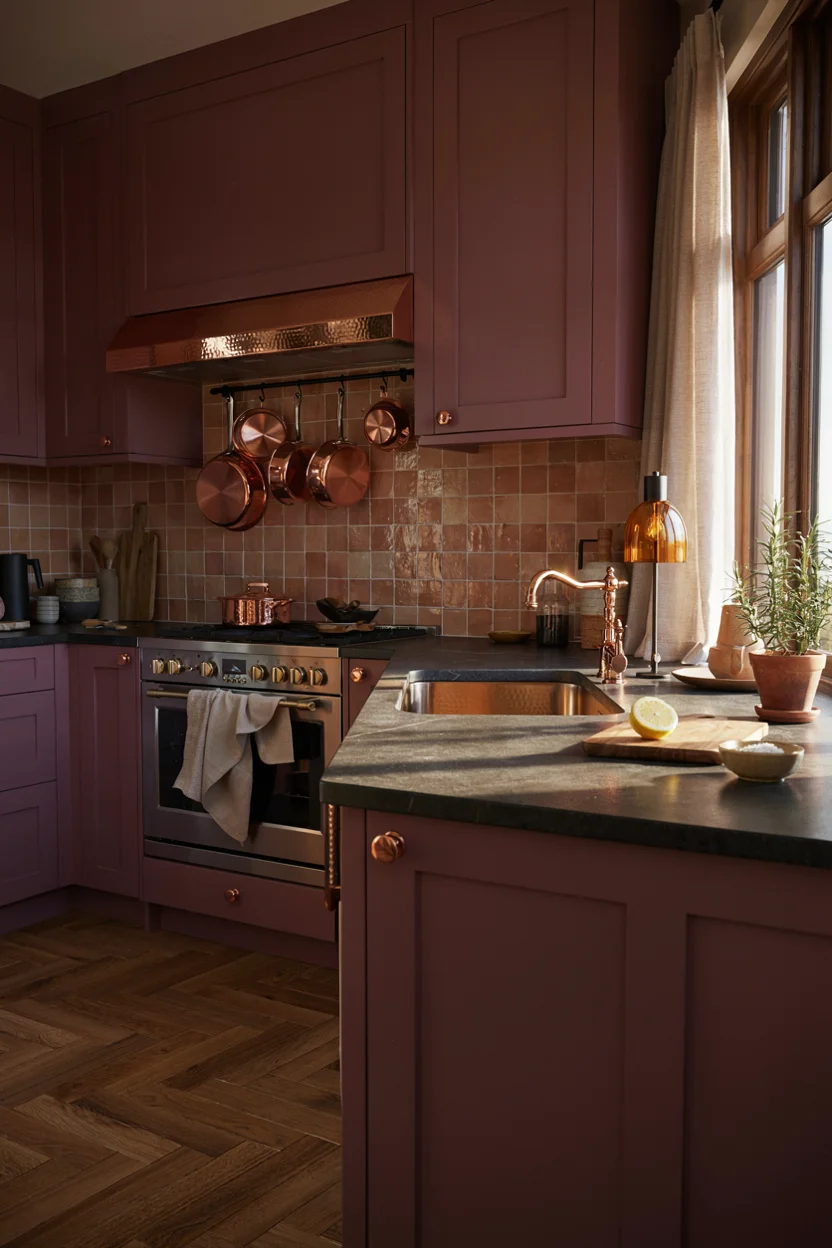
Copper brings a warm, artisanal quality to aubergine kitchens that feels distinct from the more common brass or gold pairings. The reddish warmth of copper plays beautifully against the cool undertones of aubergine, creating a rich, layered colour palette that feels handcrafted rather than mass-produced.
This idea suits homeowners drawn to an eclectic, artisanal, or Mediterranean-inspired kitchen, particularly those who already love terracotta, zellige tile, or other warm, textured materials. It works well in kitchens designed to feel collected over time rather than perfectly matched.
17. Aubergine Kitchen Pantry Doors
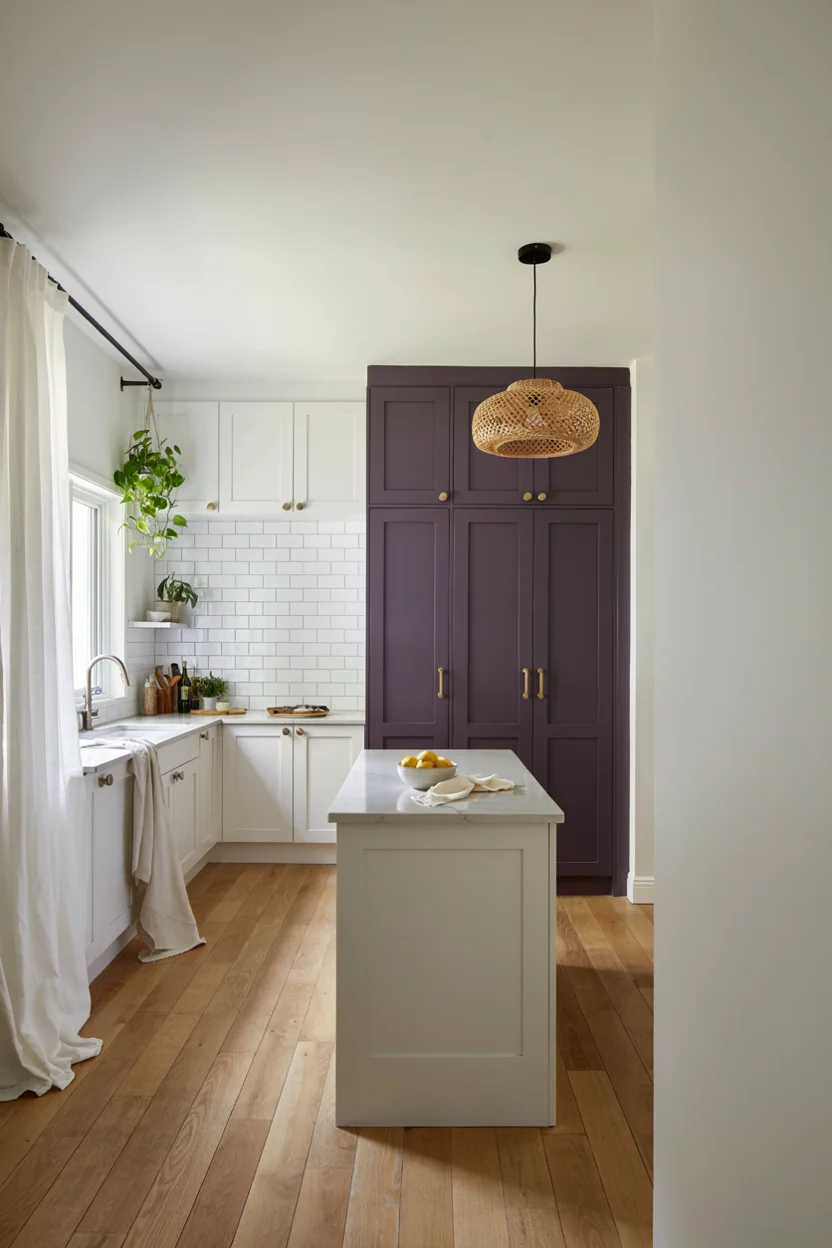
Painting just the pantry doors aubergine is a clever way to introduce colour at a smaller scale, particularly in kitchens that already have expensive white or wood cabinetry the homeowner does not want to replace. The framed glass panels add texture and let the colour read as intentional rather than incidental.
This idea suits homeowners who want a distinctive design detail without a major renovation, since repainting a set of doors is a weekend project rather than a full remodel. It works especially well in modern farmhouse and transitional kitchens where a pantry or butler’s door is already part of the layout.
18. Aubergine and Blush Pink Kitchen
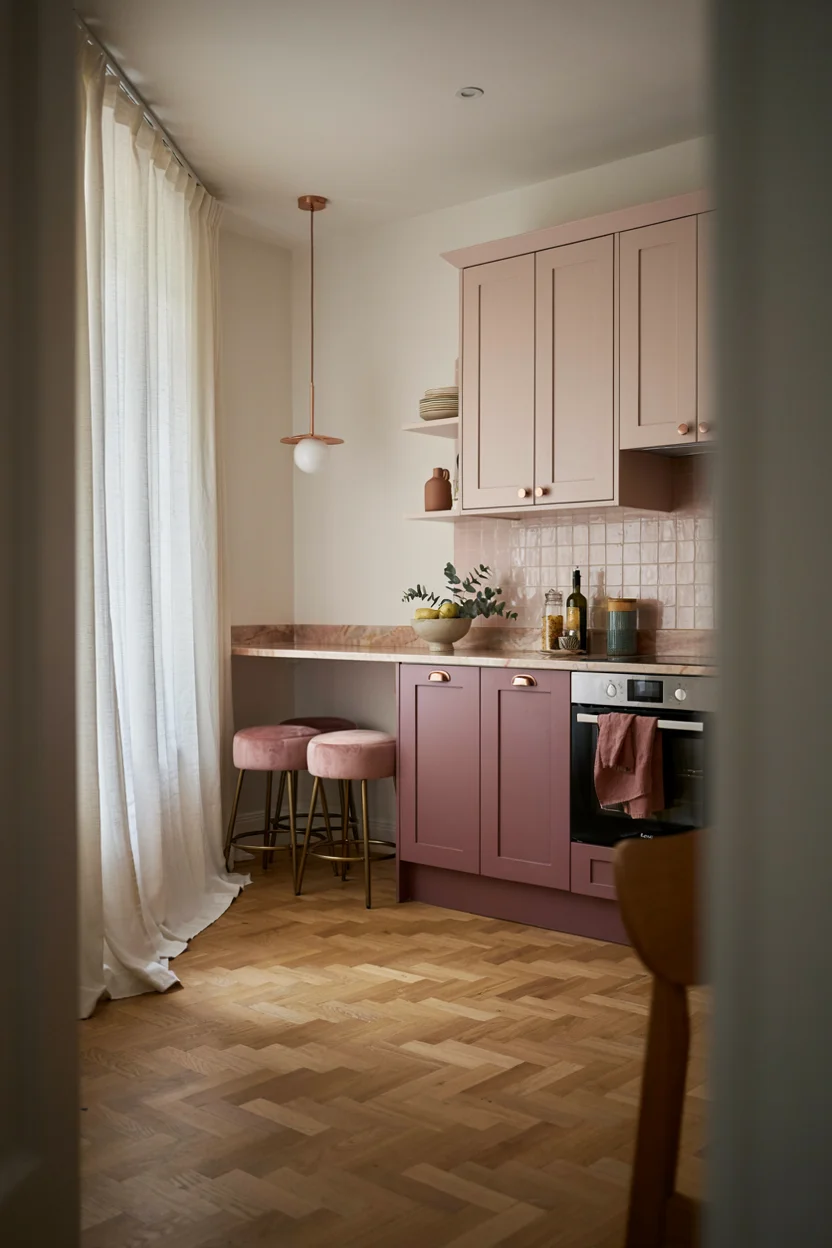
Aubergine and blush pink might sound like an unusual pairing, but the two share warm undertones that blend into a soft, romantic palette rather than clashing. The deep purple grounds the lighter pink, preventing the overall look from feeling overly saccharine or precious.
This idea suits homeowners who want a distinctly feminine, boutique-style kitchen, and it pairs particularly well with rose gold or brushed pink-toned hardware. It works best in kitchens with generous natural light, since the softness of both colours depends on daylight to feel fresh rather than dim.
19. Moody Aubergine Kitchen with Statement Lighting
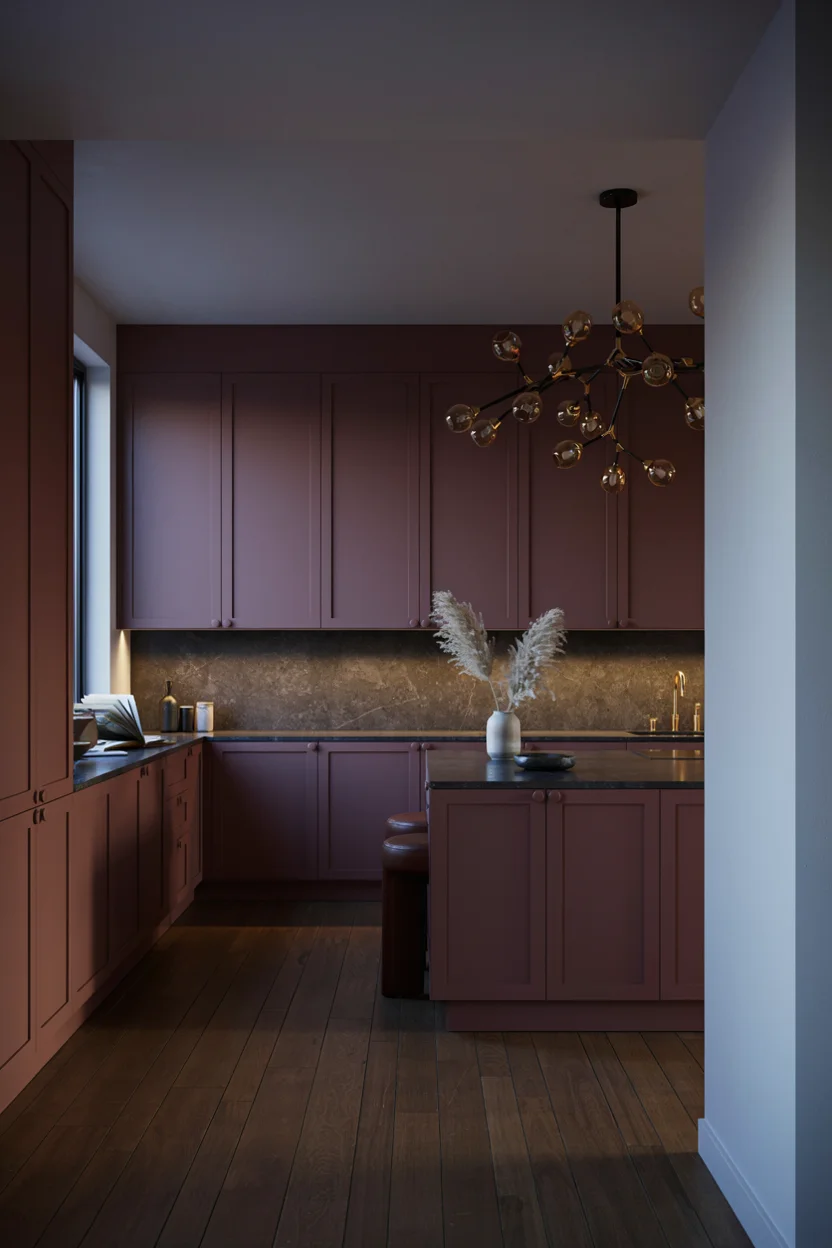
For homeowners who want maximum drama, taking aubergine from cabinets to countertop to backsplash creates a fully immersive, cocooning effect that reads as bold and intentional rather than accidental. A statement light fixture becomes essential here, since it provides the visual relief and sparkle the room needs to avoid feeling flat.
This idea is best suited to kitchens with strong artificial lighting design, and at least some natural light to balance the depth of colour, and it works particularly well in evening-focused entertaining spaces. It appeals to confident design lovers who want their kitchen to feel like a designed room rather than a purely functional space.
Planning and Buying Tips
Before committing to an aubergine kitchen, a bit of planning will save time, money, and headaches once installation begins.
Space and light requirements
Aubergine performs best in kitchens with at least one good source of natural light. In smaller or darker rooms, balance the colour with light countertops, pale flooring, or an accent-only approach such as an island or backsplash rather than full cabinetry.
Installation and setup considerations
Custom-painted or lacquered cabinetry generally takes longer to install than stock finishes, since colour-matching and multiple coats add time. Factor in two to six weeks of lead time for custom cabinet orders, and confirm whether your installer needs to prime existing cabinets before repainting.
Structural and technical factors
If you are adding a waterfall island or heavier stone countertop, confirm your cabinet boxes and base structure can support the added weight. Check that plumbing and electrical rough-ins align with any layout changes before finalizing cabinet orders.
Standard sizing and specs to shop for
Base cabinets typically run 34.5 inches tall and 24 inches deep, with upper cabinets at 12 to 24 inches deep and mounted 18 inches above the counter. Islands generally require a minimum of 42 inches of clearance on all sides for comfortable movement, and countertop overhangs for seating should be 12 to 15 inches.
Cost Breakdown
Costs for an aubergine kitchen vary widely depending on whether you are painting existing cabinets, ordering new stock cabinetry, or going fully custom.
Budget: $150 to $600
Painting existing cabinets with a quality cabinet paint, or adding aubergine as an accent through a tiled backsplash, bar stools, or a small pantry door. DIY painting keeps installation costs minimal, though professional spraying typically adds $300 to $800 for a full kitchen.
Mid-range: $3,000 to $12,000
New stock or semi-custom shaker cabinetry in a factory aubergine finish, paired with a quartz countertop and standard tile backsplash. Installation typically adds $1,500 to $4,000 depending on kitchen size and whether plumbing or electrical work is involved.
Luxury or premium: $15,000 to $40,000+
Fully custom cabinetry with high-gloss lacquer or hand-painted finishes, natural stone countertops, waterfall islands, and designer lighting. Professional installation, custom millwork, and stone fabrication can add $5,000 to $15,000 or more on top of materials.
Materials and Finish Comparison
Choosing the right material for aubergine cabinetry affects both the final look and how well the colour holds up over time.
| Material or Finish | Approx. Price per Linear Foot | Durability | Best For |
| Painted MDF (stock) | $100 to $250 | Moderate; chips can show over time | Budget-conscious renovations and rentals |
| Solid wood, painted | $250 to $500 | High; holds up well to daily use | Long-term homeowners wanting durability |
| High-gloss lacquer | $400 to $800 | High, but shows scratches and fingerprints | Modern, high-end kitchens |
| Wood veneer, stained | $200 to $400 | Moderate to high depending on sealant | Warm, natural aubergine-adjacent tones |
| Laminate (aubergine finish) | $80 to $180 | Lower; can peel or chip at edges | Rentals and short-term budgets |
Maintenance Tips
Keeping an aubergine kitchen looking sharp mostly comes down to regular, gentle cleaning and catching small issues early.
• Wipe cabinets weekly with a soft microfiber cloth and a mild soap and water solution, avoiding abrasive sponges that can dull matte finishes
• Address grease splatter near the stove promptly, since dark matte finishes show buildup more visibly over time than lighter colours
• Use coasters and trivets on countertops near dark cabinetry to prevent water rings or heat marks from becoming visually obvious
• Touch up small chips or scuffs on painted cabinetry quickly with matched touch-up paint to prevent moisture from getting underneath the finish
• Avoid harsh chemical cleaners on high-gloss lacquer finishes, which can dull the sheen; stick to manufacturer-recommended cleaning products
Frequently Asked Questions
Which colours go best with an aubergine kitchen?
Aubergine pairs well with warm white, cream, sage green, blush pink, and black, along with brass, gold, and copper metal accents. Lighter, warmer tones help balance the depth of the colour and keep the kitchen feeling bright rather than heavy.
Does aubergine make a kitchen look smaller?
It can in low-light or small spaces, but pairing aubergine with light countertops, pale flooring, or using it only as an accent colour on an island or backsplash helps prevent the room from feeling closed in.
Is aubergine a good resale colour for a kitchen?
Aubergine tends to hold resale value better than more unusual colours when it is balanced with neutral countertops, walls, and flooring, since buyers can more easily imagine updating one bold element rather than an entire room.
How much does it cost to paint kitchen cabinets aubergine?
Professional cabinet painting typically costs between 300 and 800 dollars for a full kitchen using cabinet-grade paint, while custom lacquer or spray-finished cabinetry can run several thousand dollars depending on kitchen size.
What is the difference between aubergine and eggplant kitchen colours?
The terms are largely interchangeable, and both describe a deep purple-brown shade, though aubergine sometimes leans slightly more toward gray or brown undertones while eggplant can lean slightly more toward true purple, depending on the specific paint or finish.
How to Choose the Right Aubergine Kitchen for You
The right aubergine kitchen idea for you comes down to balancing space, budget, and how bold you want the final look to feel. Smaller or darker kitchens generally do best with an accent approach, such as an island, pantry door, or backsplash, while larger, well-lit spaces can handle full cabinetry or even aubergine walls without feeling closed in.
Budget also plays a major role: painting existing cabinets or adding textiles and hardware accents delivers the aubergine look for a few hundred dollars, while custom lacquer cabinetry and natural stone countertops push into the higher end of the price range. Finally, let your lifestyle guide the finish, since busy family kitchens benefit from durable painted wood or quartz, while formal entertaining spaces can lean into higher-maintenance marble or high-gloss lacquer.
Whichever direction you choose, aubergine remains one of the most versatile bold colours available for a kitchen renovation, capable of feeling classic, modern, moody, or romantic depending on how it is styled. Start with the idea that matches your space and budget, gather a few real product samples, and take the first step toward a kitchen that finally feels like yours.

- Be Respectful
- Stay Relevant
- Stay Positive
- True Feedback
- Encourage Discussion
- Avoid Spamming
- No Fake News
- Don't Copy-Paste
- No Personal Attacks
- Be Respectful
- Stay Relevant
- Stay Positive
- True Feedback
- Encourage Discussion
- Avoid Spamming
- No Fake News
- Don't Copy-Paste
- No Personal Attacks
