18 Open Shelving vs Closed Cabinets Ideas That Will Transform Your Kitchen
Published: 23 Aug 2026
Deciding between open shelving and closed cabinets is one of the biggest storage dilemmas homeowners face when designing or renovating a kitchen. Open shelving vs closed cabinets isn’t just a style choice, it directly affects how your kitchen functions day to day, how much you spend, and how much upkeep you’re willing to commit to. Open shelves bring light, personality, and easy access, while closed cabinets offer clutter-free storage and a polished, cohesive look. The right answer usually depends on your space, your budget, and how you actually cook and entertain. This guide walks through 18 real-world open shelving and closed cabinet ideas, plus the planning tips, cost breakdowns, materials comparisons, and maintenance advice you need to choose the option that fits your kitchen and your lifestyle best.
Is Open Shelving vs Closed Cabinets Right for You?
Before you commit to a layout, it helps to weigh how open shelving and closed cabinets actually perform in daily life. Both options can look stunning in photos, but they behave very differently once real dishes, spices, and small appliances enter the picture. Here’s an honest look at the pros and cons of each.
Open Shelving: Pros
- Costs less per linear foot since there are no doors, hinges, or hardware to buy and install
- Makes small kitchens feel more open and airy by removing bulky cabinet boxes
- Gives you instant access to everyday dishes and ingredients without opening a single door
- Doubles as display space for curated dishware, cookbooks, and plants
Open Shelving: Cons
- Requires constant tidiness since every item is on display
- Collects dust and kitchen grease faster than enclosed storage
- Offers less protection for fragile or sentimental items
- Can look cluttered quickly if not styled and edited regularly
Closed Cabinets: Pros
- Hides clutter and mismatched dishware behind a clean, unified door front
- Protects contents from dust, grease, and sunlight, extending the life of cookware and pantry goods
- Offers better resale appeal for buyers who want a traditional, move-in-ready kitchen
- Provides more flexible interior storage with drawers, pull-outs, and adjustable shelving
Closed Cabinets: Cons
- Costs more upfront due to doors, hinges, soft-close hardware, and finishing
- Can make a small kitchen feel heavier or more closed-in if not planned carefully
- Requires more maintenance long-term for hinges, hardware, and door finishes
- Makes it easier to lose track of what you own since nothing is visible
In most kitchens, the smartest approach is a blend of both: open shelving for everyday items and display pieces, closed cabinets for bulk storage, small appliances, and anything you’d rather not dust. The 18 ideas below will help you see exactly how that balance can look in your own space.
1. Rustic Farmhouse Open Shelving
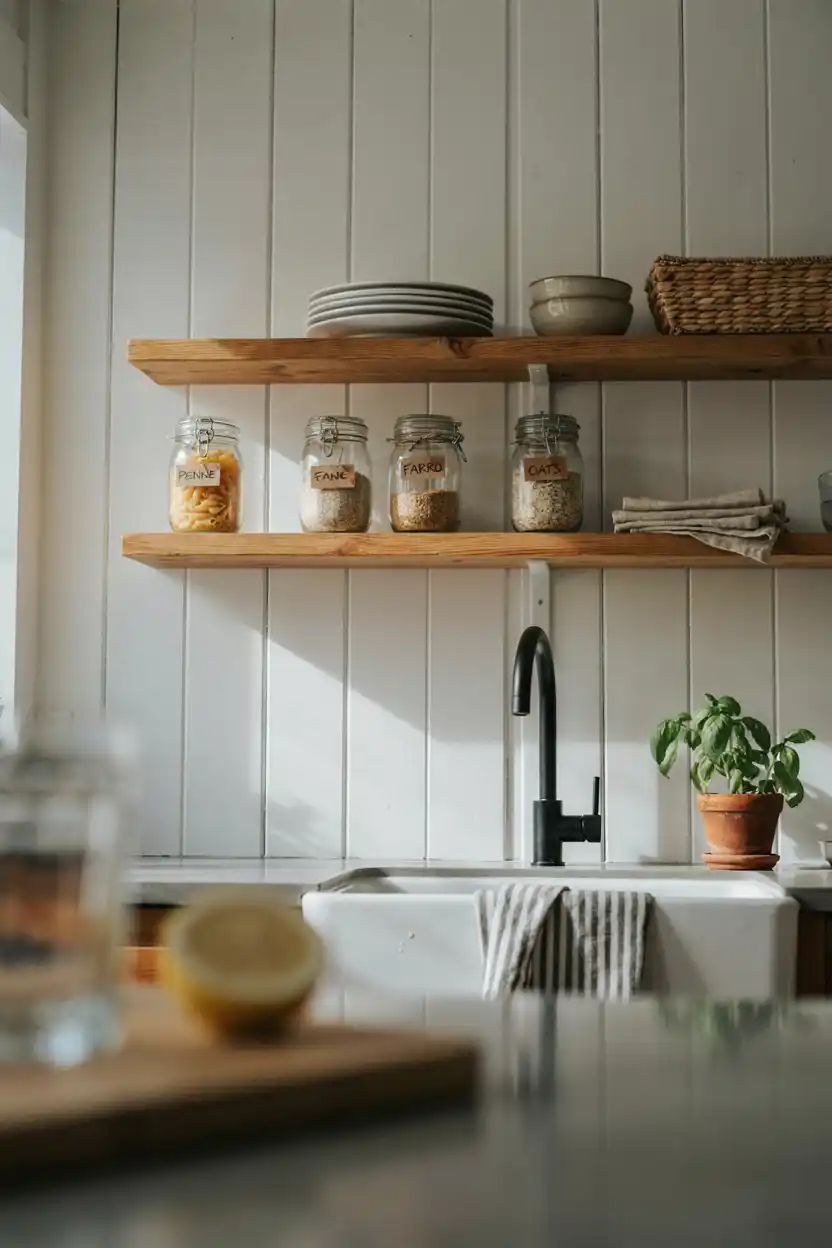
Rustic farmhouse open shelving pairs raw, reclaimed wood with a soft white or shiplap backdrop, creating a warm, inviting focal point above the counter. The exposed shelves let you showcase everyday stoneware, mason jars, and woven baskets, turning practical storage into part of the room’s charm.
Styling details usually include mismatched but coordinated ceramics, a few trailing plants, and iron or rope shelf brackets that echo the farmhouse aesthetic. Keeping items grouped by color or material helps prevent the look from feeling cluttered.
This idea works best for homeowners who already lean into a cozy, country-inspired kitchen and don’t mind a bit of visible imperfection in exchange for character and warmth.
2. Sleek Handleless Closed Cabinets
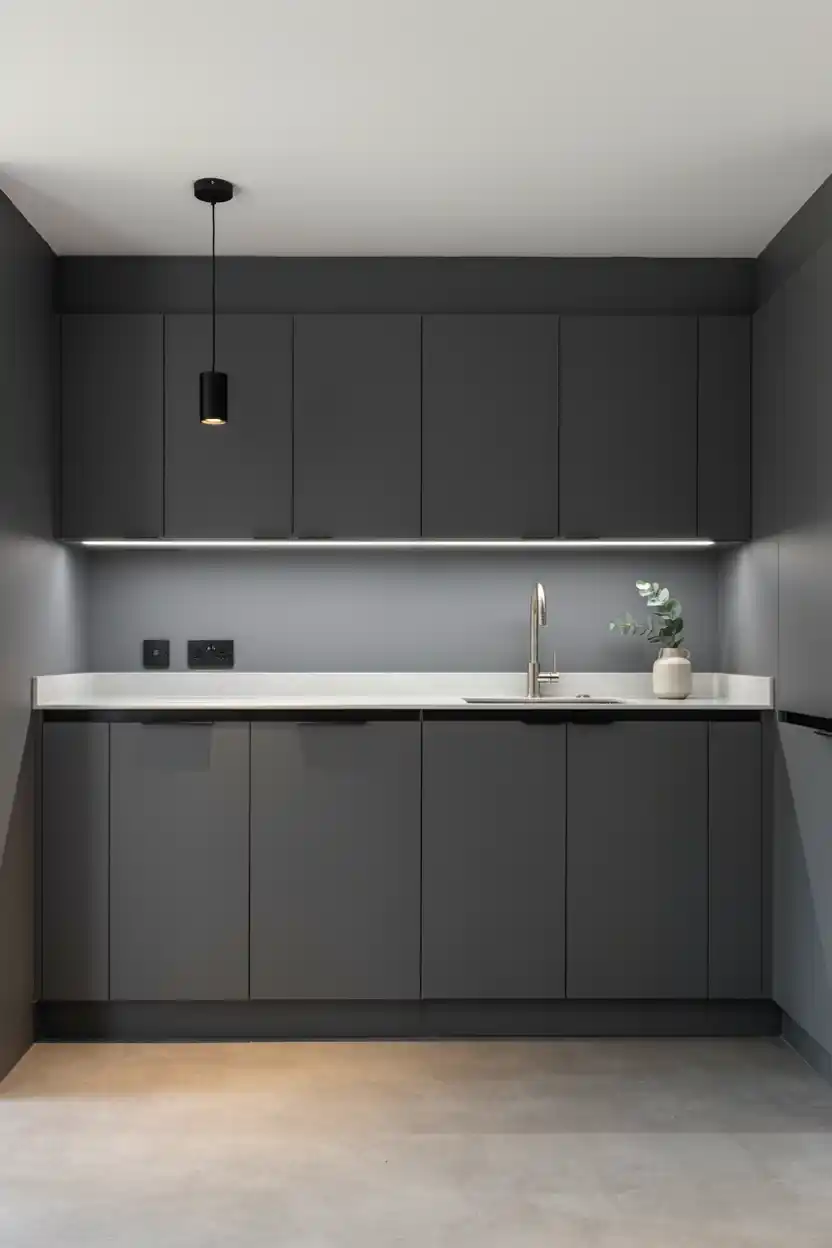
Handleless closed cabinets create an ultra-streamlined look by eliminating visible hardware entirely, relying instead on push-to-open mechanisms or integrated finger pulls. The result is a smooth, uninterrupted wall of cabinetry that feels architectural rather than domestic.
This style typically uses matte finishes in charcoal, deep green, or soft white, paired with minimal countertop clutter and hidden appliance garages to keep every surface clear.
It’s best suited for homeowners who love a modern, minimalist aesthetic and are willing to invest in higher-end cabinet hardware and precise installation for that flawless, gapless finish.
3. Floating Walnut Open Shelves
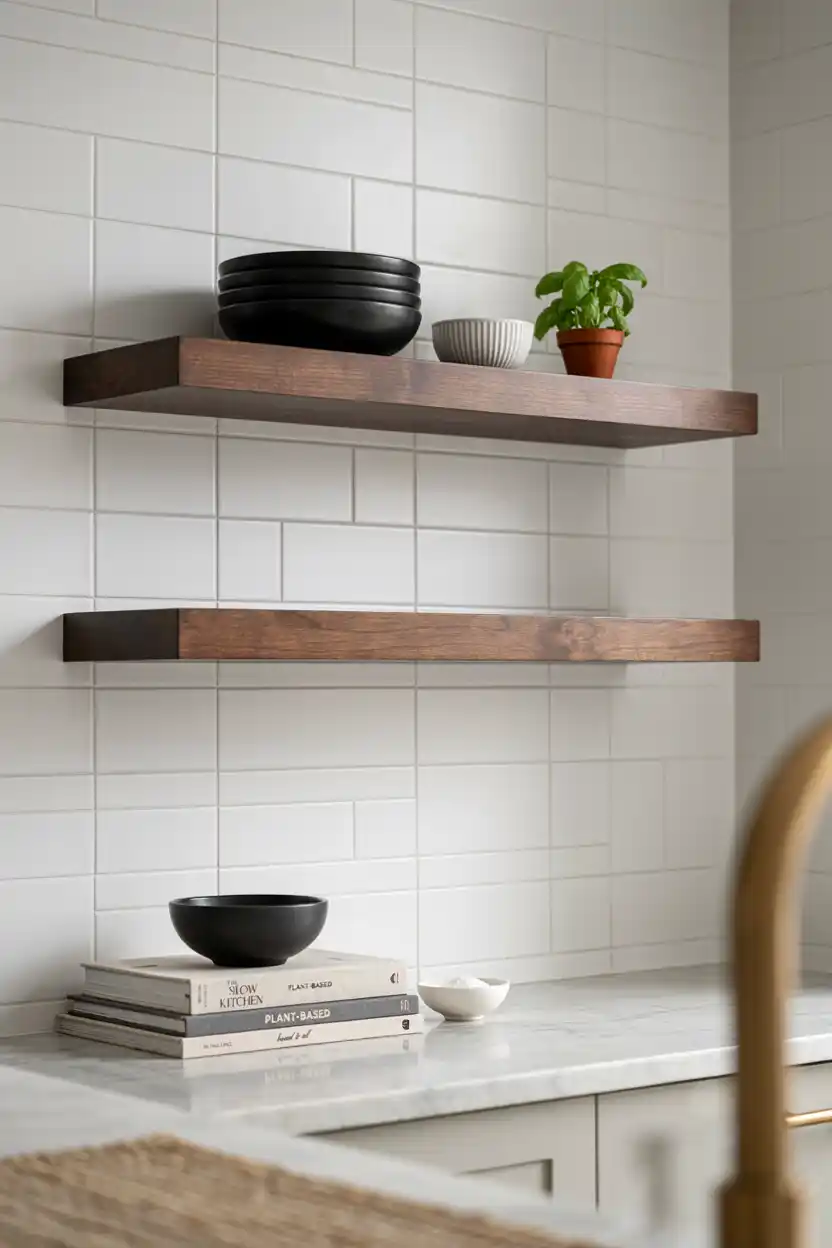
Floating walnut shelves bring rich, warm contrast into a predominantly white or light-toned kitchen. The thick, solid wood slabs feel substantial and high-end, especially when paired with hidden brackets that make the shelves appear to float directly off the wall.
Because walnut has such a distinct grain and color, styling tends to stay minimal, just a few curated bowls, a small plant, and maybe a stack of cookbooks, letting the wood itself be the statement.
This idea suits homeowners with a modern or Scandinavian-influenced kitchen who want warmth and texture without adding visual clutter.
4. Classic Shaker-Style Closed Cabinetry
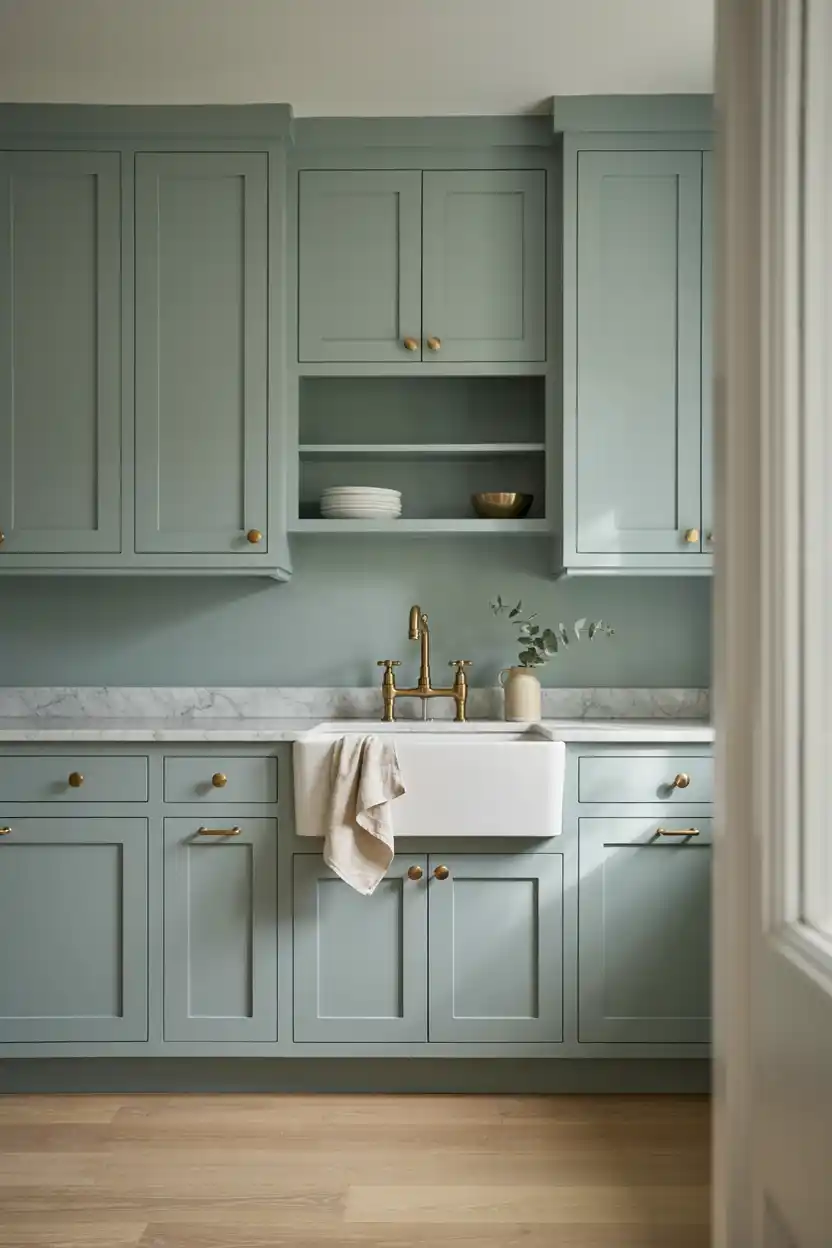
Shaker-style closed cabinets remain one of the most popular choices because of their simple, recessed-panel doors that work in traditional, transitional, and even modern farmhouse kitchens. The clean lines age well and rarely look dated.
Popular finishes include soft sage green, navy, warm white, and classic wood tones, often paired with brass or matte black hardware to add a bit of personality without overwhelming the design.
This option is ideal for homeowners who want a timeless kitchen that will still look good in ten years, and who prefer keeping countertops and interiors fully hidden from view.
5. Glass-Front Closed Cabinets
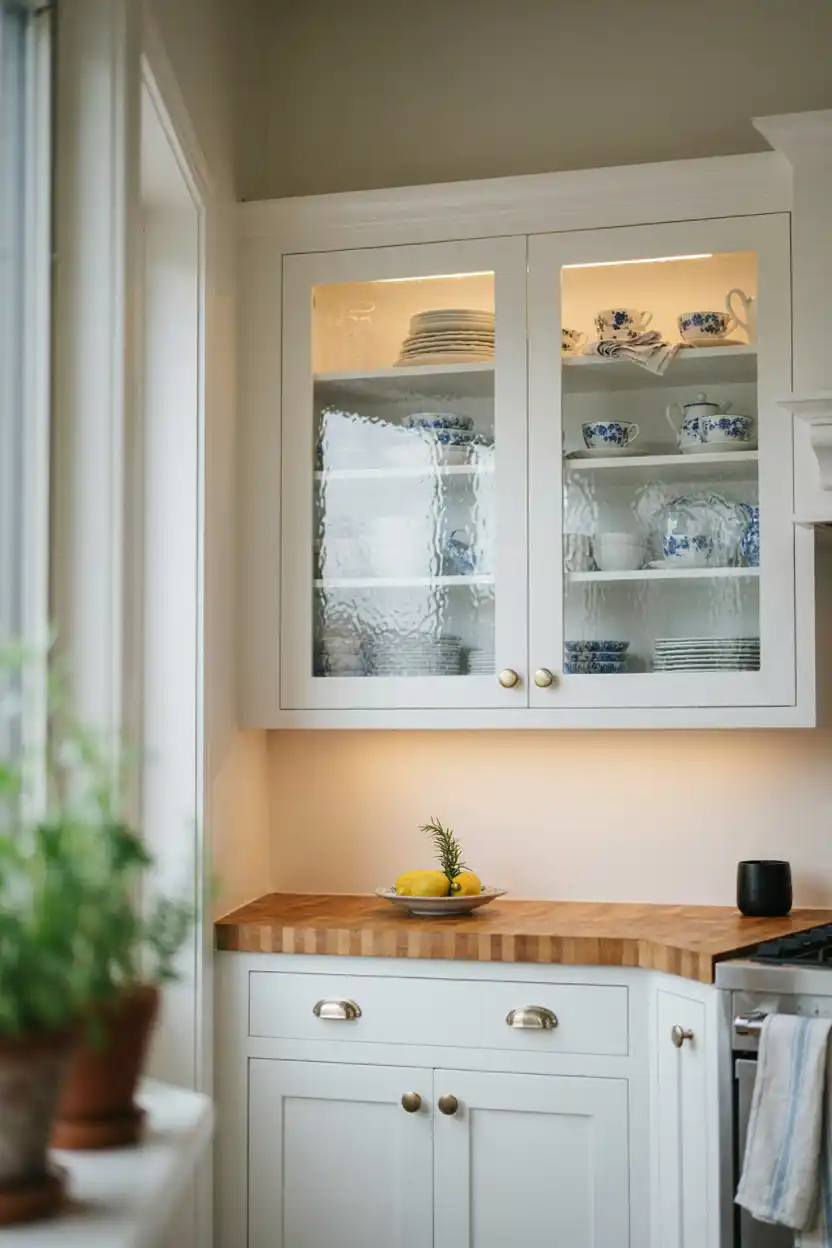
Glass-front closed cabinets offer a hybrid solution, giving you the protective, dust-free benefits of a closed door while still allowing your favorite dishware to be seen. Seeded, fluted, or frosted glass options add texture and softness compared to plain clear panes.
Interior cabinet lighting is a popular addition here, turning the cabinet into a lit display case at night. Styling typically favors coordinated, color-matched dishware since everything inside is visible.
This idea works well for homeowners who love the display quality of open shelving but want the dust protection and tidier appearance that a door provides.
6. Industrial Pipe Open Shelving
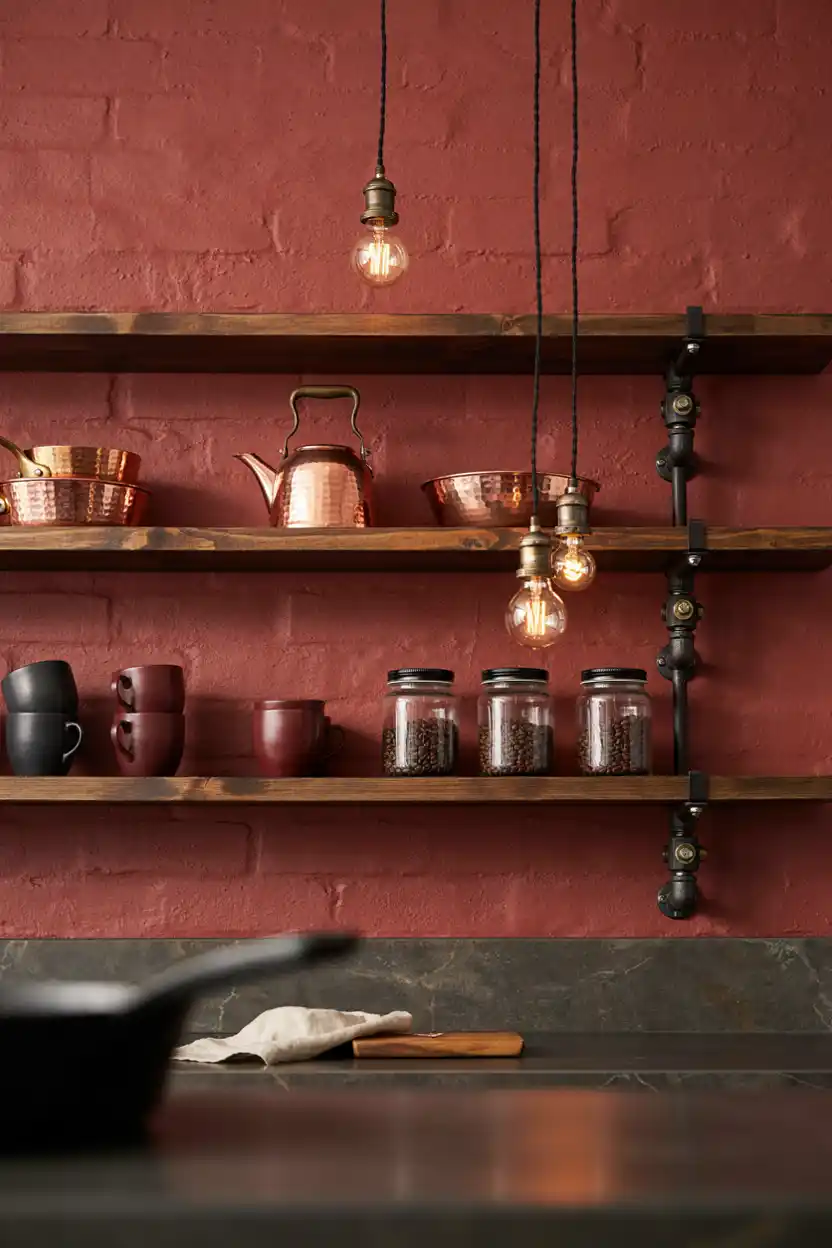
Industrial pipe shelving uses exposed black iron brackets and reclaimed wood planks to create a raw, loft-inspired look. It pairs especially well with exposed brick, concrete counters, and darker overall color schemes.
Styling leans toward function-forward pieces like copper pans, dark ceramic mugs, and glass canisters, items that look intentional even when left out in the open.
This idea is best suited for homeowners with a loft, urban, or industrial-style home who want shelving that feels sturdy, masculine, and full of character.
7. Two-Tone Open and Closed Combo
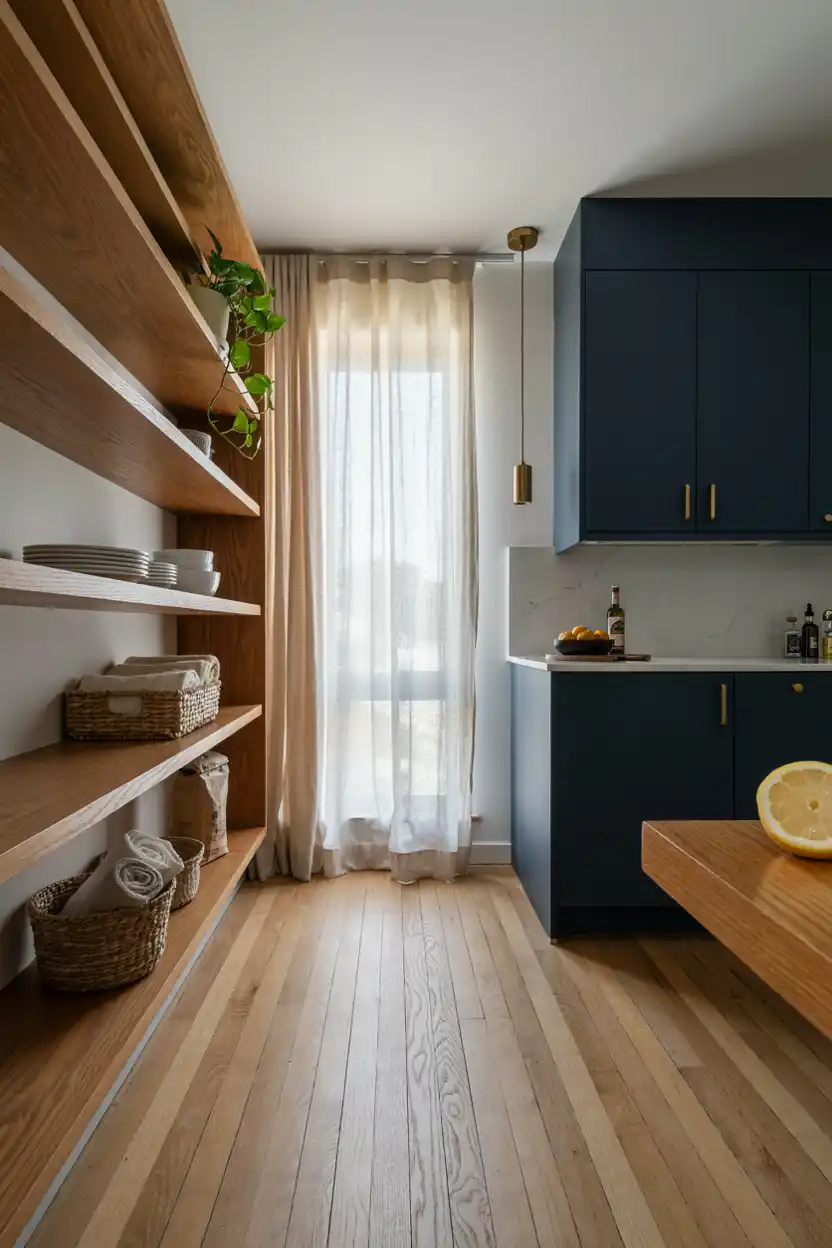
Combining open shelving with closed cabinets in the same kitchen gives you the best of both worlds: display space for your favorite pieces and hidden storage for everything else. This two-tone approach also adds visual interest by mixing textures and colors.
A common pairing is warm wood open shelves against one wall paired with bold, colorful closed cabinetry on another, tied together with a consistent countertop and hardware finish.
This idea is ideal for homeowners who can’t quite commit to one storage style and want a kitchen that feels curated, layered, and personalized.
8. Minimalist White Closed Cabinets
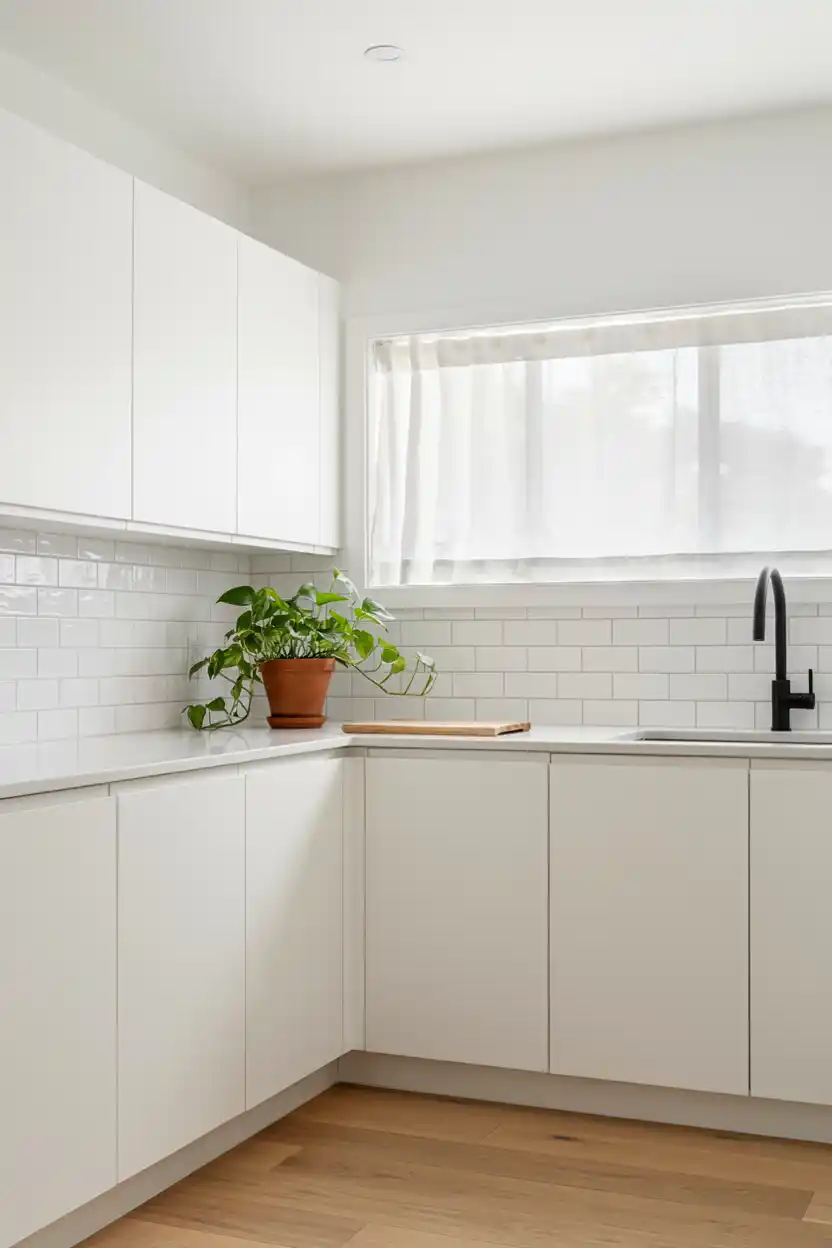
Minimalist white closed cabinets create a bright, seamless backdrop that makes any kitchen feel larger and more open. Flat-panel doors with slim integrated handles keep the look ultra clean, with no visible clutter or hardware to distract the eye.
This style relies heavily on keeping countertops nearly empty, letting the cabinetry itself be the design statement rather than decorative accessories.
It’s best suited for homeowners who want a low-clutter, easy-to-maintain kitchen and prefer a light, airy feel over a display-heavy, decorative one.
9. Black Matte Open Shelving
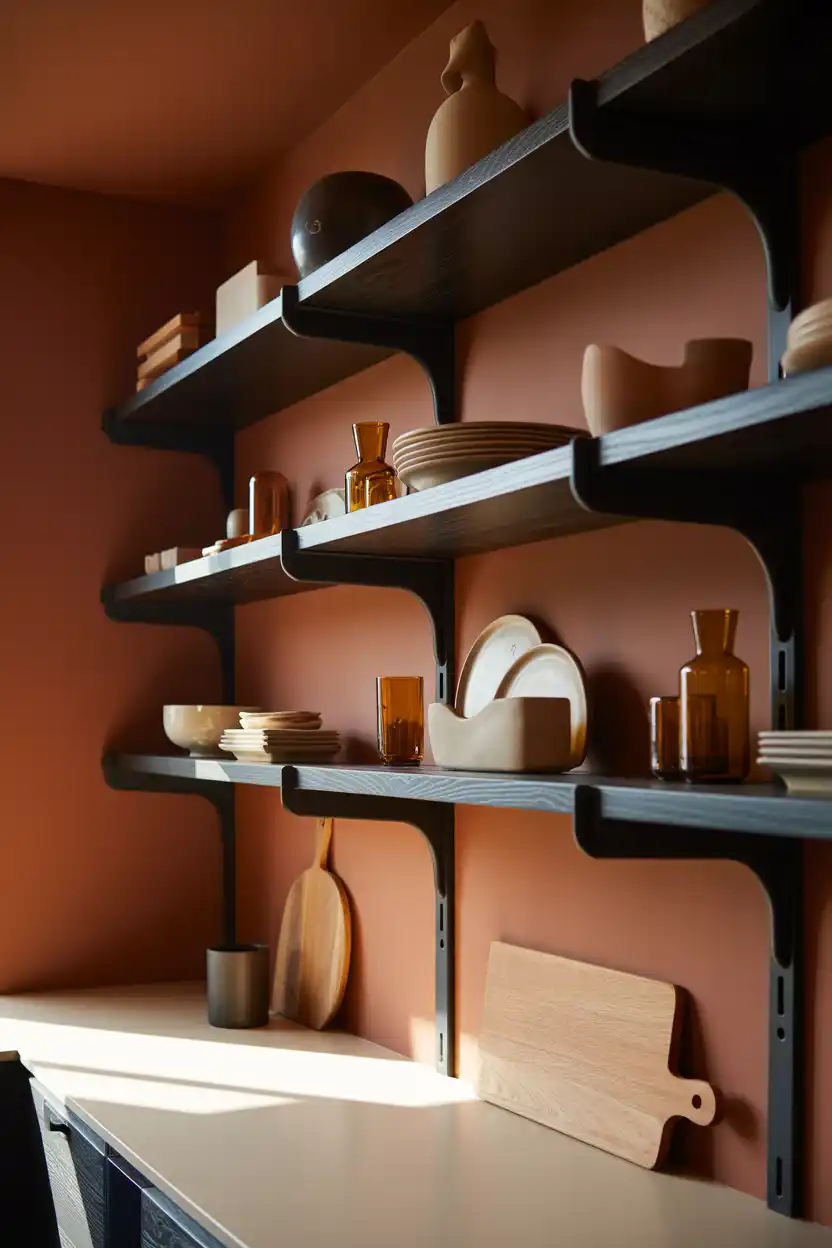
Black matte open shelving brings a bold, modern edge to a kitchen, especially when paired with warm wall colors like terracotta, rust, or deep clay. The dark metal frames contrast beautifully against lighter dishware and warm-toned walls.
Because black shelving reads as a strong design statement on its own, styling tends to be more editorial, with intentional color coordination between the shelf contents and the surrounding palette.
This idea suits homeowners who want a kitchen with personality and aren’t afraid of bold color and material contrast.
10. Corner Open Shelving Nook
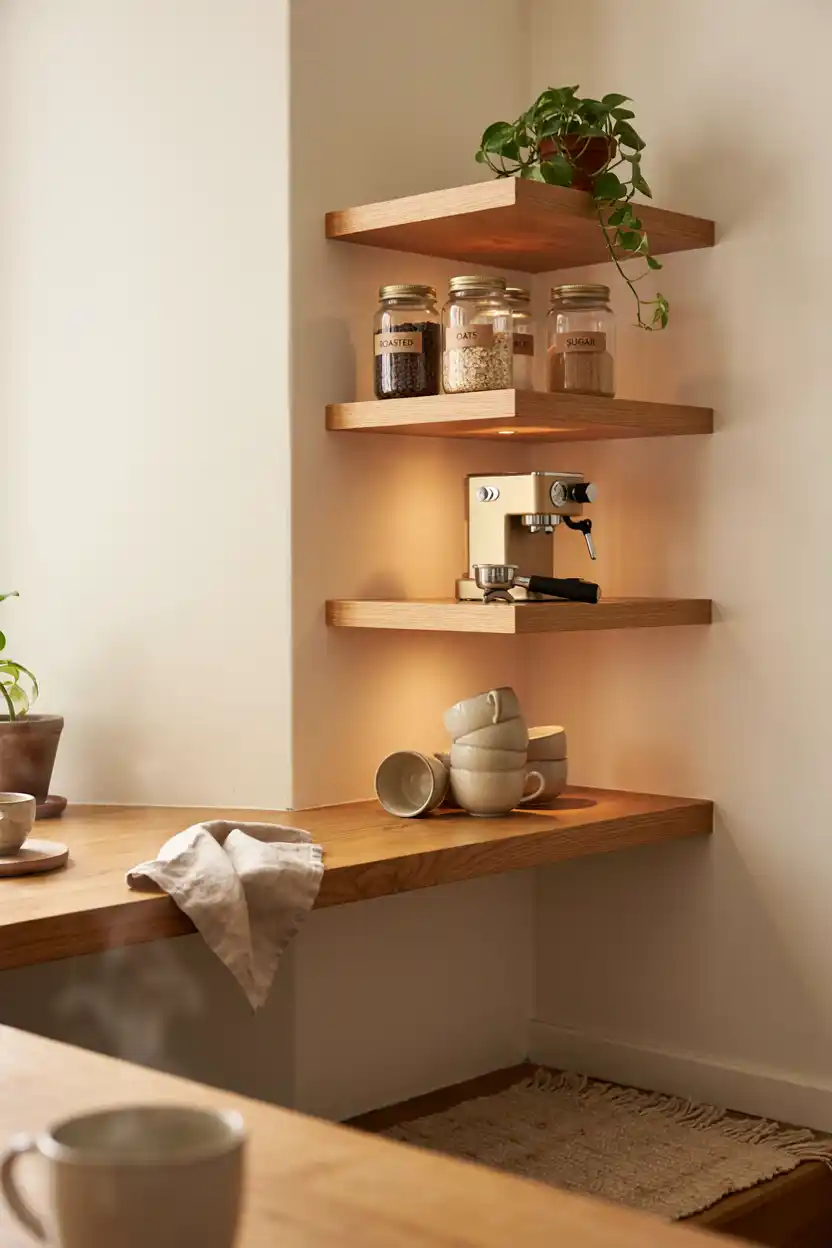
Corner open shelving turns an often-wasted architectural space into a functional and charming feature, commonly styled as a dedicated coffee or tea station. Light wood shelves with soft under-cabinet lighting make the corner feel intentional rather than awkward.
Styling usually centers around a specific function, like coffee gear, spices, or cookbooks, keeping the display purposeful and easy to maintain.
This idea is perfect for homeowners with an underused corner or nook who want to maximize storage without adding bulky cabinetry.
11. Full-Height Pantry Closed Cabinets
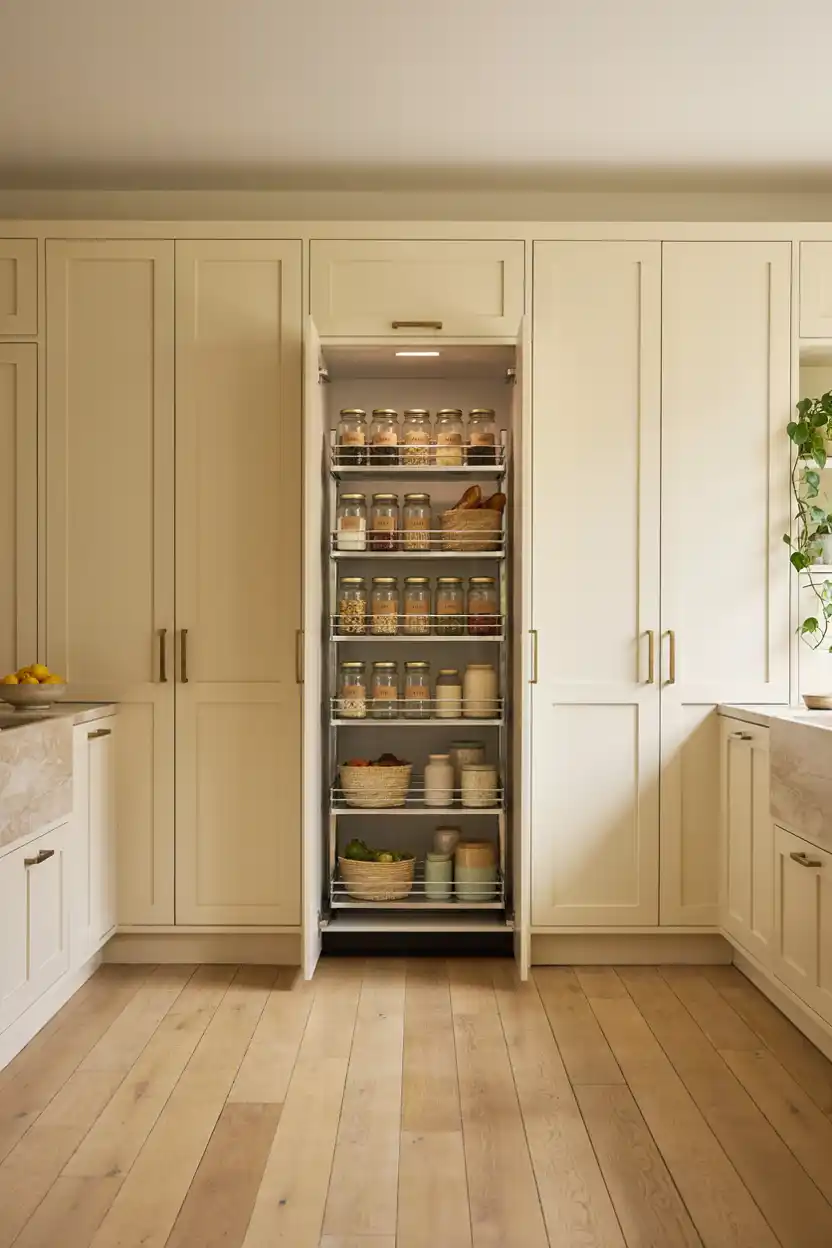
A full-height pantry of closed cabinets maximizes vertical storage while keeping bulk pantry items, small appliances, and extra dishware completely out of sight. Tall paneled doors create a furniture-like presence rather than a purely utilitarian storage wall.
Interior features like pull-out wire shelving, adjustable racks, and clear glass jars help keep the inside just as organized as the outside looks, especially useful for larger households.
This idea is best suited for homeowners with larger kitchens who need serious storage capacity and prefer everything neatly hidden behind closed doors.
12. Open Shelving Above the Sink
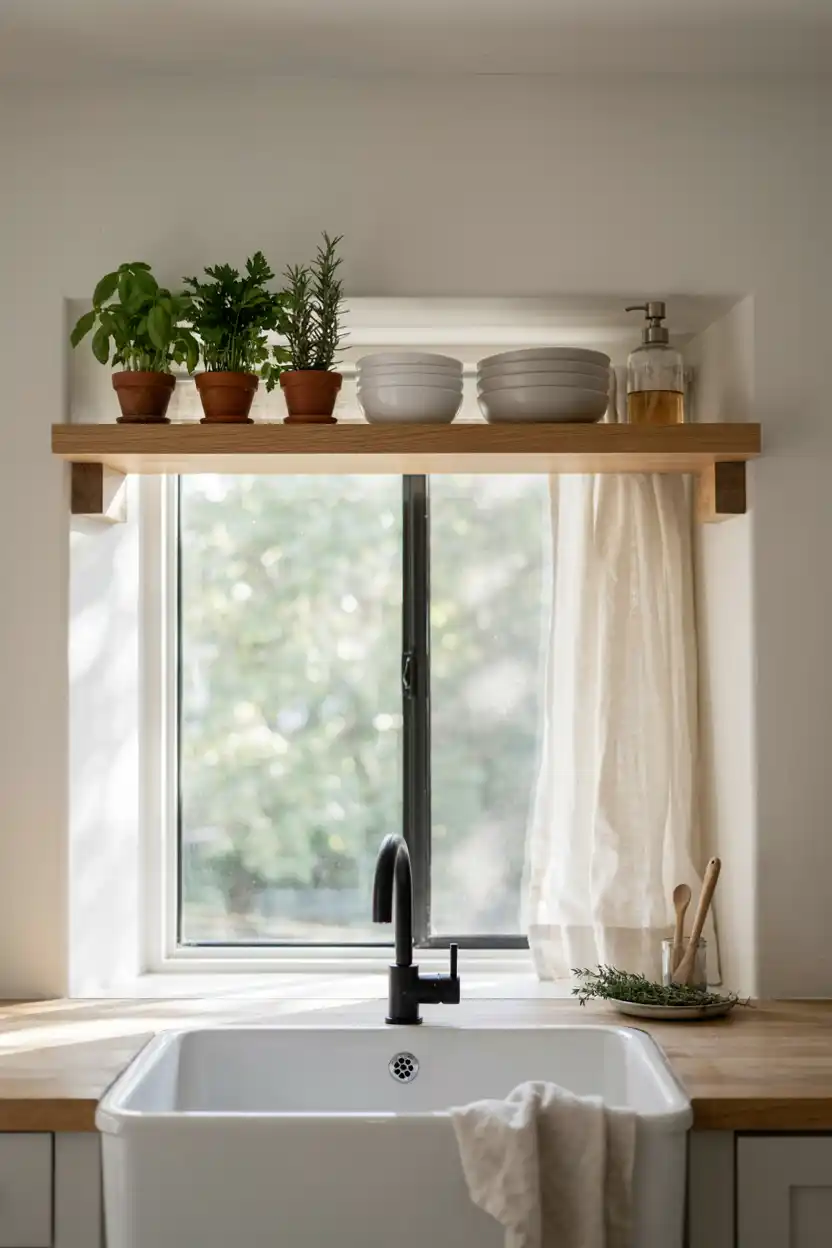
Placing a single open shelf above the sink and window makes use of a spot that’s often left bare, turning it into a bright, functional display for herbs, everyday bowls, and small plants. Natural light from the window makes this one of the most photogenic spots in the kitchen.
Because the space is narrow, styling stays simple, usually just a row of potted herbs, a soap dispenser, and one or two bowls, keeping the window’s light unobstructed.
This idea works especially well for homeowners with a window over their sink who want to add greenery and warmth without committing to full wall shelving.
13. Navy Blue Closed Cabinet Island
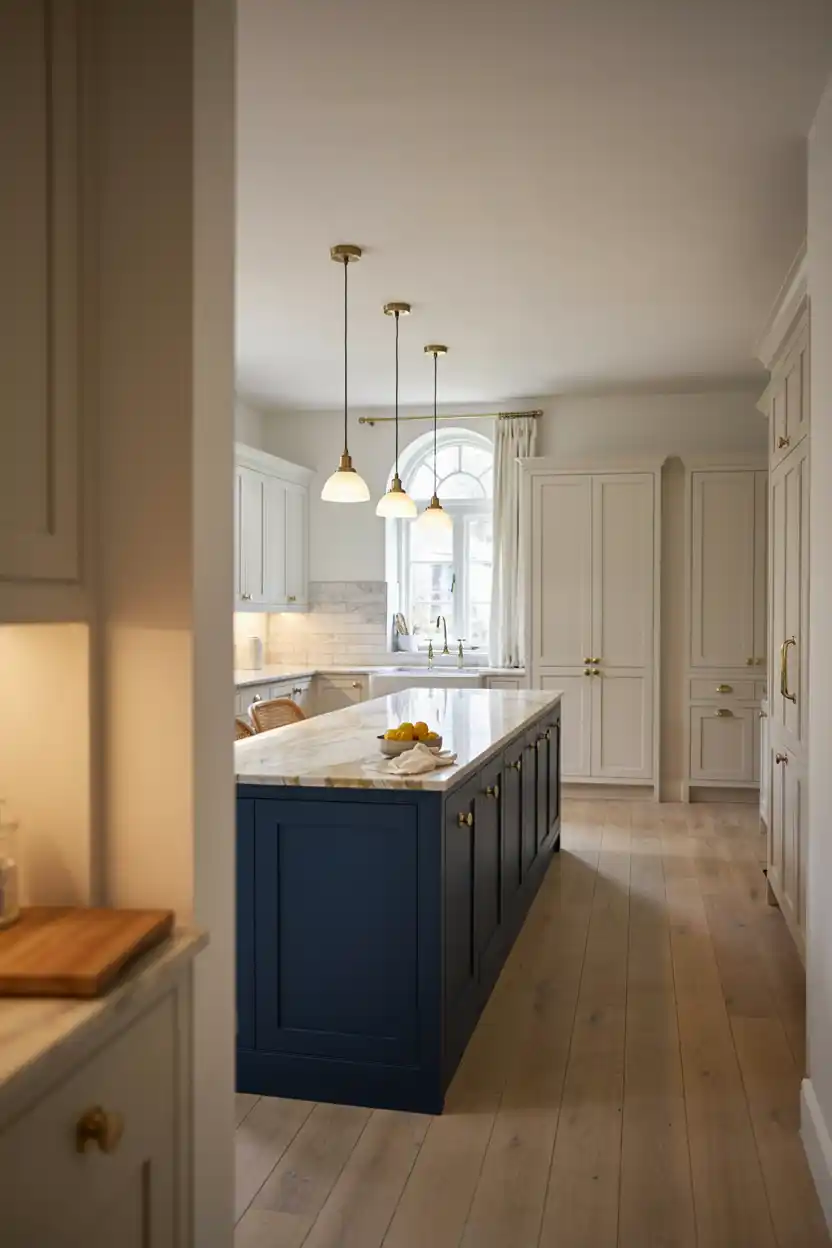
A navy blue closed cabinet island creates a bold contrast point in an otherwise neutral kitchen, using color to draw the eye without overwhelming the whole room. Closed cabinetry keeps the island’s interior storage, often pots, pans, and small appliances, completely hidden.
Pairing the navy cabinetry with brass hardware and a light marble countertop keeps the look luxurious rather than heavy, and white surrounding cabinets help balance the dark tone.
This idea suits homeowners who want to introduce color into their kitchen in a controlled, high-impact way, particularly in kitchens with an island as the central feature.
14. Reclaimed Wood Open Shelving
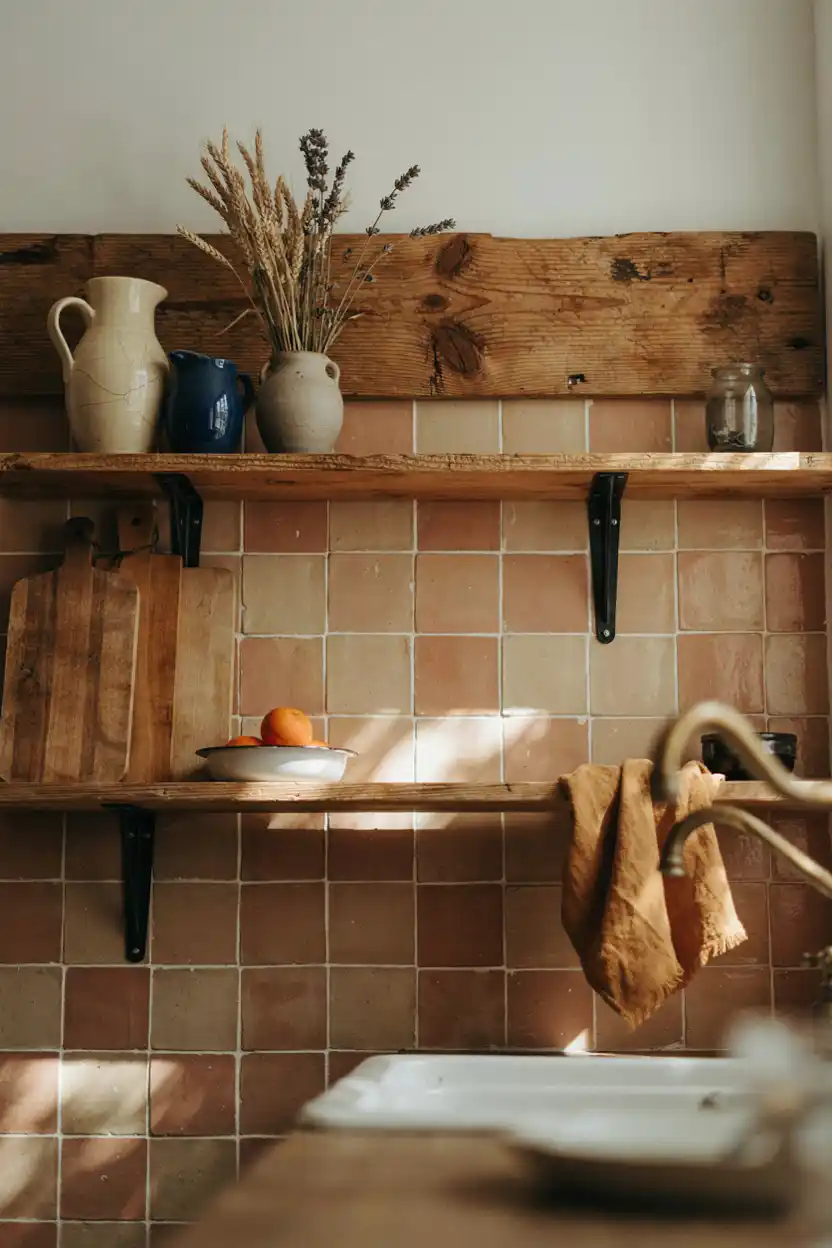
Reclaimed wood open shelving embraces imperfection, using raw, weathered boards with visible grain, knots, and saw marks for a collected, bohemian feel. Paired with warm terracotta or clay-toned walls, the shelving feels earthy and lived-in rather than overly polished.
Styling tends to include vintage pitchers, dried florals, and wooden serving boards, pieces that look better with a bit of visible age and character.
This idea is best for homeowners with an eclectic or boho-leaning kitchen who appreciate texture and don’t need everything to look brand new.
15. Frosted Glass Closed Cabinets
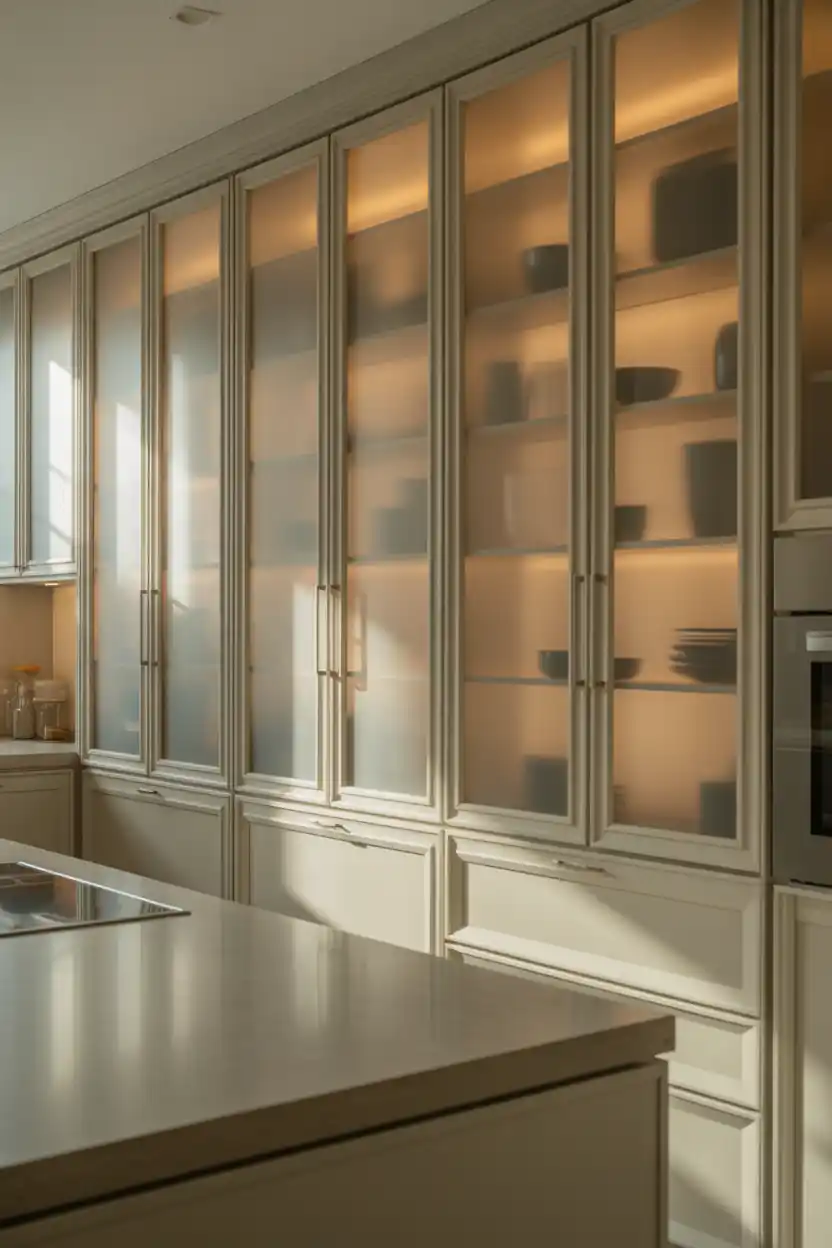
Frosted glass closed cabinets soften the visibility of a glass front while still hinting at the shapes and colors stored inside. Combined with slim aluminum or matte white frames, the look feels contemporary and calm rather than fully transparent.
Interior lighting is often added behind the frosted panels, creating a soft glow that adds ambiance without exposing every detail of what’s stored inside.
This idea is ideal for homeowners who like the idea of glass-front cabinets but want a more forgiving, low-maintenance option that doesn’t require perfectly styled dishware.
16. Mixed Materials Open Shelf Display
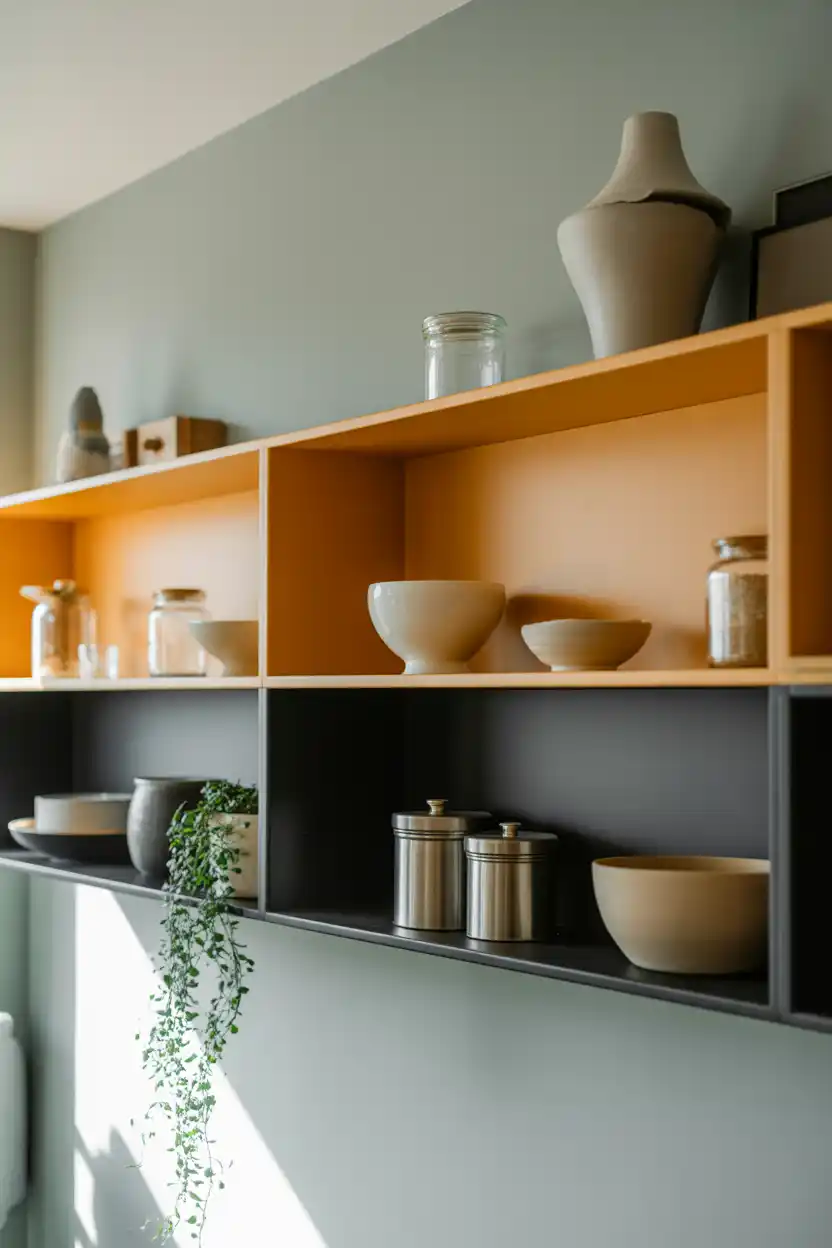
Mixing materials, like alternating wood and metal shelves, adds visual interest and depth to an open shelving display, avoiding the flatness that can happen when every shelf looks identical. It creates a layered, gallery-like effect.
Successful styling here relies on keeping the color palette of the displayed items neutral and coordinated, even as the shelf materials themselves vary, so the mix feels intentional rather than mismatched.
This idea is best suited for design-savvy homeowners who enjoy curating their kitchen display the way they would a bookshelf or gallery wall.
17. Coastal White Open Shelving
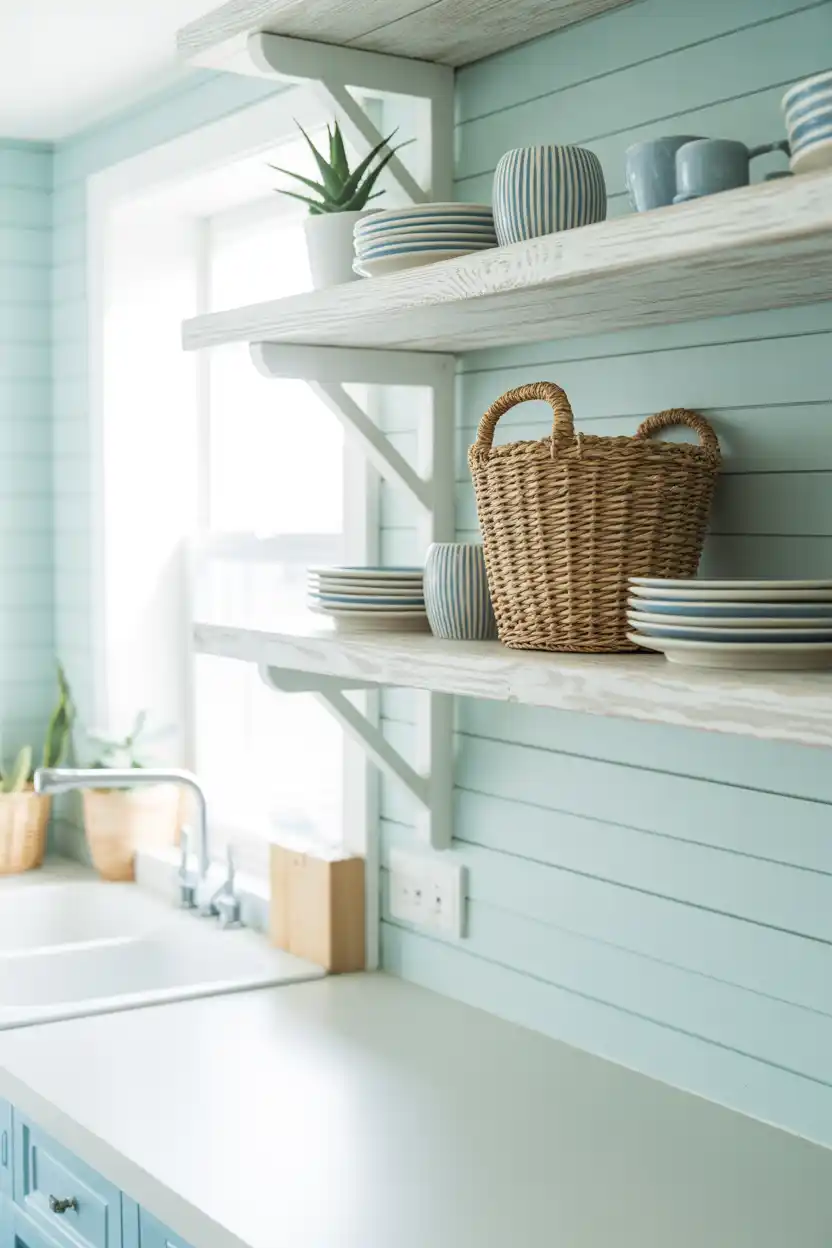
Coastal white open shelving uses whitewashed or painted wood shelves against soft blue or shiplap walls to create a light, breezy feel reminiscent of a beach cottage. Blue and white dishware ties directly into the color scheme.
Woven baskets, seagrass textures, and a few simple potted plants round out the styling, keeping the look relaxed rather than overly formal.
This idea works best for homeowners in coastal or cottage-style homes who want their kitchen to feel light, casual, and vacation-inspired year-round.
18. Dark Wood Closed Cabinet Wall
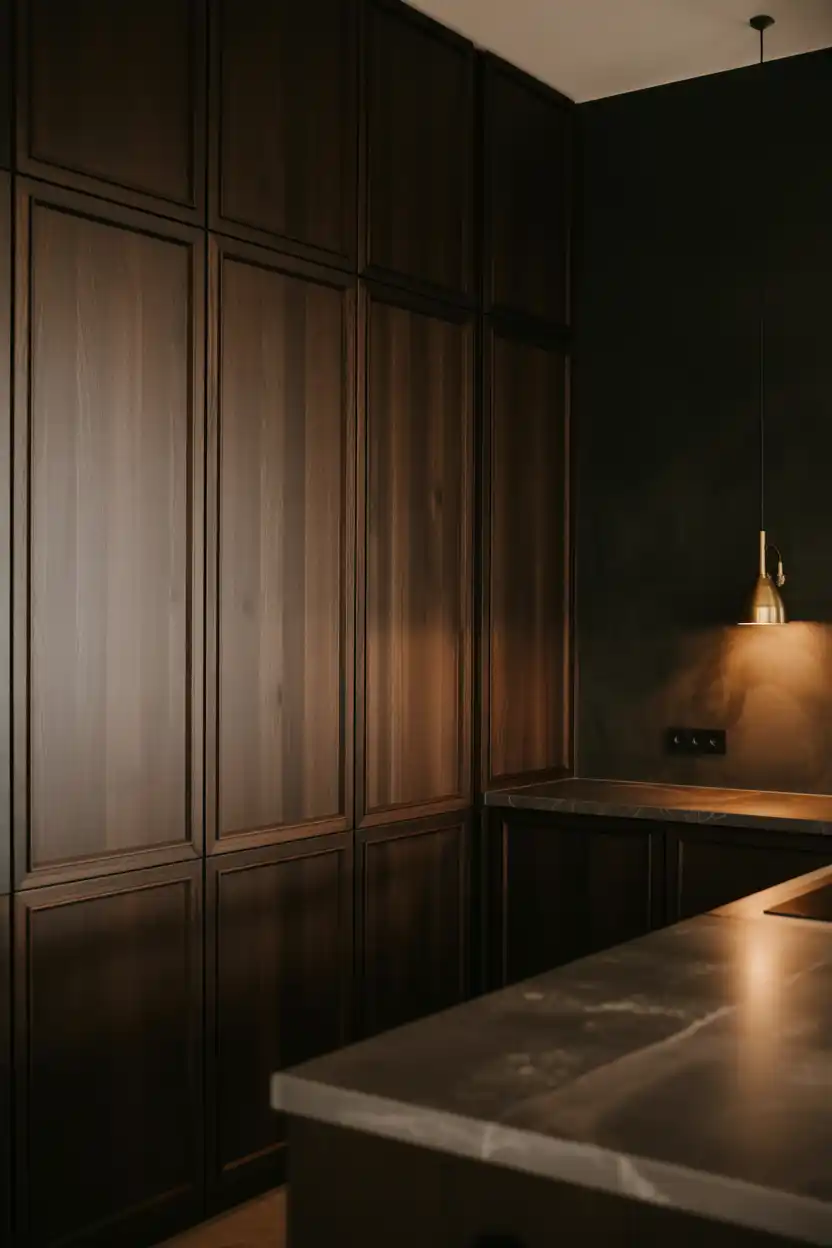
A dark wood closed cabinet wall creates a dramatic, upscale look, especially when paired with matching stone countertops and warm brass or black hardware. The rich wood tones add depth and sophistication that lighter cabinetry can’t replicate.
Because dark wood absorbs more light than white or pale finishes, this idea works best in kitchens with ample natural light or well-planned artificial lighting to avoid the space feeling too closed-in.
This idea suits homeowners who want a moody, upscale kitchen and have a well-lit space to balance out the deeper tones.
Planning and Buying Tips
Before choosing between open shelving and closed cabinets, take an honest look at your available wall space, your kitchen’s natural light, and how much you’re realistically willing to keep tidy on a weekly basis. Open shelving generally needs at least 10 to 12 inches of depth and 12 to 15 inches of vertical spacing between shelves to comfortably hold plates, bowls, and glassware without feeling cramped.
For closed cabinets, standard upper cabinets run 12 inches deep and are typically installed 18 inches above the countertop, while base cabinets are usually 24 inches deep. If you’re installing open shelves, make sure they’re anchored into wall studs or use heavy-duty toggle anchors, since a fully loaded shelf of dishware can weigh significantly more than expected.
Structurally, closed cabinets require more planning around door swing clearance, drawer extension space, and adjoining appliances, so it’s worth double-checking measurements against your kitchen’s traffic flow before ordering. If you’re mixing both storage types, a good rule of thumb is to reserve closed cabinets for heavier, bulkier, or less attractive items, and open shelves for everyday dishware and display pieces near eye level.
Finally, think about long-term flexibility. Open shelving is easier and cheaper to reconfigure or add to later, while closed cabinetry is typically a more permanent, built-in investment that’s harder to change once installed.
Cost Breakdown
Costs for open shelving and closed cabinets vary widely depending on materials, finish quality, and whether you hire a professional or install them yourself. Here’s a general guide.
Budget: $50 to $300 per linear foot
Budget open shelving typically means simple pine or laminate boards with basic metal brackets, often DIY-installed for under $100 total per section. Budget closed cabinets usually mean stock cabinetry from a home improvement store with laminate or thermofoil doors, sometimes requiring self-installation to keep costs down.
Mid-Range: $300 to $700 per linear foot
Mid-range options include solid wood open shelves with better hardware, or semi-custom painted or stained cabinets with soft-close hinges and drawers. Professional installation is common at this tier, typically adding $50 to $150 per linear foot depending on your region and contractor.
Luxury / Premium: $700 to $1,500+ per linear foot
Premium tiers cover custom hardwood open shelving with integrated lighting, or fully custom cabinetry with high-end finishes, dovetail joinery, and premium hardware like brass or matte black pulls. Professional design, custom fabrication, and installation at this level can add several thousand dollars to a full kitchen project.
Materials and Options Comparison
| Option | Average Cost | Durability | Maintenance | Best For |
| Solid Wood Open Shelving | $200–$800 | High with proper sealing | Moderate, needs regular dusting | Warm, natural kitchen styles |
| Metal Open Shelving | $100–$500 | Very High | Low, wipes clean easily | Industrial or modern kitchens |
| Laminate Closed Cabinets | $2,000–$6,000 | Moderate | Low | Budget-friendly renovations |
| Painted Wood Closed Cabinets | $3,000–$10,000 | High | Moderate, touch-ups over time | Classic and transitional kitchens |
| Glass-Front Closed Cabinets | $$4,000–$12,000 | Moderate, glass can chip | Moderate to high, needs cleaning | Display-focused traditional kitchens |
| Custom Hardwood Closed Cabinets | $8,000–$25,000+ | Very High | Moderate | Luxury, long-term kitchen investments |
Maintenance Tips
Open shelving needs the most frequent attention since everything on display collects dust, grease, and kitchen residue faster than enclosed storage. Wipe shelves down weekly with a mild cleaner, and wash any dishware left out on open shelves more often than you would if it were tucked behind a cabinet door.
Closed cabinets need less frequent surface cleaning but still require periodic care, wipe down door fronts monthly, check hinges and drawer slides every few months for looseness, and tighten hardware as needed. Avoid harsh chemical cleaners on painted or wood finishes, since they can strip color or leave streaks over time.
For both storage types, a common mistake is overloading shelves or cabinets beyond their weight rating, which can lead to sagging shelves or sticking doors. If you notice a shelf beginning to bow or a door misaligning, address it early. A small adjustment now is far easier than a full repair or replacement later.
Frequently Asked Questions
Is open shelving more expensive than closed cabinets?
No, open shelving is generally less expensive than closed cabinets since it requires fewer materials and no doors, hinges, or soft-close hardware. Budget open shelving can cost as little as $50 to $100 per linear foot, while comparable closed cabinetry typically starts higher due to the added components.
Do open shelves make a small kitchen look bigger?
Yes, open shelving can make a small kitchen feel more spacious because it removes bulky cabinet boxes and lets the wall color show through, creating a lighter, airier visual effect compared to a full wall of closed cabinetry.
How much weight can open kitchen shelves hold?
A properly installed wood shelf anchored into wall studs can typically hold 25 to 50 pounds per bracket, depending on the bracket type and shelf thickness. Always check manufacturer weight ratings and anchor into studs rather than drywall alone for heavier loads like stacked dishware.
Should I mix open shelving and closed cabinets in the same kitchen?
Yes, mixing both is a popular and practical approach. Use open shelving for everyday dishware and display items, and reserve closed cabinets for bulkier, less attractive, or infrequently used items, giving you both accessibility and clutter-free storage.
Are closed cabinets better for resale value?
Generally yes, closed cabinets tend to appeal to a broader range of buyers since they offer more concealed storage and a traditional, move-in-ready look. That said, a well-designed mix of open shelving and closed cabinets can also be a strong selling point in updated, design-forward kitchens.
How to Choose the Right Open Shelving vs Closed Cabinets Option for You
Choosing between open shelving and closed cabinets ultimately comes down to three factors: your available space, your budget, and how you actually live in your kitchen. If you have a smaller kitchen and want it to feel brighter and more open, lean toward open shelving in key areas. If you need serious hidden storage for a busy household, prioritize closed cabinets, especially for pantry and bulk items.
Budget-conscious homeowners will find open shelving the more affordable entry point, while those planning a long-term, high-end renovation may find that a mix of custom closed cabinetry with a few open shelving accents delivers the best balance of function and style. Aesthetically, think about how much you enjoy styling and maintaining a display versus how much you value a clean, hidden look.
Whichever direction you choose, the 18 ideas in this guide show that open shelving and closed cabinets don’t have to be an all-or-nothing decision. Ready to start planning your own kitchen storage? Save your favorite ideas from this list and bring them to your next design consultation or renovation project.


- Be Respectful
- Stay Relevant
- Stay Positive
- True Feedback
- Encourage Discussion
- Avoid Spamming
- No Fake News
- Don't Copy-Paste
- No Personal Attacks
- Be Respectful
- Stay Relevant
- Stay Positive
- True Feedback
- Encourage Discussion
- Avoid Spamming
- No Fake News
- Don't Copy-Paste
- No Personal Attacks
