22 Canopy Bed Ideas That’ll Turn Your Bedroom Into a Dreamy Retreat
Published: 19 Aug 2026
A canopy bed is one of the fastest ways to make an ordinary bedroom feel like a boutique hotel suite. Whether you’re dealing with a plain builder-grade room, a bedroom that feels cold and unfinished, or you simply crave a cozier, more romantic sleep space, a canopy frame adds instant architecture, softness, and drama without a full renovation. It works because it draws the eye upward, fills empty vertical space, and gives you a built-in spot to add fabric, lights, or greenery for a custom look. In this guide, we’re covering 21 canopy bed ideas spanning wood, metal, boho, modern, kids’ rooms, and even outdoor spaces, plus everything you need to know about cost, materials, sizing, and upkeep before you buy.
Is a Canopy Bed Right for You?
Canopy beds are undeniably beautiful, but they’re not the right fit for every bedroom or every budget. Before you fall in love with a specific style, it helps to weigh the practical side.
Pros
- Adds height, architecture, and a focal point to bedrooms with plain or low ceilings
- Highly customizable with curtains, lights, greenery, or fabric for seasonal updates
- Available at nearly every price point, from simple metal frames to hand-carved wood
- Can improve privacy and coziness in shared rooms, studios, or open-concept lofts
- Adds long-term resale and rental appeal as a designer-look statement piece
Cons
- Requires more floor and ceiling clearance than a standard bed frame
- Taller posts can make low-ceiling rooms feel more cramped rather than airy
- Draped fabric and canopy tops collect dust and need regular cleaning
- Solid wood and metal four-poster frames are heavier and harder to move or assemble
- Premium materials (solid oak, wrought iron, upholstered velvet) cost significantly more than a standard frame
1. Classic Four-Poster Wooden Canopy Bed
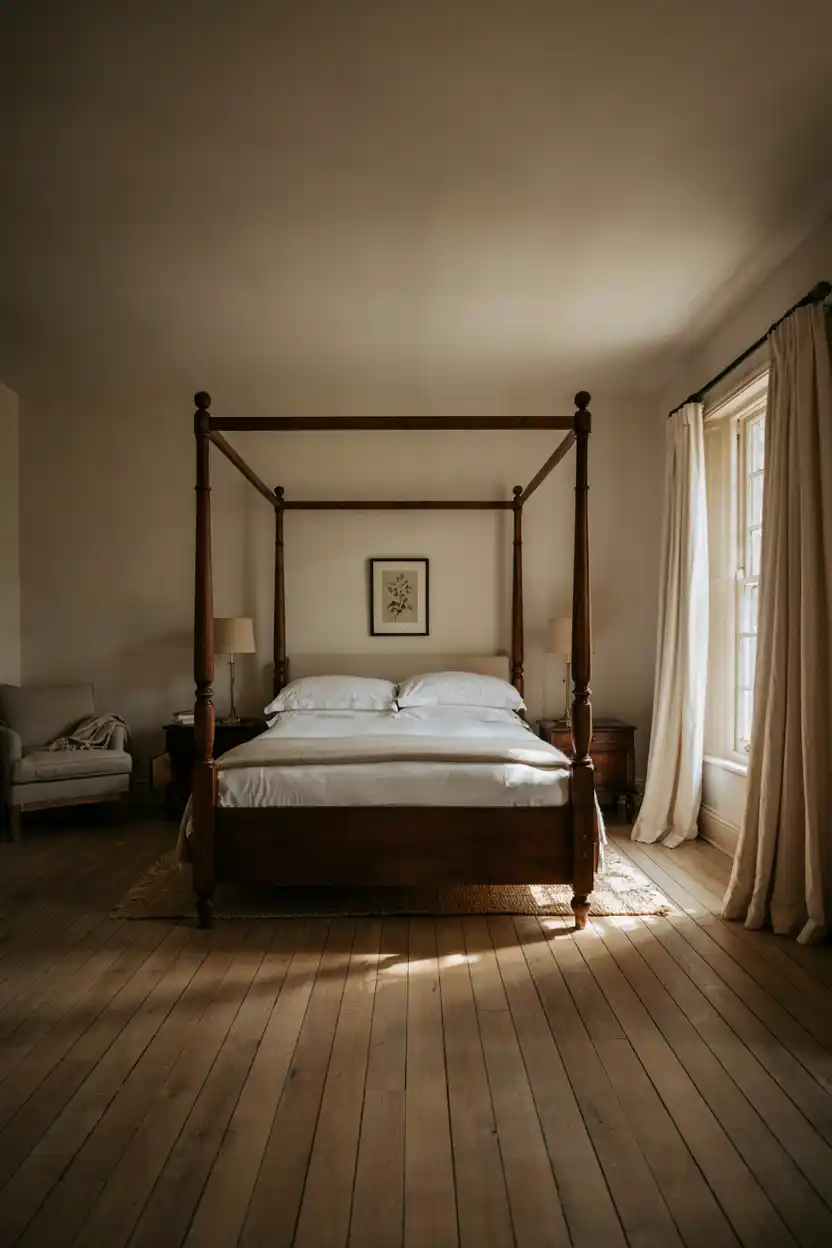
The classic four-poster is the original canopy bed and still the most timeless option. Thick, turned wooden posts anchor the corners while an open-top frame outlines the ceiling space without needing any fabric at all.
Pair it with a neutral or jewel-toned duvet, brass or bronze hardware, and traditional nightstands to lean into a heritage look, or keep the finishes matte black and the linens crisp white for a more updated take.
This style suits homeowners with generous ceiling height, traditional or transitional interiors, and anyone who wants a canopy bed that reads as furniture-grade rather than decorative fabric-first.
2. Sleek Black Metal Canopy Bed Frame
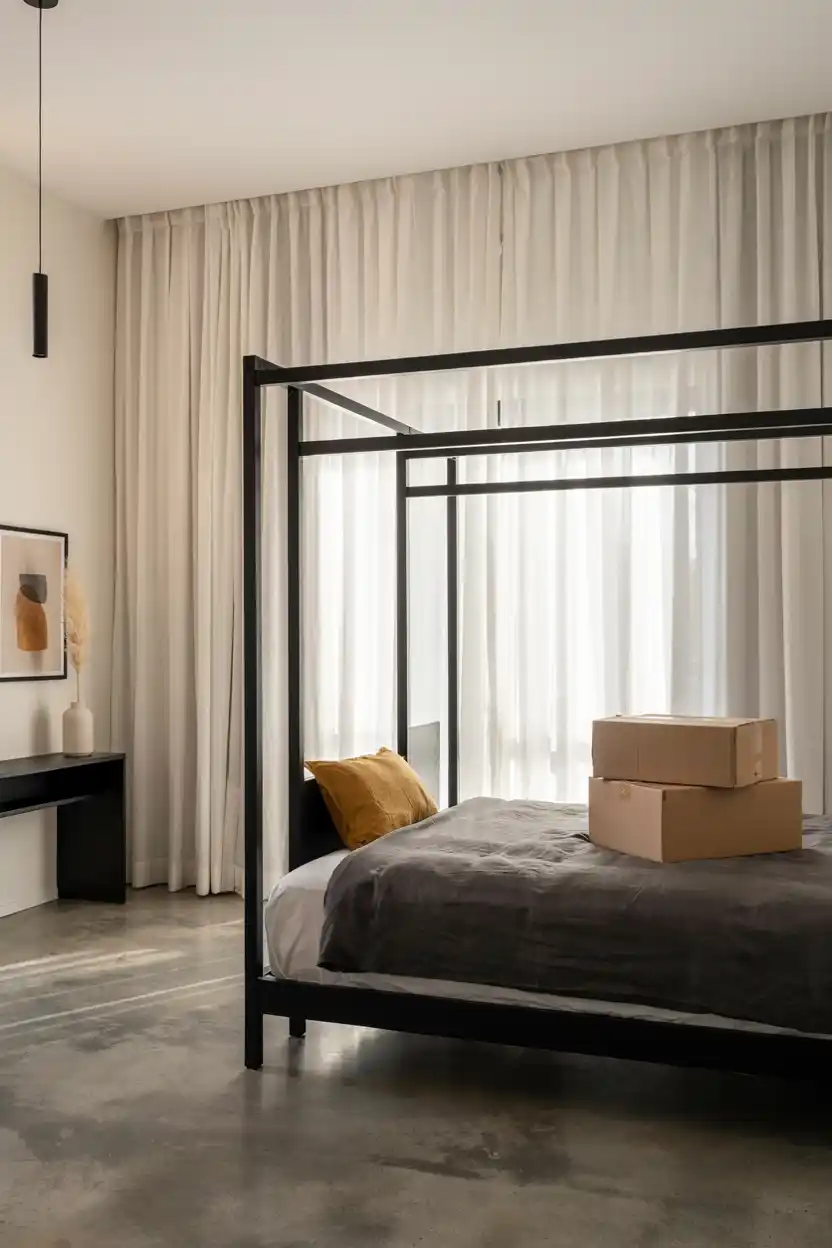
Thin black metal posts give you the height and drama of a canopy frame without the visual weight of solid wood, making this a favourite in modern and industrial-leaning bedrooms.
Because the frame is slim, it pairs well with bold graphic bedding, a single statement pendant light hung inside the canopy, or simply left bare to act as a piece of architectural sculpture in the room.
It’s an excellent match for apartments, lofts, and smaller bedrooms where a bulky wood frame would feel too heavy, and for anyone furnishing a modern or minimalist space.
3. Sheer White Fabric Draped Canopy
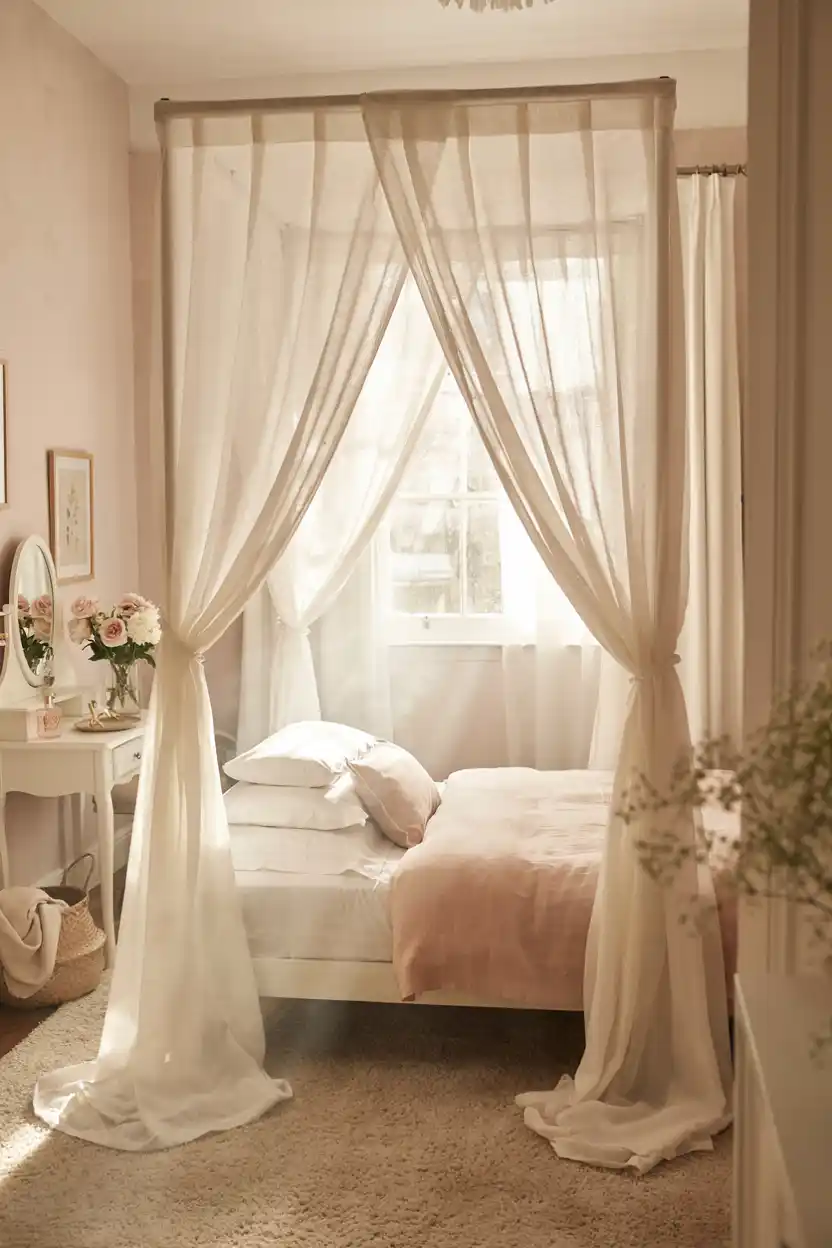
Sheer white fabric is the most classic canopy styling choice, and it’s popular for good reason: it softens the whole room, filters light beautifully, and photographs like something out of a bridal magazine.
Look for lightweight voile or chiffon panels that you can tie back during the day and let fall loose at night, and pair them with soft pastel or all-white bedding so nothing competes with the fabric itself.
This idea is best for romantics, guest rooms, and primary bedrooms where the goal is a soft, feminine, hotel-suite feel rather than a bold design statement.
4. Boho Macrame Canopy Bed
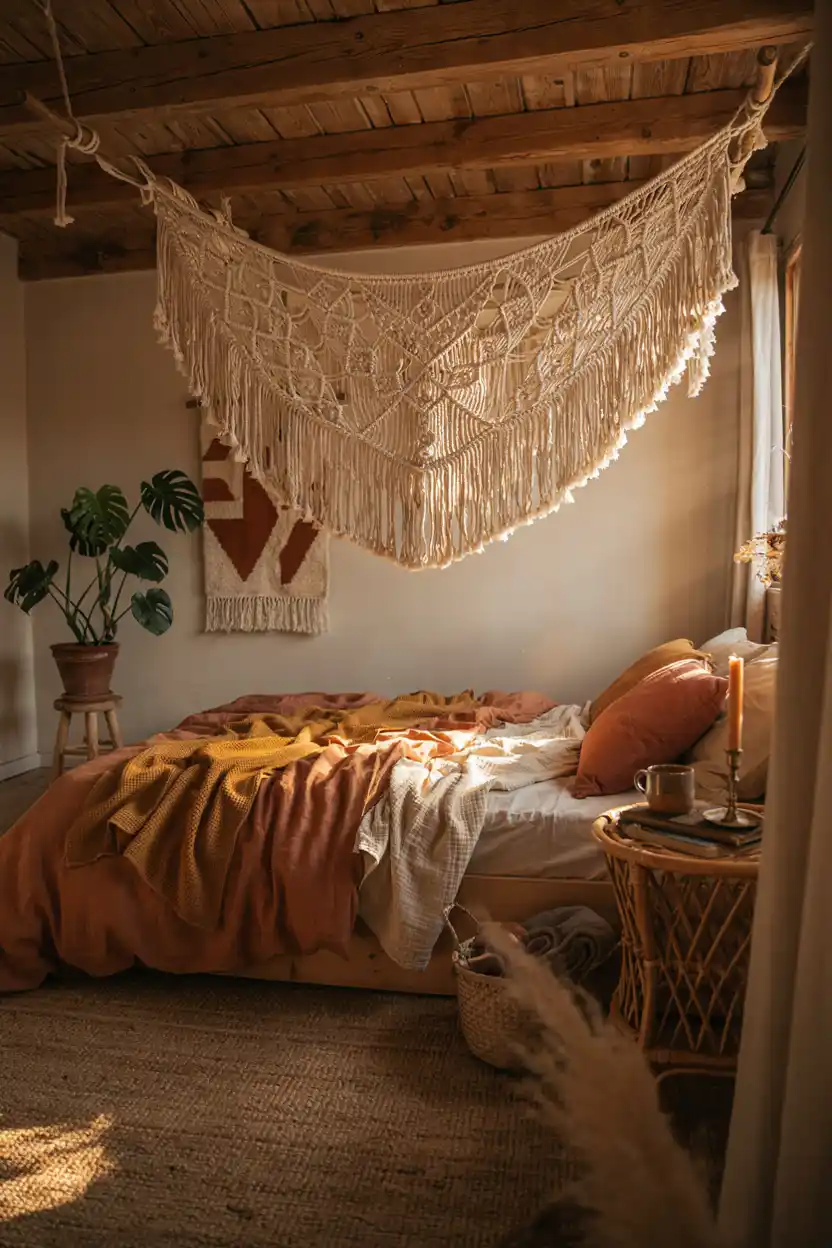
Instead of a full four-post structure, a macrame canopy hangs from a single ceiling hook above the headboard, making it one of the most affordable and renter-friendly canopy looks available.
The intricate rope knotwork adds texture and warmth, and it pairs naturally with rattan furniture, layered textiles, plants, and a warm, earthy colour palette that defines the boho aesthetic.
This is the ideal pick for renters, small bedrooms, and anyone who wants the canopy effect without installing a full bed frame or drilling into multiple points in the ceiling.
5. Classic White Four-Poster with Sheer Drapes
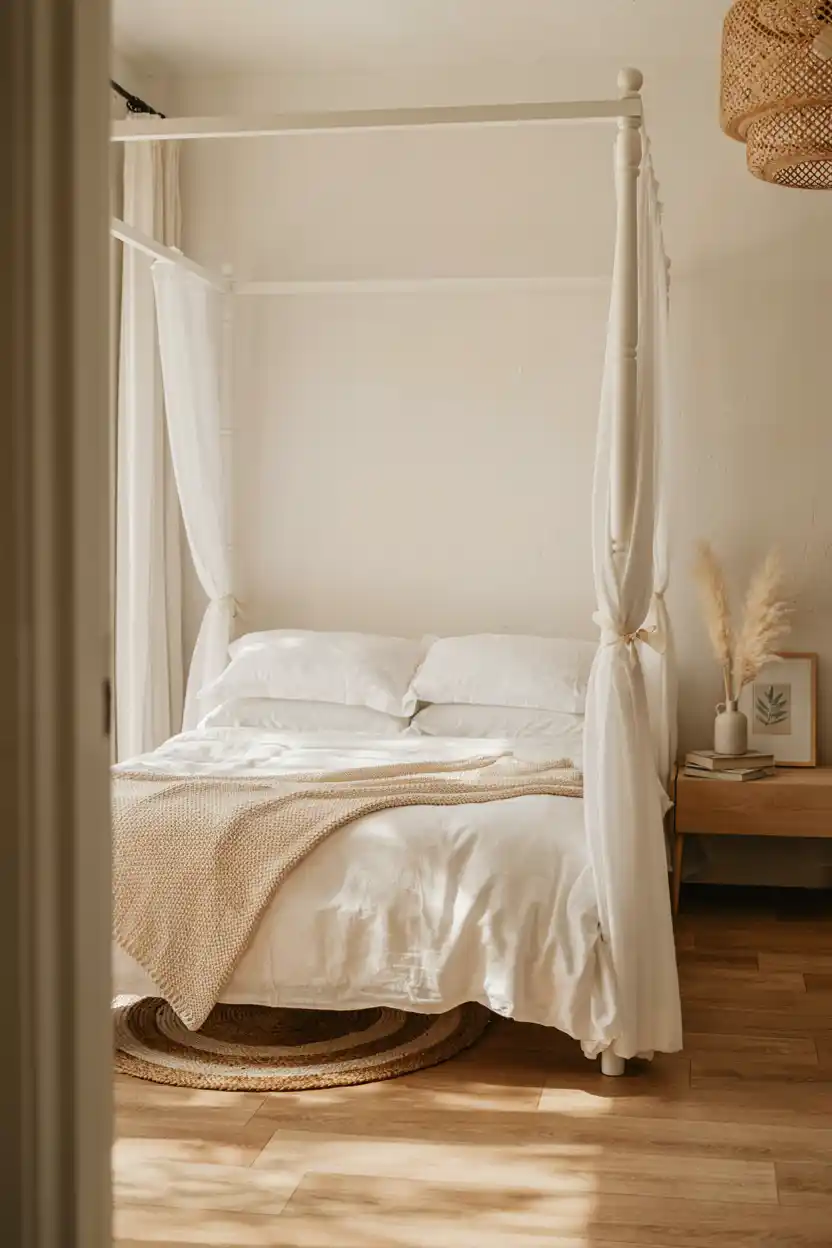
This is the quintessential canopy bed look — timeless, breezy, and endlessly versatile. The sheer drapes soften the room without blocking light, making it a great choice for anyone who wants romance without heaviness. It pairs beautifully with cottagecore, coastal, or classic farmhouse interiors.
This style works especially well in bedrooms with generous natural light, since the sheer fabric filters rather than blocks the sun. It’s best suited to homeowners who want a soft, feminine aesthetic and don’t mind occasionally washing or dusting the curtain panels.
6. Rustic Farmhouse Canopy Bed
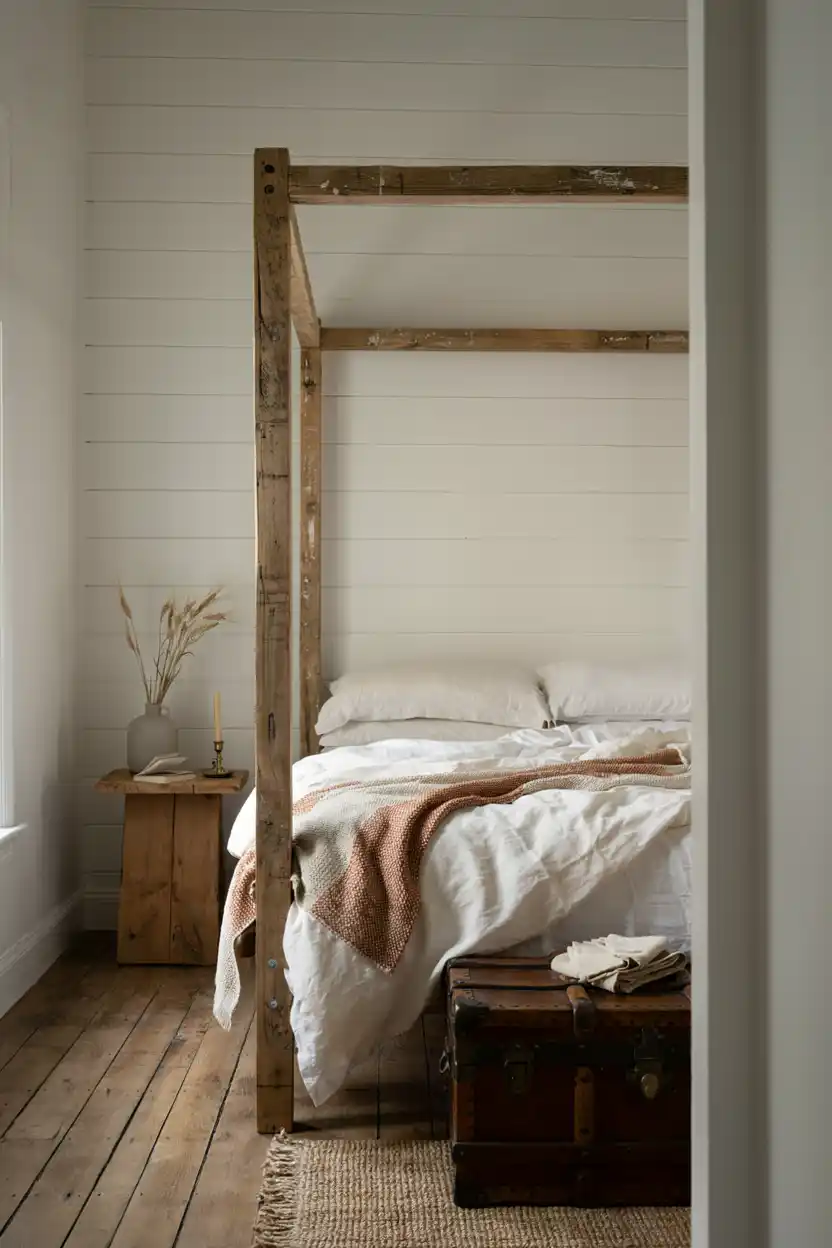
Reclaimed or whitewashed wood gives this canopy bed a lived-in, storied character that fits farmhouse, cottagecore, and country interiors far better than a polished modern frame would.
Lean into the theme with shiplap or board-and-batten walls, woven baskets, dried florals, and layered linen or waffle-weave bedding in warm neutral tones.
This idea works well for larger primary bedrooms in older homes, cabins, or farmhouse-style new builds where warmth and texture matter more than sleek lines.
7. Four-Poster Bed with Heavy Velvet Drapes
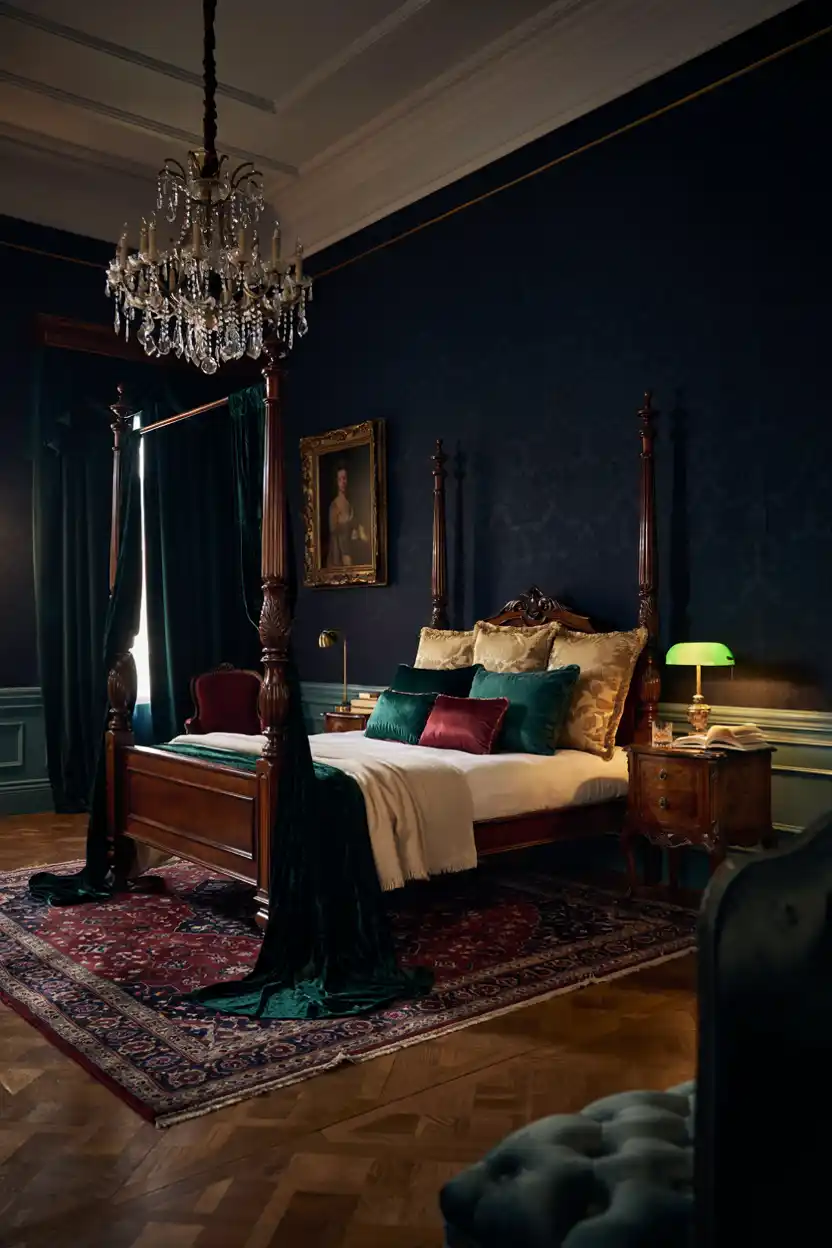
Heavy velvet drapes transform a canopy bed into a true statement piece, ideal for those who want a sense of old-world glamour. The fabric also adds sound and light dampening, which can help create a cozier, more enclosed sleeping space.
This idea works best in larger bedrooms with higher ceilings, since heavy drapes need room to hang properly. It’s a great pick for anyone drawn to maximalist or traditional design styles.
8. Upholstered Fabric Canopy Bed
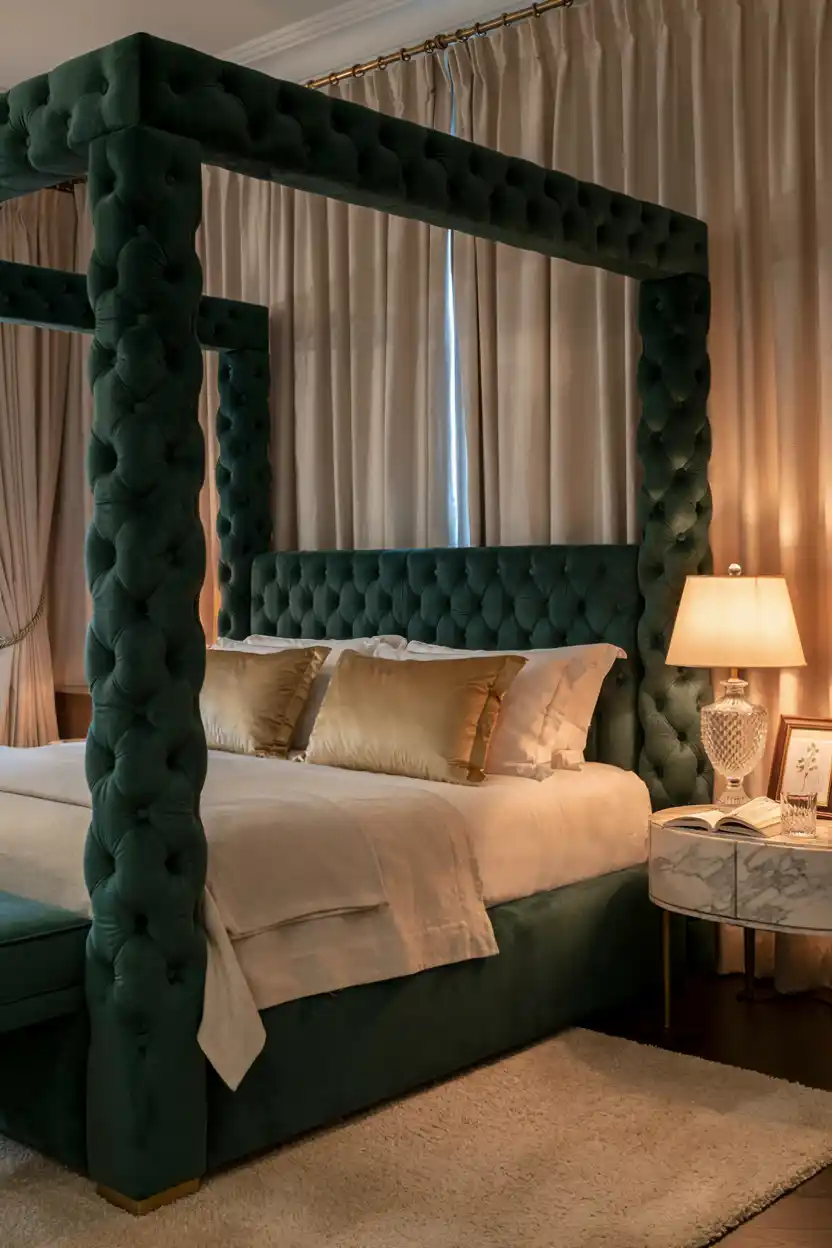
An upholstered canopy frame wraps the posts and headboard in padded fabric, usually velvet or linen, for a plush, hotel-suite feel that’s softer to the touch than wood or metal.
Rich jewel tones like emerald, navy, or burgundy paired with gold or brass hardware create a glamorous look, while soft gray or blush upholstery leans more contemporary and calming.
This style is ideal for primary bedrooms where comfort and softness are priorities, and for anyone building a cozy, upscale aesthetic rather than a strictly architectural one.
9. Canopy Bed as a Room Divider in a Studio
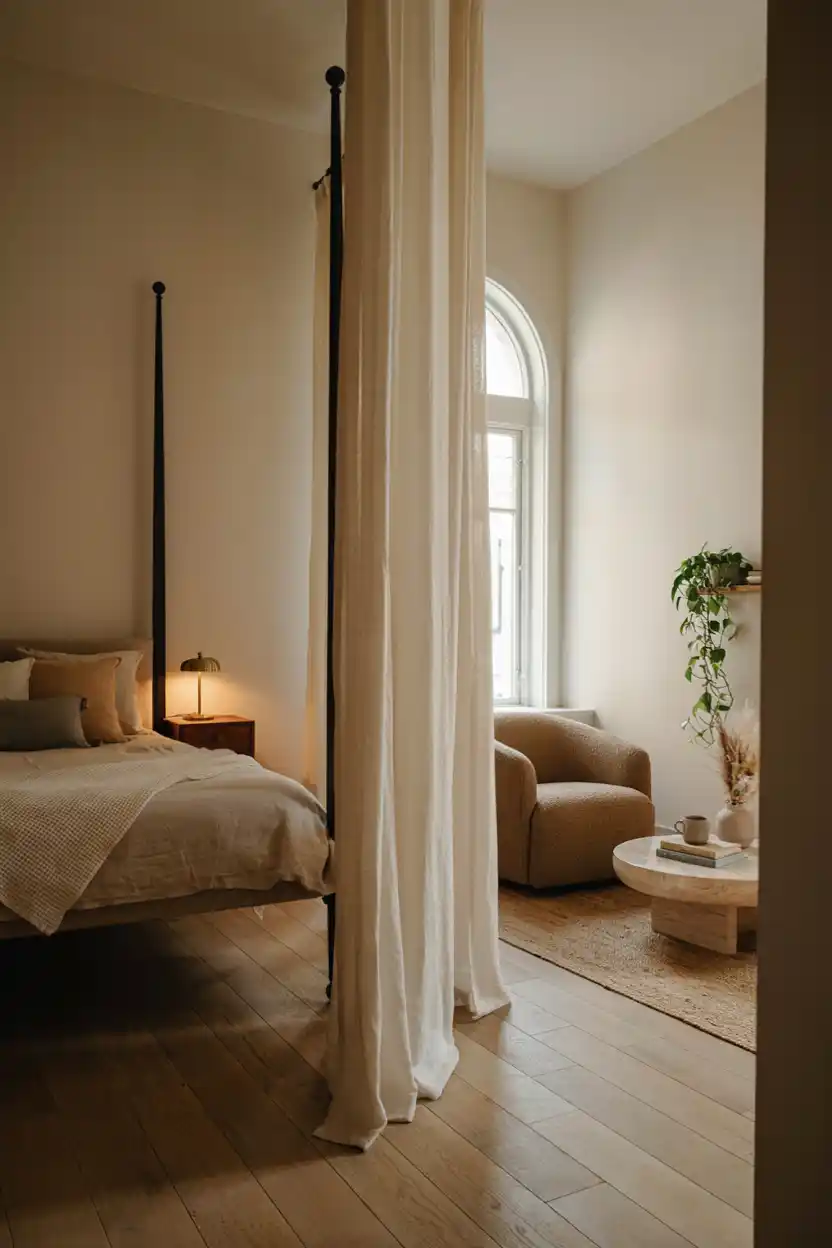
In small studio apartments, a canopy bed can double as a functional room divider, giving the sleeping area a sense of separation and privacy without adding walls.
This idea is ideal for studio or open-concept apartment dwellers who want to define their sleep space without permanent construction.
10. Coastal Driftwood Canopy Bed
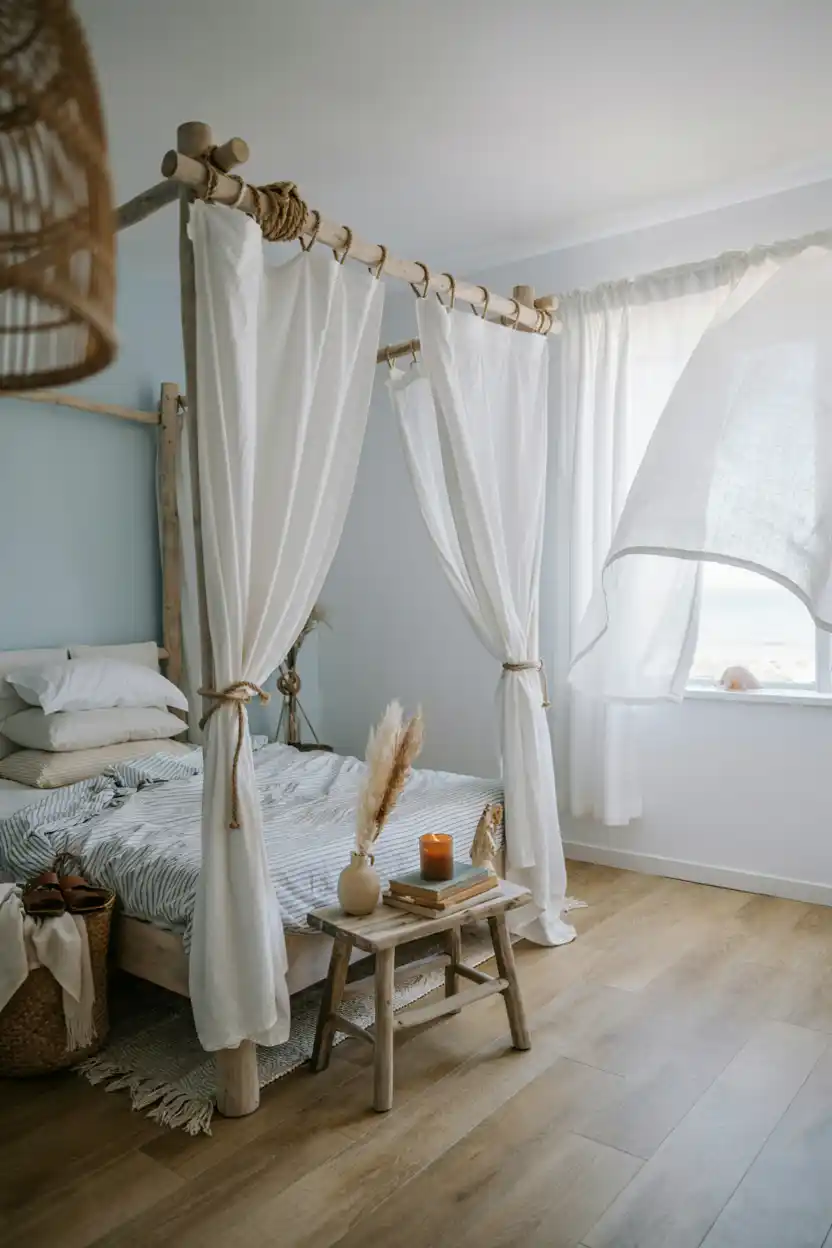
Bleached or whitewashed driftwood-toned posts paired with natural rope detailing bring a relaxed, beachy character that feels perfectly at home in coastal or vacation-style bedrooms.
Stick to a palette of white, sandy beige, and soft blue, and add texture through jute rugs, woven baskets, and linen curtains rather than heavy drapery.
This idea suits beach houses, guest rooms, and any bedroom aiming for a light, breezy, low-key vacation feel year-round.
11. Dramatic Black Canopy Bed
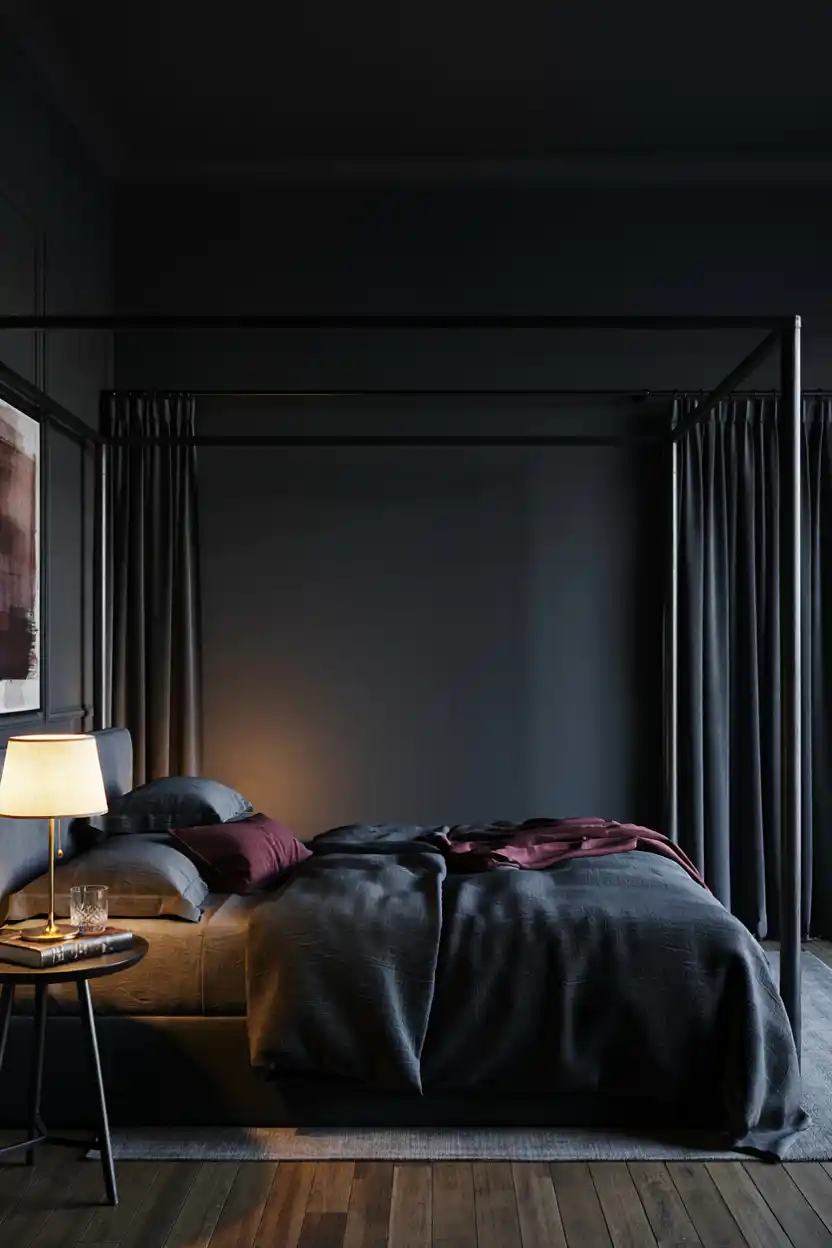
A black canopy frame instantly adds drama and makes a strong design statement, especially against dark or moody wall colours like charcoal, deep green, or navy.
Balance the boldness with warm metallic accents, like brass lamps or gold picture frames, and at least one warm light source so the room doesn’t feel cold or cave-like.
This look is best for confident design lovers with larger primary bedrooms, and it photographs beautifully for anyone building a dramatic, editorial-style interior.
12. Airy All-White Canopy Bed
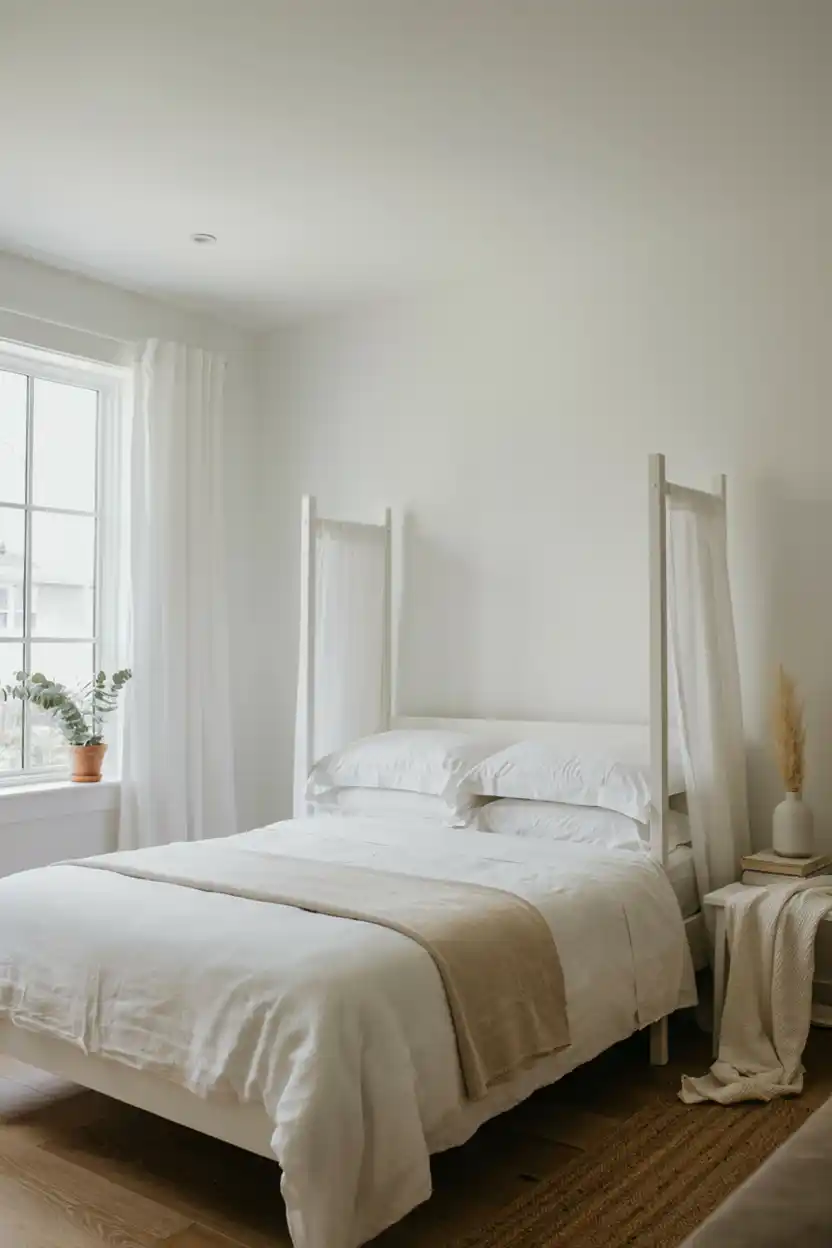
An all-white canopy frame paired with white drapery creates one of the brightest, most calming bedroom looks available, making small or dark rooms feel noticeably more open.
Because everything is tonal, texture becomes the main design tool: mix linen, waffle-weave cotton, and a bit of boucle to keep the room from feeling flat or sterile.
This is a strong choice for small bedrooms, rooms with limited natural light, and anyone who wants a serene, spa-like retreat rather than a bold statement piece.
13. Canopy Bed With Warm String Lights
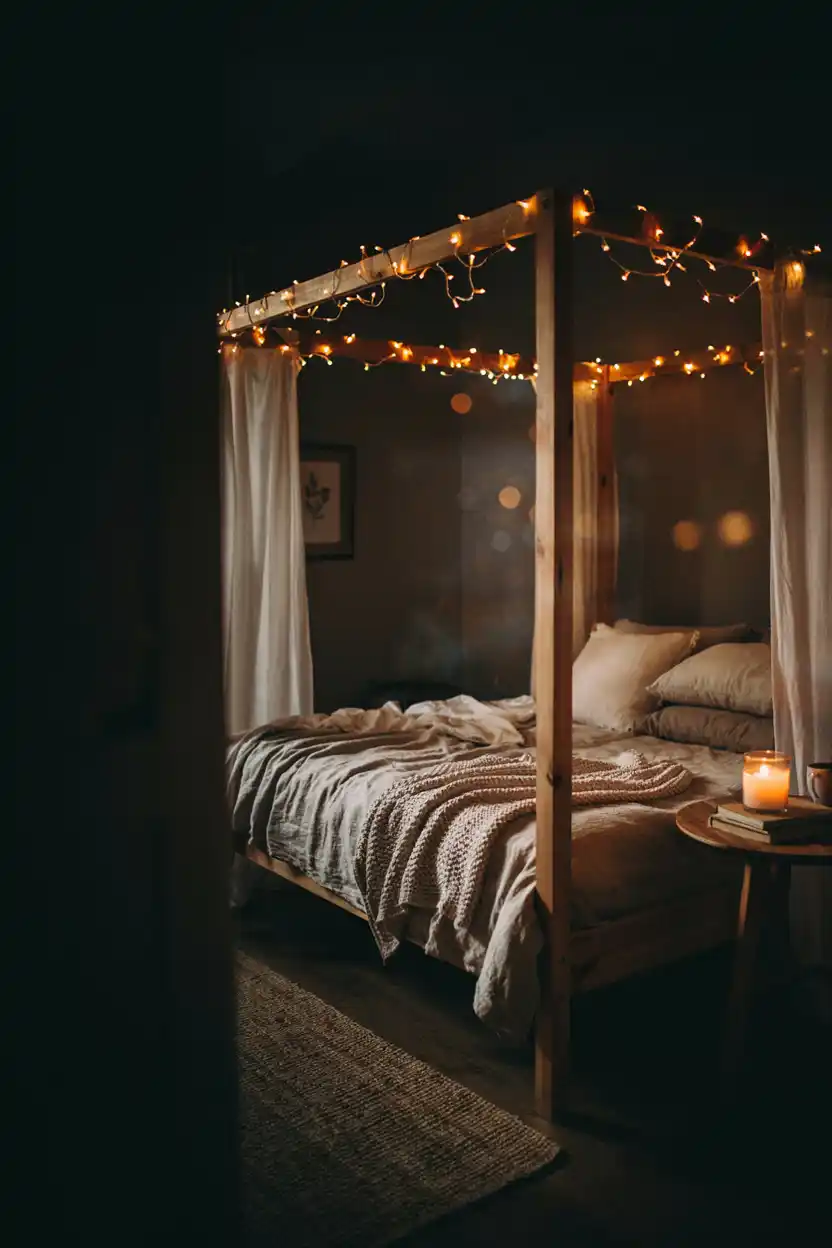
Wrapping warm white string lights along the top rail of any canopy frame instantly creates a cozy, twinkling ambiance that works beautifully as a nightly reading or wind-down light source.
Use battery-operated or USB-powered LED string lights rated for indoor use, and secure them with small adhesive clips rather than draping them loosely to avoid strain on the fabric or frame.
This idea works with almost any canopy style underneath it, and it’s especially popular in teen bedrooms, apartments, and among anyone wanting a low-cost way to upgrade an existing frame.
14. DIY PVC Pipe Canopy Frame
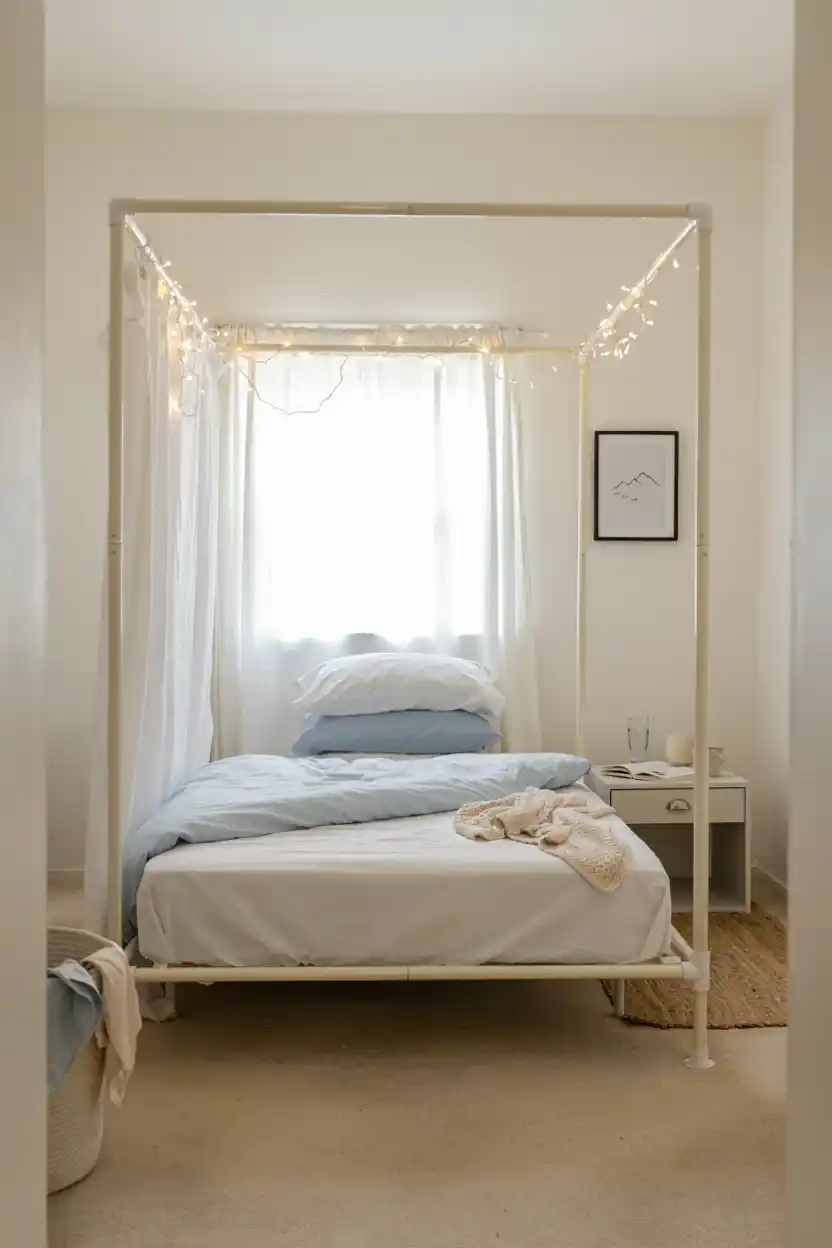
For renters and budget-conscious decorators, a canopy frame built from painted PVC pipe and simple joint connectors can replicate the look of a store-bought frame for a fraction of the price.
Spray-paint the pipes in matte black or white, sand the joints smooth, and drape lightweight curtain fabric over the top rail to hide any visible seams.
This project suits first apartments, dorm-adjacent living, and anyone comfortable with a weekend DIY build who wants canopy styling without the canopy-bed price tag.
15. Curtained Canopy Bed for Privacy
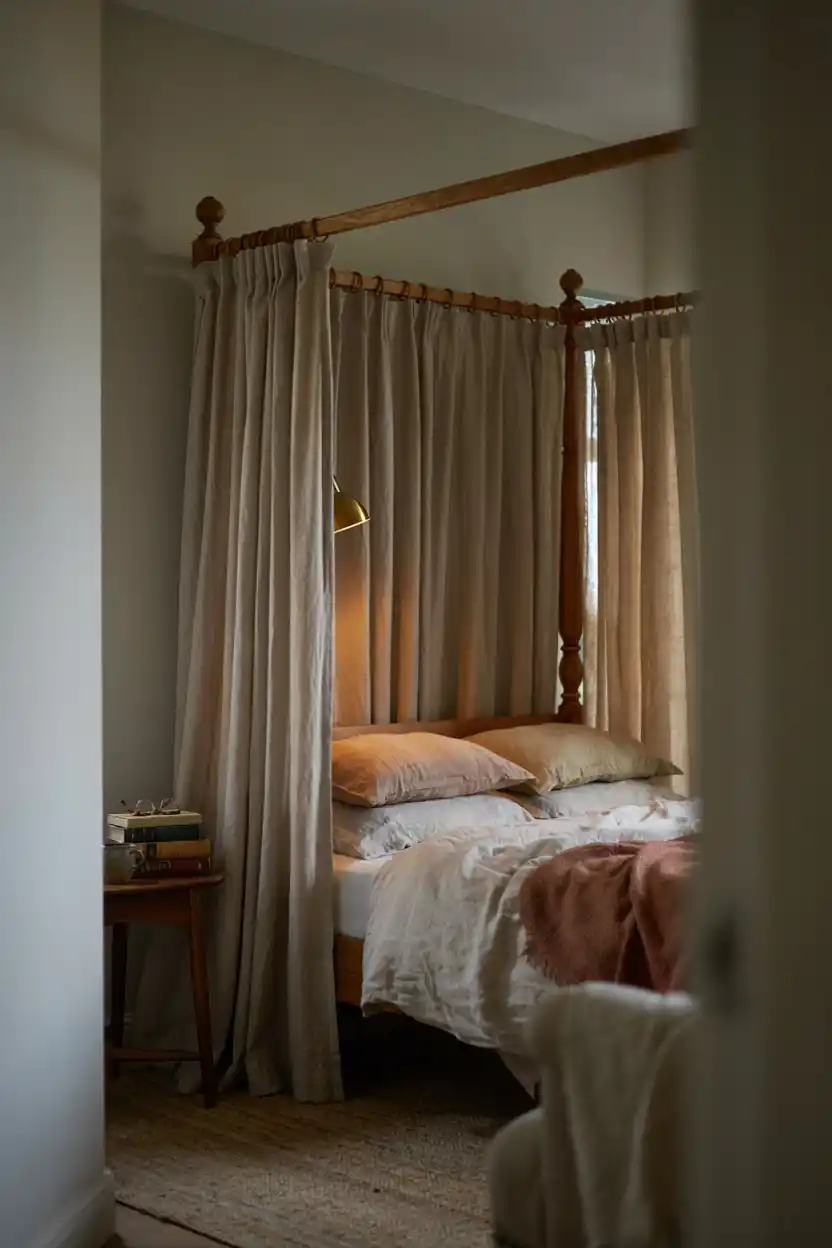
Unlike sheer decorative panels, this canopy setup uses thicker, fully closable curtains on all four sides, functioning almost like a private room within a room.
It’s especially useful for blocking early morning light, muffling sound, or adding privacy in shared bedrooms, studio apartments, or open-plan lofts without walls around the sleeping area.
This idea is best for light sleepers, shared living situations, and anyone who wants the option of true privacy and darkness on demand.
16. Canopy Bed with String Curtain Panels
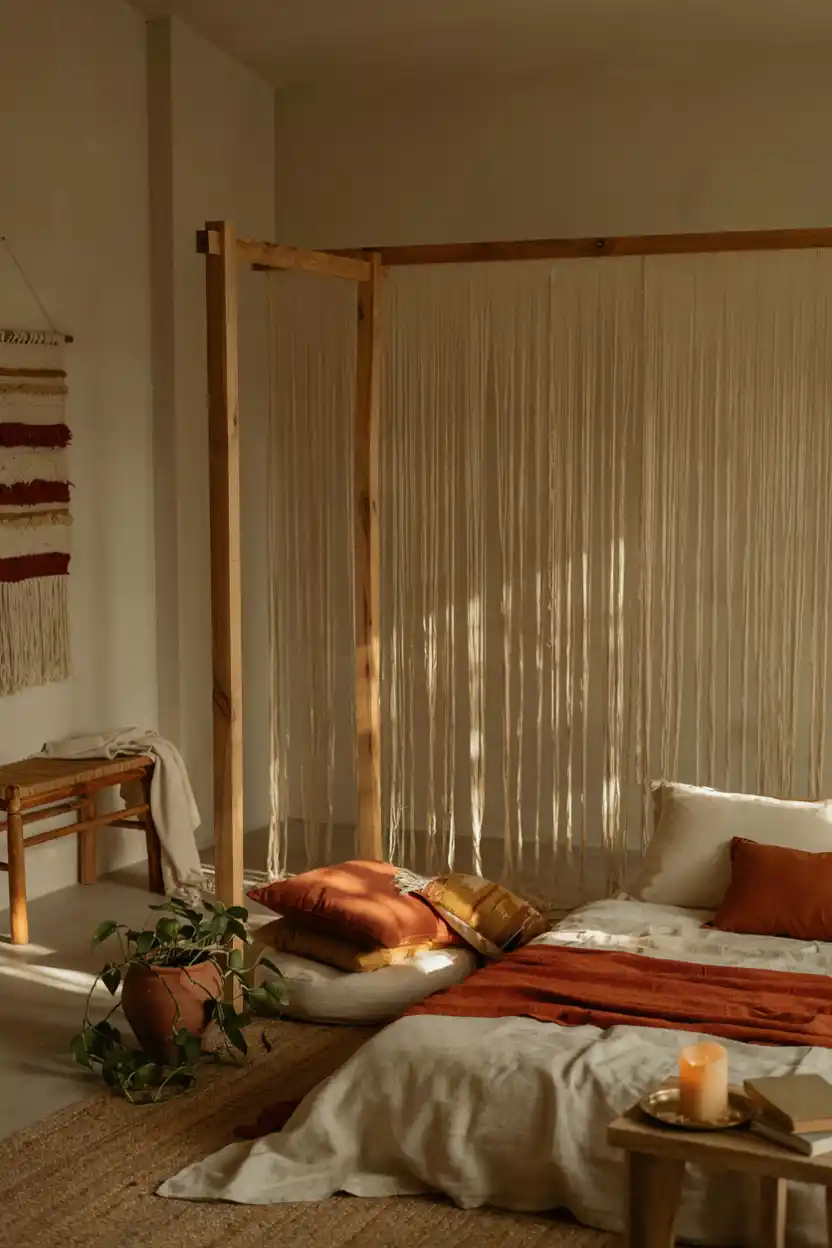
String curtains offer texture and movement while still letting in plenty of light and air, making them a nice middle ground between bare frames and heavy drapes.
This works well for boho or eclectic bedrooms in warmer climates, where airflow matters and a fully enclosed canopy might feel too stuffy.
17. Vintage Wrought-Iron Canopy Bed
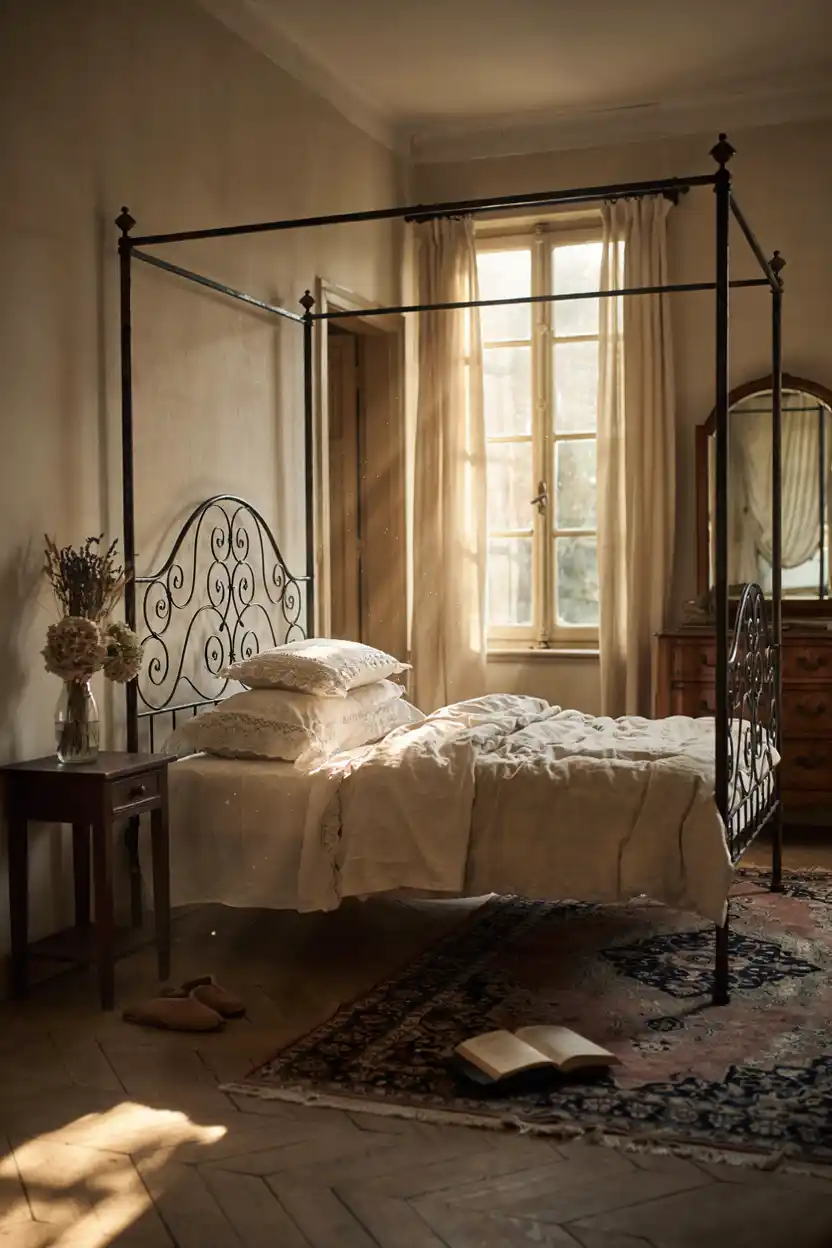
Wrought iron frames bring intricate detail and old-world charm without needing any fabric at all. The scrollwork itself becomes the decorative focal point.
This idea suits vintage, French country, or cottage-style bedrooms, and it’s a good pick for those who want ornamentation but not the maintenance of curtains.
18. Canopy Bed With Built-In Storage
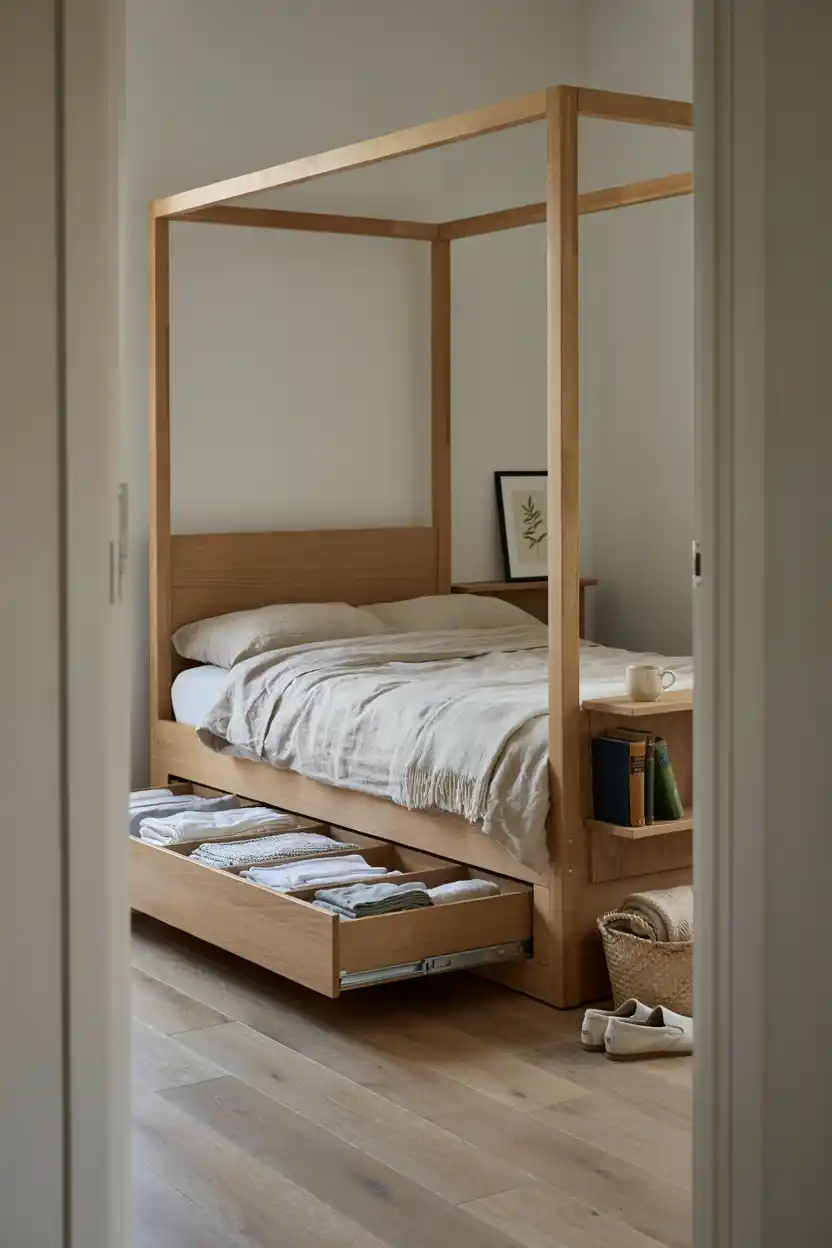
This canopy style solves one of the format’s biggest drawbacks, lack of storage, by integrating drawers or shelving into the base or lower posts of the frame.
It works well in bedrooms without room for a separate dresser, letting you keep the visual drama of a canopy bed while still gaining functional storage space.
This idea is ideal for smaller bedrooms, studio apartments, and anyone who needs a canopy bed to be practical as well as beautiful.
19. Outdoor Patio Canopy Daybed
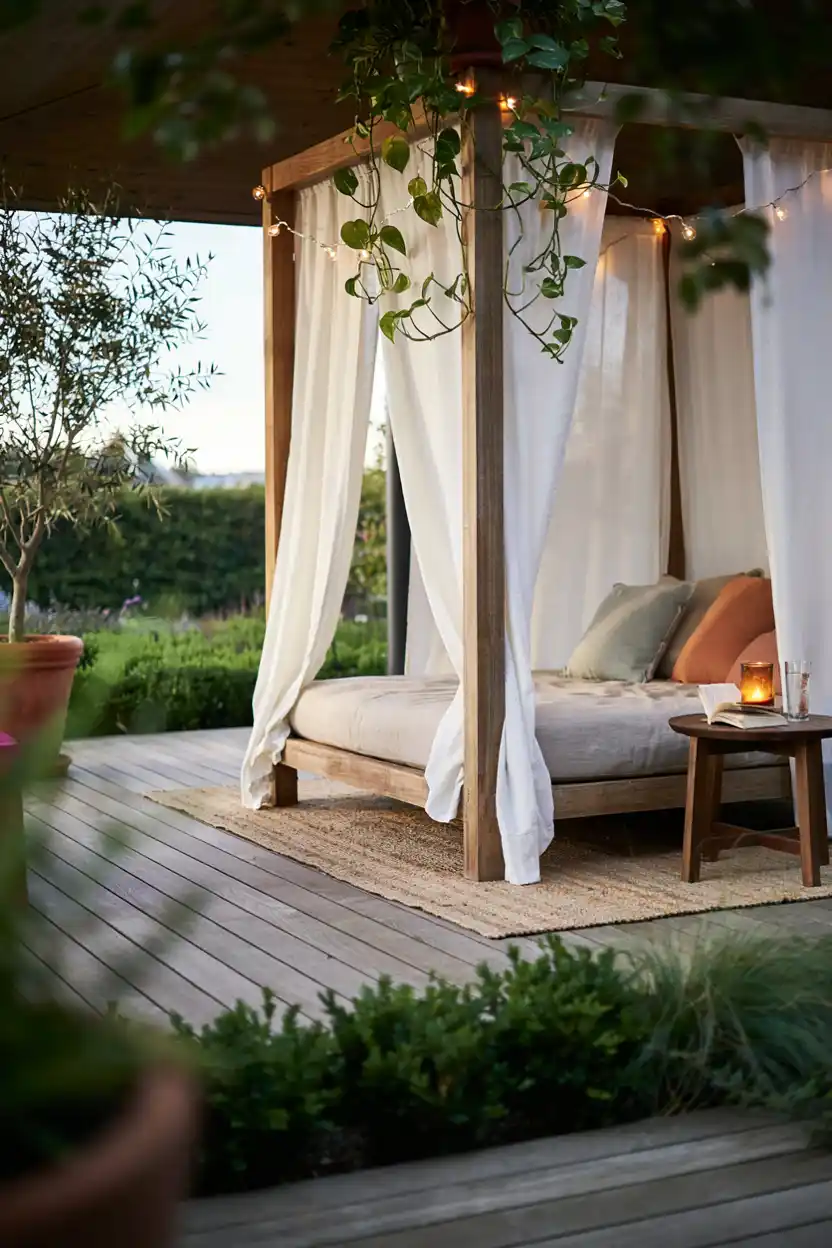
An outdoor canopy daybed brings the same dreamy, shaded look indoors furniture offers to a patio, deck, or garden nook, using weather-resistant fabric and finishes built for the elements.
Choose powder-coated aluminum or teak frames with mildew-resistant cushions and quick-dry outdoor fabric, and secure the canopy fabric so it doesn’t billow excessively in the wind.
This idea suits homeowners with a covered patio, garden, or poolside area who want a shaded lounging spot that doubles as a striking outdoor design feature.
20. Natural Bamboo and Rattan Canopy Bed
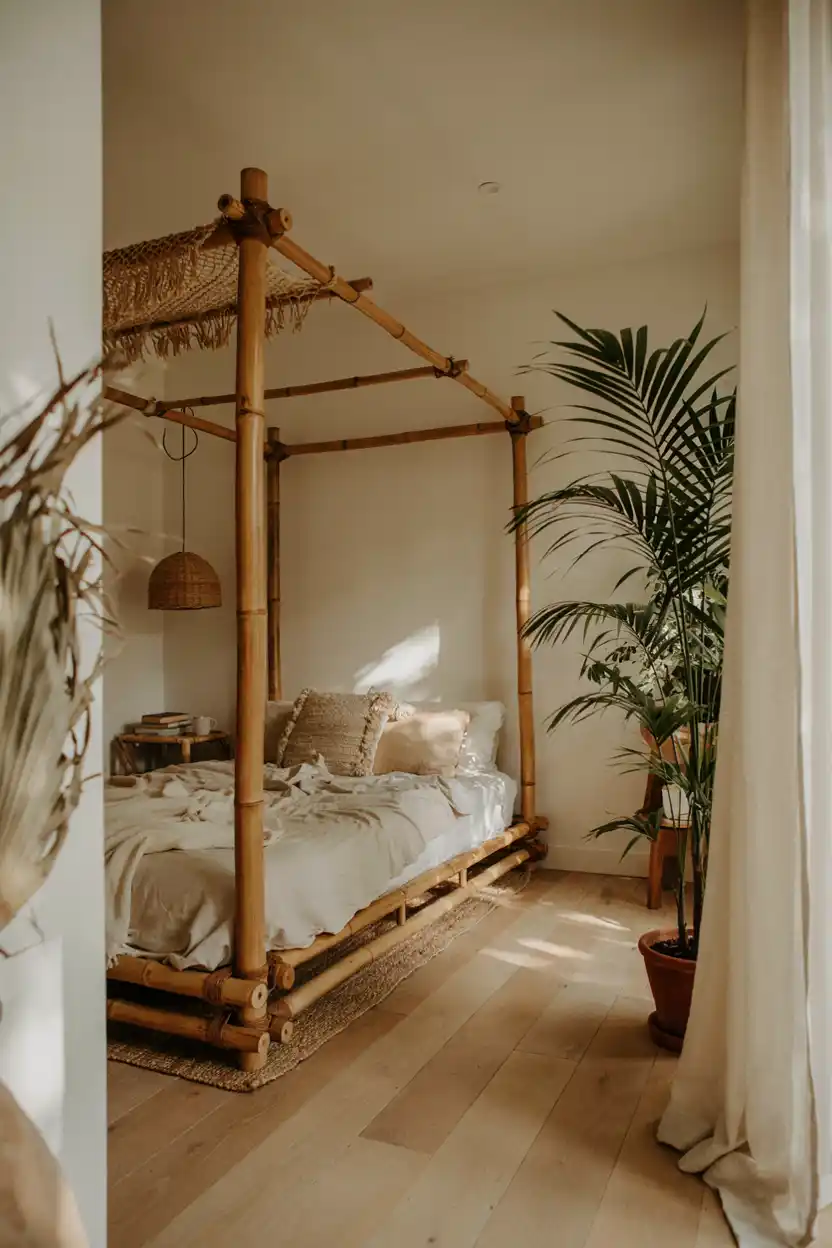
Natural bamboo poles and woven rattan detailing give this canopy bed an organic, resort-like texture that feels light and breathable, especially in warm climates.
Pair it with linen bedding, rattan lighting, and plenty of greenery to complete a relaxed, tropical, or Balinese-inspired bedroom look.
This style is a great fit for warm-climate homes, vacation properties, and anyone drawn to natural, textural materials over polished wood or metal.
21. Canopy Bed with Draped String Lights and Greenery Combo
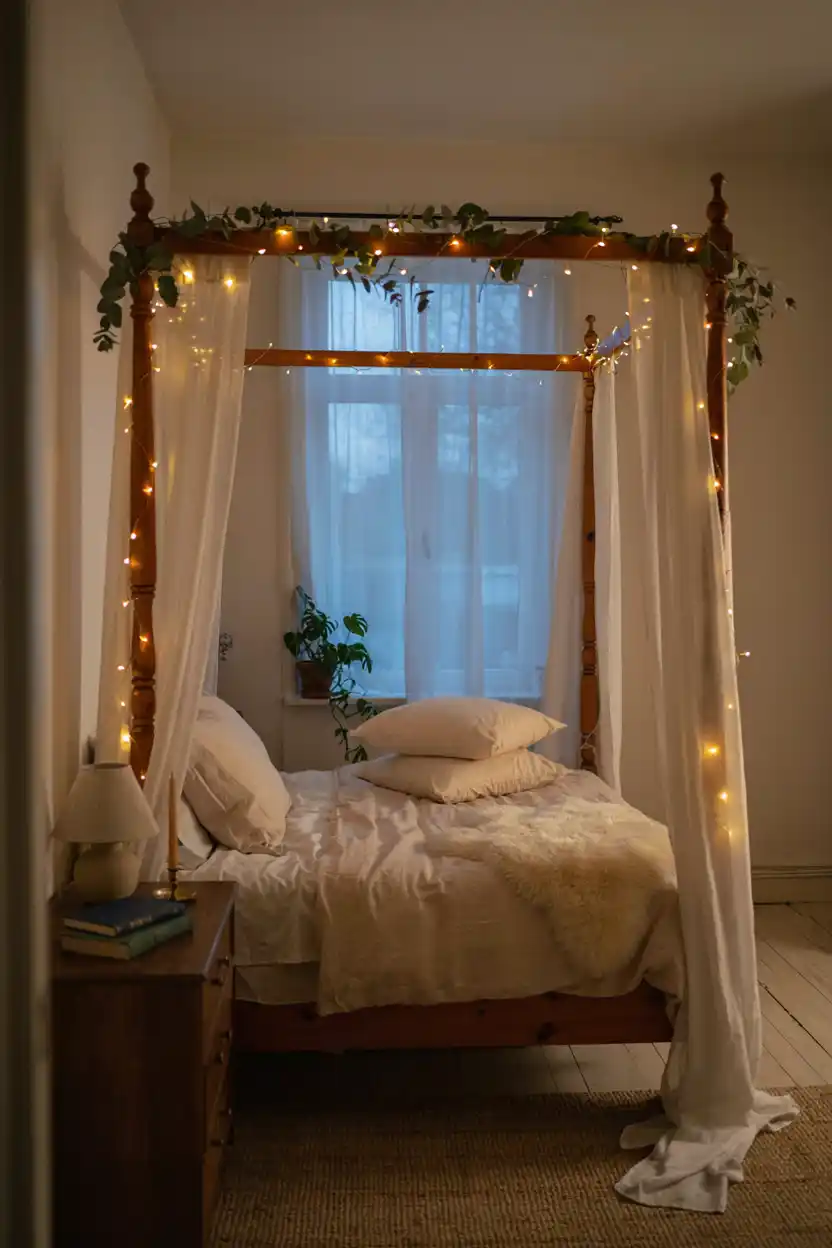
Combining several canopy styling elements — light fabric, lights, and greenery — creates a layered, personalized look that feels more curated than any single element alone.
This is a great option for anyone who loves a cozy, Pinterest-inspired bedroom and doesn’t mind a bit more upkeep to maintain the layered look.
22. Canopy Bed with Mosquito-Net Style Drapes
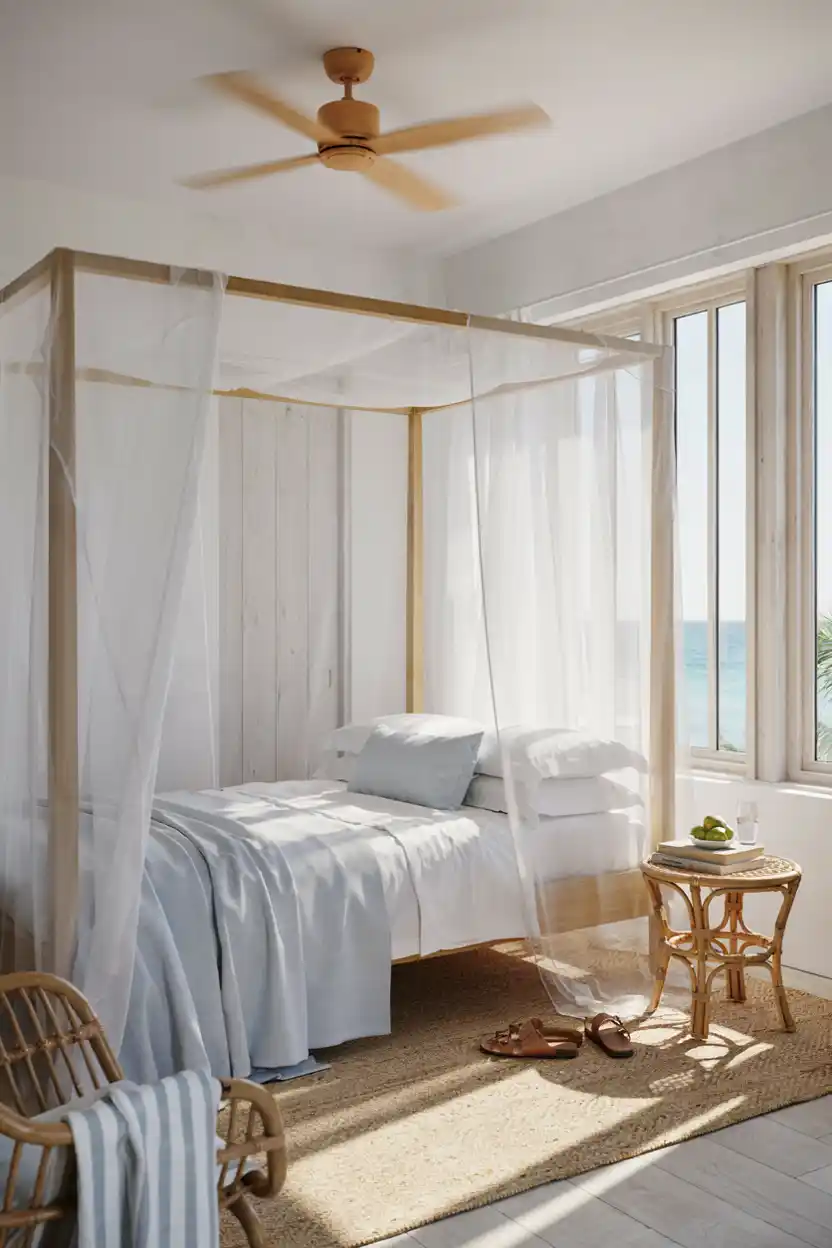
This style borrows from tropical resort design, using lightweight netting for both looks and function. It’s especially popular in warm climates where bugs are a real consideration.
This is a great fit for coastal or tropical-themed bedrooms, and it’s genuinely practical for anyone in a warmer region who wants a functional, breathable canopy.
Planning and Buying Tips
Measure Your Ceiling Height First
Most canopy bed frames stand between 74 and 86 inches tall. Measure your ceiling height and subtract the frame height; you’ll want at least 12 inches of clearance above the frame for the room to feel comfortable rather than cramped, especially in rooms with ceilings under 8 feet.
Check Floor Space and Walking Clearance
Canopy frames take up more visual and physical footprint than a standard bed because of the corner posts. Leave at least 24 to 30 inches of clearance on each side you’ll walk around regularly, and measure doorways if the frame needs to be carried in fully assembled.
Confirm Assembly and Anchoring Needs
Heavier wood and metal four-poster frames often require two people to assemble and may need to be anchored to a wall stud for stability, particularly in homes with children or pets. Lightweight canopy toppers or macrame hangs typically only need a single ceiling anchor point rated for the fabric’s weight.
Standard Sizing to Shop For
Canopy beds are sold in the same sizing as standard mattresses: twin, full, queen, king, and California king, but always double-check the frame’s total footprint (including posts) against your room dimensions rather than just the mattress size, since posts typically add 4 to 8 inches beyond the mattress edge on each side.
Cost Breakdown
Canopy bed prices vary widely based on material, size, and how much of the frame is decorative versus structural. Here’s a realistic breakdown by tier.
Budget: $150 – $400
Includes basic metal frames, PVC or simple wood canopy toppers, and flat-pack assembly. Installation is typically DIY with basic tools; no professional help is needed.
Mid-Range: $400 – $1,200
Covers solid wood four-posters, better hardware, and upholstered accents. Some assembly complexity increases, and heavier frames may benefit from professional or two-person assembly (add $50–$150 if hiring help).
Luxury / Premium: $1,200 – $4,000+
Includes hand-carved solid wood, wrought iron with custom finishes, fully upholstered velvet frames, or designer collaborations. Often requires professional delivery and assembly, adding $100–$300, plus potential wall-anchoring work.
Materials and Options Comparison
| Material / Type | Price Range | Durability | Best For |
| Solid Wood (oak, walnut) | $500 – $2,500+ | Excellent, lasts decades | Traditional, farmhouse, transitional styles |
| Metal (iron, steel) | $150 – $900 | Very good, resists warping | Modern, industrial, minimalist bedrooms |
| PVC / DIY Frame | $30 – $150 | Fair, best as a temporary solution | Renters, budget or first-apartment setups |
| Upholstered Frame | $700 – $3,000+ | Good, fabric may wear or stain over time | Glam, luxury, and cozy transitional styles |
| Bamboo / Rattan | $250 – $1,000 | Moderate, sensitive to humidity | Coastal, tropical, and boho interiors |
| Macrame / Fabric-Only Canopy | $25 – $200 | Fair, fabric needs regular washing | Boho rooms, renters, small bedrooms |
Maintenance Tips
- Dust the top rail and posts weekly with a microfiber cloth; dust tends to settle heavily on horizontal canopy frames.
- Wash sheer or lightweight canopy curtains every 4 to 6 weeks on a gentle cycle, or spot-clean heavier drapery fabric.
- Tighten bolts and joint connections every few months, especially on metal pipes or flat-pack wood frames that can loosen with regular use.
- Keep wood frames out of direct, prolonged sunlight to prevent fading or warping, and use furniture wax or oil annually on solid wood posts.
- For string lights, inspect wiring periodically and avoid overloading a single outlet or leaving lights on unattended overnight.
Frequently Asked Questions
What is the point of a canopy bed?
A canopy bed adds architectural height and a decorative focal point to a bedroom, and it can also support fabric, netting, or lights for added privacy, softness, or ambiance.
Do canopy beds need a box spring?
Most modern canopy bed frames include slats and do not require a box spring, but it’s worth checking the manufacturer’s specifications since some traditional frames are designed with a box spring in mind.
How much ceiling clearance do I need for a canopy bed?
Aim for at least 12 inches of clearance between the top of the canopy frame and your ceiling so the bed doesn’t visually overwhelm the room, especially in spaces with 8-foot ceilings.
Are canopy beds hard to assemble?
Lightweight metal or PVC frames are usually simple enough for one person to assemble in under an hour, while solid wood four-posters are heavier and typically require two people and about two to three hours.
Can you put a canopy bed frame in a small bedroom?
Yes, a slim metal frame, a macrame canopy hung from a single ceiling hook, or a minimalist wood frame without drapery are all good options for smaller rooms since they add less visual bulk than a fully draped four-poster.
How to Choose the Right Canopy Bed for You
With 21 different directions to choose from, the right canopy bed idea really comes down to three things: how much space and ceiling height you’re working with, your budget, and the mood you want the room to have. If you’re short on space, lean toward a slim metal frame or a single-point macrame hang. If budget is the priority, a painted PVC frame or basic metal option delivers the look for a fraction of the cost of solid wood or upholstery. And if you’re designing your dream primary bedroom with no constraints, a fully upholstered or wrought-iron statement frame will give you the most dramatic payoff. Whichever direction you choose, a canopy bed is one of the few furniture pieces that can single-handedly change how an entire room feels. Ready to bring one of these looks home? Start by measuring your space, pick your material from the comparison table above, and choose the style that matches your bedroom’s personality.


- Be Respectful
- Stay Relevant
- Stay Positive
- True Feedback
- Encourage Discussion
- Avoid Spamming
- No Fake News
- Don't Copy-Paste
- No Personal Attacks
- Be Respectful
- Stay Relevant
- Stay Positive
- True Feedback
- Encourage Discussion
- Avoid Spamming
- No Fake News
- Don't Copy-Paste
- No Personal Attacks
