18 Cottage Kitchen Ideas That Turn a Plain Kitchen Into a Charming Retreat
Published: 19 Aug 2026
There’s a reason cottage kitchen ideas keep showing up on every mood board: the style takes the warmth of a countryside cottage and makes it work in real homes, whether that’s a century-old farmhouse or a modern suburban build. If your kitchen feels sterile, dated, or as if it belongs to no one in particular, cottage style solves that with soft colour, natural materials, and small, personal details that are easy to add gradually.
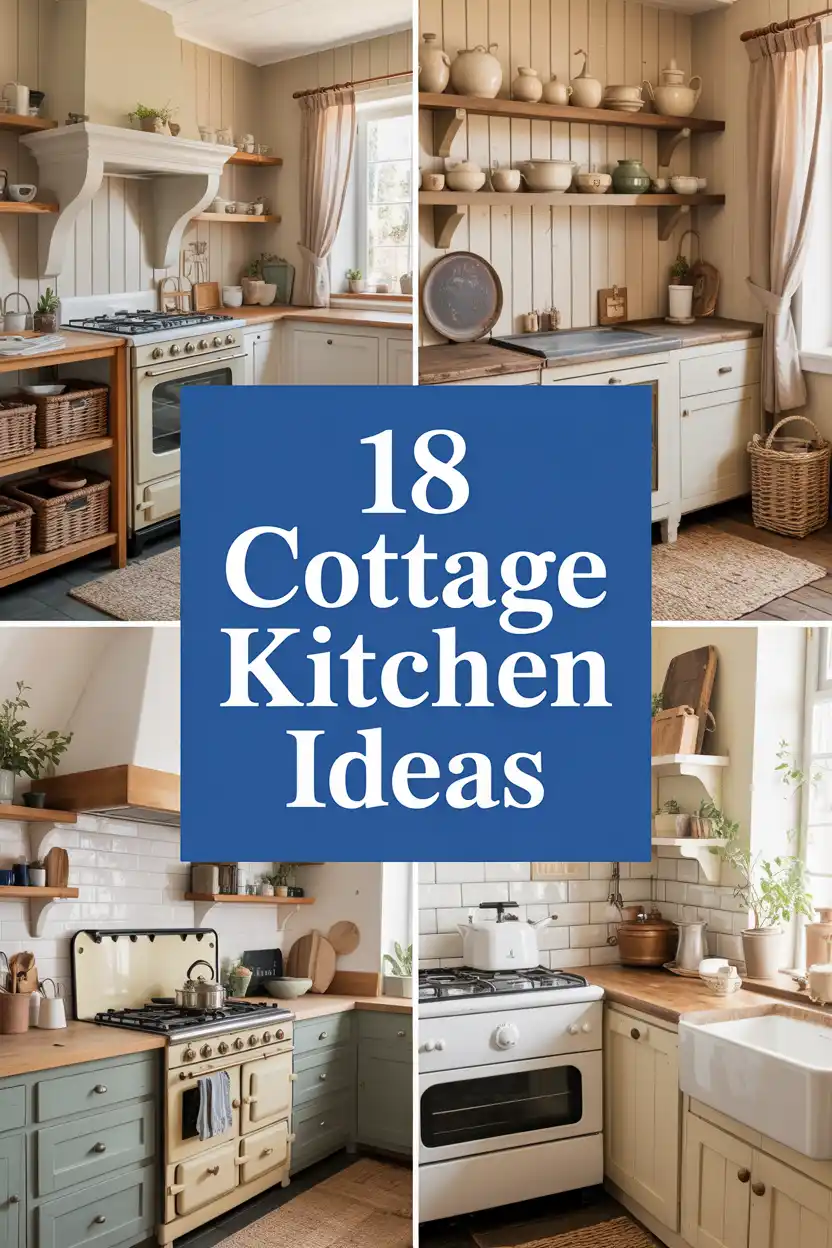
This guide walks through 18 cottage kitchen ideas, from farmhouse sinks and open shelving to lighting, flooring, and storage, along with the planning, cost, and maintenance information you actually need to pull the look off. Whether you’re refreshing a rental with curtains and hardware or planning a full remodel, there’s an idea here for every budget.
Is Cottage Kitchen Style Right for You?
Cottage style has real strengths, but it isn’t the right fit for every home or every homeowner. Consider these factors before committing to the look.
- Cost: Many cottage elements, like hardware, curtains, and open shelving, are inexpensive, but signature features like a farmhouse sink, range cooker, or new flooring add up quickly in a full remodel.
- Space: The style works in both small and large kitchens, but open shelving and vintage collections need a household willing to keep things tidy, since clutter is more visible than when things are behind closed cabinets.
- Maintenance: Natural materials like butcher block, unlacquered brass, and woven baskets look better with age but do require more regular care than low-maintenance modern finishes.
- Long-term value: Cottage style has stayed popular for decades and tends to appeal broadly to buyers, making it a safer long-term investment than more trend-driven looks.
If you like the idea of a lived-in, personal kitchen and don’t mind a little upkeep, cottage style is a strong fit. If you prefer sleek, low-maintenance surfaces and minimal visual clutter, you may want to borrow just a few cottage accents rather than committing to the full look.
1. A Classic Farmhouse Sink as the Centrepiece
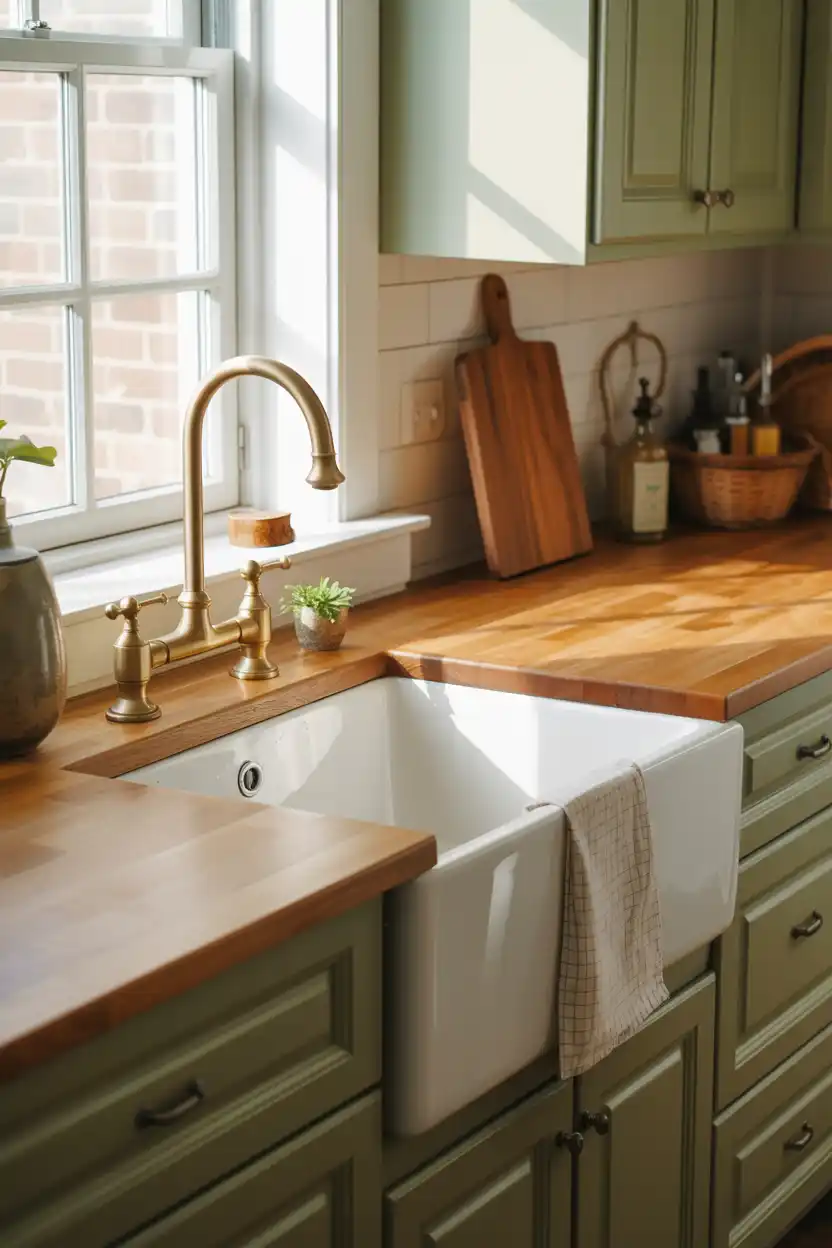
A deep, apron-front farmhouse sink is one of the fastest ways to anchor a cottage kitchen. The exposed front panel gives the room an old-world, handmade feel, while the generous basin makes it genuinely useful for washing produce, soaking pots, or bathing a small dog. Pair it with a gooseneck or bridge faucet in brass or matte black for contrast against a white or cream basin.
This idea works best for homeowners doing a full or partial counter replacement, since most farmhouse sinks require a specific cabinet base and cutout. It suits anyone who wants a functional focal point rather than a purely decorative upgrade, and it pairs beautifully with butcher block, soapstone, or tiled countertops.
2. Open Shelving Styled with Vintage Dishware
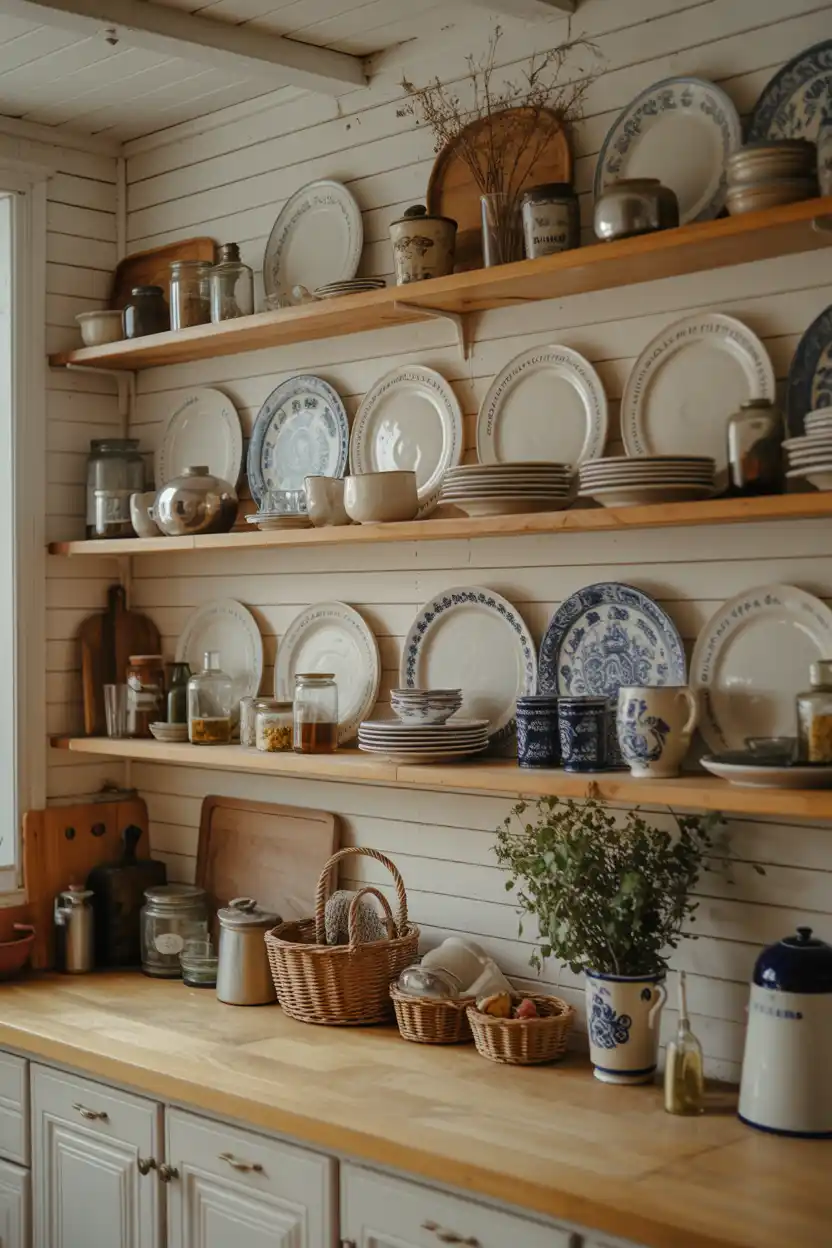
Swapping upper cabinets for open shelving instantly opens up a small kitchen and gives collectors a place to show off inherited or thrifted dishware. Stack plates by colour, lean a few in wooden plate racks, and mix in glass canisters, dried florals, or a small potted herb for texture.
Open shelving suits people who already keep a tidy kitchen, since everything on display is visible when it’s dusty or cluttered. It’s a low-cost update, especially if you’re simply removing existing cabinet doors, and it works well for renters who want a big visual change without permanent renovation.
3. Beadboard Cabinetry for Cottage Texture
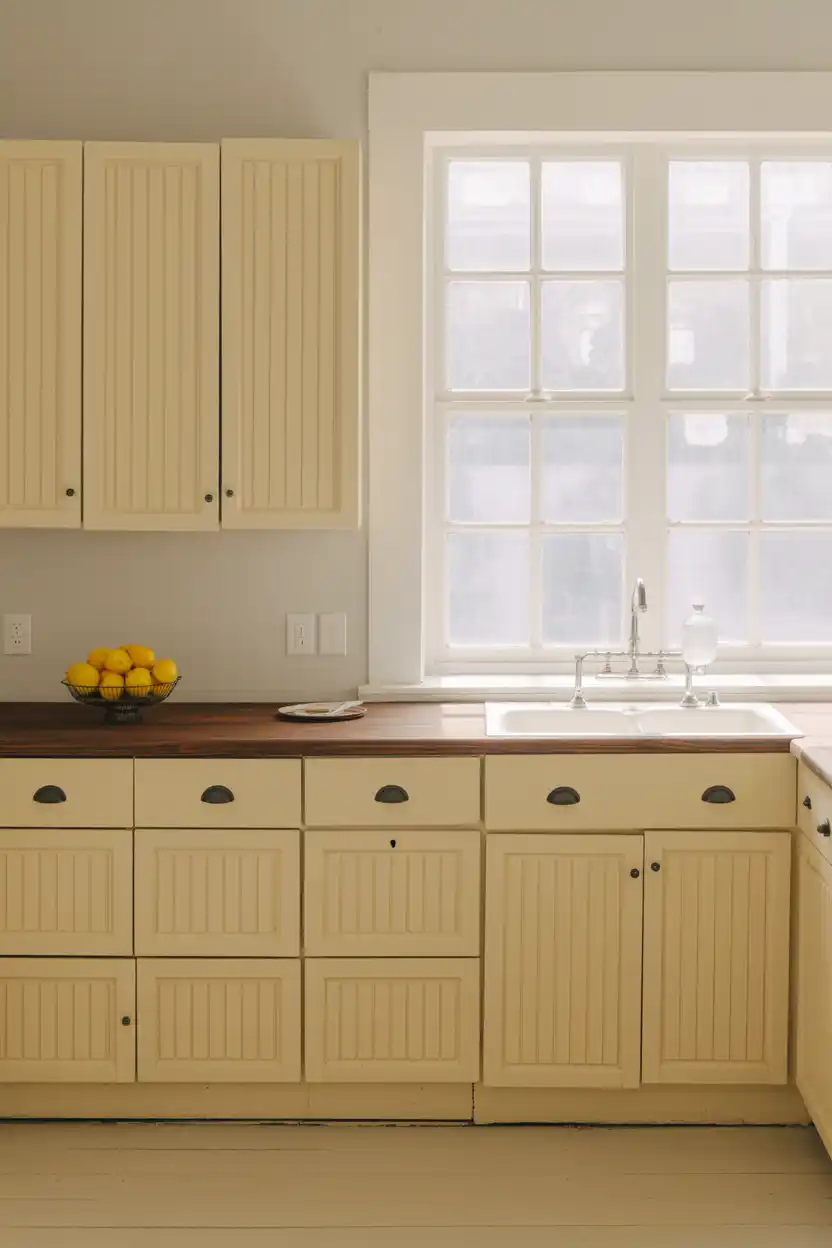
Beadboard panelling on cabinet doors, kick plates, or a kitchen island adds the grooved, cottage-style texture that flat modern cabinetry lacks. Painted in soft cream, sage, or dove grey, beadboard reads as classic without feeling dated, especially when paired with simple black or brass hardware.
This is a strong option for a mid-range remodel where you’re replacing cabinet fronts rather than the whole kitchen structure. It’s best suited to homeowners who want a distinctly cottage or coastal-cottage look rather than a farmhouse-industrial mix.
4. Warm Butcher Block Countertops
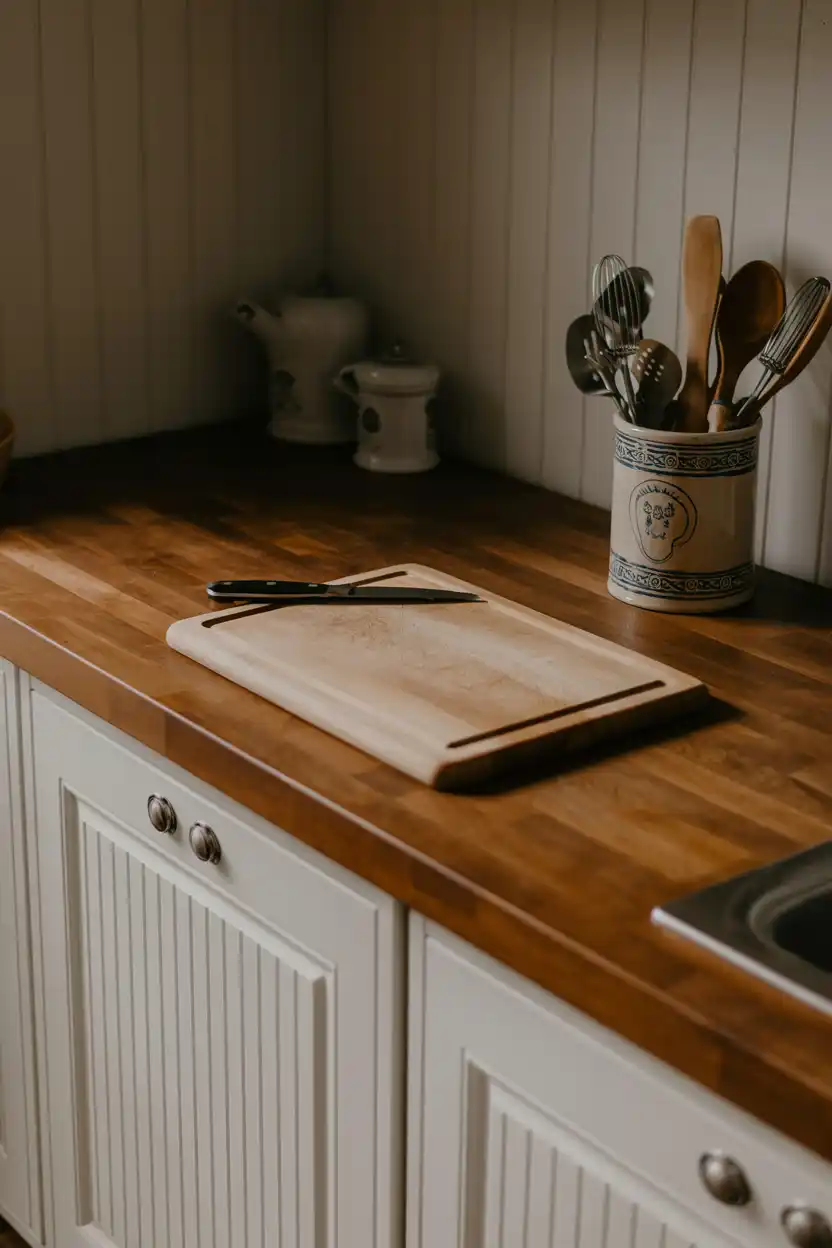
Butcher block brings warmth that stone counters can’t match, and it’s one of the most budget-friendly ways to get a custom, high-end look. Oiled regularly, the wood develops a rich patina that suits the slightly imperfect, lived-in character of cottage style.
It’s best suited to households that don’t mind periodic maintenance, since butcher block needs re-oiling every few months and isn’t as heat- or water-resistant as stone. For a busy family kitchen, consider it only for the island top, with a more durable material on the main counters.
5. Vintage-Inspired Pendant Lighting
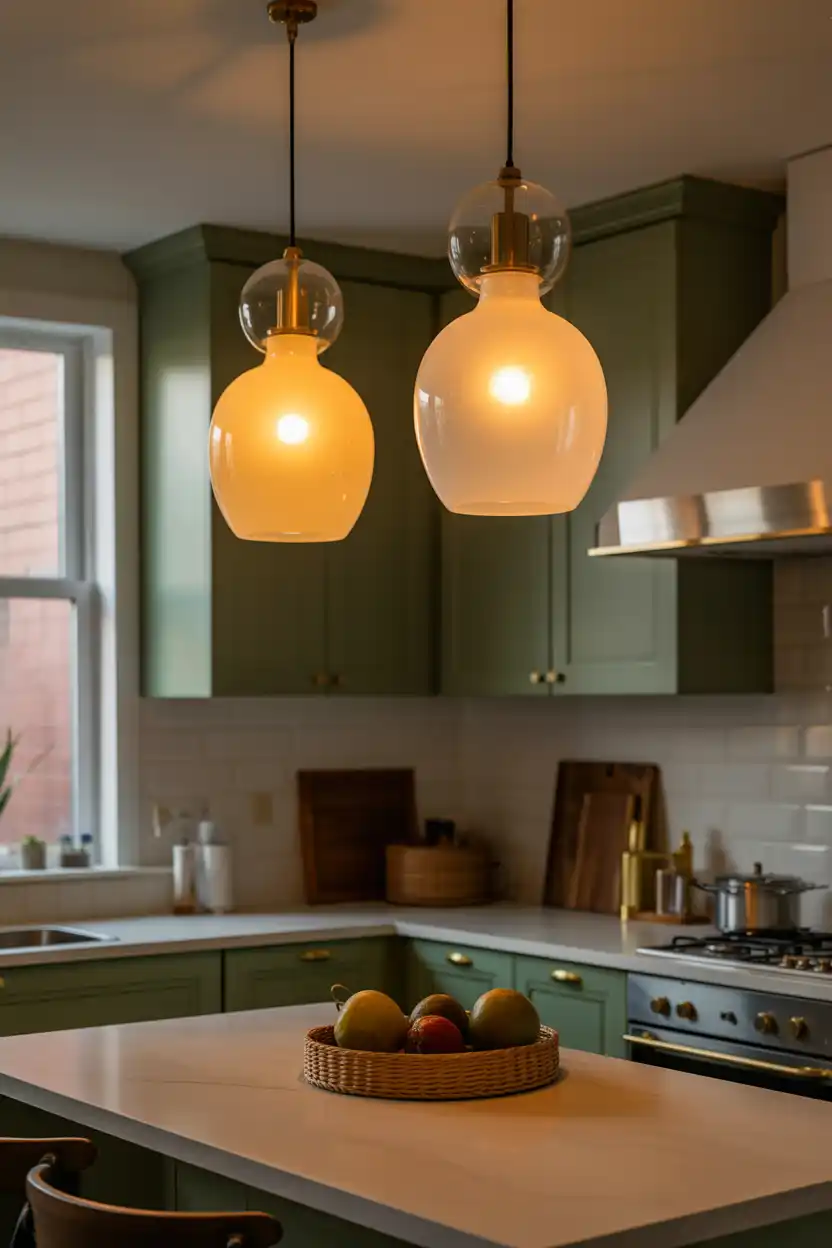
Swapping recessed lighting for a pair of vintage-style pendants over the sink or island is one of the highest-impact, lowest-cost cottage kitchen updates. Milk glass, ribbed amber glass, or woven rattan shades all read as cottage without looking costume-y.
This idea is ideal for anyone not ready for a full remodel, since it usually requires only an electrician’s afternoon or a simple swap if the wiring is already in place. It works in kitchens of any size, though pendant scale should match island length so the fixtures don’t look lost or crowded.
6. A Soft Pastel Colour Palette
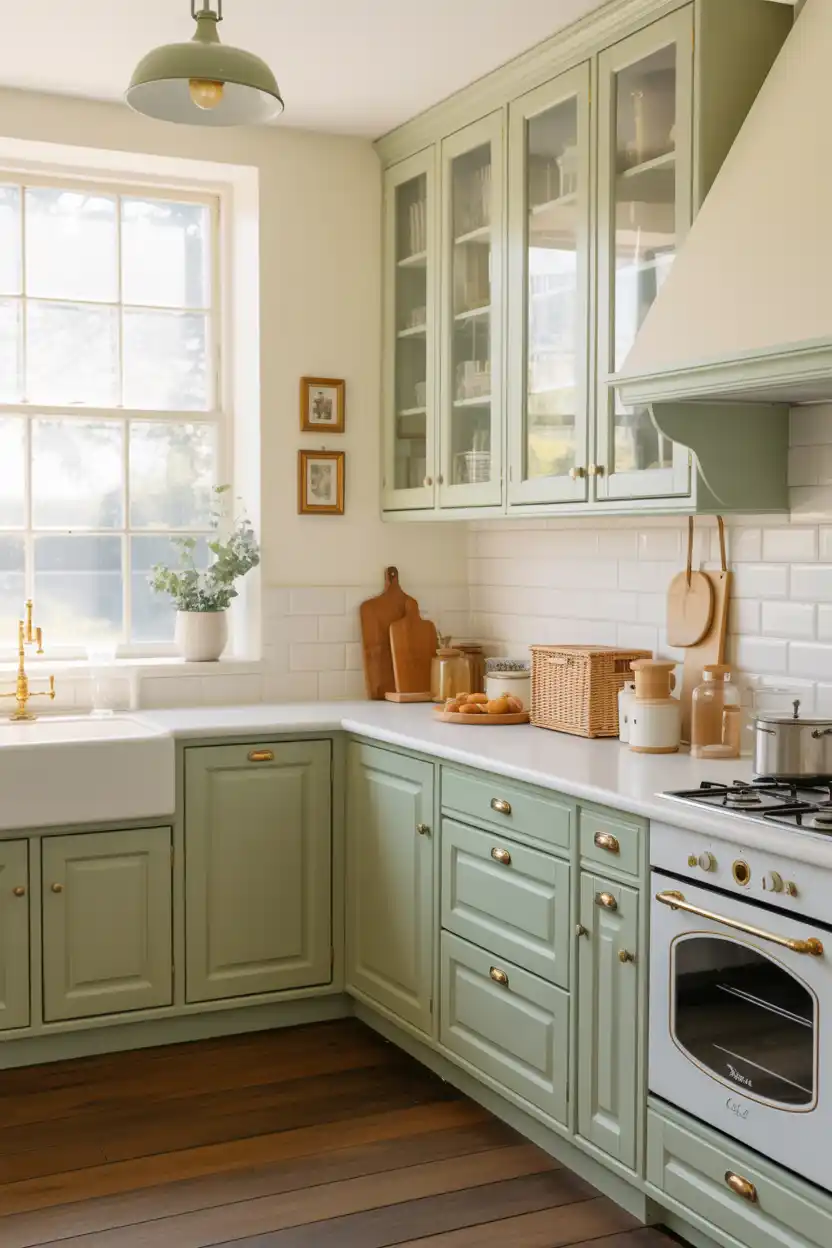
Sage, buttery yellow, dusty blue, and soft blush are the backbone of cottage kitchen colour schemes. Painting cabinets rather than walls gives the strongest effect and can be done for the cost of paint and a weekend, without touching layout or plumbing.
A pastel palette suits kitchens with plenty of natural light, since deeper rooms can feel washed out or cold in pale colours without warm-toned wood or brass accents to balance them.
7. Exposed Wood Beams Overhead
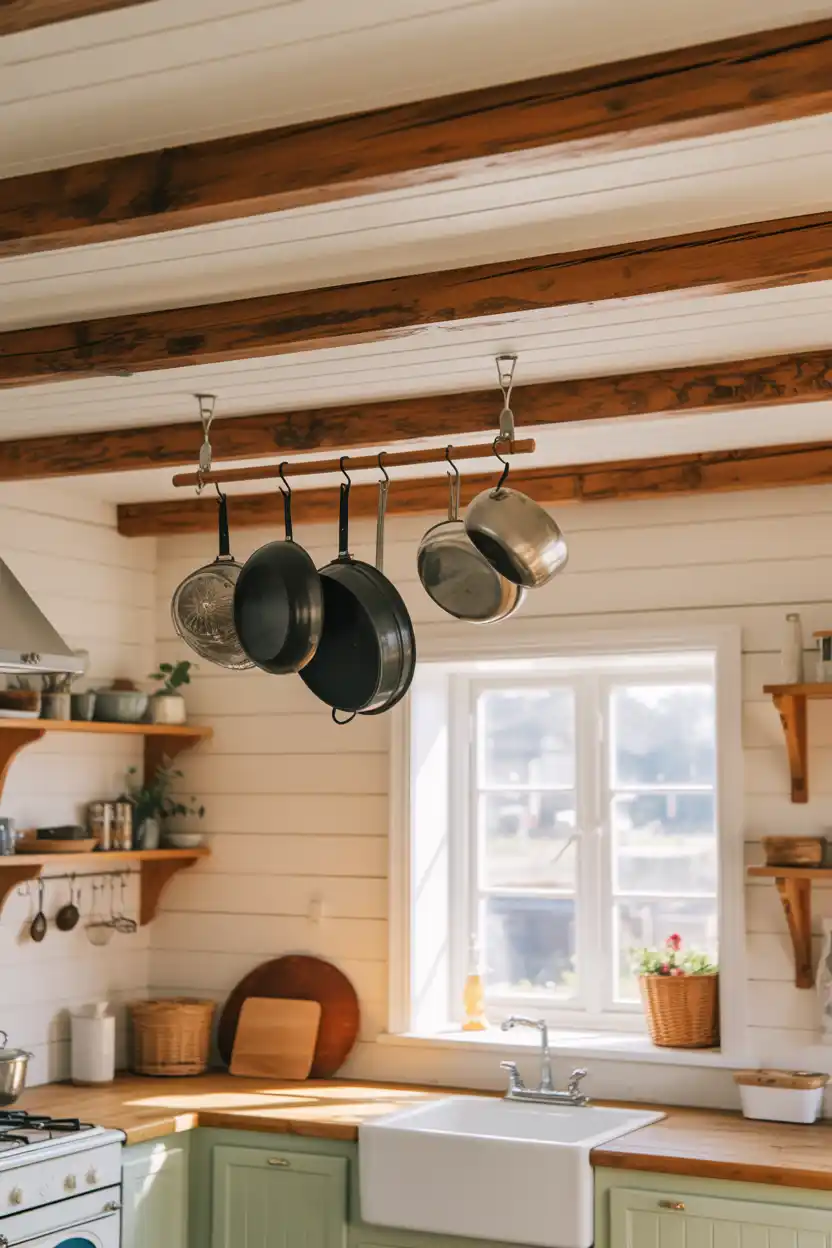
Real or decorative faux beams add architectural character overhead, drawing the eye up and giving a newer home some of the age and texture of an original cottage. Reclaimed barn wood beams look the most authentic, though lightweight polyurethane beams achieve a similar look for much less.
This idea works best in kitchens with ceiling height to spare, since beams can make a low ceiling feel heavier and more cramped. It’s a good structural or cosmetic addition for anyone already opening up drywall for other renovation work.
8. Checkerboard or Patterned Flooring
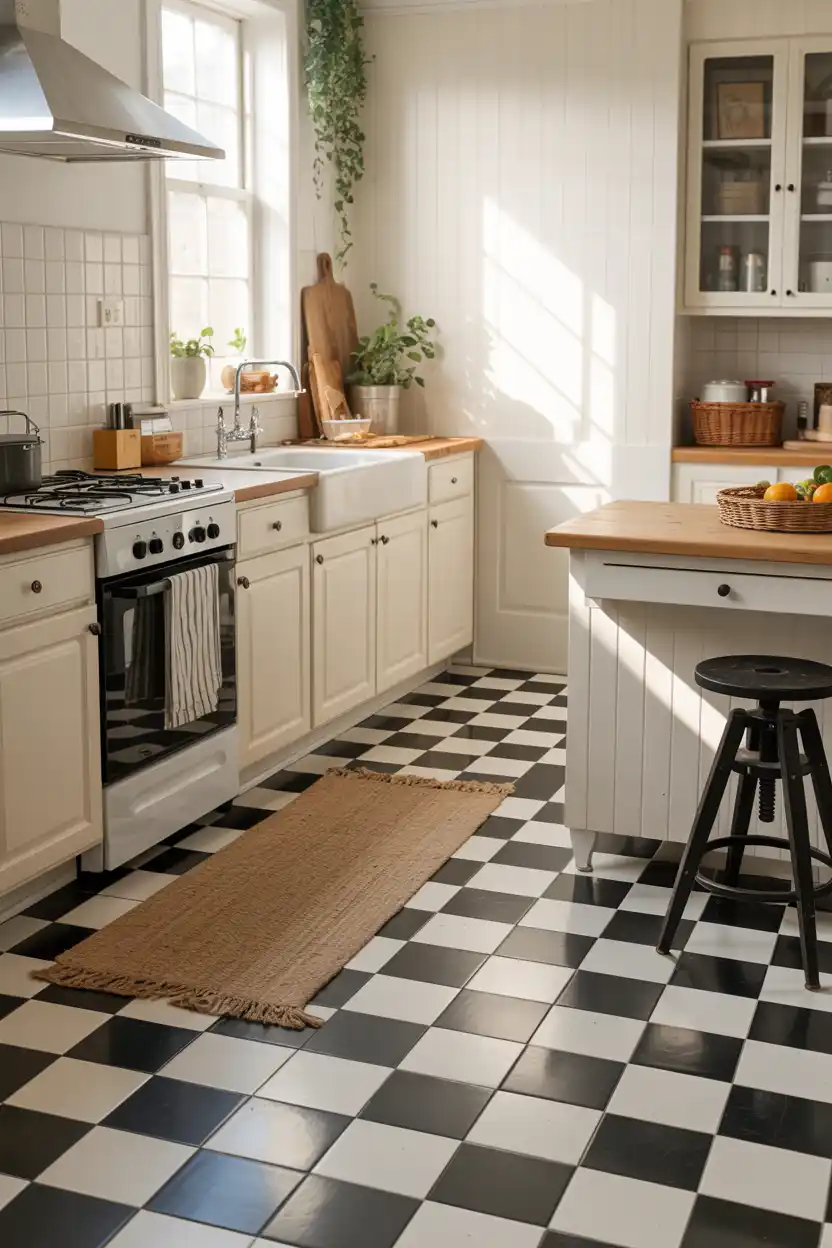
A checkerboard or encaustic-pattern floor gives a cottage kitchen instant personality and works whether the rest of the room is kept simple or richly decorated. Classic black-and-white is timeless, while soft green-and-cream or terracotta patterns lean more rustic-cottage.
Vinyl or luxury vinyl tile versions are budget-friendly and DIY-installable, while real cement or ceramic tile costs more but lasts decades. This idea suits homeowners doing a full-floor replacement rather than a quick refresh, since installing flooring is disruptive.
9. A Floral Wallpaper Accent Wall
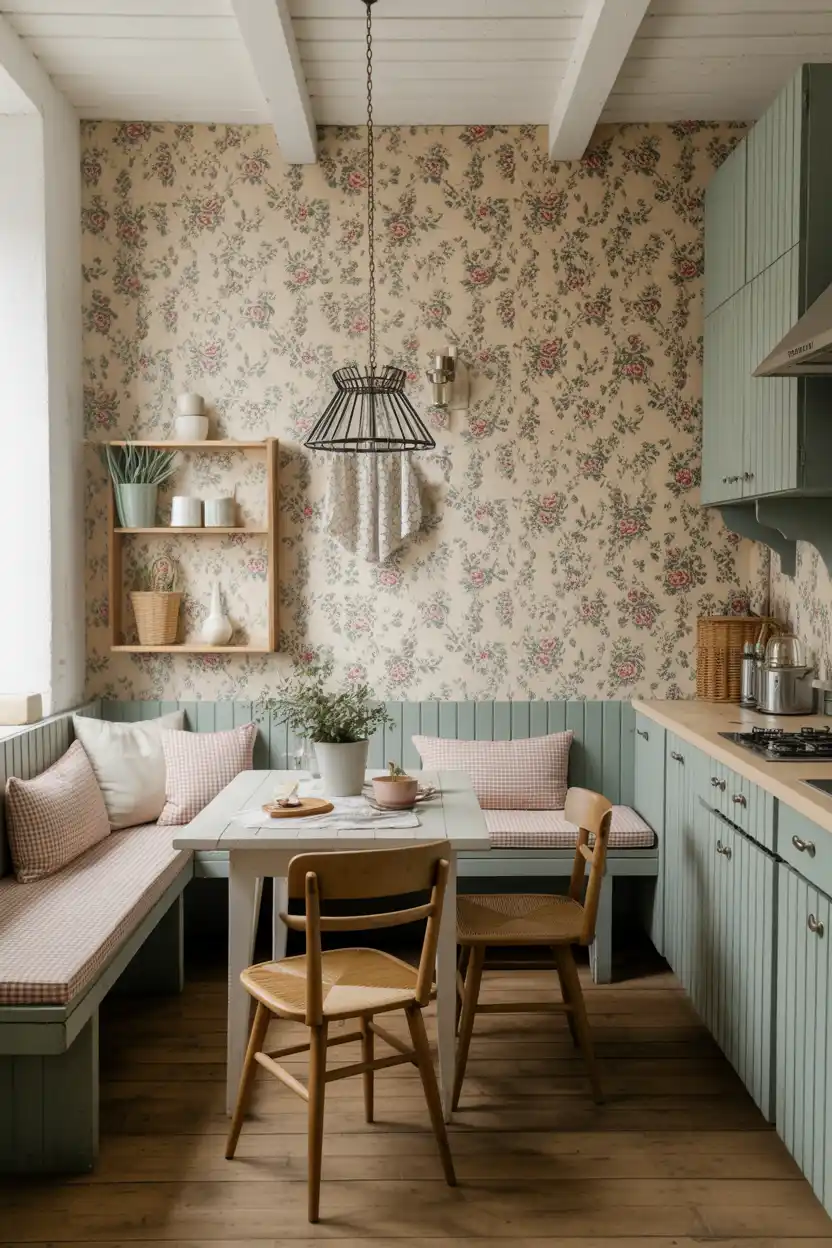
A single wallpapered wall behind open shelving, a breakfast nook, or a pantry door brings pattern into the kitchen without overwhelming it. Small-scale florals, ticking stripes, or toile all suit the cottage aesthetic and are easy to swap out later if tastes change.
Peel-and-stick wallpaper makes this idea renter-friendly and reversible, while traditional pasted wallpaper offers more texture and durability for a permanent home. It’s best kept to one wall or a small nook so the pattern reads as a feature rather than clutter.
10. Brass and Copper Hardware Accents
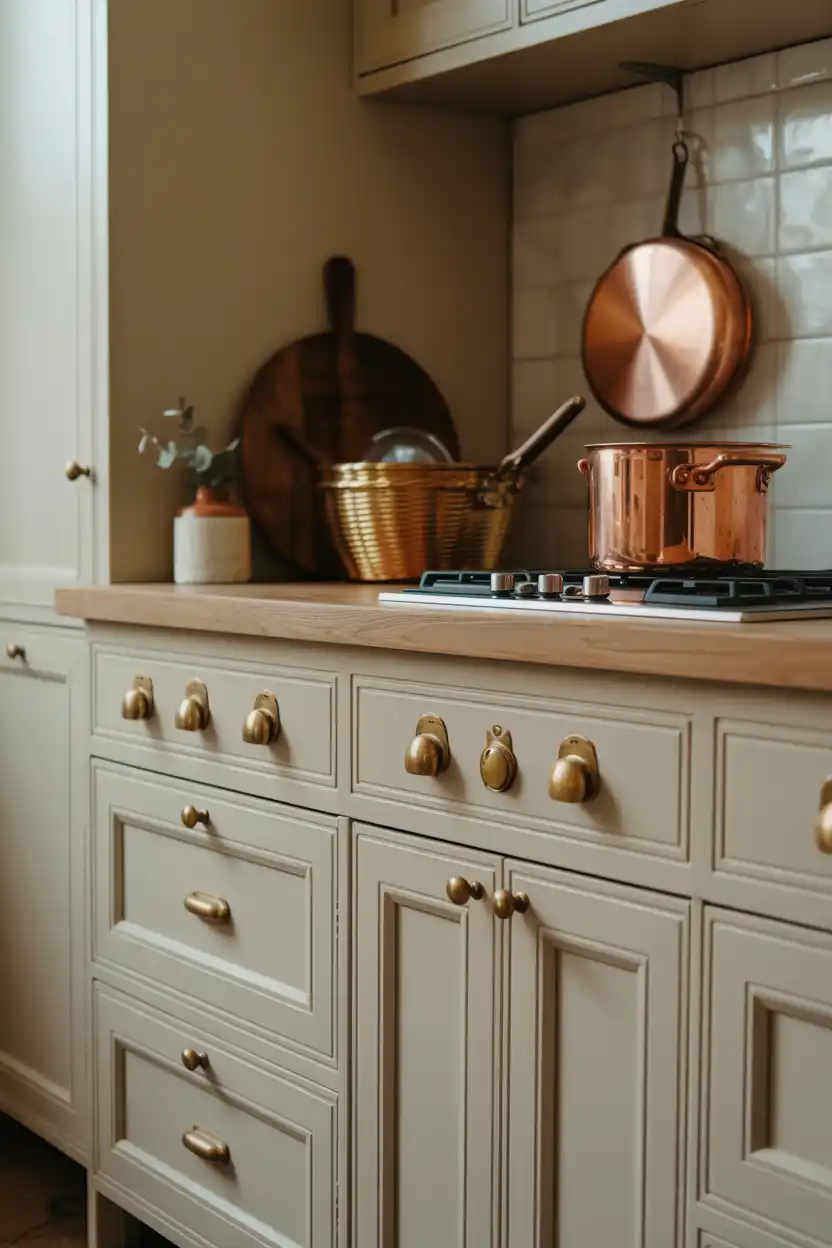
Swapping cabinet knobs, pulls, and faucet finishes for warm brass or copper is one of the cheapest updates on this list, often costing under $500 for an entire kitchen. The warm tones soften the coolness of stainless steel appliances and stone counters.
This works on any budget and at any stage of renovation, since it doesn’t require a structural change. It’s especially effective layered with open shelving or beadboard, where the hardware becomes a visible design detail rather than an afterthought.
11. A Window Herb Garden
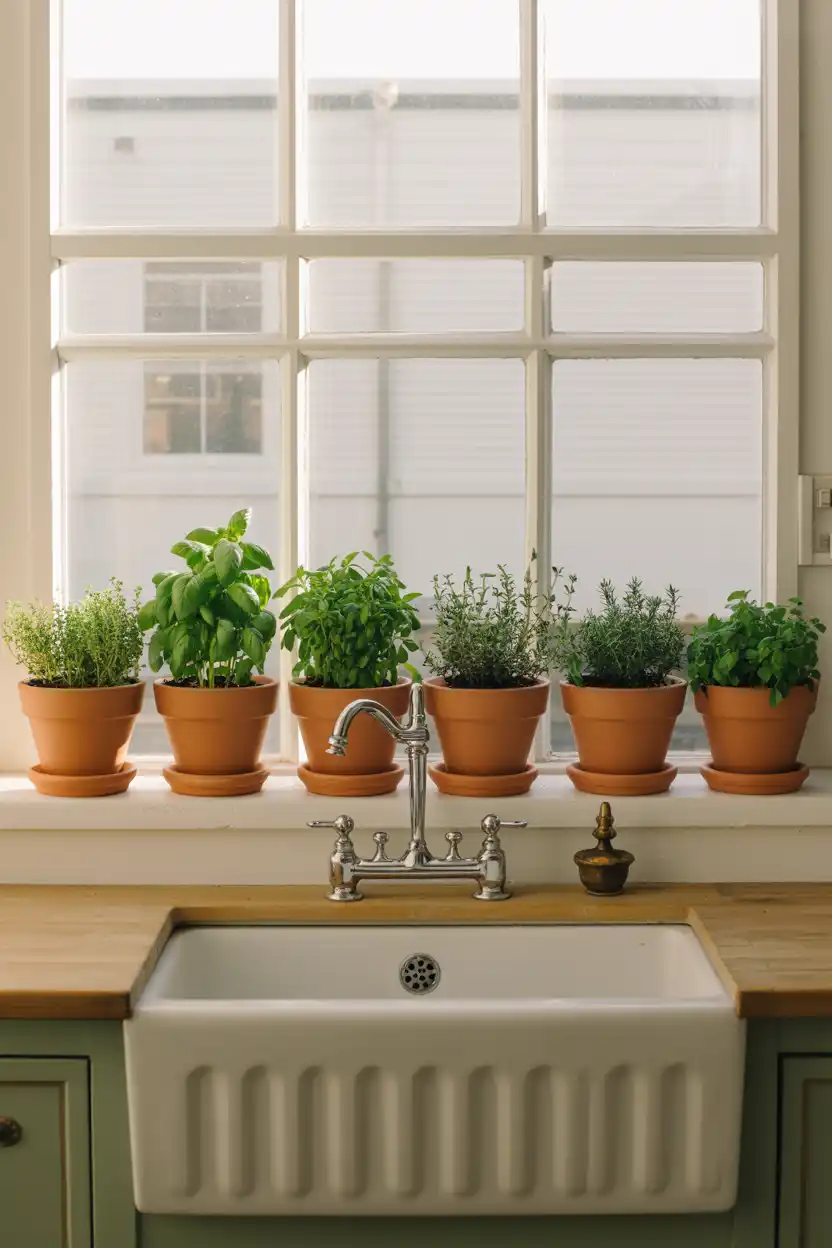
A row of potted herbs on the windowsill above the sink adds greenery, fragrance, and everyday usefulness for a minimal cost. Terracotta pots keep the look earthy and cottage-appropriate, and a simple wood or wire shelf can double the growing space if the sill itself is narrow.
This idea is ideal for anyone in a rental or on a tight budget, since it needs no renovation at all. It works best on a south- or west-facing window that gets several hours of direct sun each day.
12. A Cosy Cottage-Style Breakfast Nook
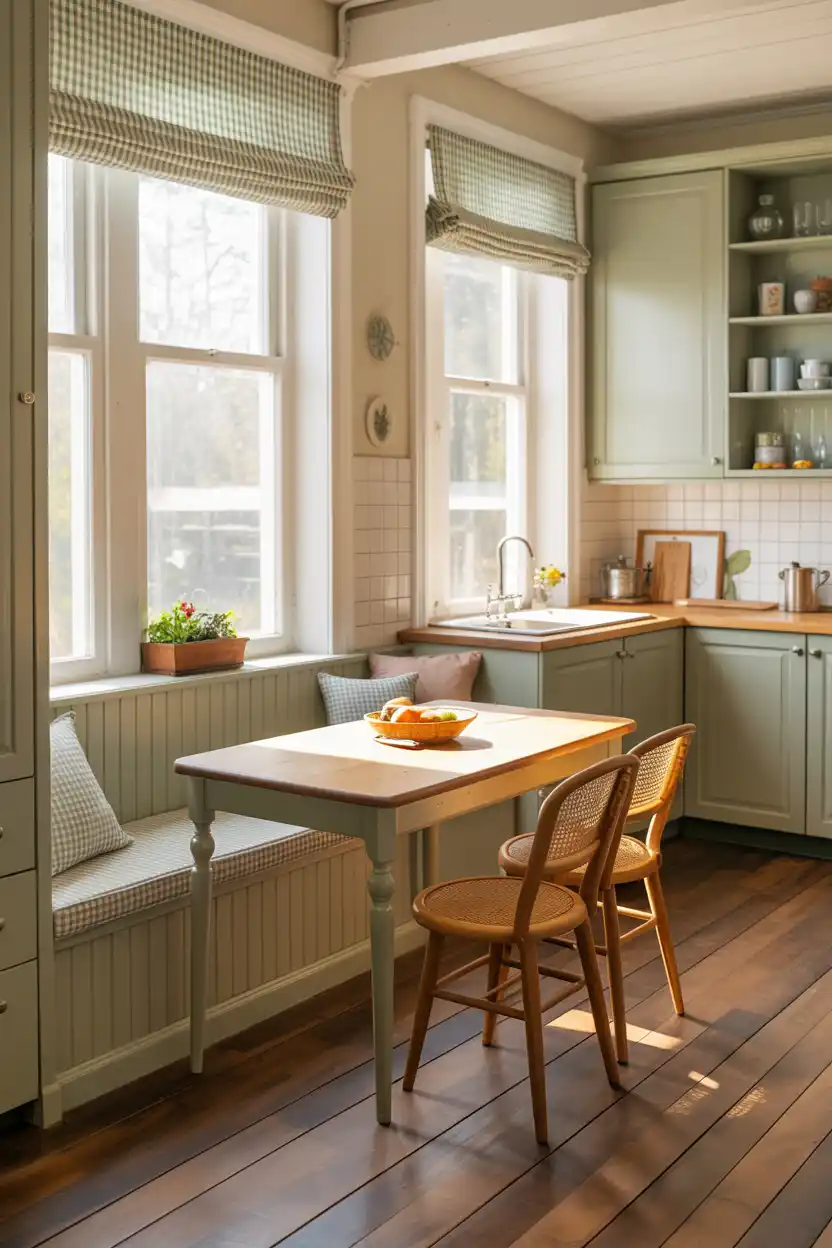
A built-in banquette or window seat with a small table turns an underused kitchen corner into the coziest spot in the house. Upholster the bench in gingham, ticking stripe, or a soft floral, and add a pendant or small chandelier overhead for warmth in the evening.
Built-in benches are best for kitchens with an awkward corner or bay window that doesn’t suit standard cabinetry, and they add valuable hidden storage underneath. This is a larger carpentry project best planned alongside other structural work.
13. A Reclaimed Wood Kitchen Island
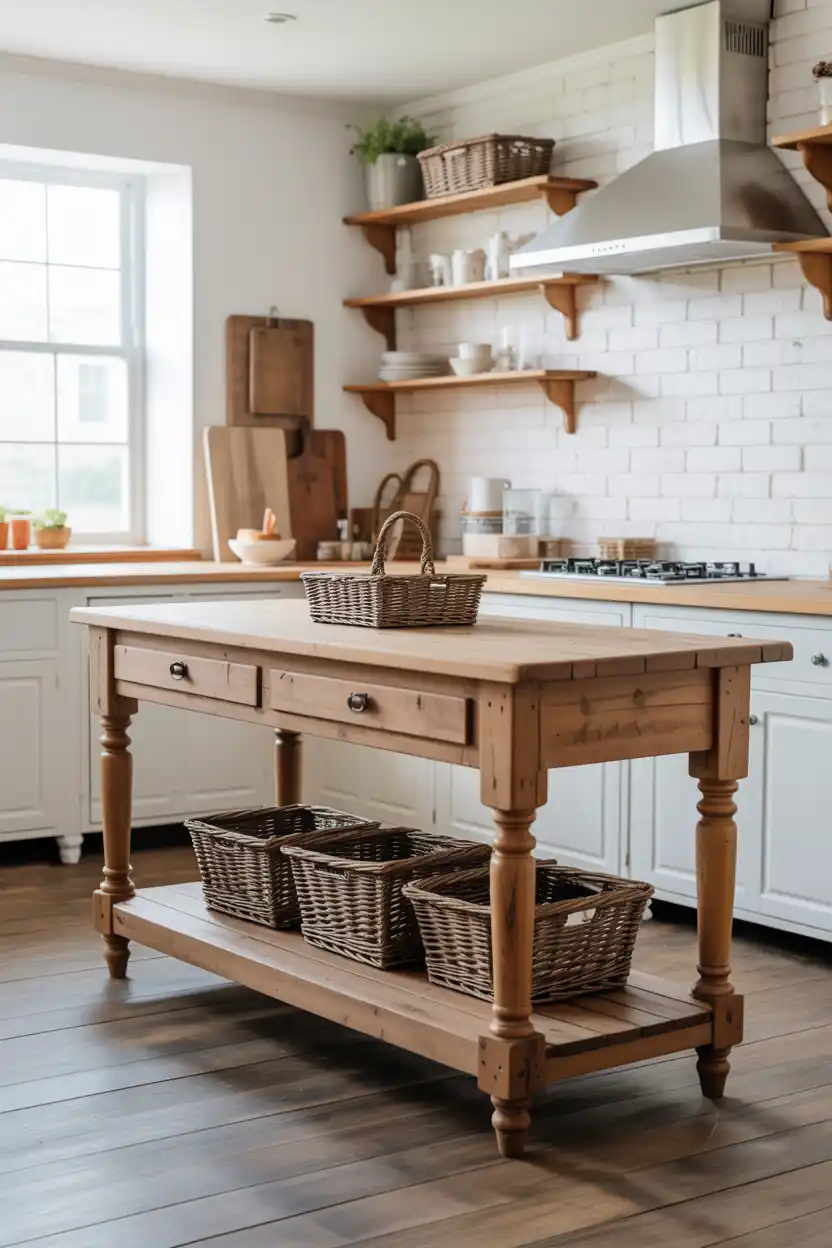
A freestanding island built from reclaimed or distressed wood adds prep space and storage while looking like a genuine antique farm table rather than a built-in unit. Turned or tapered legs, a lower shelf, and a butcher block or marble top all read as cottage rather than contemporary.
Because it’s freestanding, this is a good option for kitchens where a permanent built-in island isn’t structurally possible or where the homeowner may want the flexibility to move or replace it later.
14. An Antique-Style Range Cooker
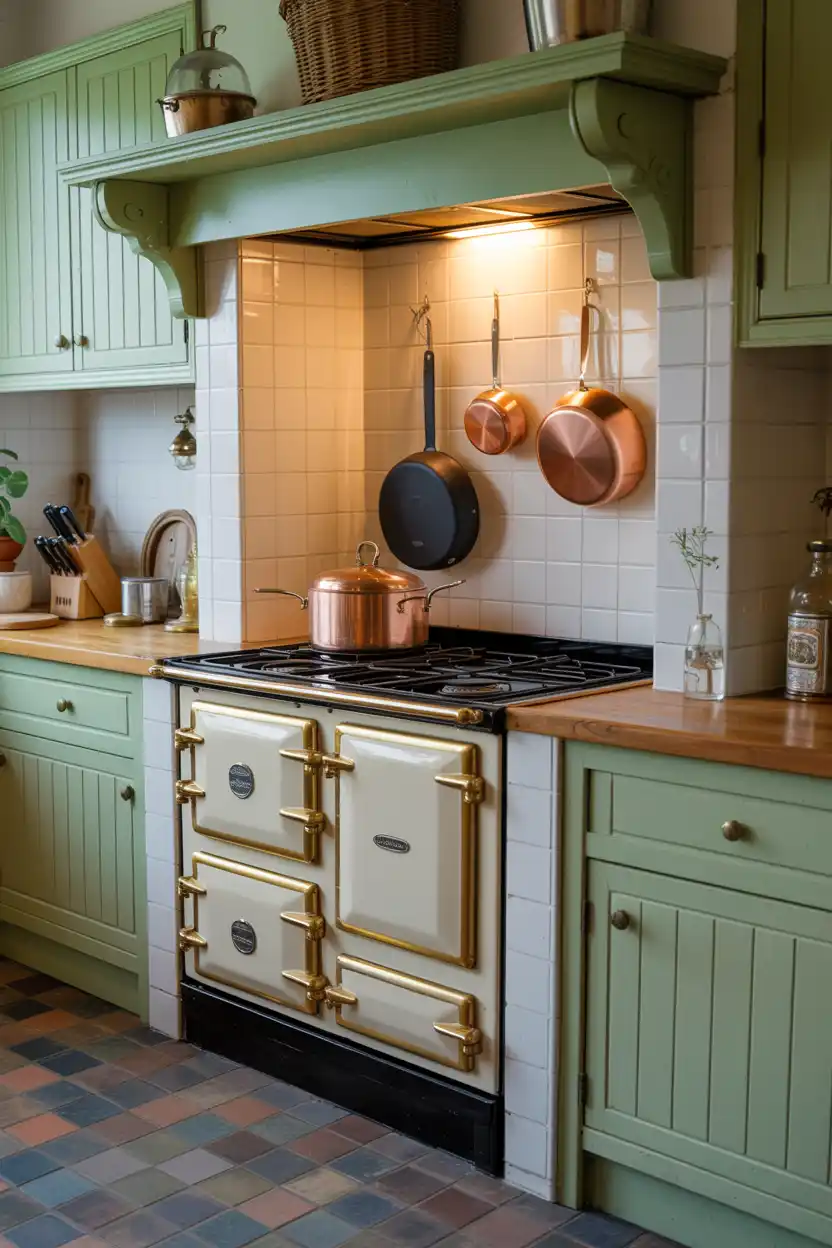
A cream or sage enamel range cooker with a classic dial-and-knob design becomes an instant focal point and gives the kitchen an English-cottage feel. Setting it into a tiled alcove with an overhead shelf for spices completes the look.
This is a bigger investment best suited to a full kitchen remodel, since range cookers are wider and heavier than standard ranges and may need dedicated ventilation and gas or electrical work.
15. Woven Baskets for Open Storage
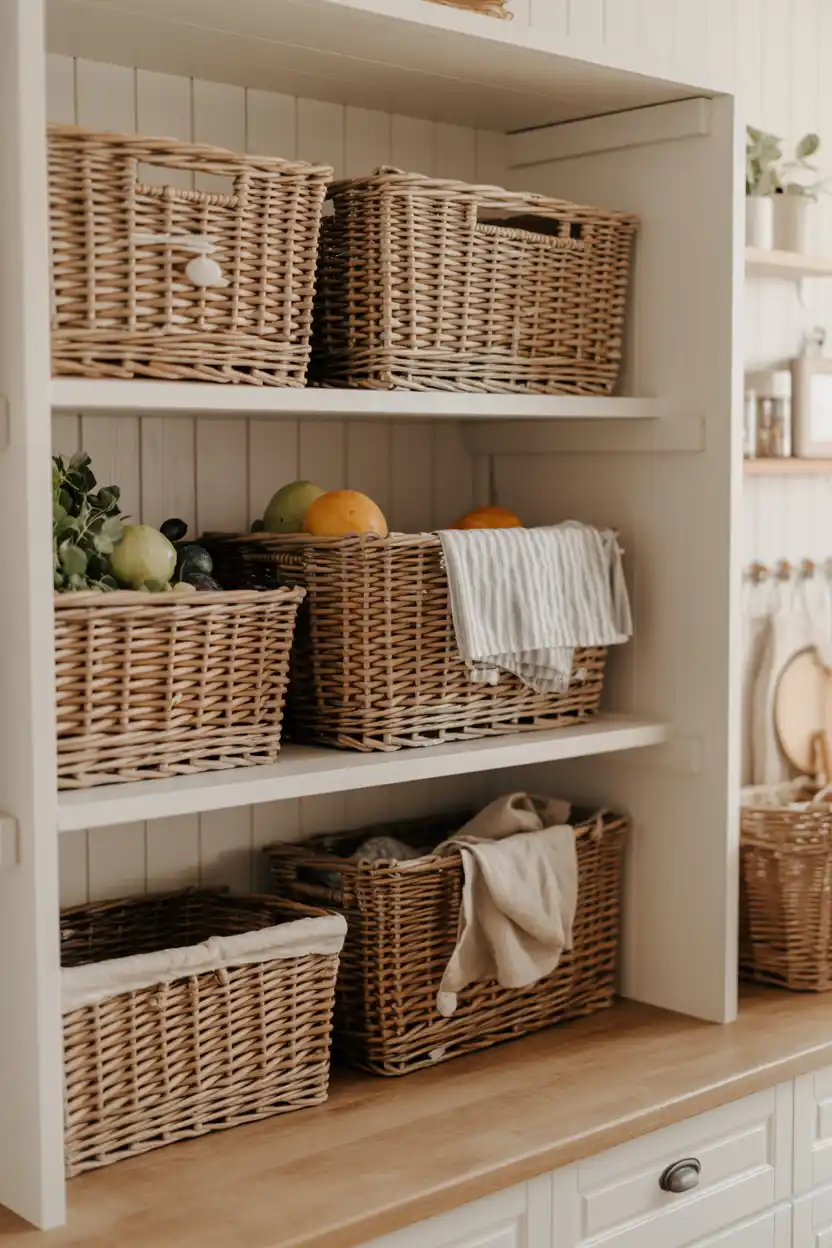
Woven baskets hide kitchen clutter while adding natural texture that fits the cottage look better than plastic bins. Use them on open shelves for linens and pantry goods, under an island for produce, or by the door for market bags.
This is one of the most affordable ideas here and suits any kitchen, rented or owned, since baskets require no installation at all.
16. A Handmade Ceramic Tile Backsplash
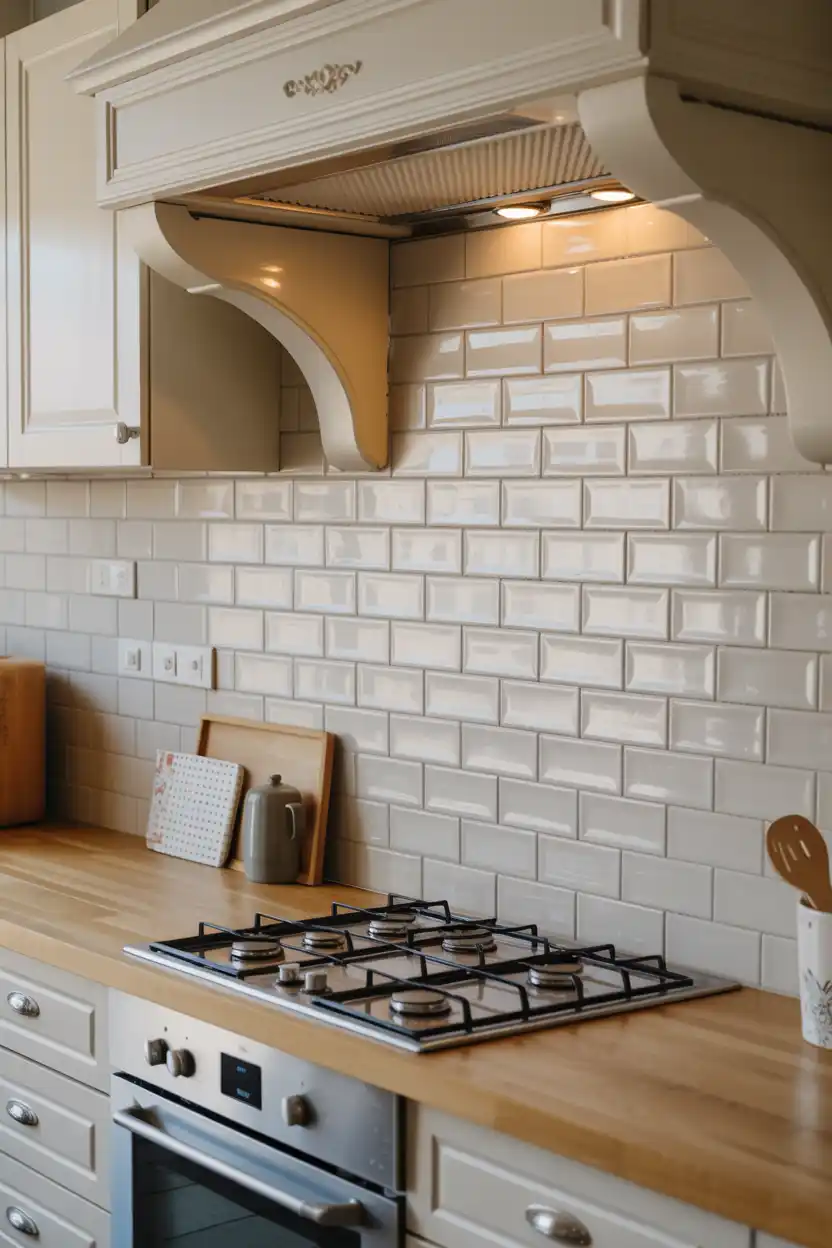
A backsplash in slightly irregular, handmade-style ceramic tile gives the kitchen the artisanal quality that machine-perfect tile lacks. Soft cream, sage, or dusty blue glazes keep it cottage-appropriate, and a simple running-bond subway layout keeps costs reasonable while still looking special.
This upgrade suits a mid-range remodel budget and is best planned alongside countertop or cabinet changes, since tile work is disruptive and worth combining with other trades on site at the same time.
17. Gingham or Linen Café Curtains
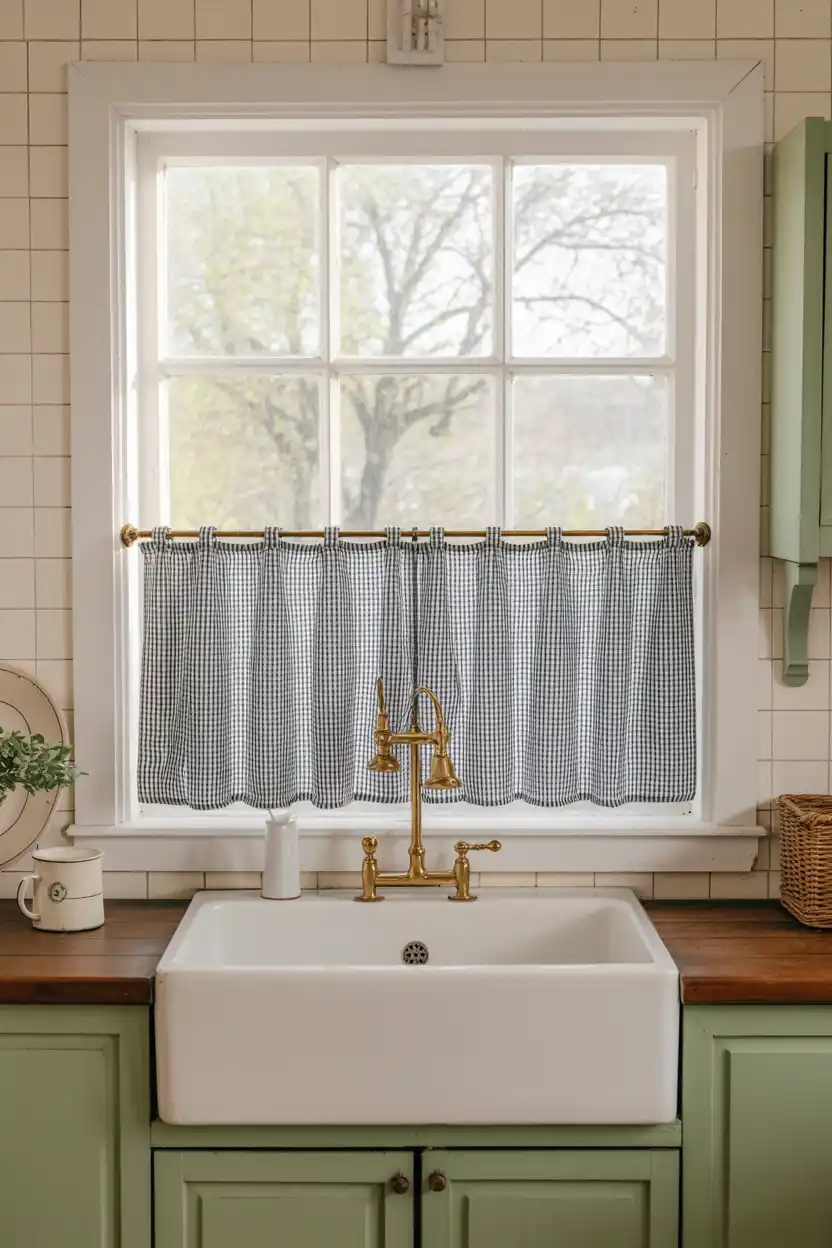
Short café curtains covering just the lower half of a window add privacy at the sink without blocking light, and gingham, ticking stripe, or plain linen all suit the cottage look. They’re inexpensive, easy to sew or buy ready-made, and simple to change with the seasons.
This is one of the easiest ideas to try first if you’re testing the cottage aesthetic before committing to a larger renovation.
18. A Cosy Coffee or Reading Corner
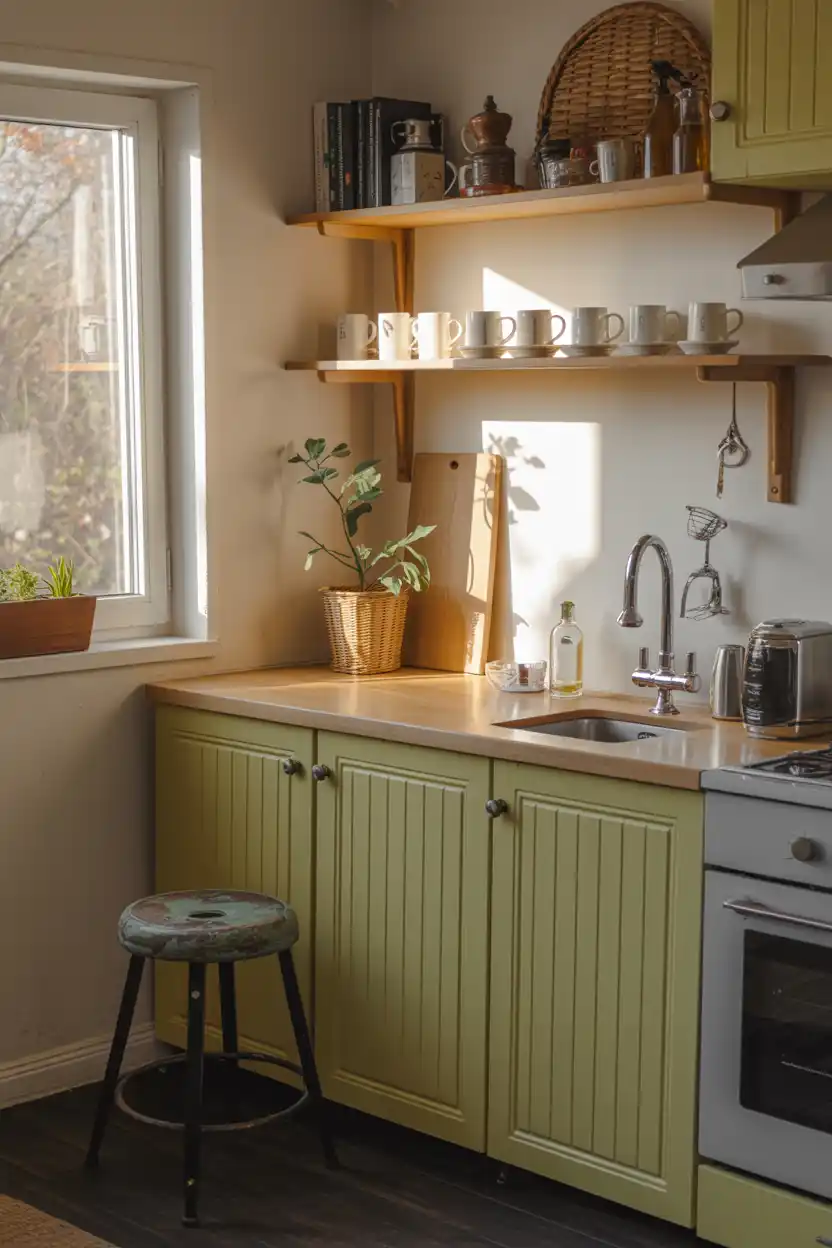
A dedicated coffee or tea corner, even just a shelf and small counter section, gives the kitchen a cosy, personal touch and keeps countertop clutter contained. Style it with a few favourite mugs, a small plant, and a vintage tray for grab-and-go mornings.
This idea works in kitchens of any size, since it can be scaled from a full shelf unit down to a single corner of a counter, making it one of the easiest and cheapest ideas on this list to add.
Planning and Buying Tips
Cottage kitchens can be built up gradually, but a few practical factors are worth planning for before you buy materials or book a contractor.
Space Requirements
Open shelving needs at least 10 to 12 inches of depth and roughly 15 to 18 inches of vertical clearance between shelves to fit standard plates and mugs. A breakfast nook bench typically needs at least 4 by 4 feet of floor space to feel comfortable rather than cramped, and a farmhouse sink base cabinet is usually 30 to 36 inches wide.
Installation and Setup Considerations
Farmhouse sinks require a specific apron-front base cabinet and often a reinforced support ledge, so measure twice against your existing cabinet run before ordering. Pendant lighting swaps are simple if wiring already exists at the location; adding a new electrical box for an island light is a job for a licensed electrician. Range cookers are wider and heavier than standard ranges, commonly 90 to 110 cm, and may need updated gas lines, ventilation, or floor reinforcement.
Structural and Technical Factors
Removing upper cabinets for open shelving is usually straightforward, but always check whether those cabinets are load-bearing for anything above, and patch and repaint the wall behind them. Exposed beams added after the fact should be confirmed with a contractor as decorative (non-structural) unless you’re specifically reinforcing the ceiling structure.
Standard Sizing and Specs to Shop For
- Farmhouse sinks: commonly 30, 33, or 36 inches wide; made of fireclay or stainless steel.
- Butcher block counters: standard depth 25 inches, thickness 1.5 to 2 inches
- Pendant lights: hang 28 to 34 inches above an island or counter surface
- Subway tile backsplash: standard 3×6 inch tiles, running bond or herringbone layout
- Range cookers: 90 to 110 cm wide, compared to a standard 30-inch (76 cm) range
Cost Breakdown: Budget, Mid-Range, and Luxury
Budget ($200–$2,000): Paint, new hardware, café curtains, open shelving from existing cabinets, baskets, and a windowsill herb garden. Most of this is DIY-friendly, so labour costs stay minimal.
Mid-Range ($3,000–$15,000): Beadboard cabinet fronts or refacing, butcher block counters, a tile backsplash, vintage-style lighting, and a checkerboard floor. Expect $50 to $150 per hour for licensed trades like electricians and tile setters, plus material costs.
Luxury/Premium ($20,000–$60,000+): Full cabinetry replacement, a farmhouse sink with custom cabinetry, a reclaimed wood island, an antique-style range cooker, and a built-in breakfast nook. Installation alone for a range cooker with new ventilation and gas work can run $2,000 to $5,000 on top of the appliance cost.
Countertop Material Comparison for Cottage Kitchens
Countertops are one of the biggest style and budget decisions in a cottage kitchen. Here’s how the most common options compare.
| Material | Price (per sq ft) | Durability | Maintenance | Best For |
| Butcher block | $40–$100 | Moderate; can scratch/dent | Re-oil every 3–6 months | Warm, classic cottage look on a budget |
| Soapstone | $70–$120 | High; resists stains | Occasional mineral oil | Authentic old-farmhouse character |
| Quartz | $60–$120 | Very high; low maintenance | Wipe clean, no sealing | Busy households wanting durability |
| Laminate | $20–$50 | Low-moderate | Wipe clean, avoid heat | Renters or tight budgets |
| Ceramic tile | $25–$60 | Moderate; grout needs care | Reseal grout yearly | Patterned, budget-friendly cottage look |
Maintenance Tips
- Re-oil butcher block counters every few months and always use a cutting board directly on prep areas to prevent deep gouges.
- Dust open shelving weekly, since displayed dishware collects grease and dust faster than items behind closed doors.
- Reseal tile grout annually, especially near the sink and stove, to prevent staining and water damage.
- Polish unlacquered brass hardware occasionally if you prefer a bright shine, or leave it alone to develop a natural patina, which is part of the cottage look.
- Avoid harsh abrasive cleaners on painted cabinetry and enamel range cookers; a soft cloth with mild soap protects the finish the longest.
- Common mistake to avoid: sealing butcher block with polyurethane instead of food-safe mineral oil, which traps moisture and can crack the finish over time.
Frequently Asked Questions
What defines a cottage kitchen style?
A cottage kitchen is defined by soft, muted colours, natural materials like wood and woven textiles, vintage or antique-style fixtures, and a slightly imperfect, collected-over-time feel rather than a sleek, uniform look.
What is the difference between a cottage kitchen and a farmhouse kitchen?
Farmhouse style tends to be bolder and more rustic, often built around black-and-white contrast and shiplap, while cottage style leans softer, with pastel colours, floral or gingham patterns, and more delicate, vintage-inspired details.
What colours work best in a cottage kitchen?
Sage green, buttery cream, soft blue, and blush pink are the most common cottage kitchen colours, usually paired with white or cream as a base and warm wood or brass accents.
How much does it cost to remodel a kitchen in cottage style?
Costs vary widely depending on the scope, from a few hundred dollars for cosmetic updates like paint, hardware, and curtains to $40,000 or more for a full remodel with custom cabinetry, a farmhouse sink, and a range cooker.
Can I get a cottage kitchen look on a small budget?
Yes. Paint, new cabinet hardware, open shelving, café curtains, and a few vintage accessories can transform a kitchen’s feel for a few hundred dollars without any structural changes.
How to Choose the Right Cottage Kitchen Ideas for You
The best starting point depends on your space, budget, and how much change you’re ready for. If you’re working with a small kitchen or a rental, start with low-cost, reversible ideas like hardware, curtains, open shelving, and a windowsill herb garden. If you have a mid-size budget and are ready for some renovation, focus on countertops, backsplash tile, and lighting for the biggest visual return. If you’re planning a full remodel and want the most authentic cottage character, invest in a farmhouse sink, a reclaimed-wood island, and a range cooker as the room’s anchors.
Whatever your starting point, the cottage look comes together gradually, one warm, natural detail at a time. Pick two or three ideas from this list that fit your space and budget today, and let the rest of the kitchen

- Be Respectful
- Stay Relevant
- Stay Positive
- True Feedback
- Encourage Discussion
- Avoid Spamming
- No Fake News
- Don't Copy-Paste
- No Personal Attacks
- Be Respectful
- Stay Relevant
- Stay Positive
- True Feedback
- Encourage Discussion
- Avoid Spamming
- No Fake News
- Don't Copy-Paste
- No Personal Attacks
