18 Farmhouse Kitchen Ideas That Bring Warmth, Character, and Function Home
Published: 24 Jul 2026
There is a reason farmhouse kitchen ideas keep showing up on renovation wish lists year after year: the style solves a very real problem. Homeowners want a kitchen that feels warm and welcoming rather than clinical, one that can handle daily family life while still looking pulled together for guests. Farmhouse design does exactly that, mixing durable natural materials, timeless cabinetry, and a few characterful details so the room ages gracefully instead of looking dated in five years.
This guide walks through 18 farmhouse kitchen ideas, from the classic apron-front sink to easy styling swaps like woven baskets and vintage rugs. Along the way, you’ll find planning and buying guidance, a real-world cost breakdown, a materials comparison table, maintenance tips, and answers to the most common questions people ask before starting a project like this.
Is a Farmhouse Kitchen Right for You?
Farmhouse style has broad appeal, but it isn’t automatically the right fit for every home or every budget. Weigh these factors before committing to the look:
- Cost: Core elements like Shaker cabinetry and an apron sink can be done on a moderate budget, but reclaimed wood, custom hoods, and natural stone add up quickly toward the luxury end.
- Space: Open shelving, a full-size island, and a farmhouse dining table all need real square footage to look intentional rather than cramped.
- Maintenance: Butcher block, open shelving, and natural woven materials require more regular upkeep than sealed quartz and closed cabinetry.
- Long-term value: Neutral cabinetry, apron sinks, and quality countertops tend to hold strong resale appeal, while very trend-specific details (like heavy shiplap) are best used sparingly.
If you cook often, entertain at home, and want a kitchen that feels personal rather than showroom-perfect, farmhouse style is likely a strong match. If you prioritize a low-maintenance, ultra-modern aesthetic, you may want to borrow just a few farmhouse accents rather than committing to the full look.
1. Apron-Front Farmhouse Sink
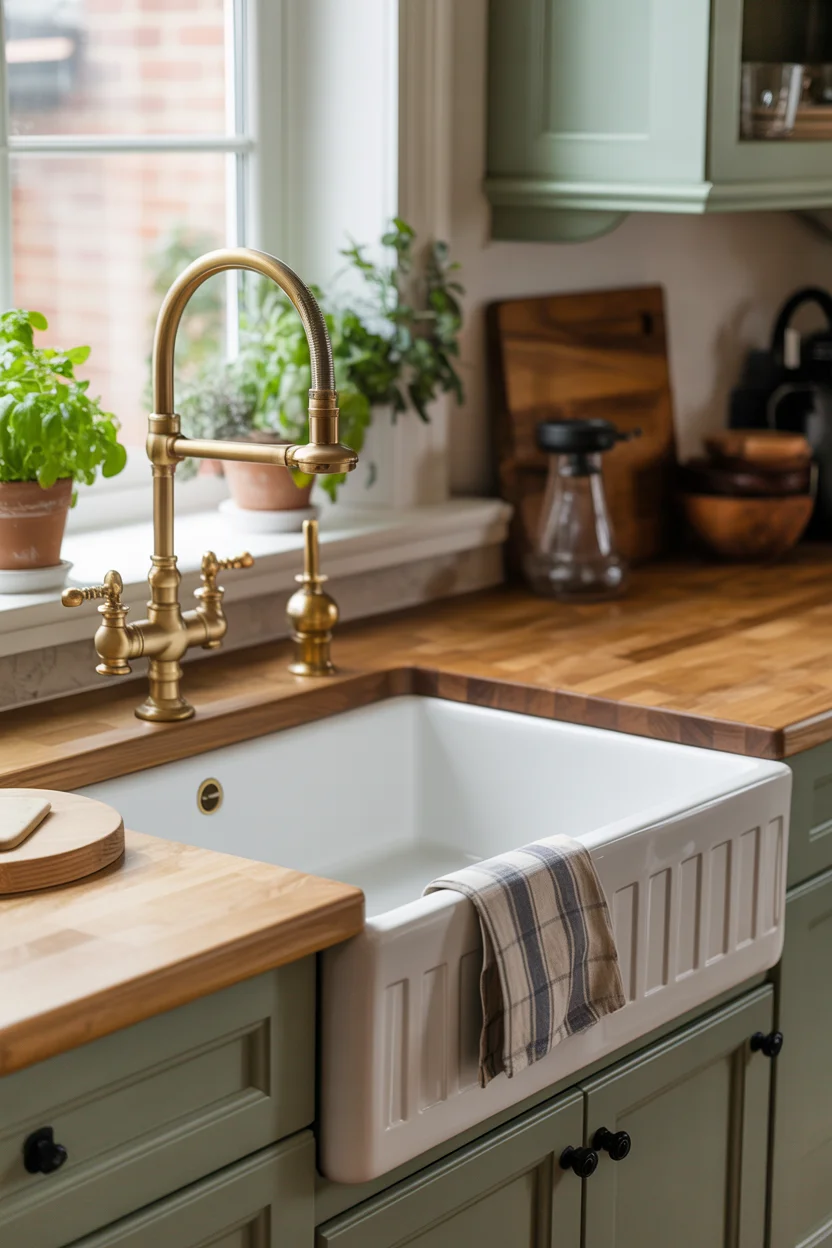
The apron-front sink is the single most recognizable feature of a farmhouse kitchen, and for good reason. Its deep, wide basin makes quick work of oversized pots and baking sheets, while the exposed front panel adds a sculptural, furniture-like presence that pulls the whole room together.
Fireclay and cast iron are the classic material choices, prized for their durability and the way they hold a crisp, matte white finish for decades. Stainless steel apron sinks offer a slightly more industrial-farmhouse look at a lower price point and lighter weight.
This idea works best for anyone who cooks often and wants a sink that can double as a workstation. It is a strong fit for growing families and serious home bakers, though the exposed front does mean more visible wear if it is chipped or scratched.
2. Open Wood Shelving
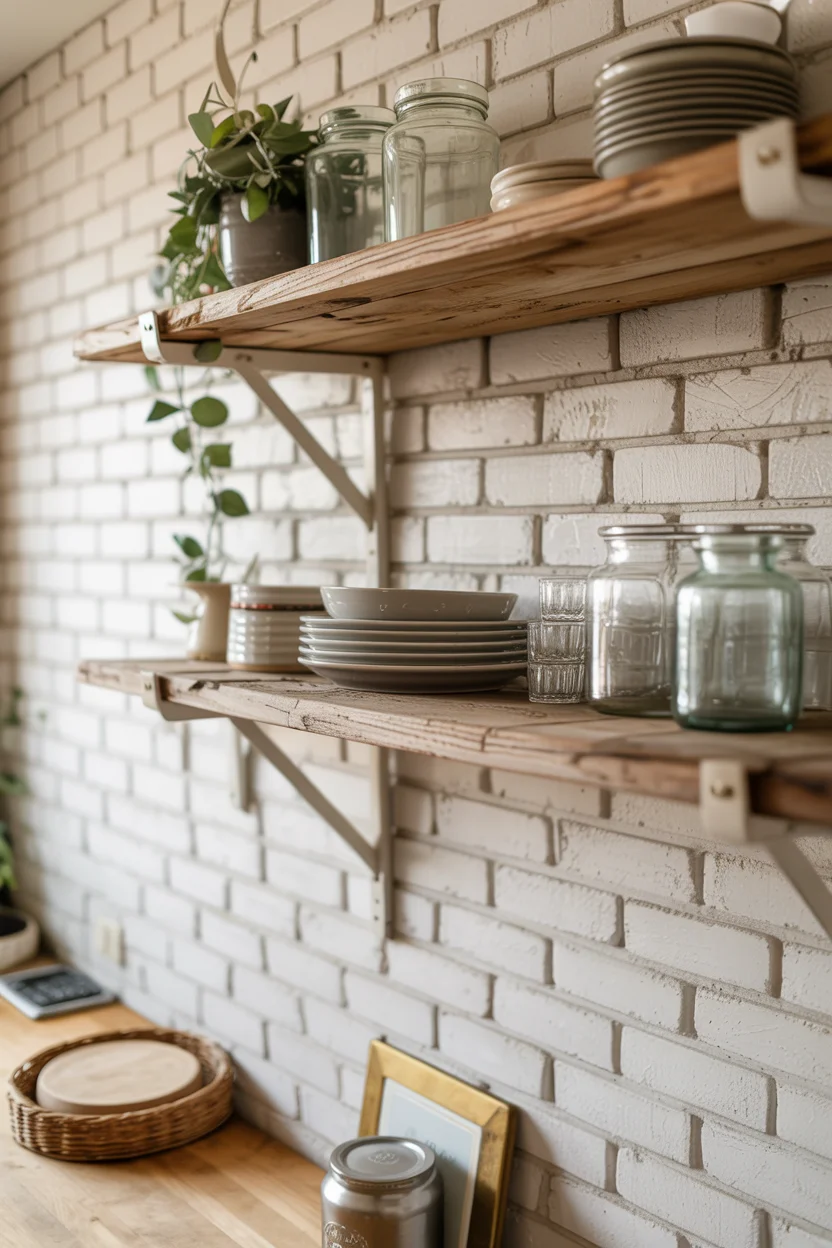
Swapping a run of upper cabinets for open wood shelving instantly lightens a kitchen and gives it that lived-in, collected-over-time farmhouse character. Shelves also put everyday dishware within easy reach, which is a genuine convenience for busy households.
Reclaimed barn wood or rough-sawn pine with visible grain reads the most authentic, while simple L-brackets or hidden floating hardware keep the look clean. Pair the shelves with a curated mix of white ceramics, woven textures, and a few glass jars rather than crowding every inch.
Open shelving suits confident stylists who don’t mind a bit of dusting, and it is best in kitchens with good natural light. It is a less practical choice for households that generate a lot of clutter, since everything on display needs to stay reasonably tidy.
3. Shaker Cabinets in Soft White
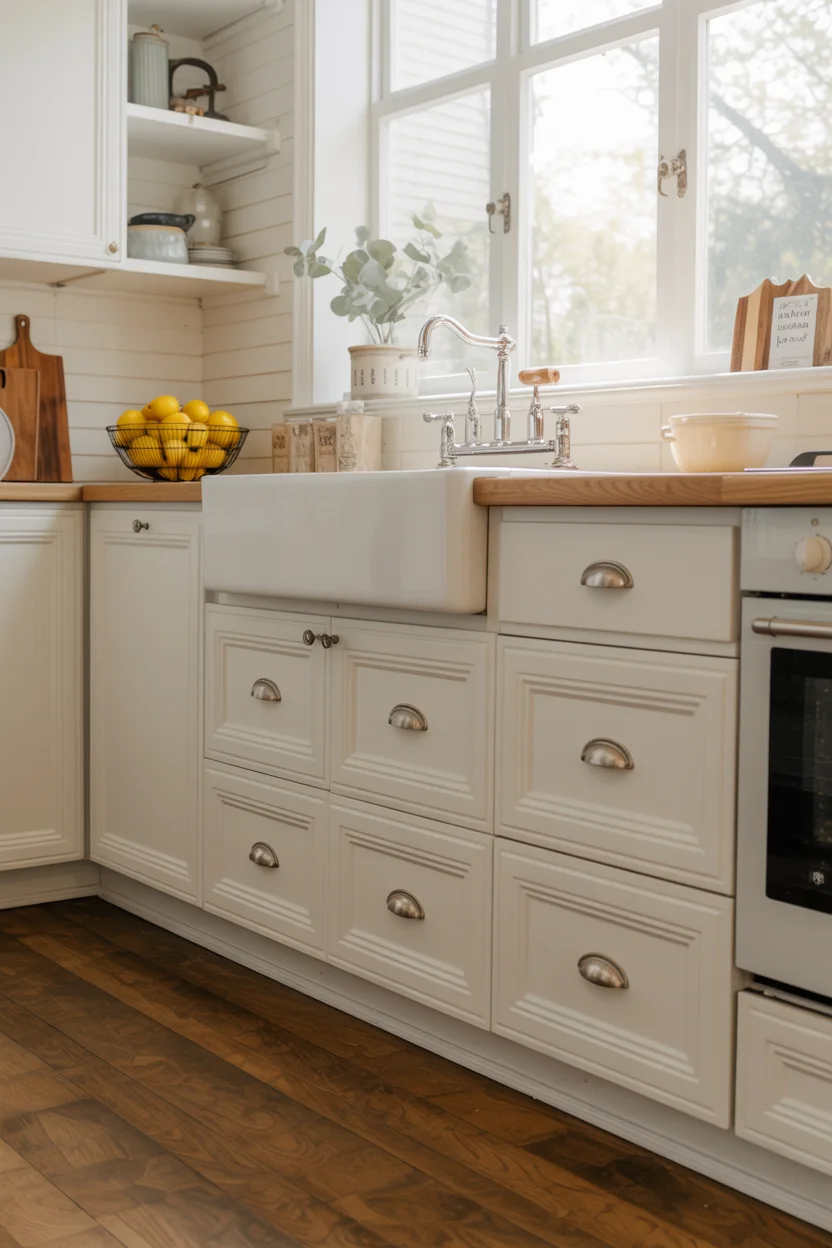
Shaker cabinetry is the structural backbone of most farmhouse kitchens. The recessed center panel and simple, square lines give it a timeless quality that photographs beautifully and never feels trendy.
A soft off-white such as warm ivory or antique white tends to feel cozier than stark white, and it hides everyday fingerprints better. Painted MDF or poplar frames keep costs reasonable, while solid wood construction adds long-term durability for a higher price.
This is the safest, most broadly appealing choice for anyone planning to sell in the next several years, since neutral Shaker cabinetry has strong resale appeal. It is less exciting for people who want a bolder, more personal statement in the kitchen.
4. Reclaimed Wood Kitchen Island
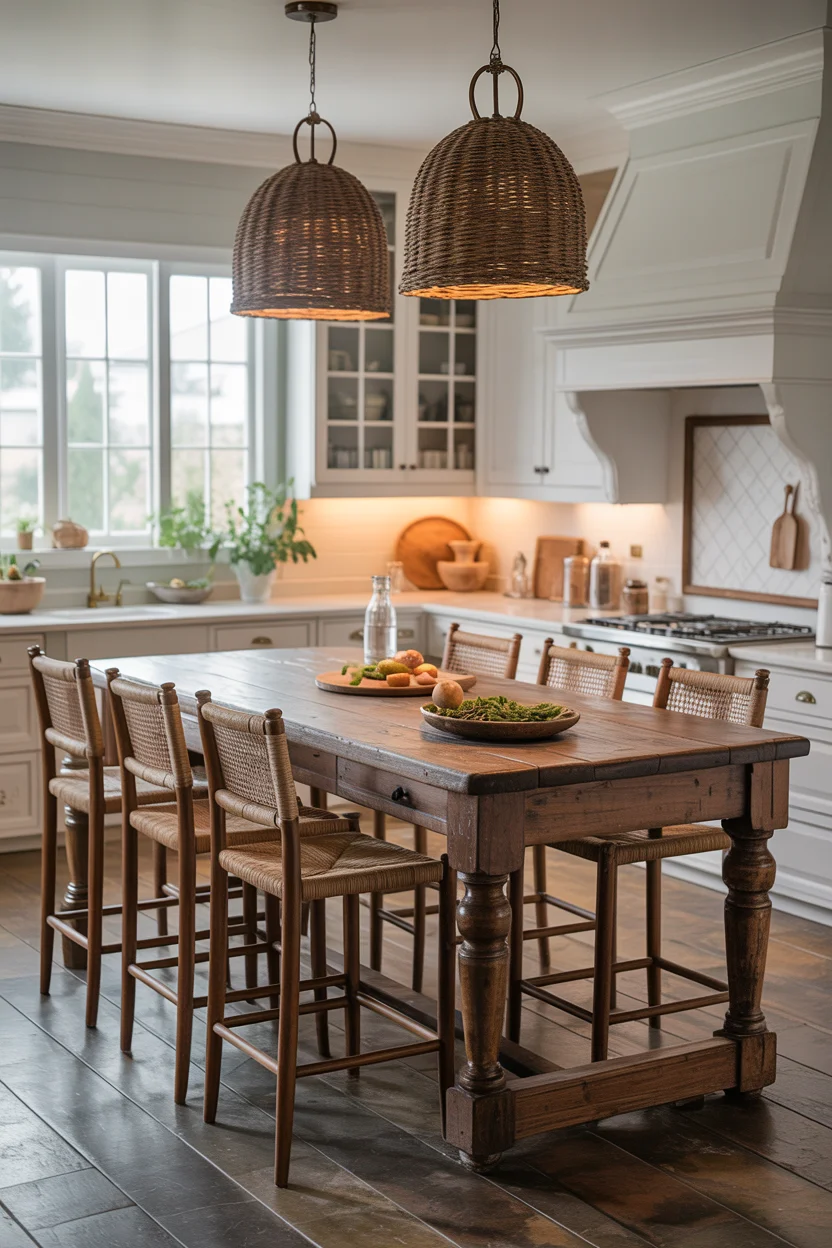
A reclaimed wood island introduces warmth and contrast against painted perimeter cabinetry, and it becomes the natural gathering point for cooking, homework, and morning coffee. The visible grain, knots, and saw marks of reclaimed timber give the room instant history.
Look for a thick, waxed or oiled top with a durable sealant if it will see daily food prep, and pair it with simple turned or trestle-style legs to keep the farmhouse silhouette. Adding a shelf or apron with drawers underneath boosts storage without disrupting the wood’s character.
This idea is best suited to kitchens with enough square footage for comfortable walkway clearance on all sides. Smaller galley kitchens may need a slimmer cart-style version instead of a full built-in island.
5. Black Iron Pendant Lighting
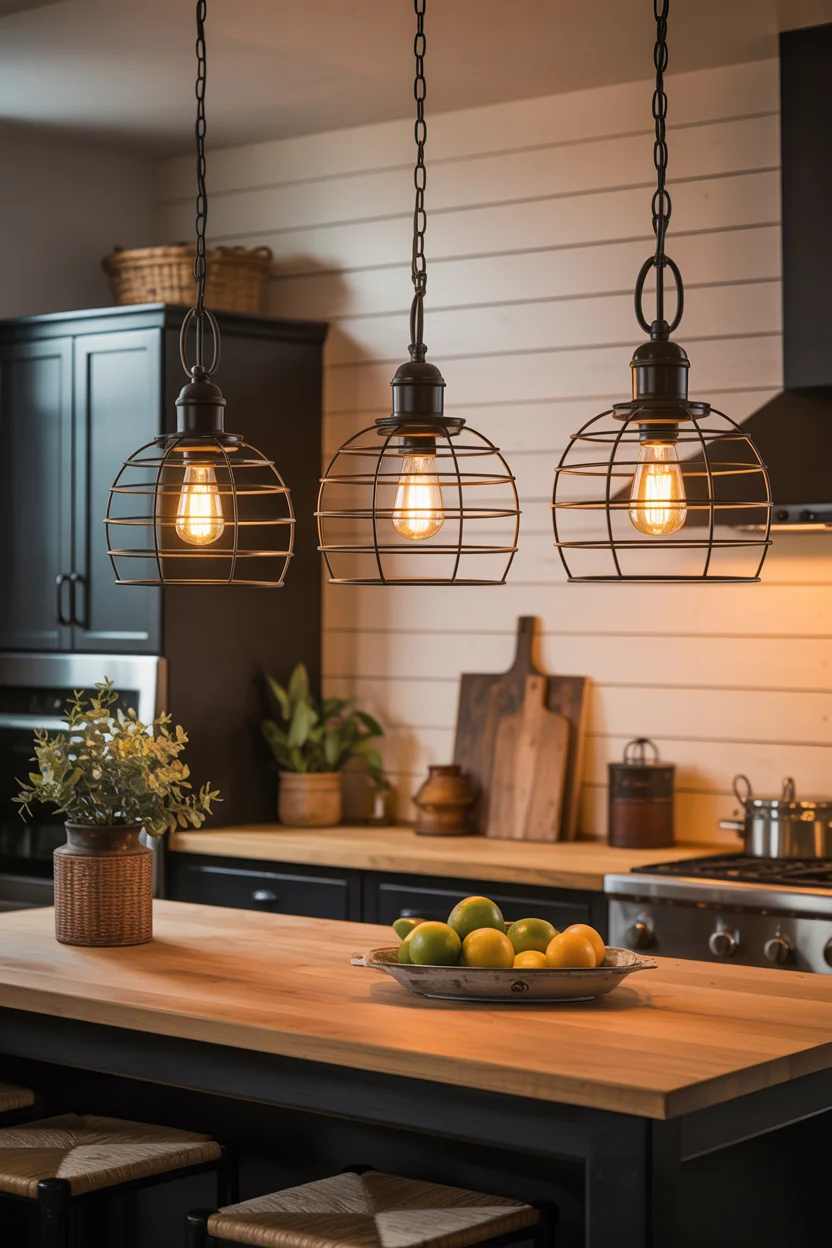
Black iron pendants are an easy, high-impact way to add contrast and a touch of industrial edge to an otherwise soft, neutral kitchen. Hung in a row of two or three over an island, they create a strong visual anchor without competing with the cabinetry.
Dome, cage, and schoolhouse-globe shapes all read as classic farmhouse, and warm-toned Edison bulbs enhance the cozy, lantern-lit feel in the evening. Adjustable cord lengths make it possible to fit pendants to ceilings of different heights.
This upgrade suits anyone doing a lighter refresh rather than a full renovation, since it is one of the most affordable ways to change a kitchen’s character. It works less well in kitchens with very low ceilings, where hanging fixtures can feel crowded.
6. Beadboard Backsplash
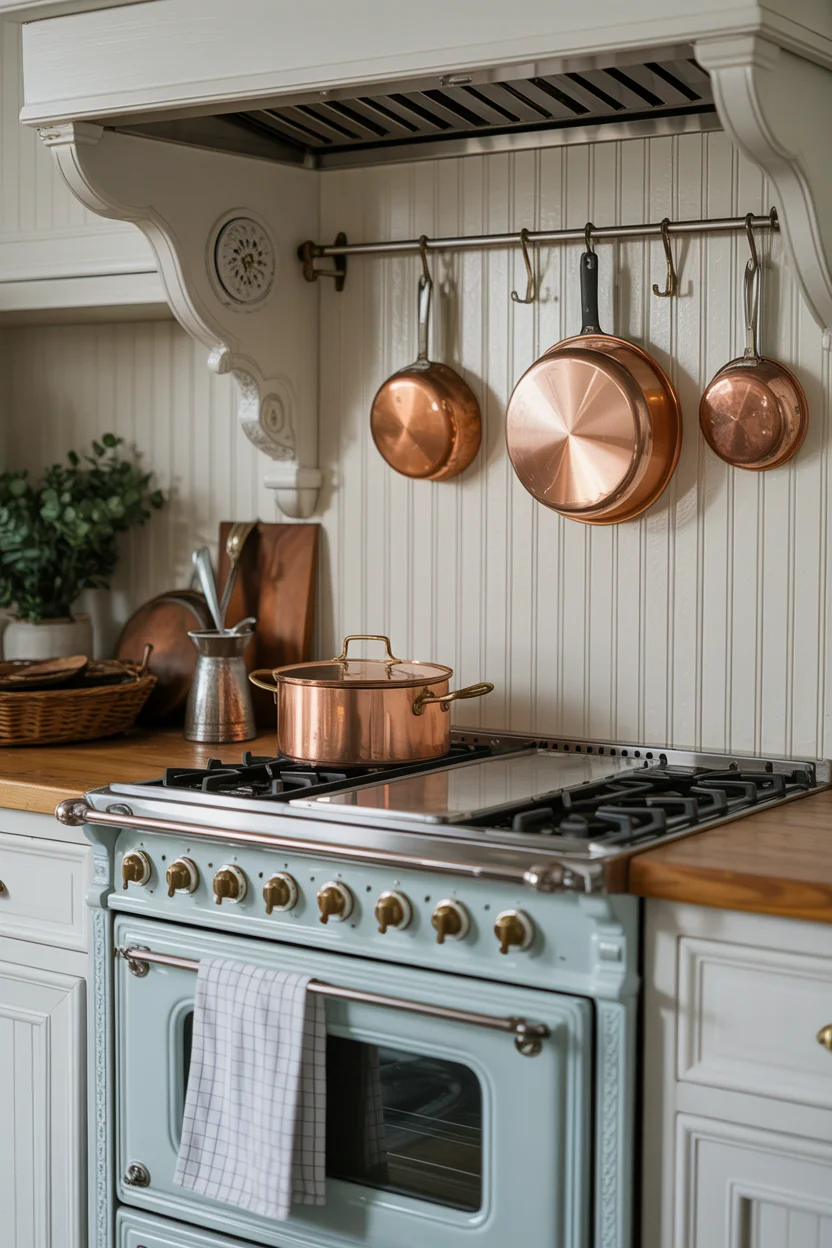
Beadboard panelling brings a cottage-meets-farmhouse texture to the wall behind the stove or sink, replacing a flat tile backsplash with vertical grooved lines that catch the light beautifully. It reads as historic and hand-built, even when it is a modern installation.
PVC beadboard panels offer an affordable, moisture-resistant option that is easy to wipe clean, while real wood beadboard, sealed with a durable paint, gives a more authentic texture at a higher price and maintenance cost.
This idea works well behind a range or sink where a bit of extra character is welcome, but it is not the most practical choice directly next to a heavy-use prep zone where grease and splatter are frequent, since the grooves take more effort to clean than flat tile.
7. Butcher Block Countertops
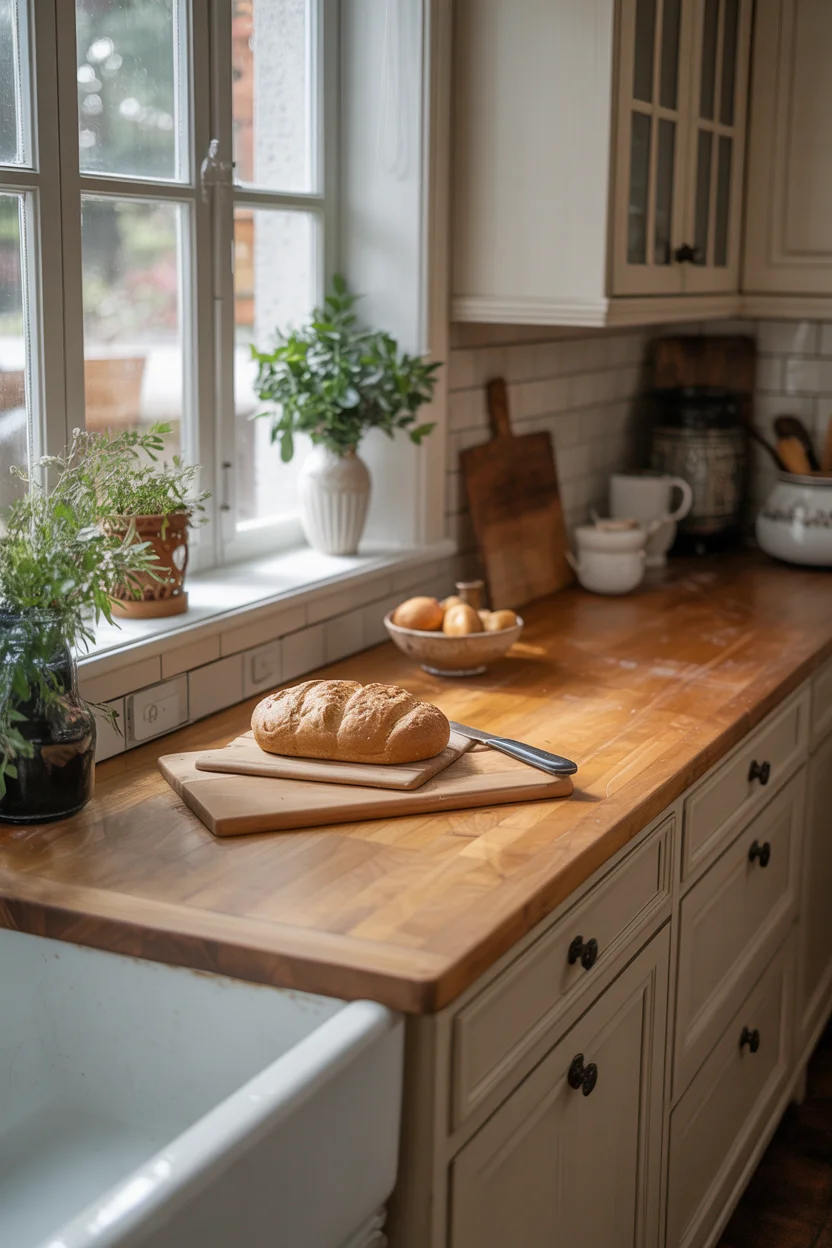
Butcher block countertops add a warm, tactile surface that softens an otherwise all-white kitchen and pairs naturally with an apron sink or reclaimed wood island. The material is genuinely functional too, since it can double as a cutting and prep surface with care.
Maple, oak, and walnut are the most common choices, finished with either food-safe mineral oil for a natural matte look or a polyurethane topcoat for extra water resistance at the cost of some authenticity.
Butcher block suits people who enjoy a bit of upkeep and don’t mind re-oiling the surface a few times a year. It is a poor match for households that leave standing water around the sink often, since prolonged moisture exposure can cause warping or staining.
8. Vintage-Style Range with Statement Hood
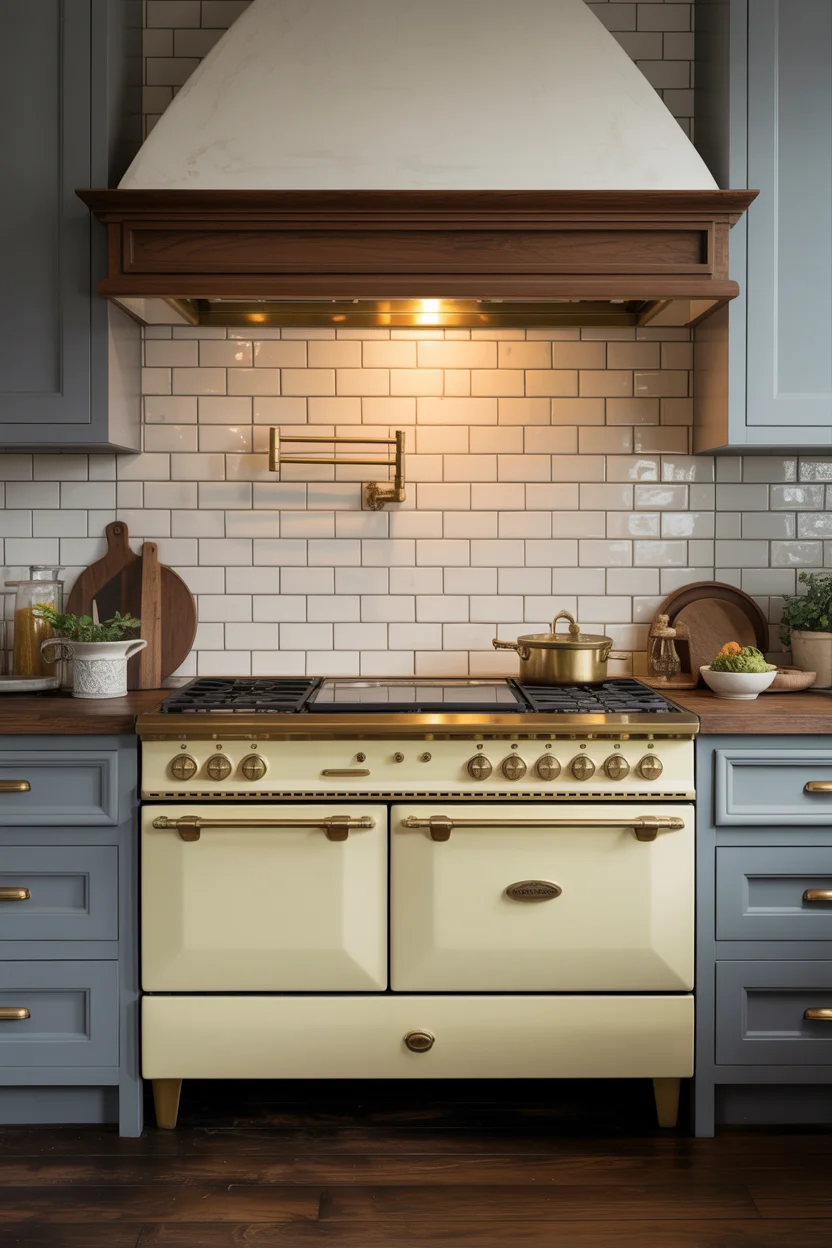
A vintage-style range paired with a substantial hood becomes the visual centrepiece of the kitchen, giving the whole space a professional, collected-over-generations feel. Cream, black, and matte navy finishes are especially popular in farmhouse schemes.
A wood-clad or plastered hood surround softens the industrial look of the appliance and ties it into the room’s natural materials, while a simple stainless hood keeps the focus on the range itself and is easier to maintain.
This statement piece is best for serious home cooks who will actually use the extra burners and features, since premium ranges carry a real price premium. For lighter cooks, a standard range with a decorative hood surround delivers most of the visual impact for less money.
9. Exposed Wood Ceiling Beams
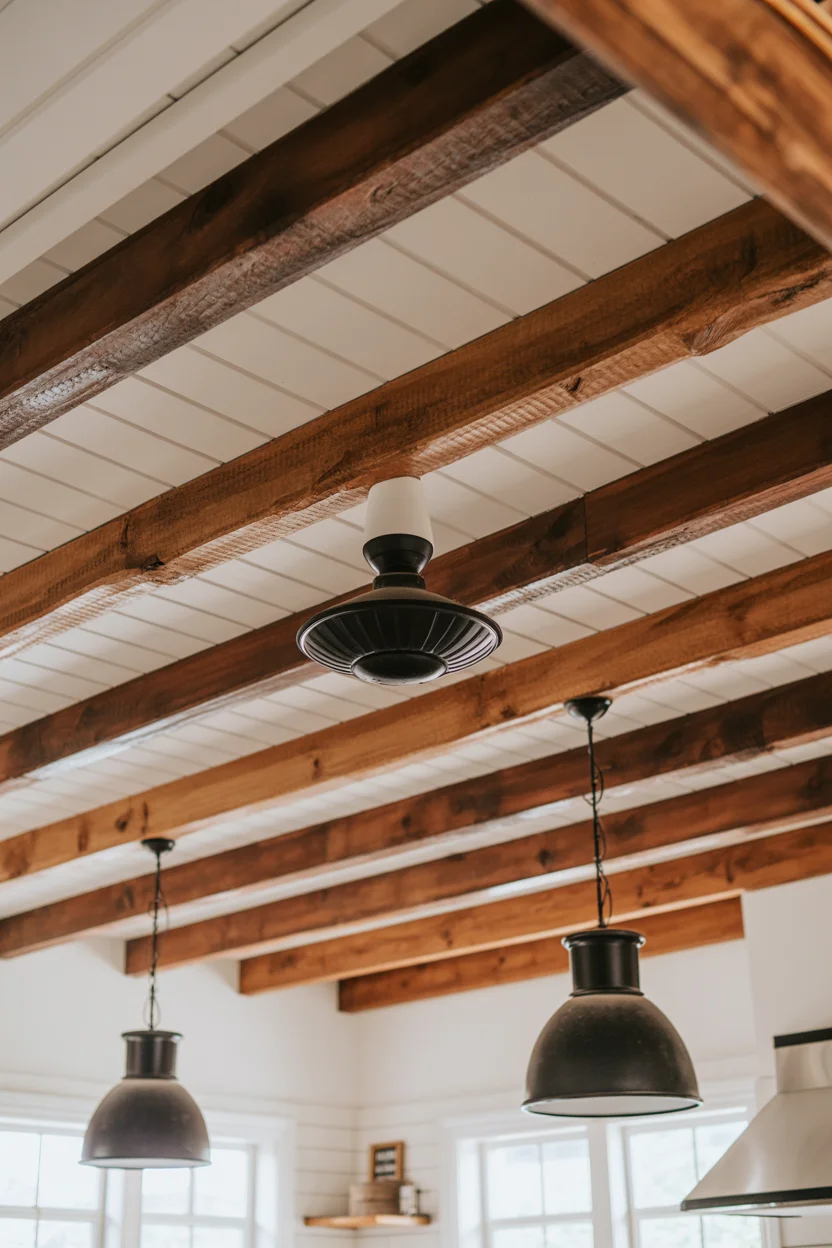
Exposed beams add architectural weight overhead and are one of the fastest ways to make a newer kitchen feel like it belongs in a century-old farmhouse. They work especially well in rooms with vaulted or higher-than-standard ceilings.
Real reclaimed timber beams are structural or semi-structural and carry the most authentic texture, while lightweight faux beams made from polyurethane or wood veneer achieve a very similar look at a fraction of the cost and installation time.
This idea is best suited to kitchens with at least nine feet of ceiling height, since beams can make a standard eight-foot ceiling feel lower and more cramped. It is a strong choice for open-concept spaces that need a defined ‘kitchen zone’ overhead.
10. Checkered or Patterned Floor Tile
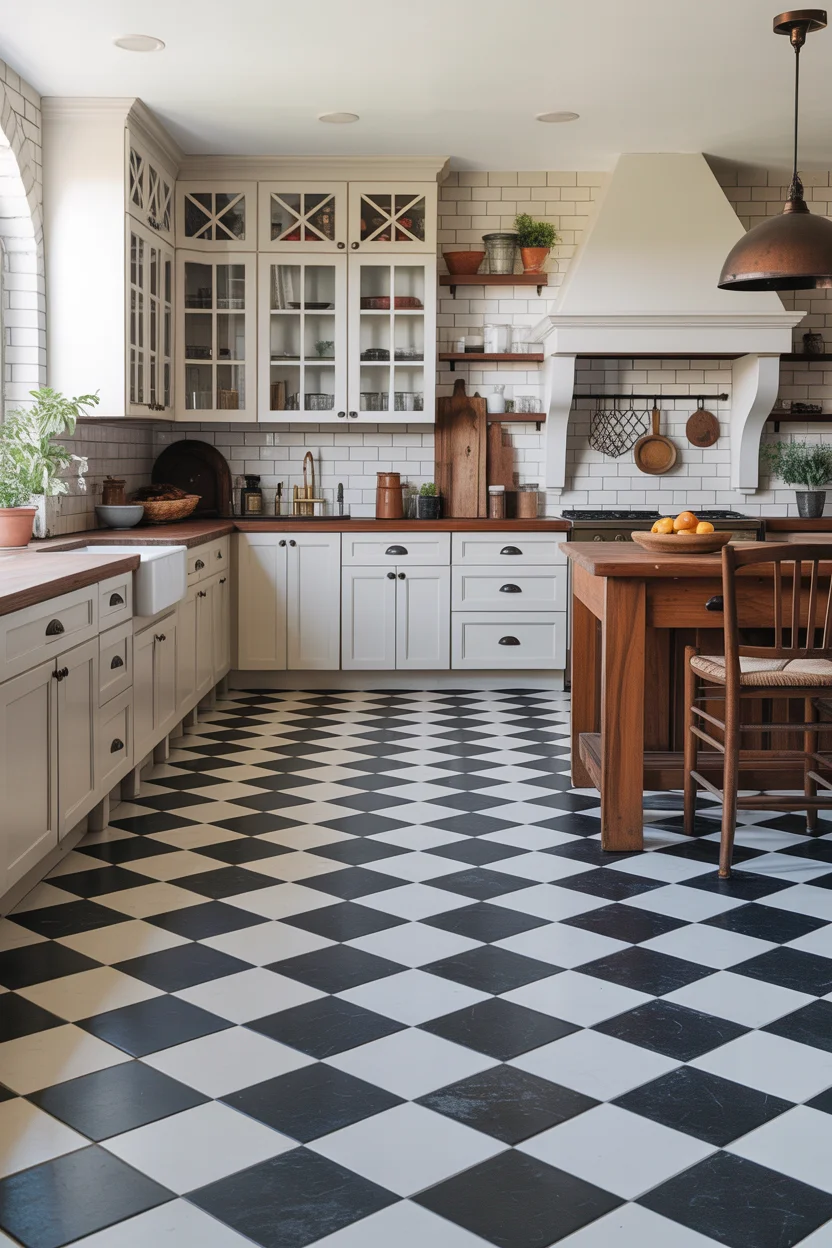
A checkerboard or patterned cement tile floor gives a farmhouse kitchen a playful, vintage-general-store energy that grounds all the neutral cabinetry and countertops above it. Black-and-white checks are the most classic, but soft terracotta and cream patterns are equally at home in this style.
Cement and encaustic tiles hold their pattern permanently since the colour runs through the material, while printed porcelain tiles mimic the look for less money and are more resistant to staining and etching.
Patterned floors suit anyone who wants a bold, photograph-ready feature and is willing to keep the rest of the room simple. It is a riskier choice for very small kitchens, where a busy pattern underfoot can visually shrink the space.
11. Two-Tone Cabinetry
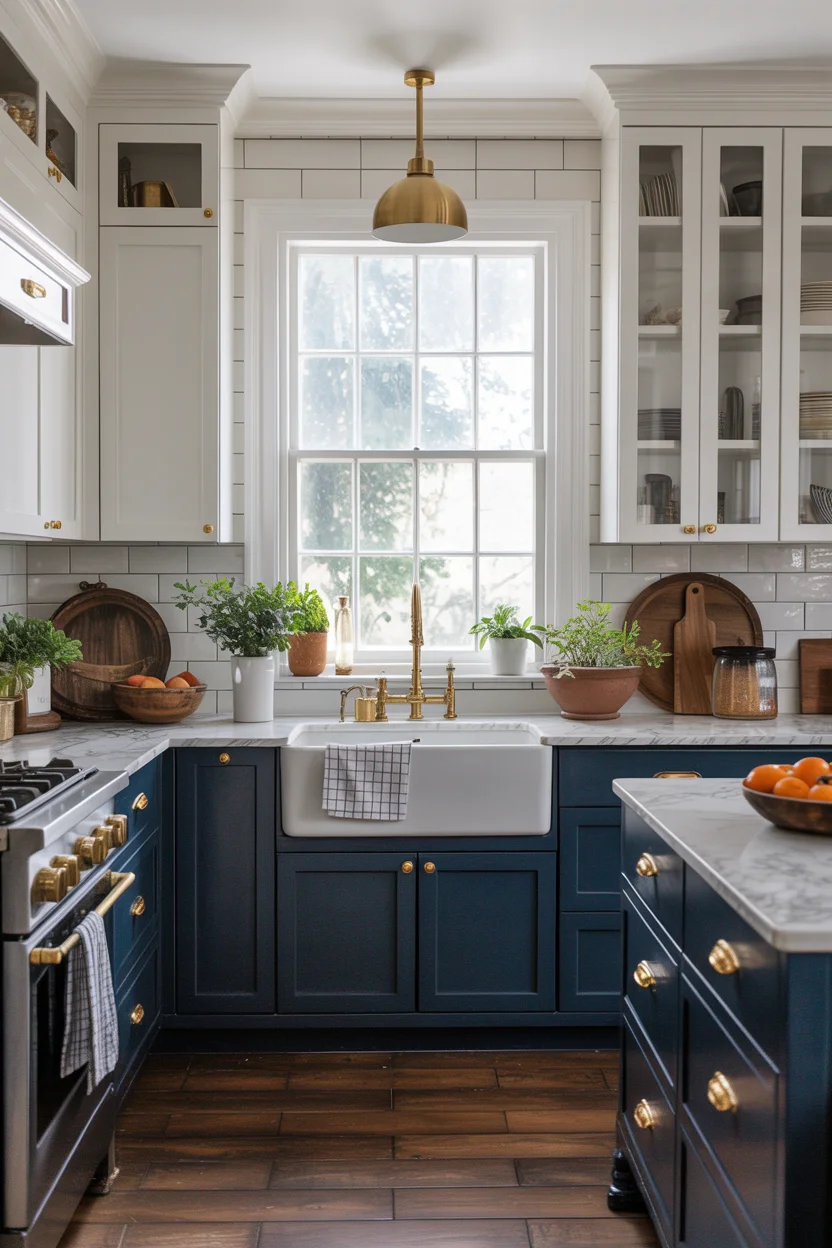
Two-tone cabinetry, most often a deeper colour on the lower cabinets and white or cream up top, adds depth and a modern edge to a traditional farmhouse layout without losing the style’s warmth. Navy, sage green, and charcoal are the most popular lower-cabinet colours right now.
Keeping the island a third, contrasting colour, or matching it to the lower cabinets, are both common approaches, and either one helps break up a large kitchen visually. Brass or matte black hardware tends to bridge the two tones nicely.
This look is a great fit for homeowners who want more personality than an all-white kitchen but still want a broadly resalable palette. It requires a bit more planning during a renovation, since the paint or cabinet order needs two finish specifications instead of one.
12. Open Plate Rack Storage
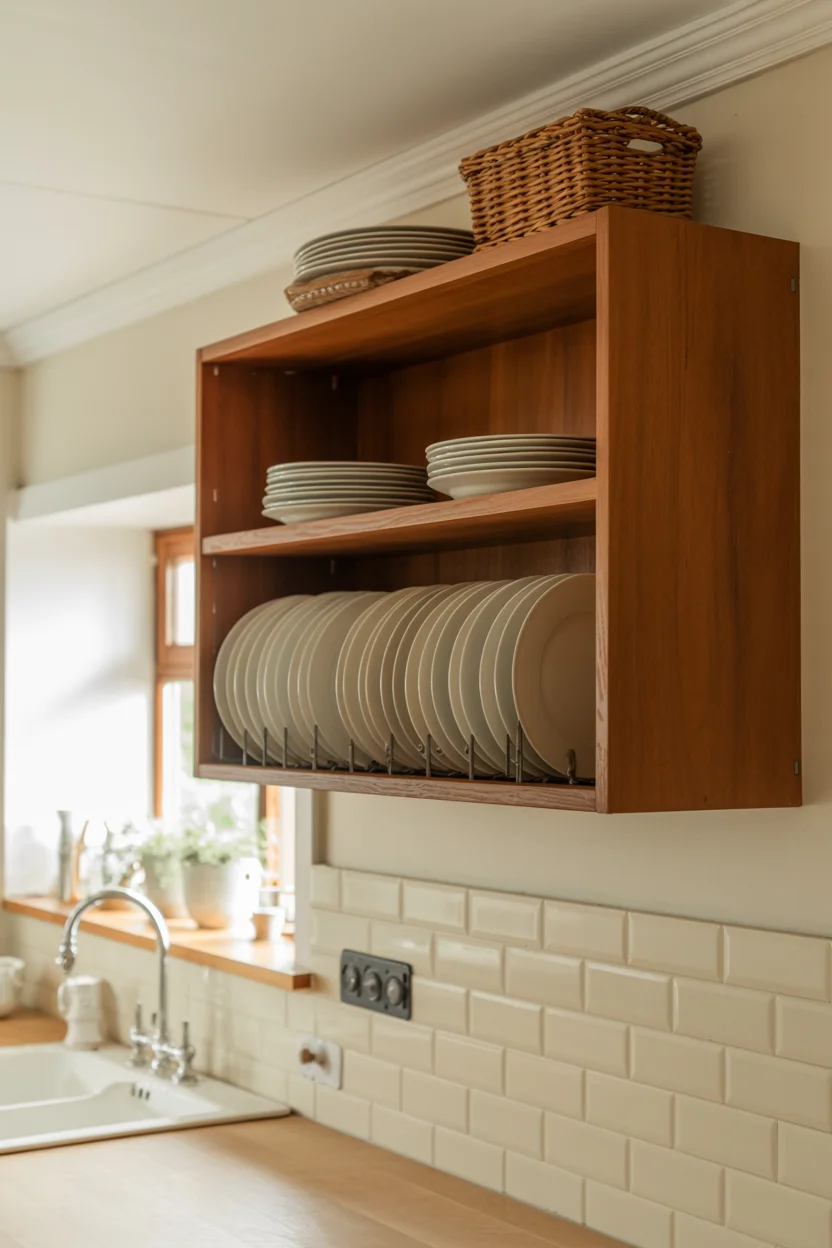
A built-in plate rack is a charming, function-forward detail borrowed from old English and French farmhouse kitchens. Vertical slats hold plates on display and let them air-dry, which is both decorative and genuinely useful next to a sink or dish-drying area.
Unfinished or painted wood racks are typically custom-built into a cabinet run, matching the surrounding millwork, though smaller freestanding versions are available for a lower-commitment update.
This detail is best for people who own a matching set of dishware they are proud to display. It is not the right choice for households with a mismatched, ever-growing dish collection, since the open format highlights everything, tidy or not.
13. Farmhouse Table Dining Nook
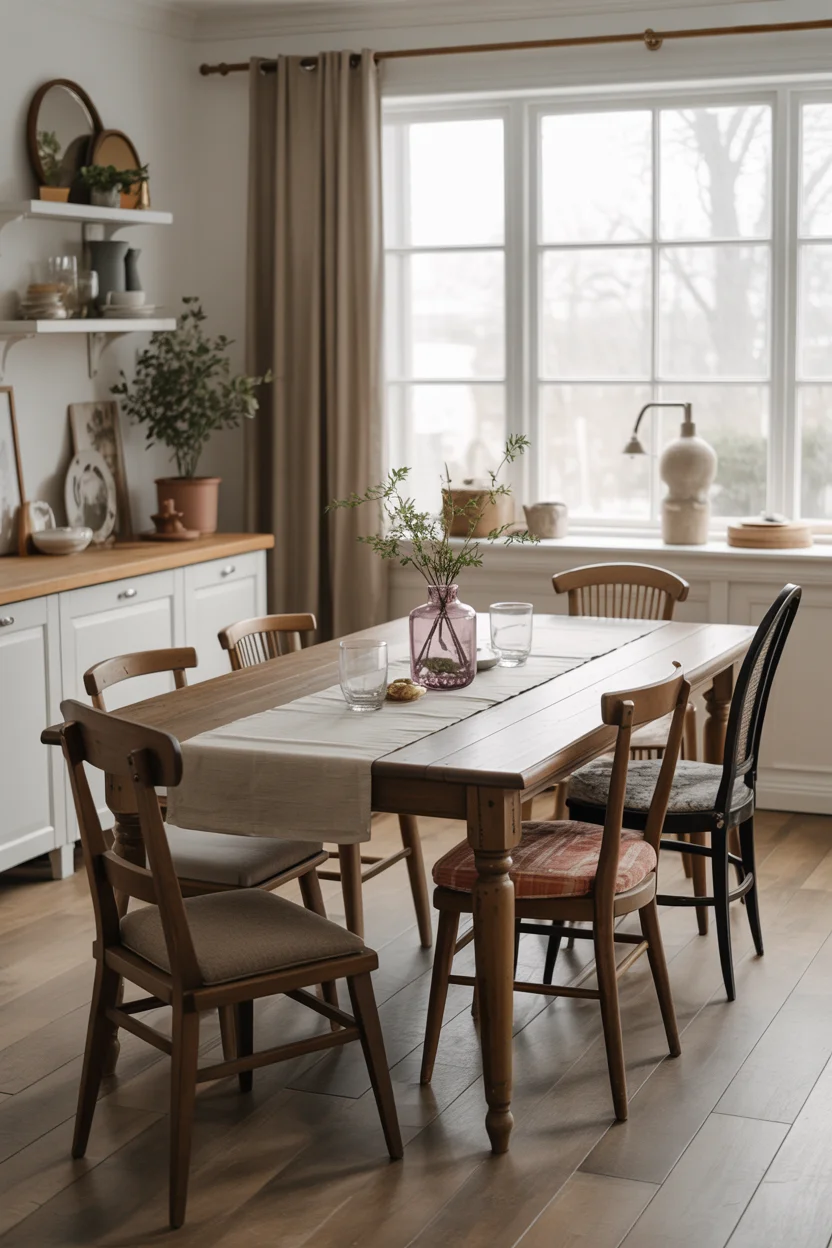
Anchoring an eat-in kitchen with a substantial farmhouse table, rather than a small breakfast bar, restores the room’s original purpose as the heart of the home. A long trestle or turned-leg table comfortably seats a family and extra guests at once.
Mixing a wood bench on one side with upholstered or mismatched wooden chairs on the other keeps the look relaxed rather than matched-set formal, which is very much in keeping with farmhouse style.
A dining nook like this needs real square footage to breathe, so it is best suited to larger eat-in kitchens or open-concept layouts. In a tighter kitchen, a narrow drop-leaf or bistro-style table can deliver a similar feel at a smaller scale.
14. Copper or Brass Hardware Accents
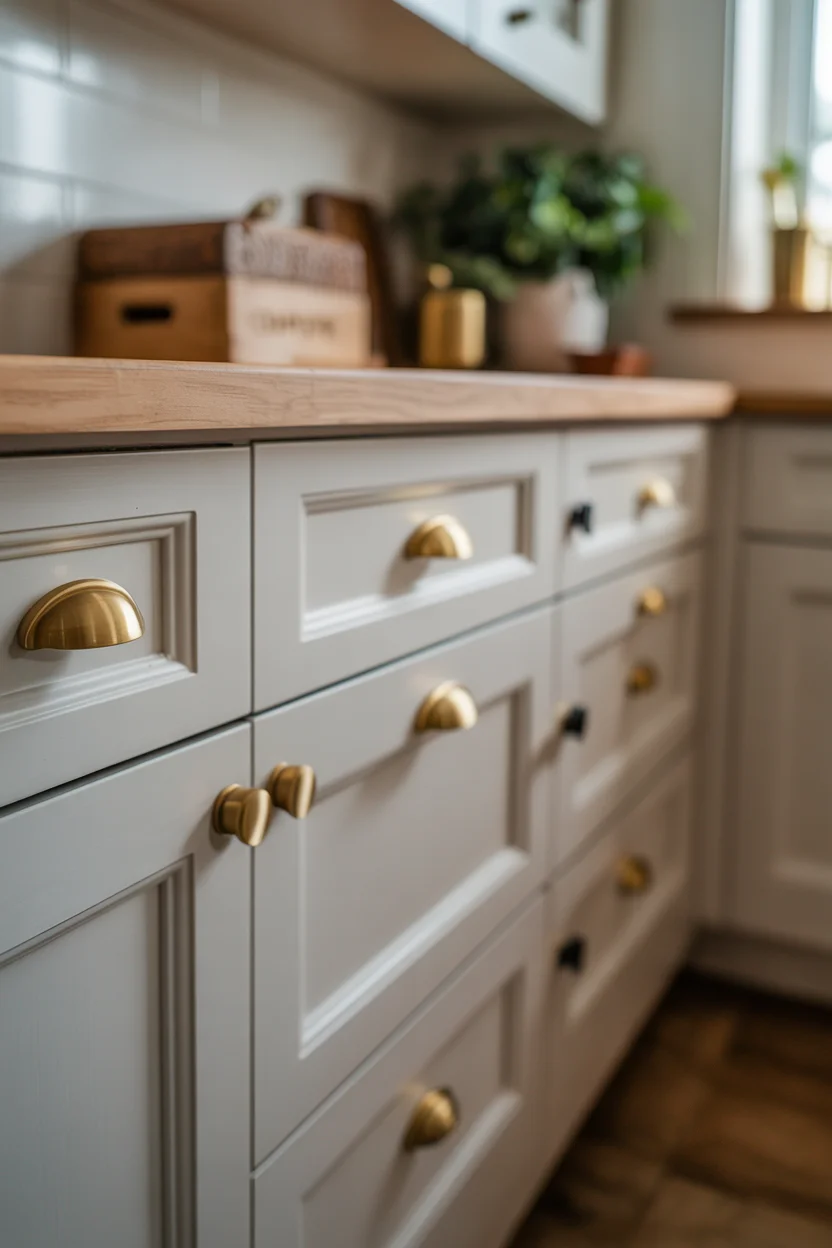
Swapping standard hardware for warm copper or brass cup pulls and knobs is one of the least expensive ways to add farmhouse polish to existing cabinetry. The warm metal tone contrasts beautifully against white or pale cabinet paint.
Unlacquered brass develops a soft living patina over time, which many farmhouse-style homeowners actually prefer, while lacquered brass stays shiny and requires less upkeep.
This is an ideal weekend project for anyone updating a kitchen on a tight budget, since it requires no demolition. It has less impact in kitchens with dark or heavily patterned cabinetry, where the hardware tone reads less distinctly.
15. Woven Baskets for Open Storage
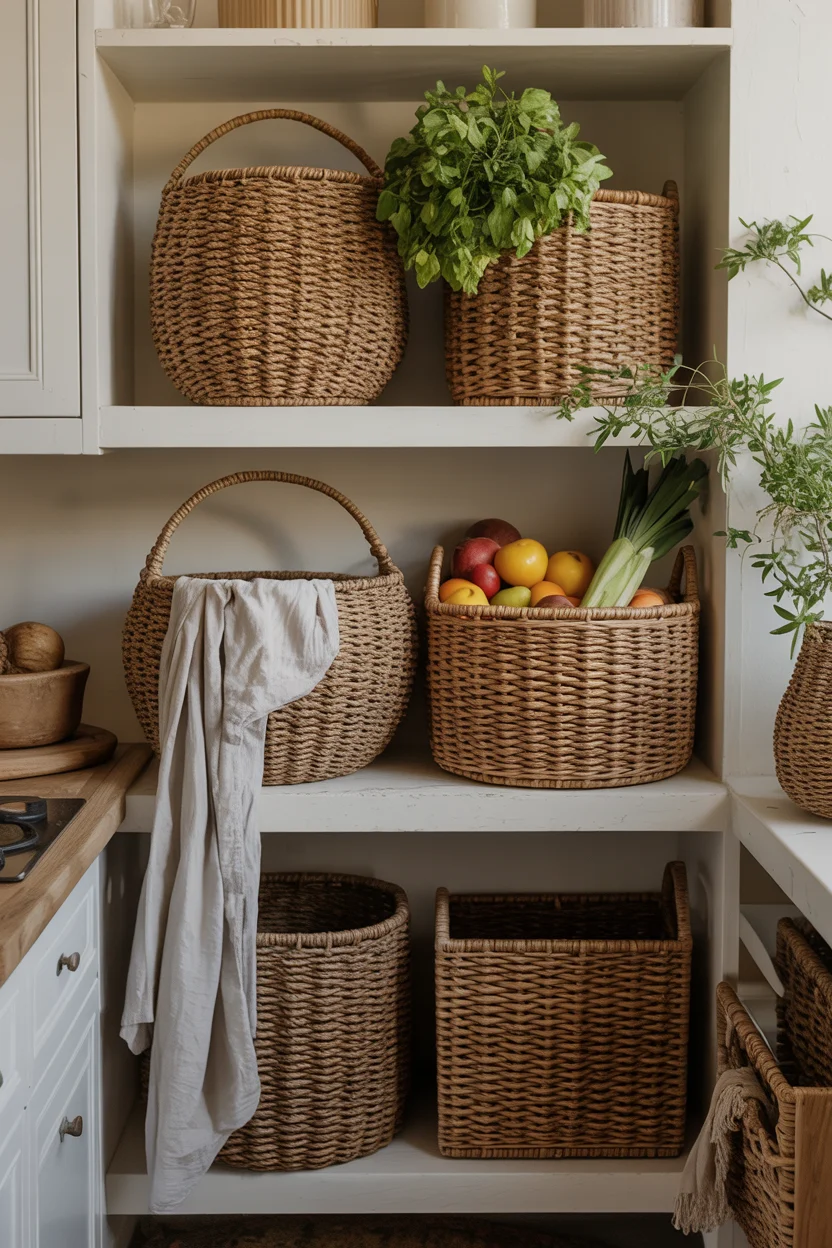
Woven baskets are a simple styling trick that softens open shelving or the space beneath an island, adding natural texture without any construction. They are also genuinely useful for corralling produce, linens, or pantry overflow that would otherwise look cluttered.
Seagrass, rattan, and wicker in varying sizes create visual rhythm when grouped, and lined baskets can even stand in for small pantry bins.
This idea suits nearly any budget and any stage of a farmhouse kitchen project, since baskets can be added to a finished space in an afternoon. They do need occasional dusting and are not ideal for holding anything damp, since natural fibres can mildew.
16. Vintage or Vintage-Style Rugs
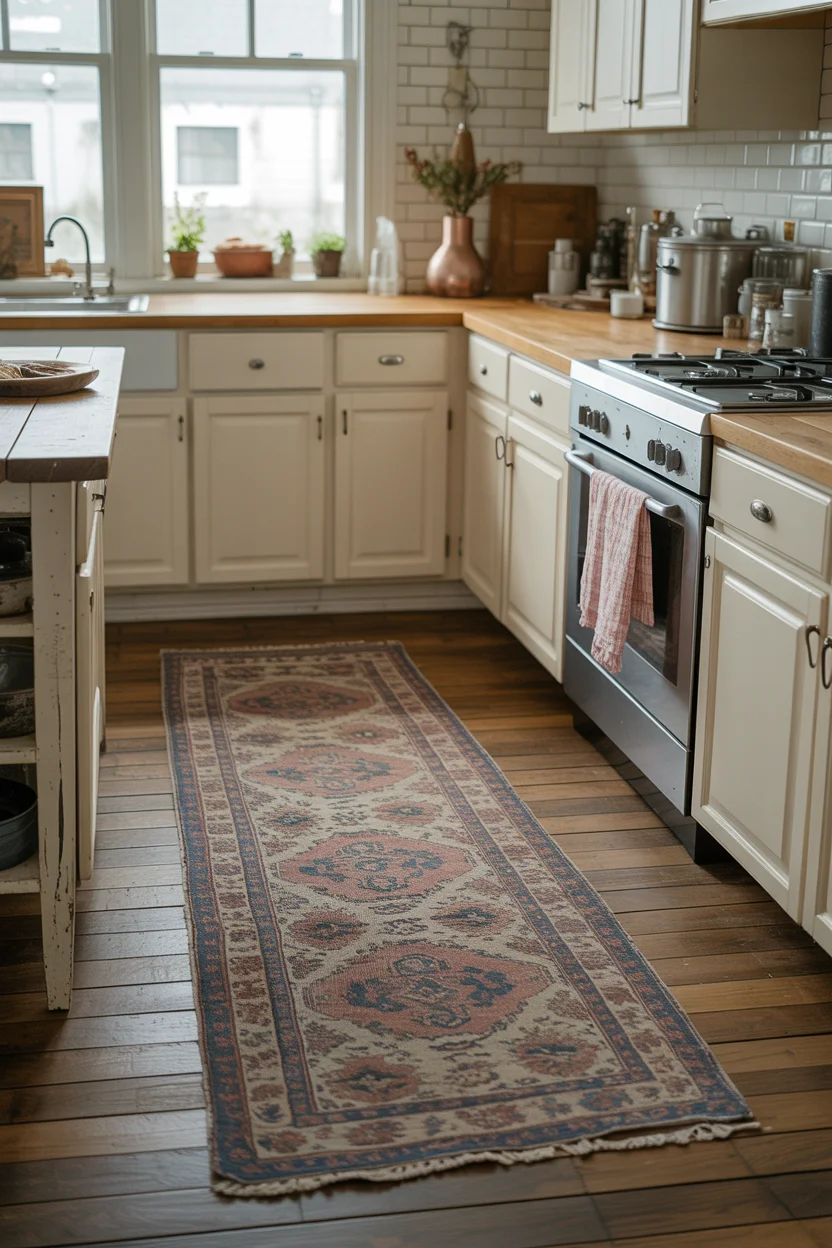
A worn-in vintage or vintage-style runner adds colour, pattern, and softness underfoot in front of the sink or stove, where a kitchen otherwise tends to feel hard and utilitarian. The faded, imperfect patterns of Turkish and Persian-style rugs suit the collected-over-time farmhouse aesthetic especially well.
Low-pile, flat-weave options are the most practical for a kitchen since they are easier to shake out and clean than a plush rug, and many modern vintage-style rugs are made specifically for high-traffic, spill-prone spaces.
This is a low-commitment, high-impact addition for renters or anyone not ready for a full renovation. It requires more frequent cleaning than a bare floor, so it is a better fit for households willing to vacuum or shake the rug out regularly.
17. Mason Jar and Crockery Accents
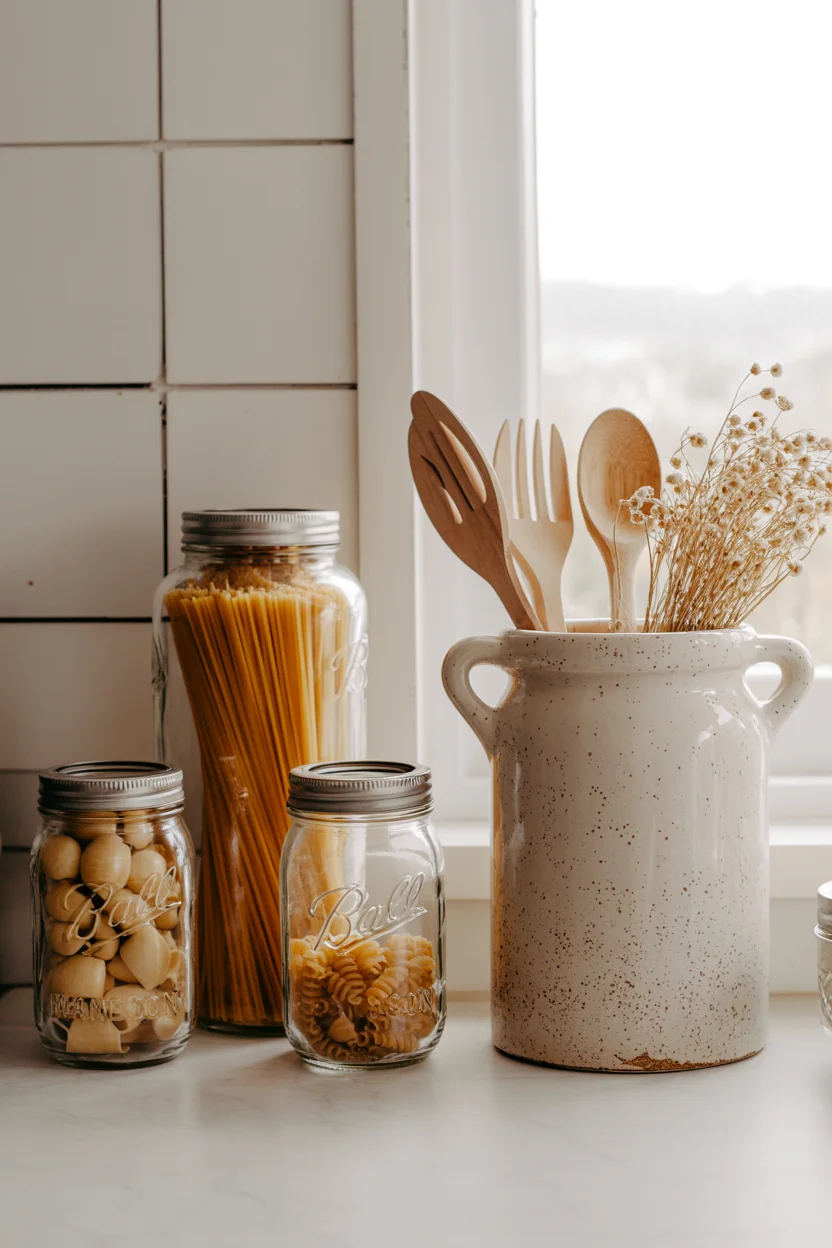
Mason jars and stoneware crocks are inexpensive, functional accents that reinforce the farmhouse story on the countertop itself. Filled with pantry staples like flour, rice, or pasta, jars keep everyday ingredients visible and within reach while adding texture.
A large crock near the stove is a classic spot to store wooden spoons and utensils upright, keeping them handy without cluttering a drawer.
These small details are ideal for finishing touches once the larger renovation elements are in place, and they cost very little to add or swap out seasonally. They are purely decorative additions rather than structural choices, so they won’t move the needle much in a kitchen that still needs bigger updates.
18. Panel-Ready or Vintage-Look Appliances
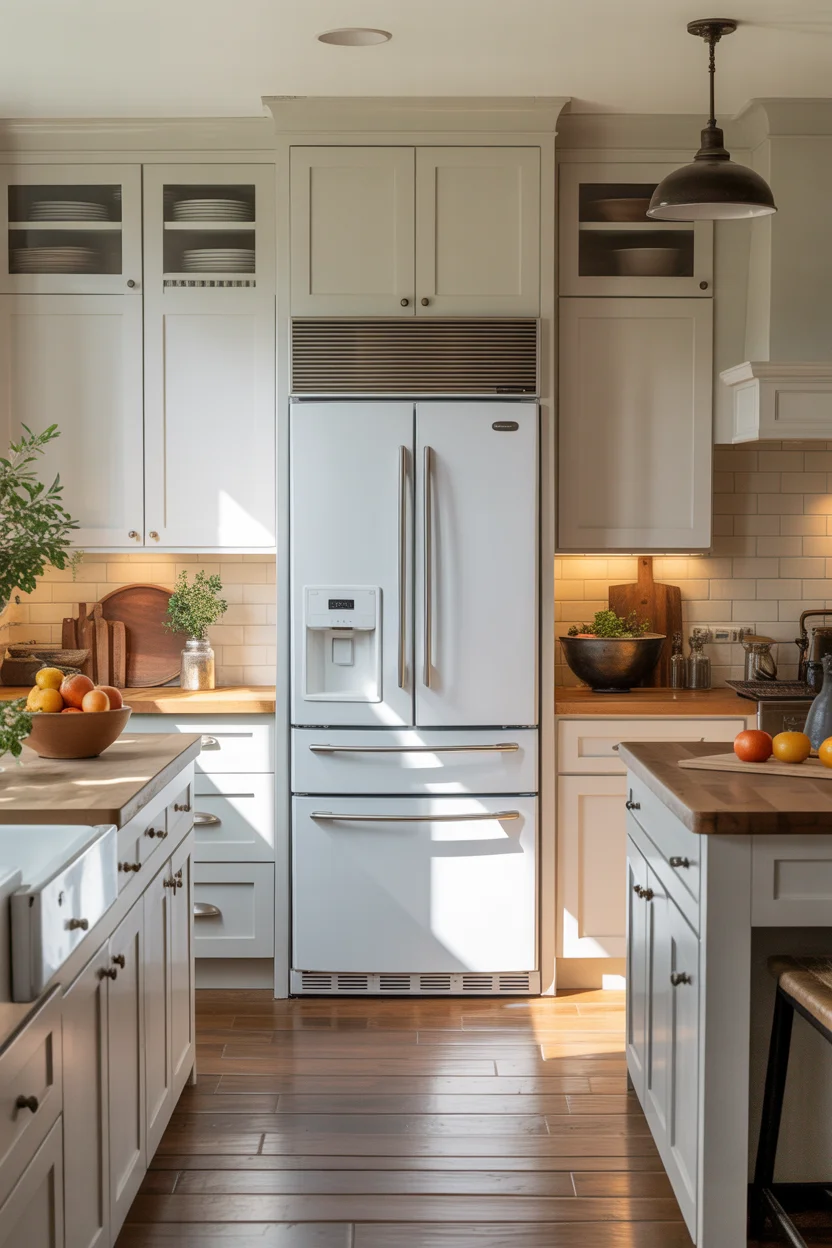
Panel-ready refrigerators and dishwashers, fitted with custom cabinet-matching fronts, let major appliances disappear into the cabinetry rather than stand out as modern boxes. This keeps sightlines clean and lets other farmhouse details, like the range or sink, take center stage.
For those who prefer to keep appliances visible, cream, matte black, or retro-styled refrigerators and ranges lean into the vintage-farmhouse look directly rather than hiding it.
Panel-ready appliances are best for kitchens undergoing a full renovation, since custom panels need to be ordered and fitted during the cabinet install. For a lighter update, a retro-finish appliance is a simpler swap that still delivers strong farmhouse character.
Planning and Buying Tips
Before shopping for materials or booking a contractor, take stock of the practical factors that will shape which farmhouse ideas actually work in your kitchen.
Space Requirements
- Allow at least 42 inches of clearance around an island for one cook, and 48 inches or more if two people will work in the kitchen at once.
- A farmhouse dining table needs roughly 36 inches of clearance behind each seated chair to allow people to get up and pass by comfortably.
- Open shelving works best on a wall with at least a few feet of unbroken space; cramming shelves into a tight run tends to look cluttered rather than curated.
Installation and Setup Considerations
- Apron-front sinks require a specific base cabinet cutout and often a different countertop template than a standard drop-in sink. Hence, this decision needs to be finalized early in the design process.
- Reclaimed wood, whether for beams, shelving, or an island top, should be kiln-dried or heat-treated before installation to prevent pests and future warping.
- Panel-ready appliances need custom cabinet fronts ordered at the same time as the rest of the cabinetry, so confirm appliance selections before finalizing the cabinet order.
Structural and Technical Factors
- Exposed beams that are load-bearing require a structural engineer’s sign-off; decorative faux beams do not, which makes them a much simpler retrofit.
- A heavier apron-front sink, especially cast iron, may require additional cabinet support or bracing depending on the base cabinet construction.
- Statement range hoods often need dedicated exterior ventilation ductwork, which can affect both cost and which wall the range can realistically sit against.
Standard Sizing and Specs to Shop For
- Apron sinks commonly come in 30, 33, and 36-inch widths; 33 inches is the most popular size for a standard cabinet run.
- Kitchen islands generally need a minimum footprint of about 40 by 24 inches to be functional, with 6 to 8 feet being typical for a family-sized island.
- Standard base cabinets are 34.5 inches tall and 24 inches deep; upper cabinets are typically 12 to 18 inches deep, an important spec when planning open shelving depth.
Cost Breakdown
Farmhouse kitchen projects can range from a weekend styling refresh to a full gut renovation. Here is a rough guide to what different budget levels typically include.
Budget: $2,000 – $15,000
This range covers cosmetic updates rather than a full remodel: new hardware, paint, open shelving, a butcher block countertop overlay, pendant lighting, and styling accents like baskets and rugs. Installation is largely DIY-friendly or requires only minor electrical and carpentry work.
Mid-Range: $15,000 – $40,000
This tier typically includes new Shaker cabinetry (painted MDF or a mix of materials), a fireclay or stainless apron sink, quartz or butcher block countertops, tile backsplash, and updated appliances. Professional installation for cabinetry, plumbing, and electrical work is standard at this level, and most timelines run four to eight weeks.
Luxury / Premium: $40,000 – $80,000+
At the top end, expect solid wood custom cabinetry, a reclaimed wood island, natural stone counters, a professional-style range with a custom hood, panel-ready appliances, and structural changes like removing a wall or adding real beams. Installation costs rise significantly here due to custom millwork, structural engineering, and extended ventilation or electrical work, and timelines often run two to four months.
Materials and Options Comparison
| Material / Feature | Price Range | Durability | Best For |
|---|---|---|---|
| Fireclay apron sink | $400 – $1,200 | Very high (chip-resistant) | Daily heavy use, classic look |
| Cast iron apron sink | $600 – $1,800 | Very high, heavy | Long-term durability |
| Stainless apron sink | $300 – $900 | High, can dent/scratch | Budget-friendly farmhouse look |
| Butcher block counters | $35 – $70/sq ft installed | Moderate, needs resealing | Warmth, prep-friendly surfaces |
| Quartz counters | $60 – $120/sq ft installed | Very high, low maintenance | Busy households, easy care |
| Painted MDF Shaker cabinets | $150 – $300/linear ft | Moderate | Budget renovations |
| Solid wood Shaker cabinets | $400 – $700/linear ft | Very high | Long-term investment kitchens |
| Reclaimed wood island top | $800 – $3,000+ | High, character marks expected | Statement centerpiece |
| Cement/encaustic tile floor | $10 – $25/sq ft installed | High, can chip at edges | Bold pattern flooring |
| PVC beadboard backsplash | $3 – $8/sq ft installed | High, moisture-resistant | Budget-friendly texture |
Maintenance Tips
- Reseal butcher block countertops with food-safe mineral oil every one to three months, more often near the sink, to prevent water damage and cracking.
- Wipe fireclay and cast iron sinks with a non-abrasive cleaner; avoid dropping heavy cast iron pans directly into the basin, which can chip the finish over time.
- Dust open shelving and displayed dishware weekly, and rotate rarely-used pieces back into closed storage to reduce buildup.
- Vacuum or shake out kitchen rugs at least once a week, and choose a low-pile or flat-weave style so spills can be blotted quickly rather than soaking in.
- Touch up painted cabinetry with matched paint as soon as small chips appear, since farmhouse-style soft whites show wear more visibly than darker finishes.
- Common issue to avoid: sealing cement or encaustic tile improperly, which leads to staining. Reseal these floors annually or as recommended by the manufacturer.
Frequently Asked Questions
What makes a kitchen a farmhouse kitchen?
A farmhouse kitchen typically combines a mix of natural materials, warm wood tones, painted Shaker-style cabinetry, and vintage-inspired fixtures like an apron-front sink. The overall feel is casual, functional, and a little worn-in rather than sleek or highly polished.
How much does a farmhouse kitchen remodel cost?
A full farmhouse kitchen remodel typically runs from around 15,000 dollars for a budget-friendly refresh to well over 60,000 dollars for a high-end renovation with custom cabinetry, natural stone, and premium appliances. Cost depends heavily on cabinet material, countertop choice, and whether the layout is changing.
Is farmhouse style going out of trend?
The heavy, all-white shiplap version of farmhouse style has cooled off somewhat, but the core elements, including Shaker cabinetry, apron sinks, and natural wood accents, remain broadly popular because they are simple, functional, and resell well. Many homeowners are now blending farmhouse elements with warmer, more modern touches.
What countertop is best for a farmhouse kitchen?
Butcher block and honed quartz or marble-look quartz are the two most popular countertop choices for farmhouse kitchens. Butcher block adds warmth and a traditional feel, while quartz offers a similar soft, matte look with far less required maintenance.
Can I get a farmhouse kitchen look without a full renovation?
Yes. Swapping cabinet hardware for brass or black pulls, adding open wood shelving, hanging black pendant lights, and styling the counters with woven baskets and stoneware crocks can shift a kitchen’s feel significantly without any structural work.
How to Choose the Right Farmhouse Kitchen Ideas for You
The best farmhouse kitchen is the one that matches your actual space, budget, and daily habits rather than trying to include every idea on this list at once. If square footage is limited, prioritize high-impact, lower-cost changes like hardware, lighting, and a butcher block counter overlay before considering a full island or dining nook. If your budget is flexible but your kitchen sees heavy daily use, lean toward durable materials like quartz and fireclay over higher-maintenance options like open shelving and reclaimed wood.
Above all, choose the details that reflect how you actually live and cook, whether that’s a statement range for a serious home chef or a simple styling refresh with baskets, brass hardware, and a vintage rug for a weekend project. Start with one or two ideas from this list, see how they feel in your space, and build outward from there.
Ready to bring these farmhouse kitchen ideas into your own home? Start with a single focal-point change this weekend, whether it’s new pendant lights or a butcher block counter, and let the rest of the room grow around it.


- Be Respectful
- Stay Relevant
- Stay Positive
- True Feedback
- Encourage Discussion
- Avoid Spamming
- No Fake News
- Don't Copy-Paste
- No Personal Attacks
- Be Respectful
- Stay Relevant
- Stay Positive
- True Feedback
- Encourage Discussion
- Avoid Spamming
- No Fake News
- Don't Copy-Paste
- No Personal Attacks
