18 Kitchen Organization Hacks That Will Turn Cluttered Cabinets Into a Chef-Worthy Space
Published: 26 Jul 2026
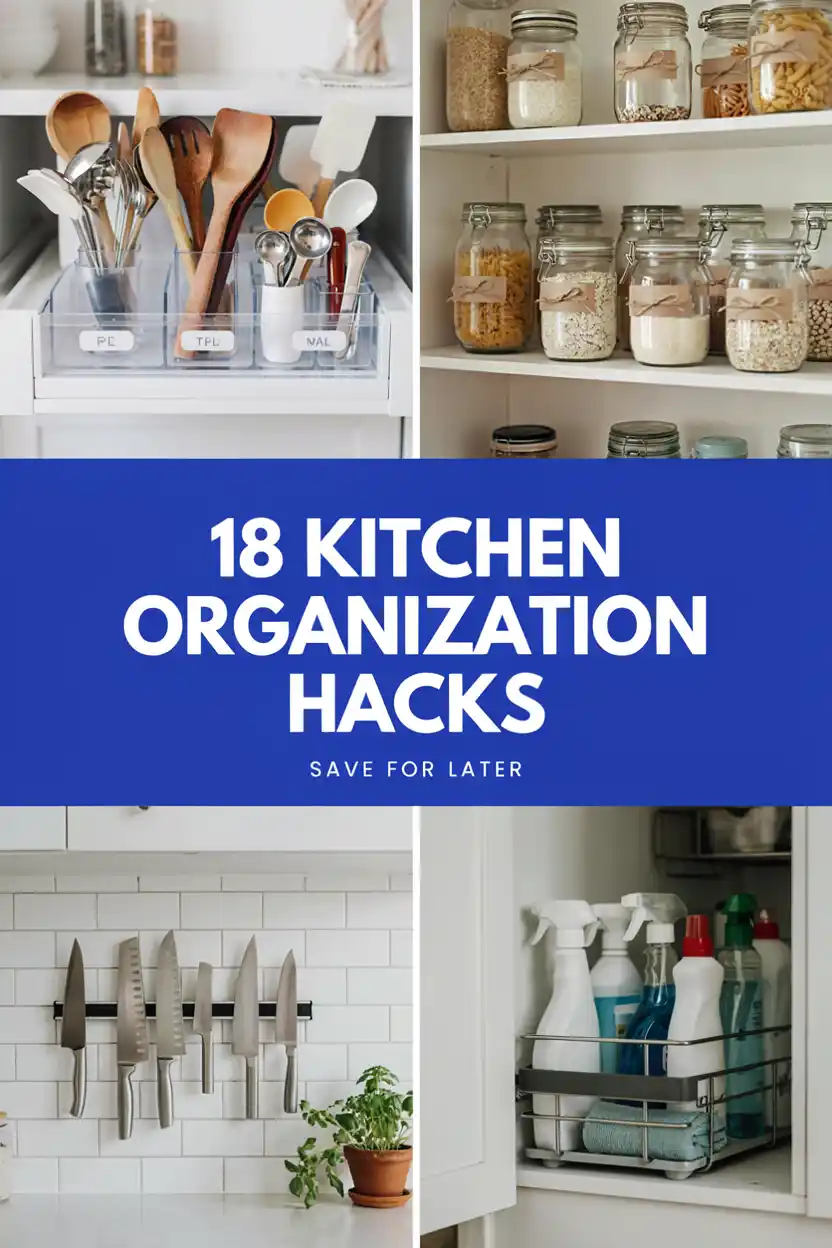
If your cabinets spill open the second you reach for a mixing bowl, or your pantry has become a game of Tetris you never win, you are not alone. Kitchen organization hacks work so well because they target the exact spots where clutter builds up fastest: deep cabinets, awkward corners, drawers, and countertops that collect everything with no home. Instead of a full remodel, these hacks use smart storage products, simple layout changes, and a bit of labelling discipline to reclaim space you already have. This article walks through 18 practical kitchen organization hacks, from pull-out pantry shelves to magnetic knife strips, along with buying tips, cost ranges, a materials comparison table, maintenance advice, and answers to the questions people search most. By the end, you will know exactly which hacks fit your space, your budget, and how you actually cook.
Is Kitchen Organization Right for You?
Before buying bins, racks, or drawer inserts, it helps to weigh whether a full organization overhaul makes sense for your kitchen right now.
Pros
- Low cost compared to a renovation — most hacks cost far less than replacing cabinetry
- Fast to implement — many projects take a single weekend or even an afternoon.
- Increases usable storage without adding square footage
- Makes daily cooking and cleanup noticeably faster once everything has a fixed home
- Boosts resale appeal since organized, well-fitted storage reads as a well-maintained kitchen
Cons
- Some hacks (pull-out shelves, drawer inserts) require exact measuring and light installation
- Upfront cost adds up if you tackle every cabinet and drawer at once
- Certain products only fit standard cabinet sizes, so older or custom kitchens may need custom solutions
- Organization systems need periodic maintenance,e or they slowly revert to clutter
- Renters may be limited to non-permanent options that avoid drilling or adhesive damage
1. Pull-Out Pantry Shelves
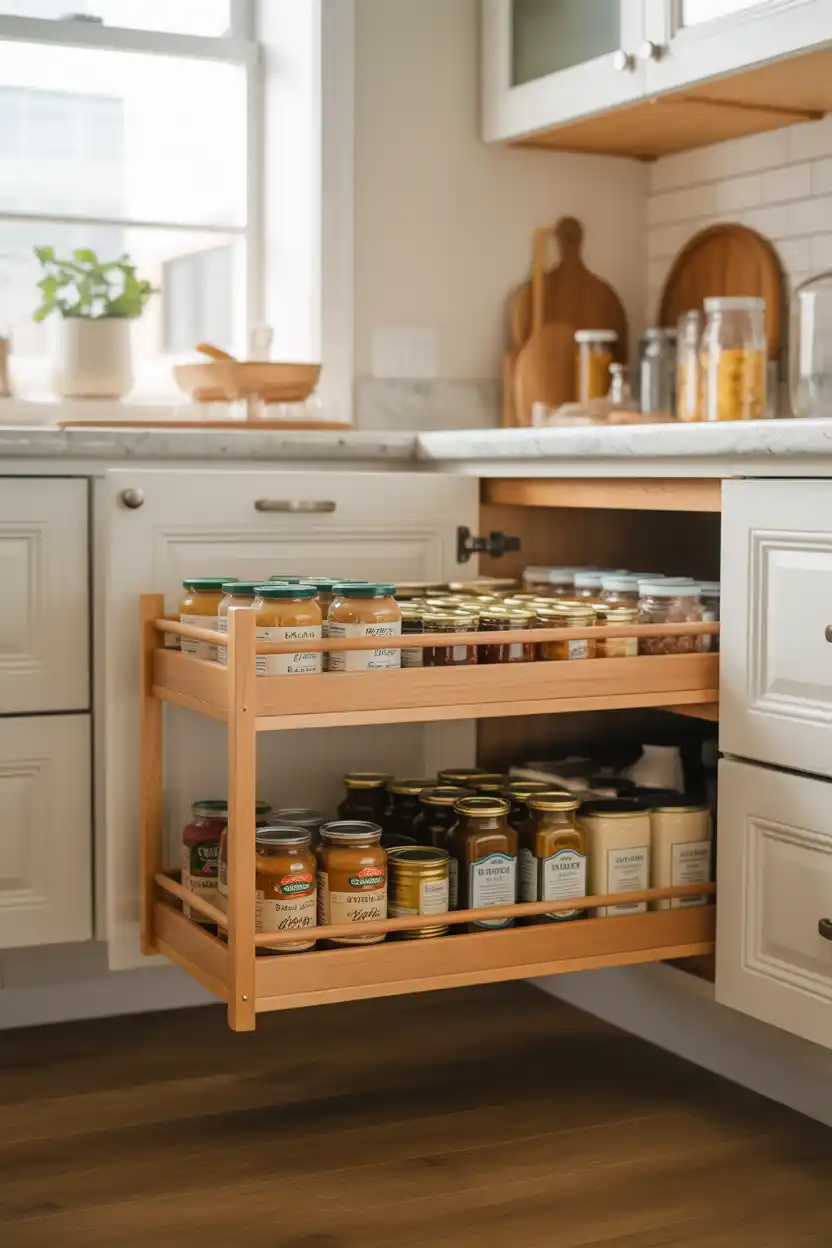
Pull-out shelves convert a deep, dark pantry cabinet into fully visible storage by sliding forward on drawer glides. Instead of digging through three rows of cans to find the one in back, everything rolls out into view and reach.
These work best in kitchens with tall pantry cabinets or narrow floor-to-ceiling closets where items get lost in the back corners. Look for plywood or solid-wood shelves rated for at least 100 pounds, with full-extension glides so the shelf comes all the way out.
This hack suits homeowners who cook often and want quick access to staples, as well as anyone tired of expired cans hiding at the back of a cabinet.
2. Drawer Dividers for Utensils
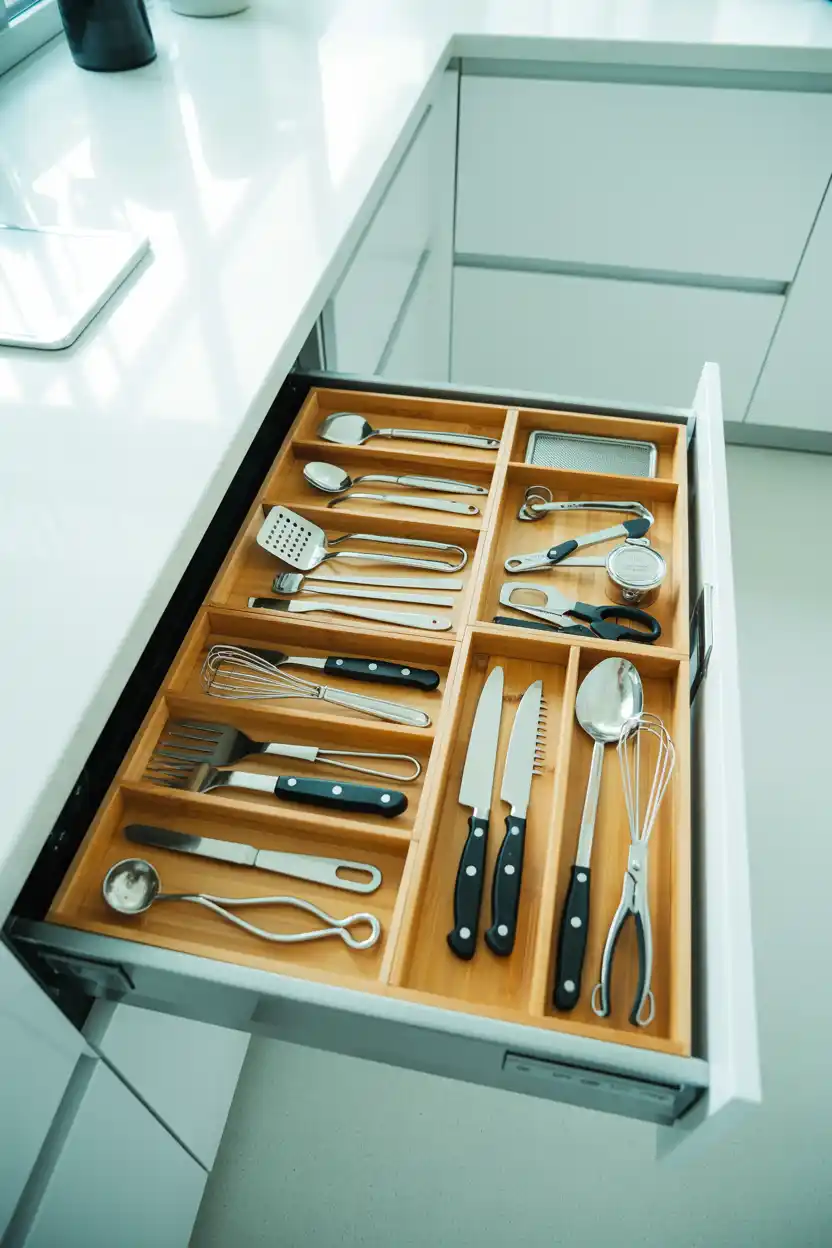
A simple drawer divider turns a jumbled utensil drawer into a set of clear compartments, so tongs, whisks, and spatulas each get their own slot instead of tangling together.
Bamboo and acacia wood dividers add warmth and durability, while adjustable plastic or bamboo expandable trays fit irregular drawer widths. Expandable models are ideal for rental kitchens since no cutting or mounting is required.
Best suited for anyone with a junk-drawer utensil situation, this hack pays off daily every time you reach for a specific tool without rummaging.
3. Under-Sink Pull-Out Organizer
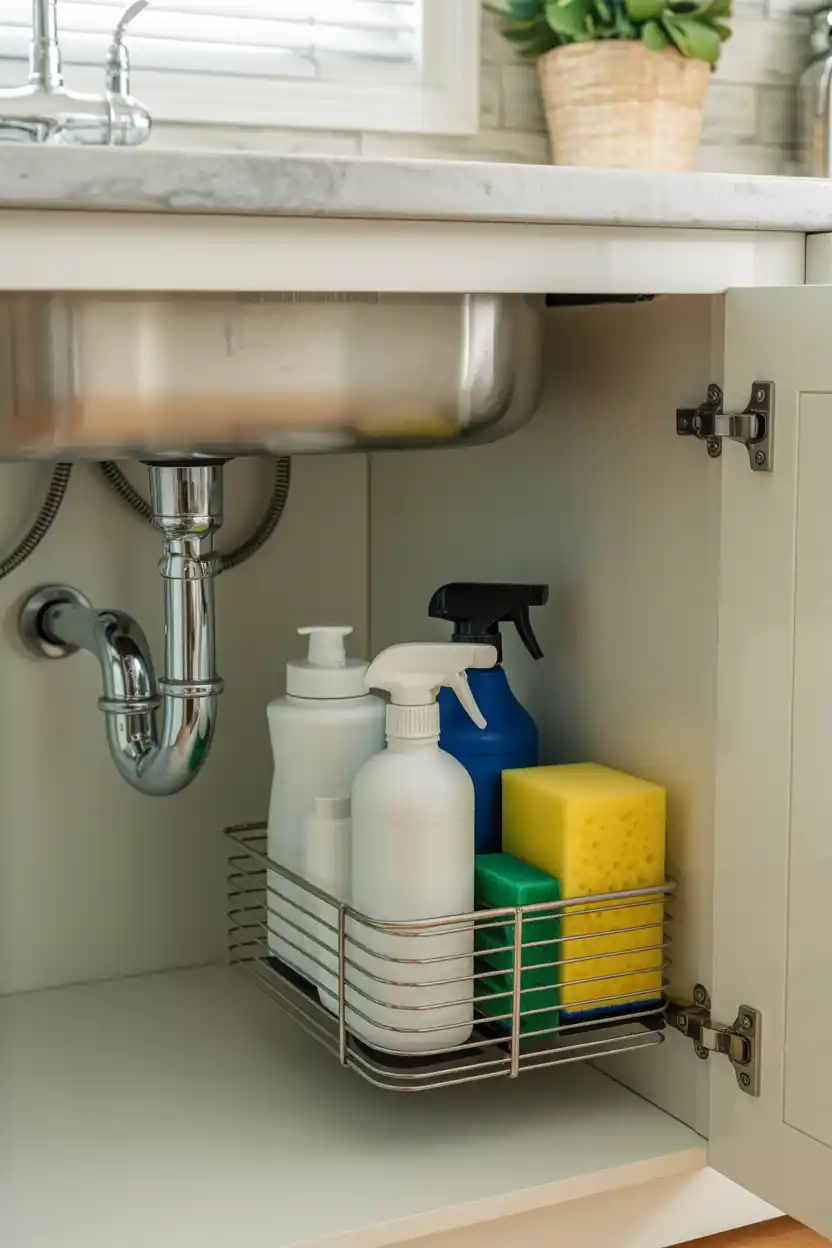
Under-sink cabinets waste space around the pipes, and cleaning bottles tend to tip over into a chaotic pile. A sliding two-tier organizer or a shelf built around the plumbing reclaims that dead space.
Choose rust-resistant coated wire or moisture-sealed wood, since this area sees occasional water exposure. Some organizers include a caddy that lifts out for carrying supplies to another room.
Great for anyone who stores cleaning products, trash bags, and dish soap refills under the sink and wants them upright and visible instead of tipped over in a dark cabinet.
4. Vertical Baking Sheet Dividers
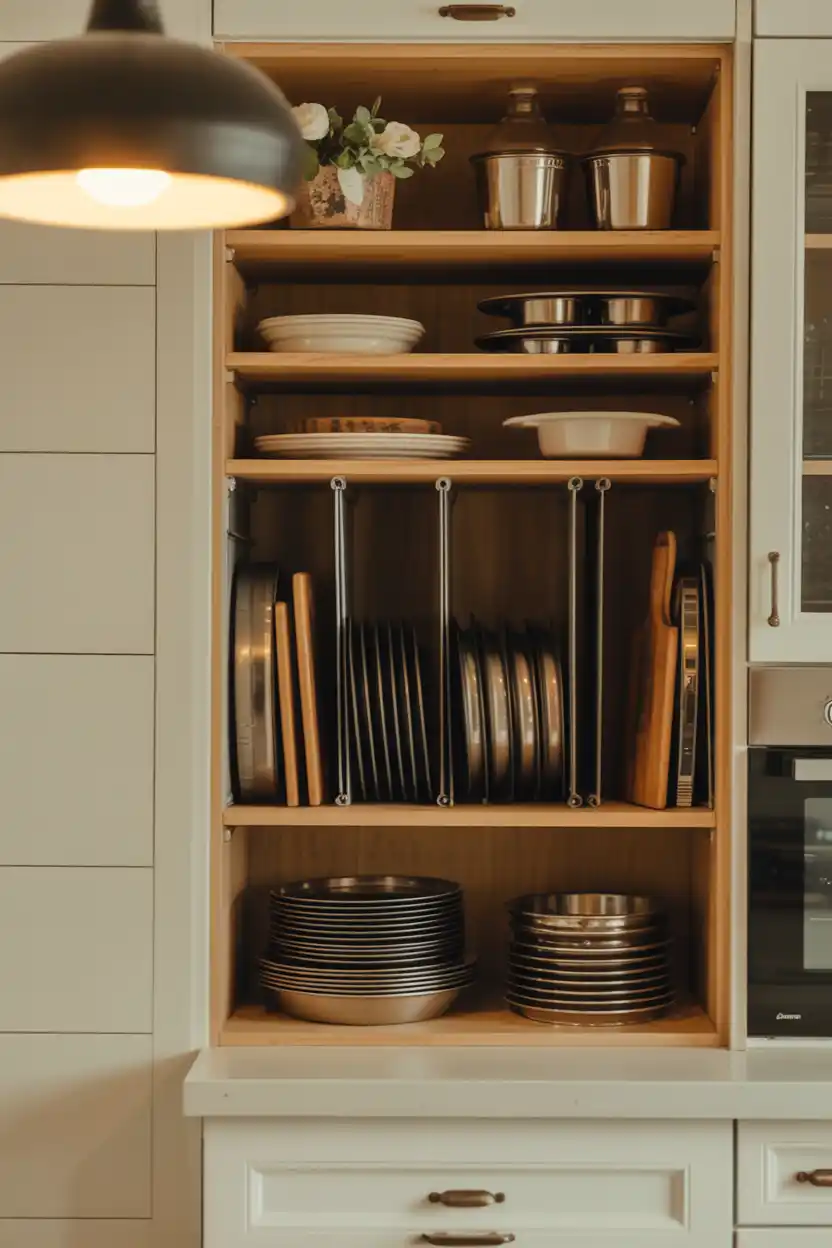
Baking sheets, cutting boards, and cooling racks are awkward to stack flat since the piece you need is always on the bottom. Vertical dividers let each item slide in and out independently, like files in a cabinet.
Adjustable tension-rod dividers install without tools and work in nearly any cabinet, while fixed wood or metal inserts offer a sturdier long-term option in a dedicated baking cabinet.
This hack is especially useful for home bakers with multiple sheet pans, and for anyone who has ever knocked over a stack of pans reaching for the one at the bottom.
5. Lazy Susan for Corner Cabinets
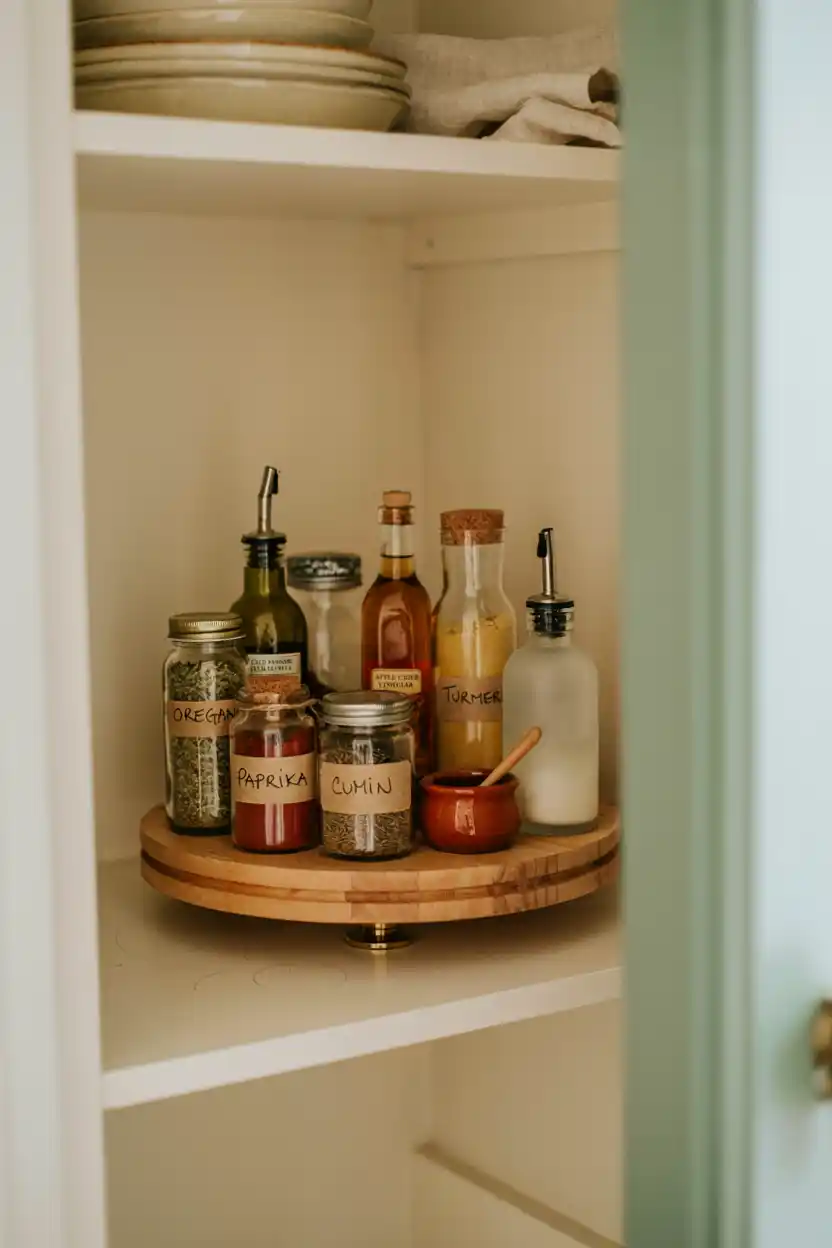
Corner cabinets are notorious for swallowing items in their deep, hard-to-reach back corners. A rotating lazy susan lets you spin the whole shelf into view instead of crawling halfway into the cabinet.
Two-tier or three-tier turntables maximize vertical space, and models with raised edges keep bottles from sliding off during the spin. Look for full 360-degree rotation versus half-moon designs, which still leave a dead zone.
Ideal for anyone with a blind corner cabinet, especially for storing oils, spices, and condiments that get used often but are easy to lose track of.
6. Clear Stackable Bins for Pantry
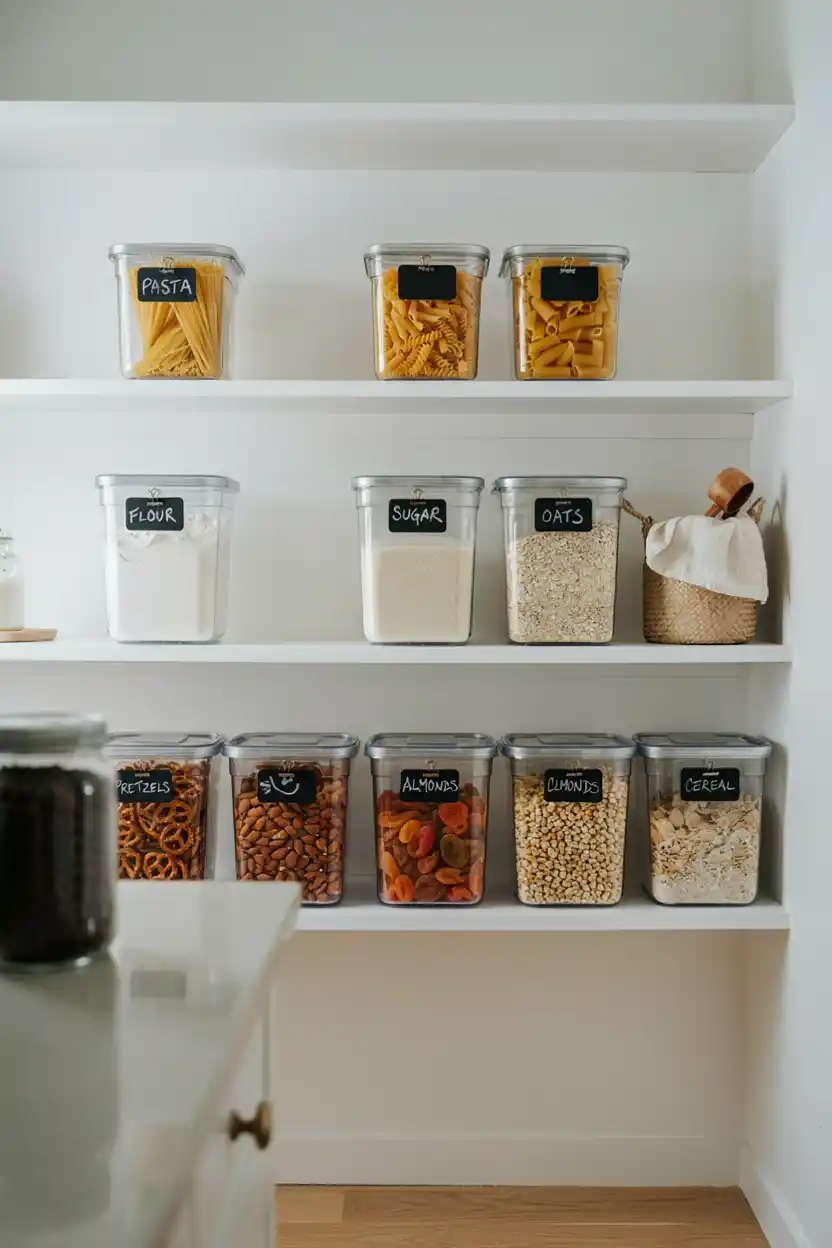
Clear bins group loose items — snack packets, baking supplies, produce — into visible categories, so you can scan the pantry at a glance instead of opening every box.
Stackable acrylic or BPA-free plastic bins with airtight lids keep dry goods fresh longer and prevent pantry moths from spreading between packages. Uniform bin sizes also make shelves look tidier and easier to restock.
This hack works especially well for families and meal preppers who buy in bulk and need the pantry to stay legible even when it’s full.
7. Magnetic Knife Strip
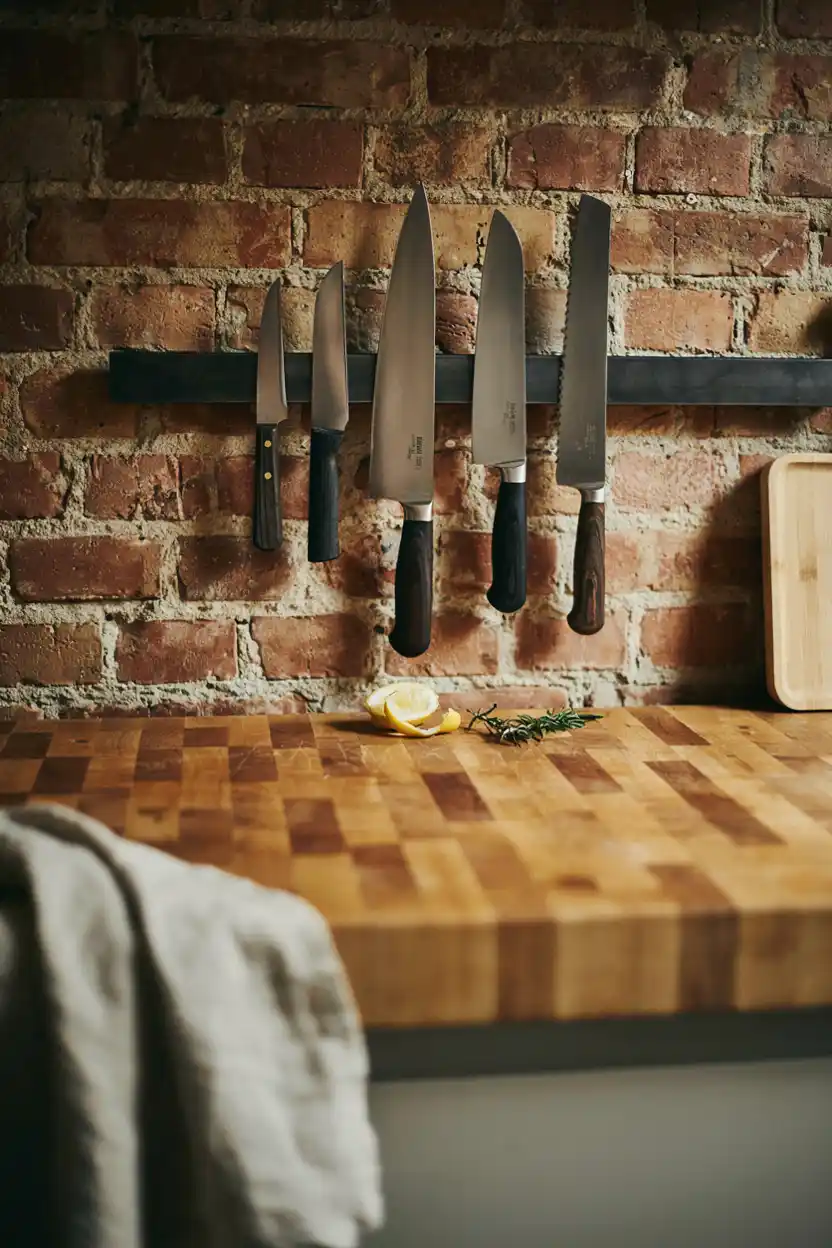
A magnetic strip mounted on the wall or backsplash frees up drawer space and keeps knife edges from dulling against other utensils. It also puts your knives in plain sight, which tends to encourage safer handling and drying.
Choose a strip with a strong, evenly distributed magnetic field and a wood or stainless steel backing that matches your kitchen finish. Mount at a height that’s safely out of reach for young children.
Best suited for home cooks with a knife set they use daily, and for small kitchens where drawer space is at a premium.
8. Tiered Shelf Organizers for Spices
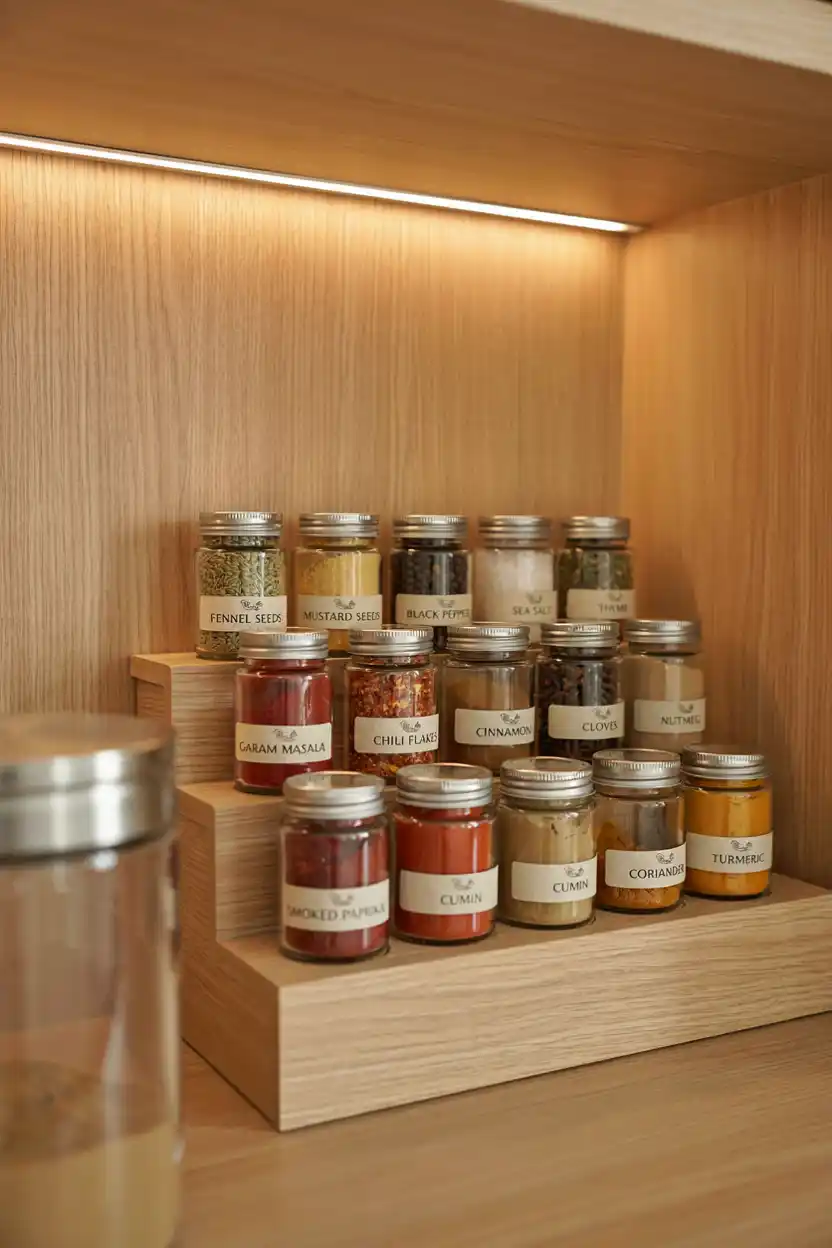
Spice jars stacked in a single flat row hide labels behind the jars in front. A tiered step shelf raises each row slightly so every label stays visible from the front.
Bamboo and metal step shelves are common, and expandable versions adjust to fit cabinets of different widths. Pair with uniform jars and printed labels for a pantry-editorial look that also speeds up cooking.
Great for anyone who cooks with a wide spice collection and wants to find cumin without pulling out five other jars first.
9. Pot Lid Organizer Rack
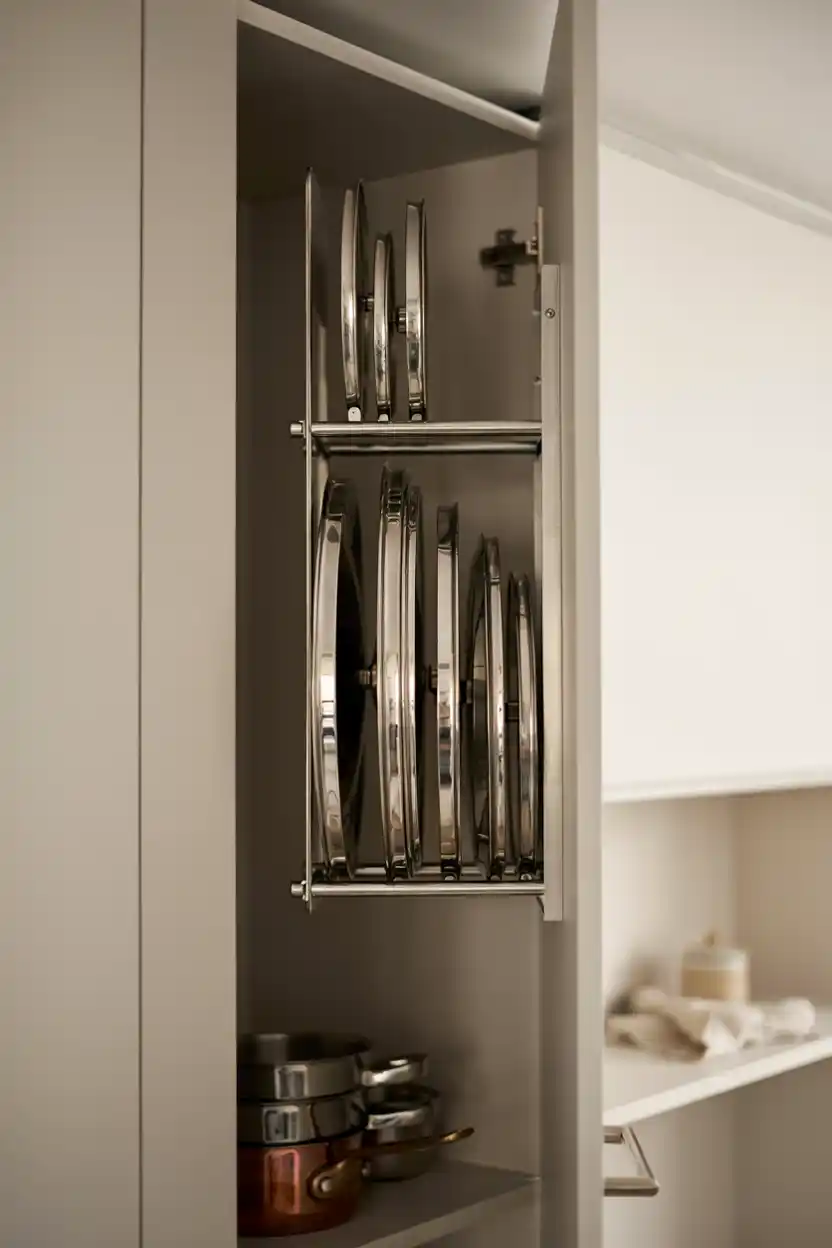
Loose pot lids are some of the hardest kitchen items to store neatly since they rarely stack with the pots themselves. A rack mounted to a cabinet door or the cabinet wall holds each lid upright and separated.
Adjustable-peg racks fit a range of lid sizes, while door-mounted versions save floor space entirely by using the inside of the cabinet door. Confirm the door has clearance to close once the rack and lids are installed.
Best for anyone with a mismatched lid collection that currently lives in a precarious stack next to the pots.
10. Over-the-Cabinet Door Storage
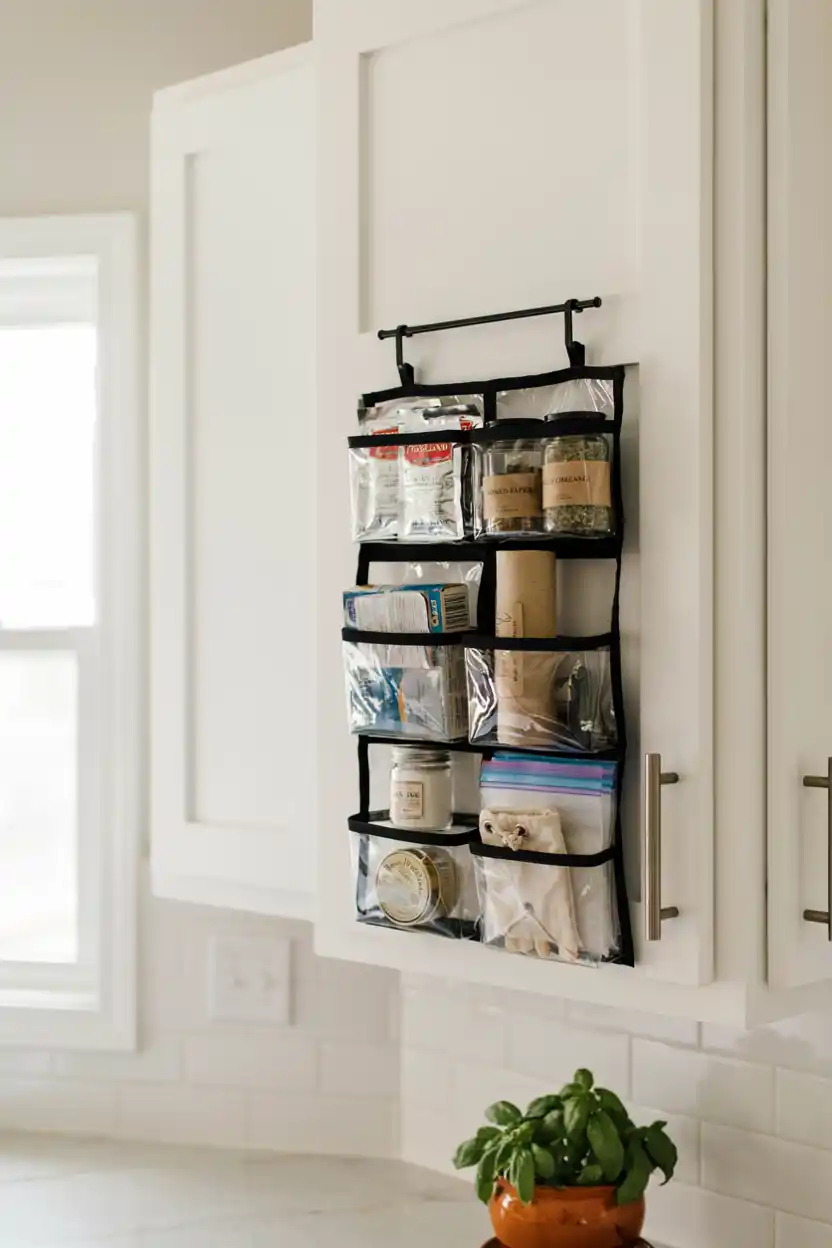
The inside of a cabinet or pantry door is often empty despite being prime real estate. Over-the-door racks or pocket organizers add a slim layer of storage without touching the shelves inside.
Wire racks suit canned goods and spray bottles, while fabric pocket organizers work well for spice packets, foil, and plastic wrap boxes. Measure door thickness first, since some hook-style mounts only fit certain door depths.
This hack is ideal for small kitchens and pantries where every inch of surface needs to earn its keep.
11. Open Shelving With Labelled Baskets
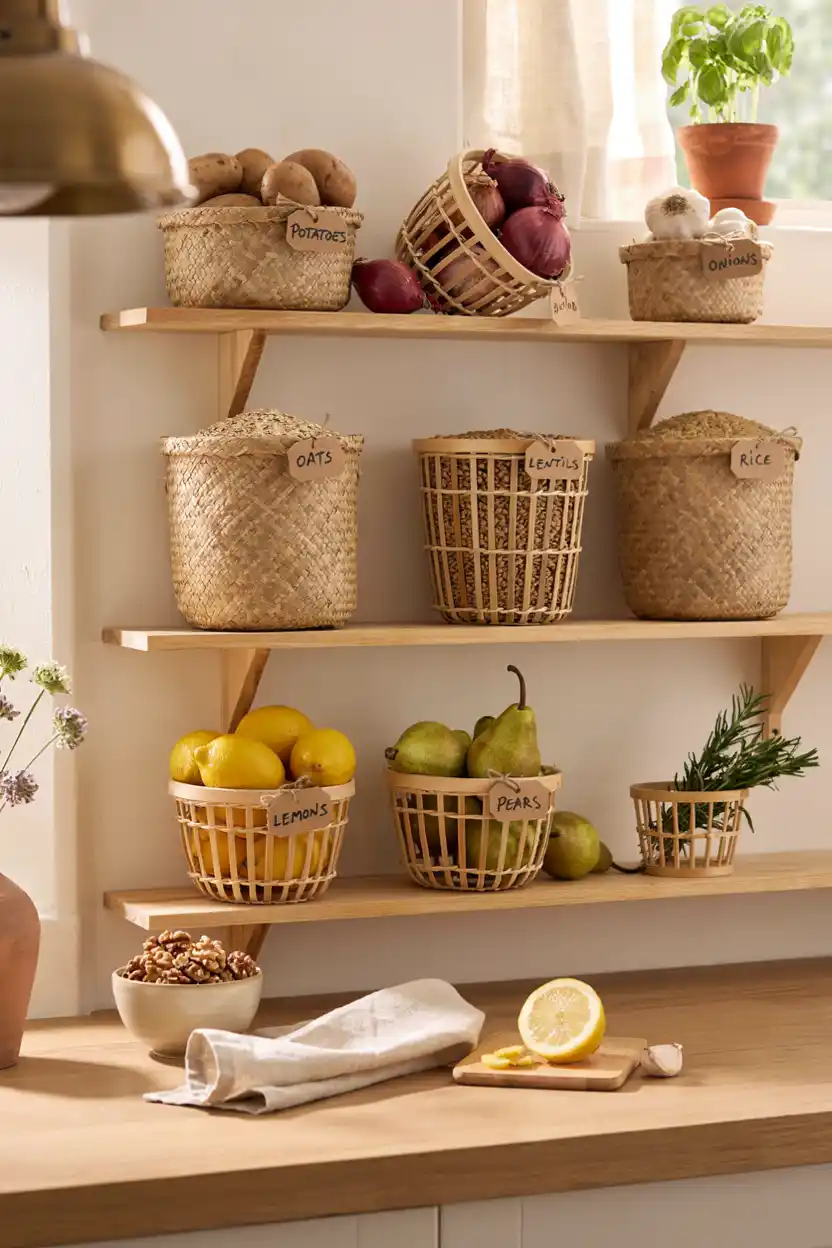
Open shelving looks clean when items are visible and orderly, but it can look chaotic fast. Grouping loose items into labelled woven or wire baskets keeps the open-shelf look while hiding the visual mess of mismatched packaging.
Natural fibre baskets suit farmhouse and Scandinavian styles, while wire or metal baskets read more industrial or modern. Add a printed or hand-lettered tag to each basket so anyone in the household can put things back correctly.
Best suited for kitchens that already have open shelving installed, or anyone converting upper cabinets into a more decorative display.
12. Under-Cabinet Mug Hooks
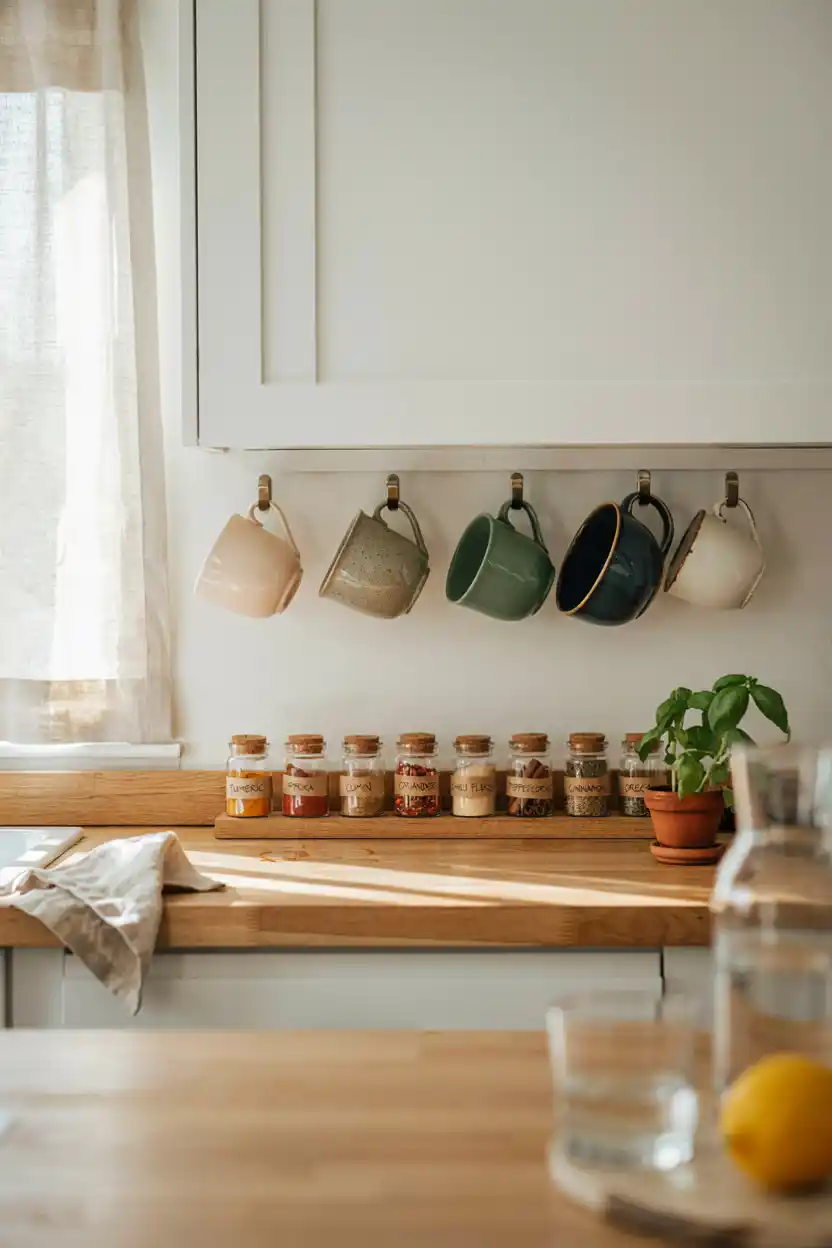
Mugs take up more shelf space than almost anything else in a cabinet, and they rarely stack well. Small screw-in or adhesive hooks mounted under an upper cabinet turn that dead air into a mug rack.
Adhesive hooks are renter-friendly and hold light mugs, while screw-in hooks handle heavier stoneware. Space hooks evenly and check mug handle size before buying, since oversized handles need wider spacing.
This hack is especially popular for coffee corner setups and for anyone who wants shelf space back for plates and bowls.
13. Pull-Out Trash and Recycling Bins
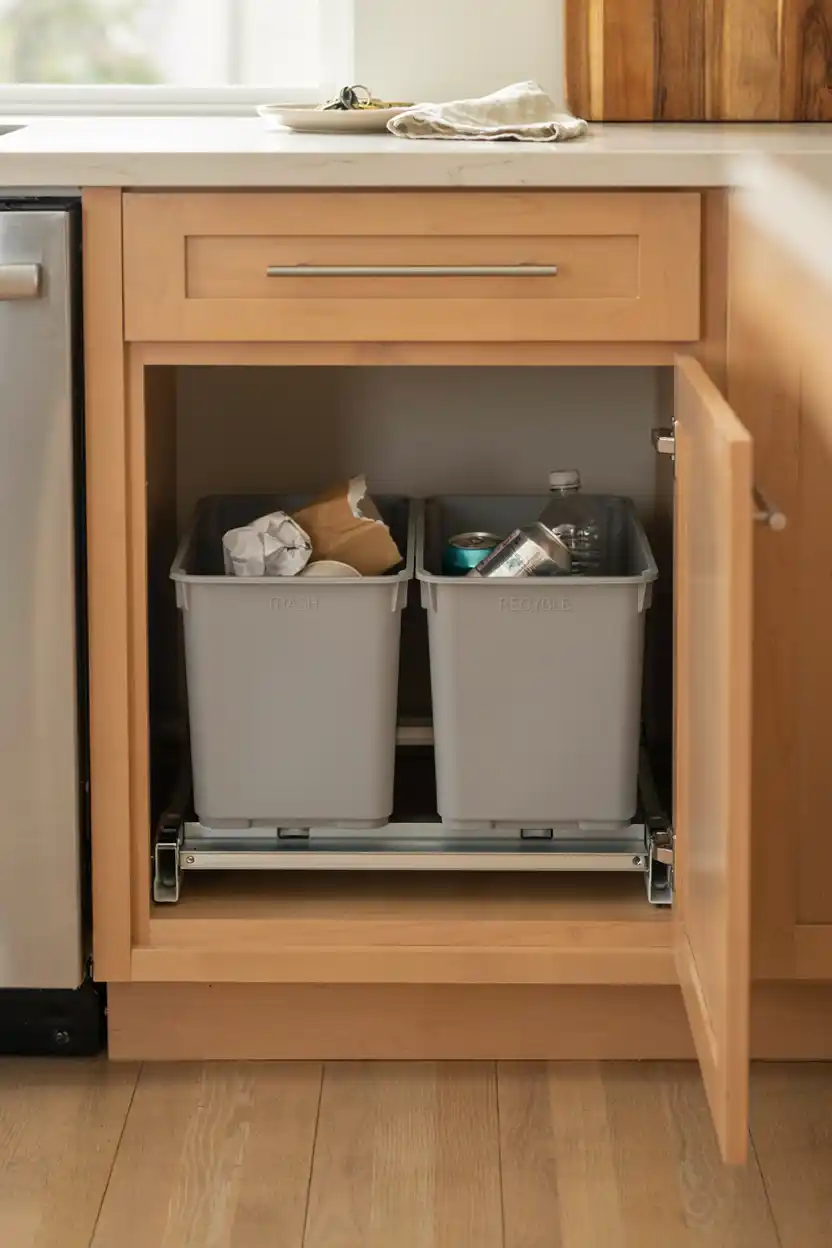
A hidden pull-out system for trash and recycling keeps bins out of sight and off the floor, while making it easier to sort waste correctly since each bin has a clear purpose.
Look for a sliding frame rated for the combined weight of two full bins, with soft-close glides so it doesn’t slam. Confirm your cabinet has enough width and depth, since most kits need a minimum 15-inch cabinet opening.
Ideal for anyone renovating a kitchen island or base cabinet and wanting trash fully concealed behind a cabinet door.
14. Wall-Mounted Pegboard for Pots and Tools
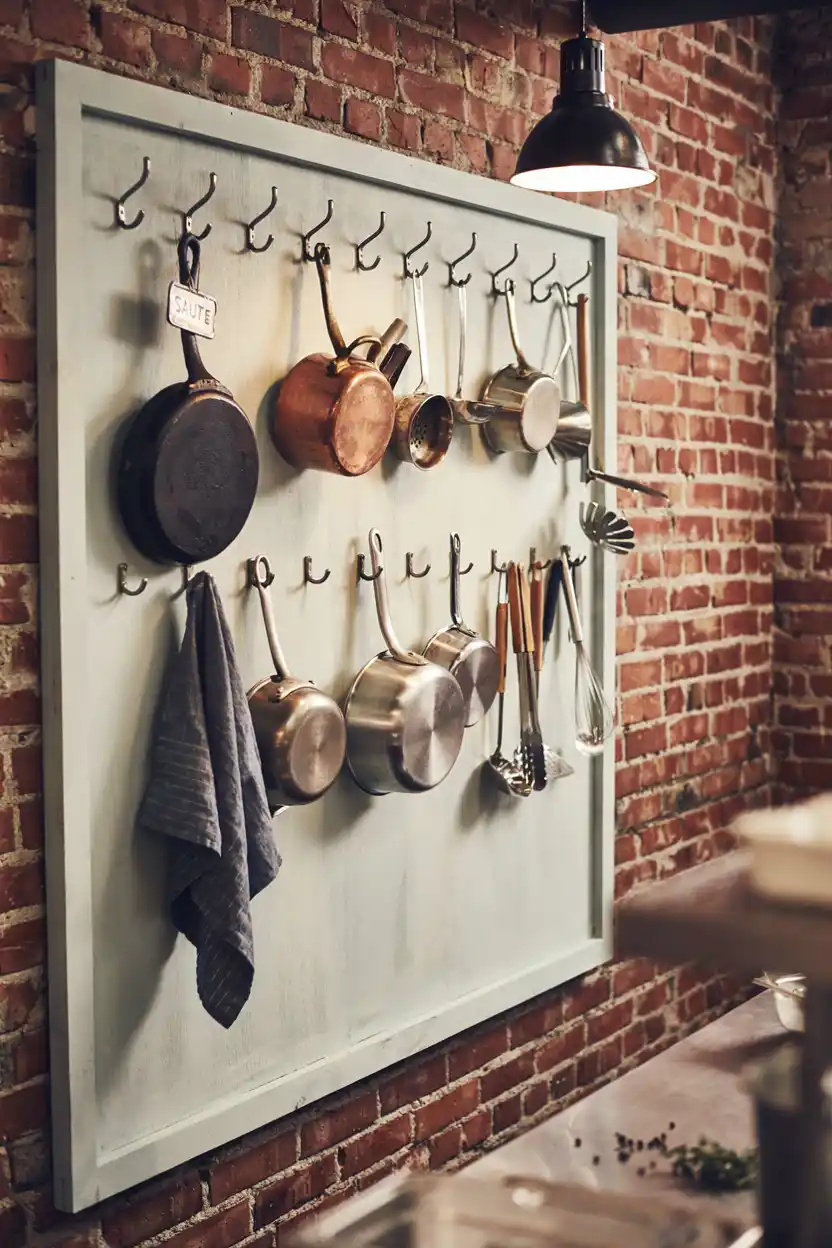
A pegboard turns an entire wall into flexible, rearrangeable storage for pots, pans, and long-handled tools that otherwise crowd cabinets. Because the pegs move, the layout can change as your cookware collection grows.
Painted pegboard blends into the wall colour for a subtle look, while metal pegboard reads more industrial. Use S-hooks rated for cookware weight, and anchor the board securely into studs since a fully loaded pegboard is heavy.
Best for cooks with limited cabinet space, open-concept kitchens, or anyone who likes the professional-kitchen look of visible cookware.
15. Drawer-Based Spice Organizer
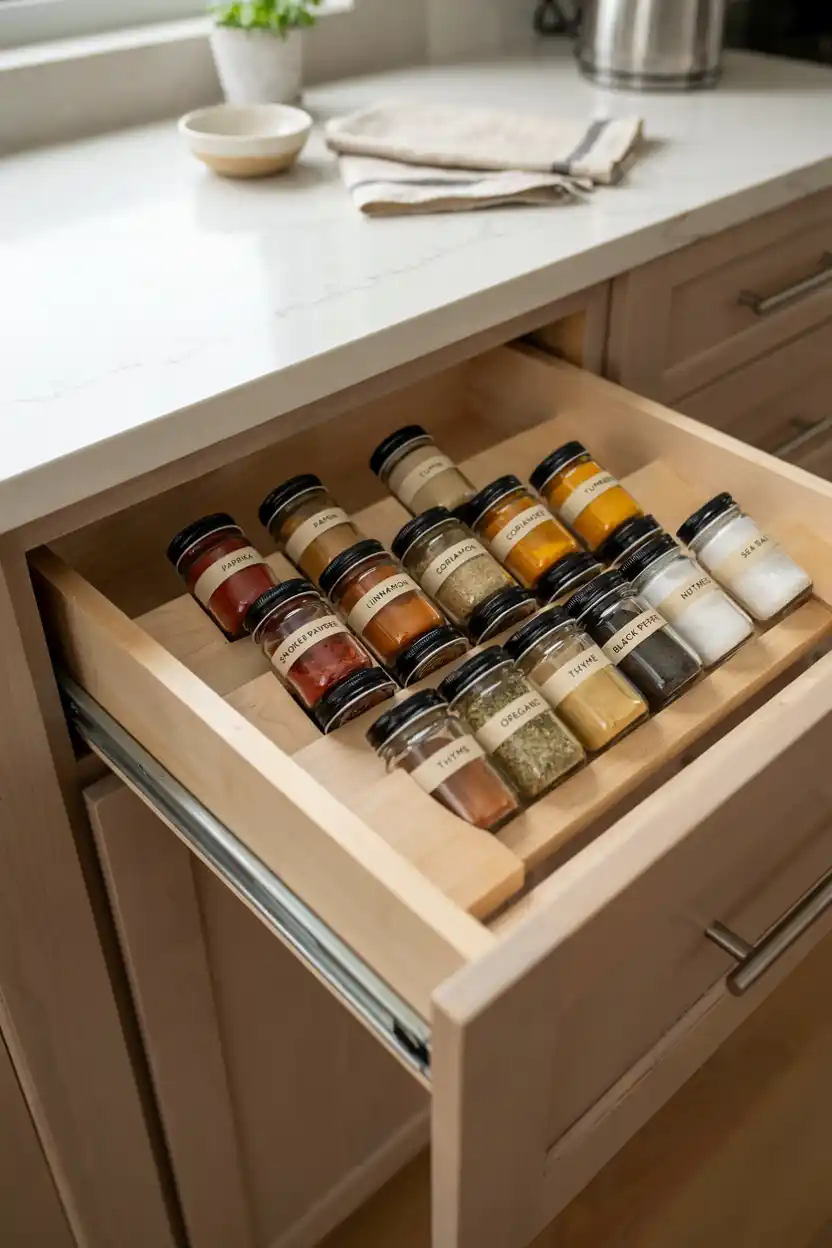
Storing spices in a shallow drawer near the stove keeps them within arm’s reach while cooking, and an angled insert tilts each jar so the label faces up instead of sideways.
Bamboo or acrylic inserts are sized for standard 2-inch spice jars; measure your jar diameter before buying, since oversized jars won’t sit flush in the slots. This works best in a drawer close to the cooktop for quick mid-recipe access.
Suited for cooks who prefer spices near their prep zone rather than in a cabinet across the kitchen.
16. Cabinet Door-Mounted Cutting Board Storage
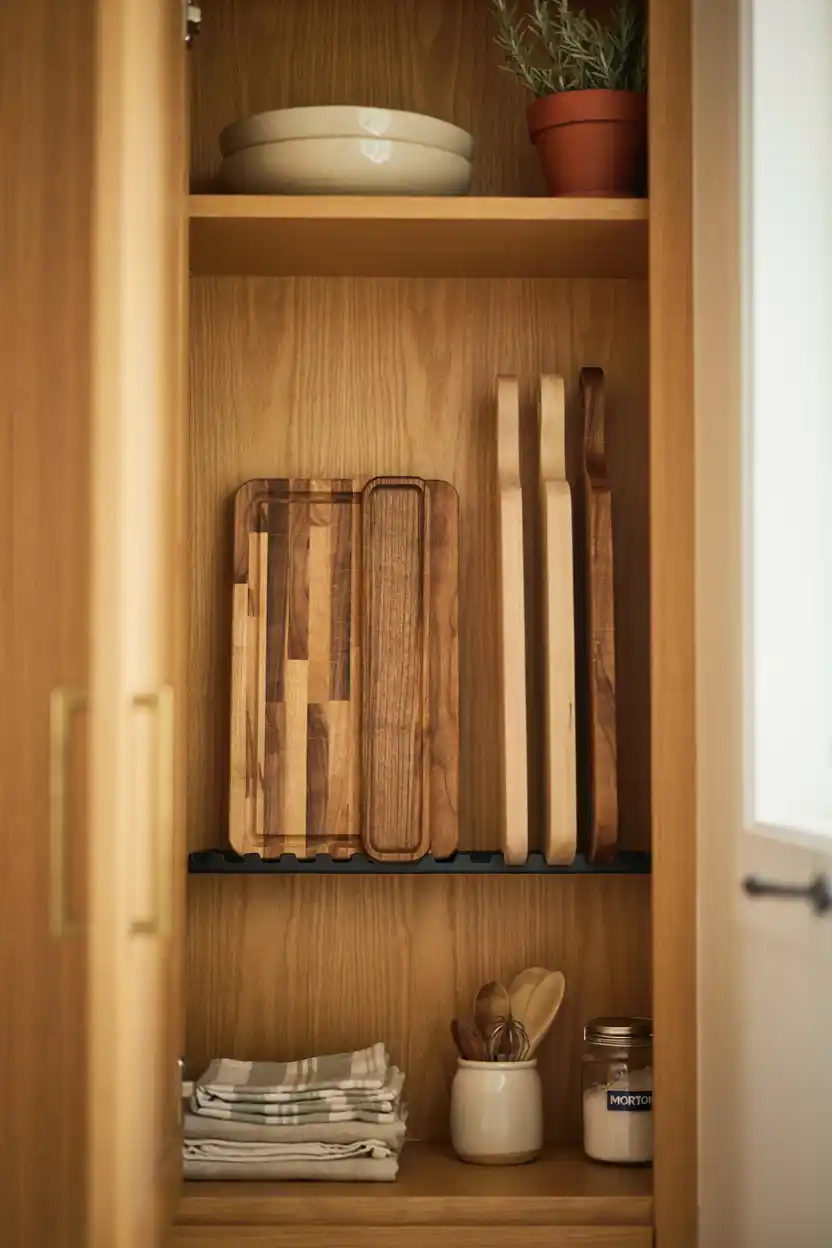
Cutting boards are bulky and awkward to store flat, often ending up wedged behind pans. A slim rack mounted to the inside of a cabinet door holds several boards upright, out of the way but still easy to grab.
Adjustable dividers accommodate boards of different thicknesses, from thin bamboo boards to thick end-grain butcher blocks. Check that the door can still close fully once boards are loaded, since thick boards add depth.
This hack suits anyone with two or more cutting boards who wants to stop unstacking pans just to find one.
17. Appliance Garage for Countertop Tools
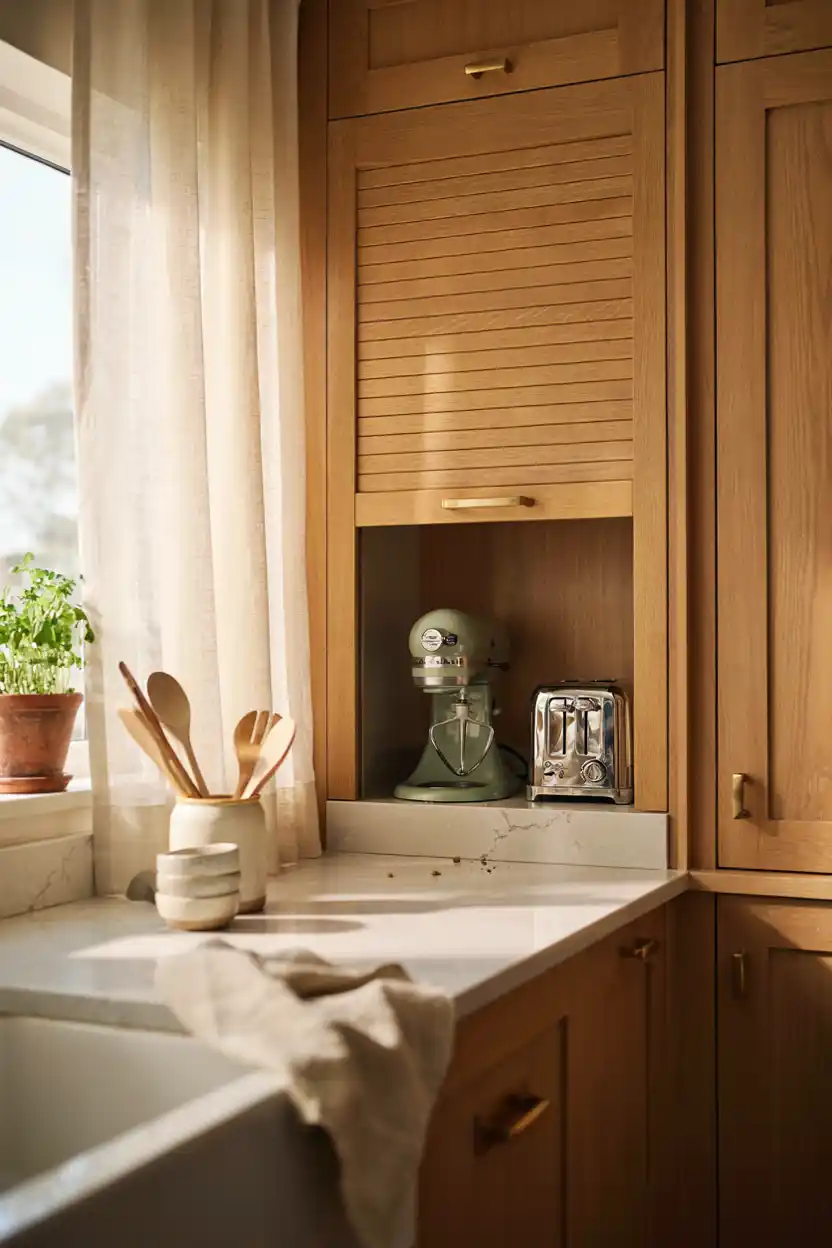
An appliance garage is a small enclosed cabinet on the counter with a roll-up or hinged door that hides toasters, mixers, and coffee makers when not in use, keeping counters clear without moving appliances in and out of storage daily.
Tambour (roll-up) doors save swing space in tight corners, while hinged doors are simpler to install as a retrofit. Match the garage depth to your tallest appliance, typically at least 14 to 16 inches, so lids and attachments fit inside.
Best for anyone who uses countertop appliances daily but dislikes a cluttered-looking counter, especially in small kitchens where every appliance is visible from the main living space.
18. Tiered Cabinet Risers for Canned Goods
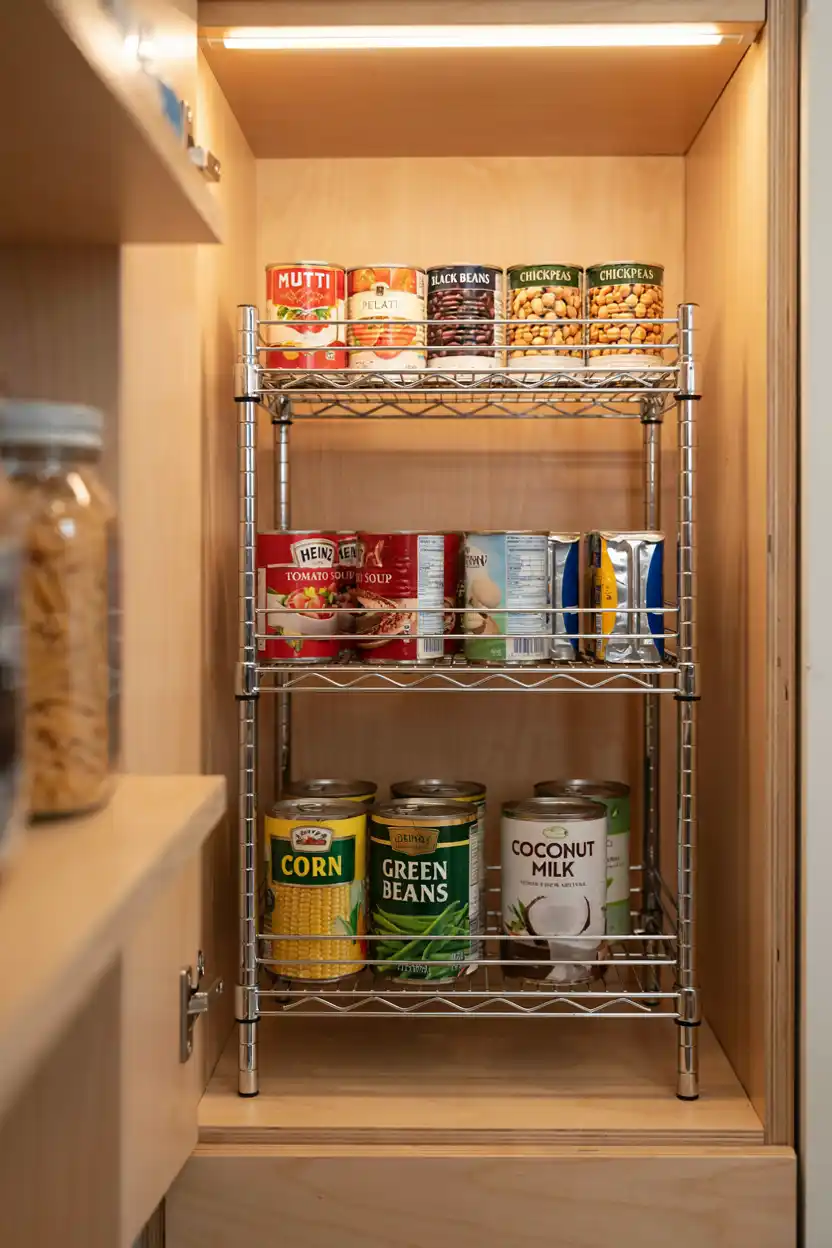
Canned goods stacked flat hide behind each other just like spice jars do. A tiered riser lifts the back row slightly so every can label is visible from the front, and cans roll forward automatically as you use the front row.
Metal wire risers hold the most weight for heavy canned goods, while stackable plastic risers are lighter and easier to reconfigure. Choose a width that matches your cabinet’s interior shelf depth so nothing overhangs the edge.
This hack is especially useful for stocked pantries and anyone practicing a first-in-first-out rotation to avoid expired cans.
Planning and Buying Tips
Before buying any organizer, measure the actual cabinet, drawer, or wall space you’re targeting — width, depth, and height — since most pull-out shelves, dividers, and racks are sold in fixed increments and a half-inch miscalculation can mean a return.
Consider installation complexity. Pull-out shelves, under-sink glide organizers, and pot lid racks that mount to cabinet doors typically need basic tools (a drill, screws, and level) and 20 to 60 minutes per unit. Adhesive hooks, tension-rod dividers, and freestanding bins need no installation at all, which matters if you’re renting.
Check weight ratings before loading anything with cast iron cookware or stacks of canned goods — lightweight pegboard hooks or thin wire risers can bend or pull loose under real kitchen weight.
Standard cabinet openings run 12, 15, 18, 24, and 36 inches wide for base cabinets, and upper cabinets are commonly 12 to 15 inches deep, so most organizer products are designed around these sizes. Corner cabinets vary more, so measure the diagonal opening carefully before buying a lazy susan.
Think about structural factors: anything wall-mounted (pegboards, magnetic strips, heavier over-the-door racks) should be anchored into studs or use rated drywall anchors, especially if it will hold cast iron or ceramic cookware.
Cost Breakdown
Kitchen organization hacks scale from a few dollars per item to a few hundred dollars for a full pantry and cabinet overhaul. Here’s roughly what to expect at each tier.
Budget ($5–$30 per item)
Adhesive hooks, tension-rod dividers, basic drawer trays, plastic stackable bins, and wire over-the-door racks. No installation cost since most require no tools.
Mid-Range ($30–$100 per item)
Bamboo drawer organizers, tiered spice shelves, wall-mounted pegboards, magnetic knife strips, and standard lazy susans. DIY installation typically takes under an hour; hiring a handyman runs $50–$100 per item if needed.
Luxury/Premium ($100–$400+ per item)
Soft-close pull-out pantry shelves, custom drawer inserts, appliance garages with tambour doors, and full pull-out trash/recycling systems. Professional installation is common here and can add $75–$250 per unit depending on cabinet modifications needed.
A full-kitchen organization overhaul touching most cabinets, drawers, and the pantry typically lands between $300 for an all-budget approach and $2,000+ if you go premium across the board with professional installation.
Materials and Options Comparison
| Option | Price Range | Durability | Best For |
| Bamboo/wood inserts | $50–150 | High (5–10+ years) | Drawers, spice shelves, cutting board storage |
| Coated wire/metal racks | $50–150 | High, rust-resistant if coated | Under-sink, pot lids, pegboards |
| Clear acrylic/plastic bins | $15–20 | Medium (3–5 years) | Pantry bins, stackable storage |
| Soft-close pull-out slides | $20–50 | Very high (10+ years) | Pantry shelves, trash pull-outs |
| Adhesive hooks/mounts | $15–20 | Low–Medium (1–3 years) | Renter-friendly, mugs, light items |
| Tambour/appliance garages | $20–50 | High | Countertop appliance concealment |
Maintenance Tips
- Wipe wood inserts and shelves with a barely damp cloth rather than soaking them, since standing water can warp bamboo and untreated wood over time. An occasional light coat of food-safe mineral oil keeps wood pieces from drying out and cracking.
- Check wire and metal organizers periodically for rust spots, especially under the sink where moisture is common; touch up any bare metal with a rust-resistant spray paint before it spreads.
- Empty and wipe down pull-out trash and recycling bins weekly to prevent odour buildup, and check the glide mechanism every few months for debris that can slow or jam the slide.
- Re-anchor any wall-mounted hooks, pegboards, or racks if you notice sagging or wobble — a loose anchor is the most common cause of items falling, not the hook itself failing.
- The most common organization mistake is overloading a system past its weight rating or original design, which is what eventually pulls hooks from drywall or bends thin wire risers under heavy cans.
Frequently Asked Questions
What is the cheapest way to organize a kitchen?
Repurposing items you already own — shoeboxes as drawer dividers, mason jars for dry goods, existing baskets for grouping items — costs nothing. After that, adhesive hooks, tension-rod dividers, and basic plastic bins are the least expensive purchased options, usually under $15 each.
Do pull-out pantry shelves require professional installation?
Most pull-out shelves are designed for DIY installation with a drill and level in under an hour, though cabinets with unusual dimensions or face-frame construction may need light carpentry adjustments, in which case a handyman can help.
How do I organize a small kitchen with limited cabinet space?
Focus on vertical and door space that’s currently empty: over-the-door racks, under-cabinet mug hooks, a wall-mounted pegboard, and a magnetic knife strip all add storage without using any additional floor or shelf space.
What size are standard kitchen cabinets for organizer shopping?
Base cabinets commonly come in 12, 15, 18, 24, and 36-inch widths, and upper cabinets are typically 12 to 15 inches deep, which is why most organizer products are sold in those increments.
How often should I reorganize my kitchen?
A quick seasonal check every three to four months — tossing expired pantry items and resetting bins — keeps most systems from sliding back into clutter, with a deeper reset once a year as habits and grocery needs change.
How to Choose the Right Kitchen Organization Hacks for You
The right combination of hacks depends on three things: your space, your budget, and how you actually cook. If you’re working with a small kitchen and can’t drill into walls, lean toward adhesive hooks, tension-rod dividers, and freestanding bins. If you own your home and want a lasting upgrade, pull-out shelves, soft-close trash systems, and built-in dividers offer the best long-term value even at a higher upfront cost.
Start with whichever cabinet or drawer causes you the most daily frustration, since that’s where a hack will pay off fastest. From there, layer in lower-cost wins — spice risers, a magnetic knife strip, labelled pantry bins — until the whole kitchen has a system that matches how you cook, not just how it looks.
Ready to stop digging through cabinets every time you cook? Pick two or three hacks from this list that match your biggest pain point and start there this weekend.


- Be Respectful
- Stay Relevant
- Stay Positive
- True Feedback
- Encourage Discussion
- Avoid Spamming
- No Fake News
- Don't Copy-Paste
- No Personal Attacks
- Be Respectful
- Stay Relevant
- Stay Positive
- True Feedback
- Encourage Discussion
- Avoid Spamming
- No Fake News
- Don't Copy-Paste
- No Personal Attacks
