19 Aubergine Kitchen Ideas to Transform Your Space Into a Moody, Modern Retreat
Published: 21 Aug 2026
Aubergine kitchen ideas are having a real moment, and it’s easy to see why. This deep, plum-purple hue brings warmth and depth to a room that’s traditionally kept safe with white or neutral tones. If you’re tired of a kitchen that fades into the background, aubergine offers a rich, sophisticated alternative that still feels timeless rather than trendy.
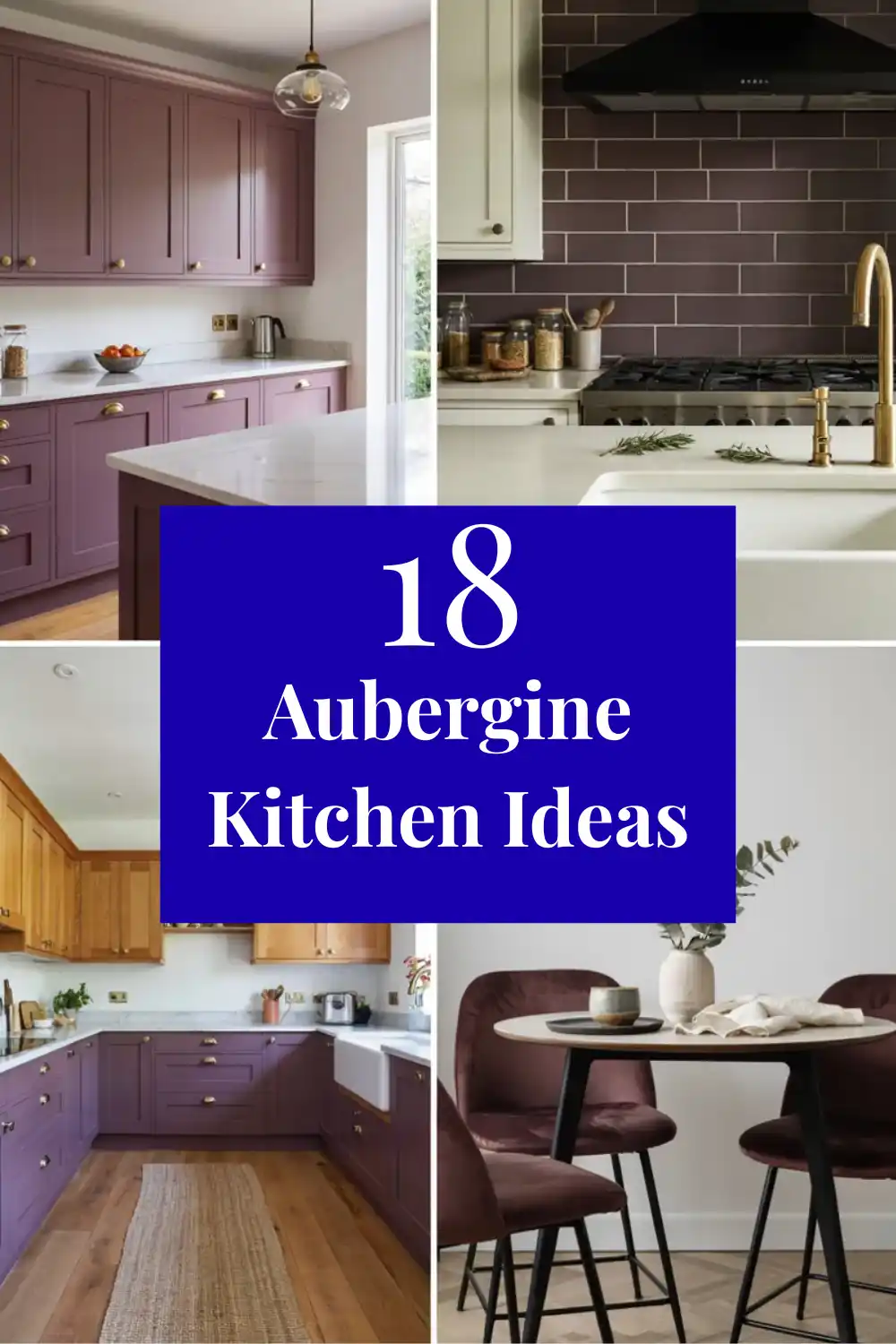
It works beautifully whether you’re renovating a small galley kitchen or designing a spacious open-plan space, because it pairs effortlessly with brass, natural wood, marble, and greenery. In this guide, we’re covering 19 aubergine kitchen ideas, from bold full-cabinet looks to subtle accent details, plus everything you need to know about cost, materials, maintenance, and how to choose the right approach for your own home.
1. Matte Aubergine Shaker Cabinets with Brass Hardware
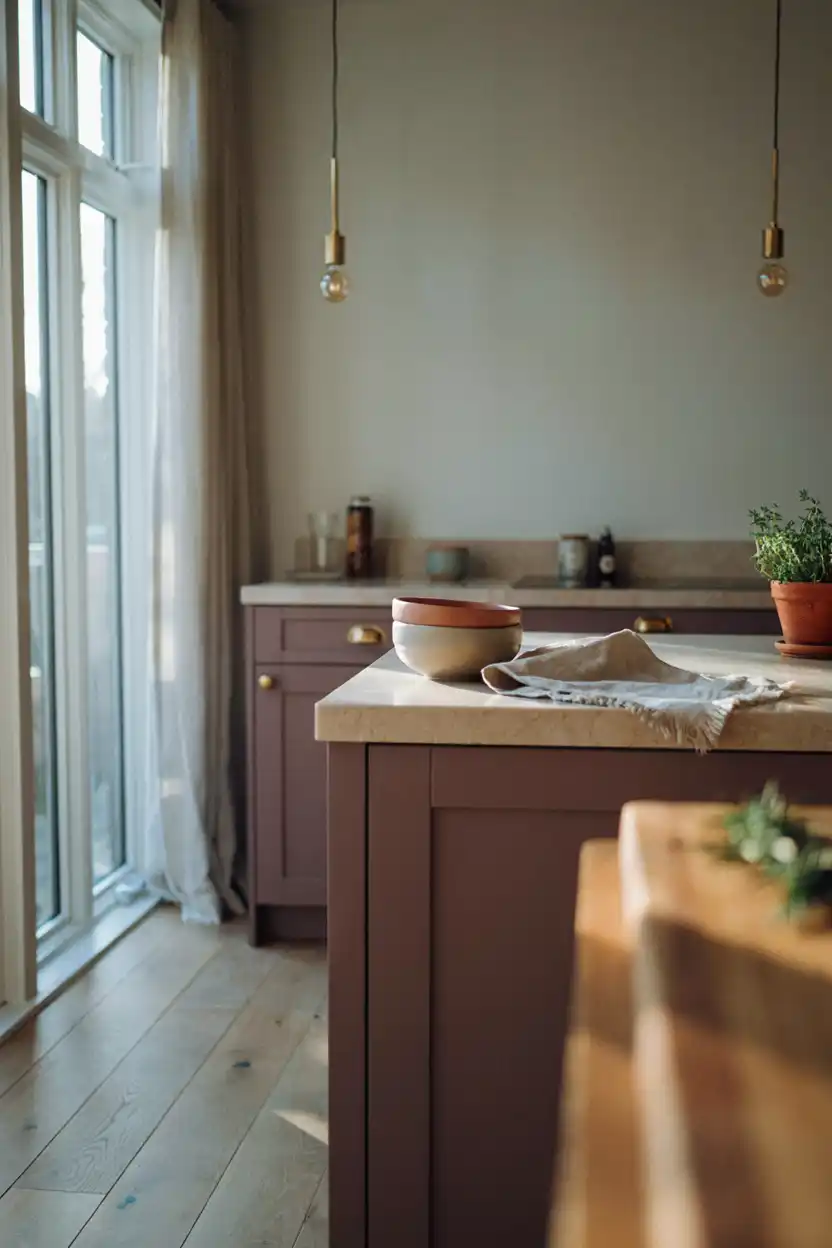
Shaker cabinetry is the safest way to bring aubergine into a kitchen without it feeling overdone, and the matte finish keeps the colour feeling soft rather than theatrical. The recessed panel detailing catches shadow beautifully, giving the cabinets depth even in a small galley layout.
Brass hardware is the detail that makes this combination sing. Warm metals soften the coolness of the purple undertone and give the whole room a collected, slightly vintage feel without looking dated. Best suited for homeowners who want a timeless base they can update with paint or decor later, since shaker doors are easy to refinish or swap hardware on down the line.
2. Deep Aubergine Island with a White Marble Countertop
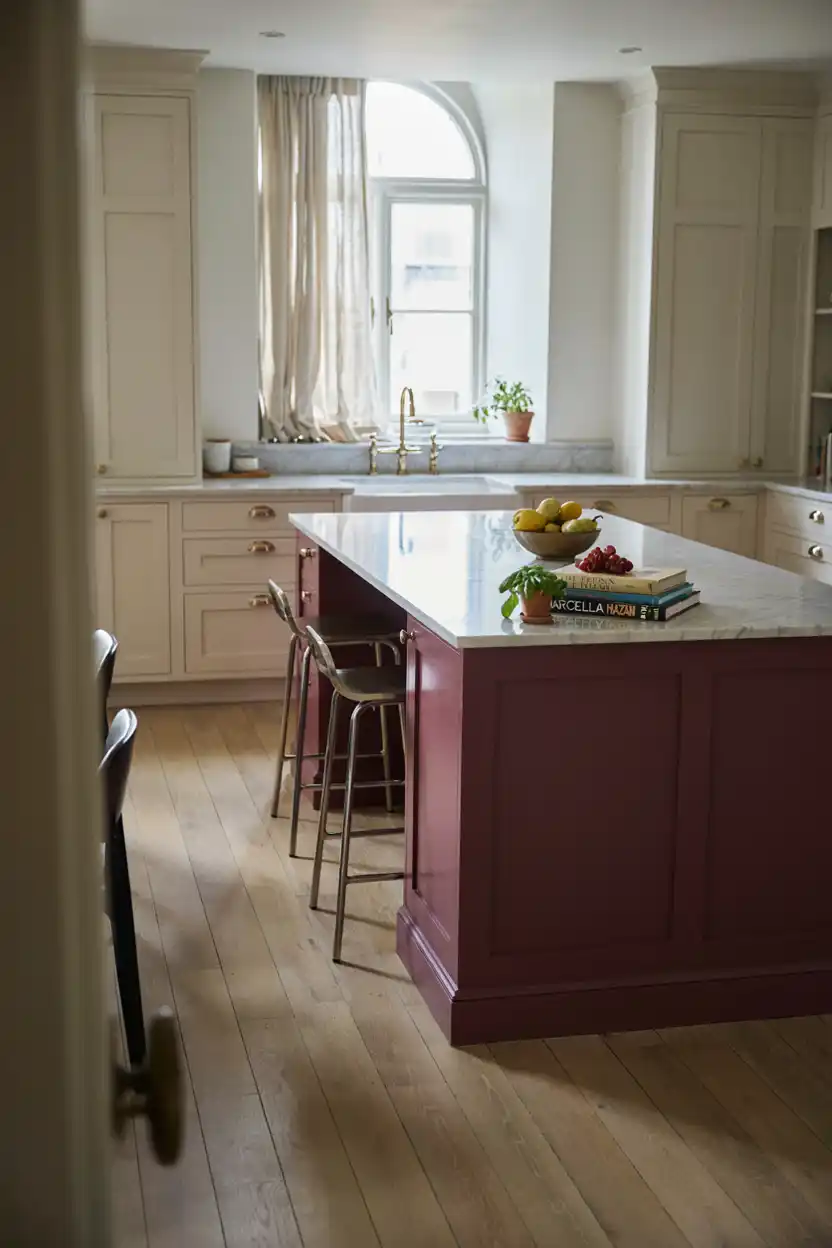
Painting only the island aubergine while keeping the perimeter cabinetry neutral is one of the most popular ways to test the colour without a full commitment. It creates a clear focal point the moment you walk into the room.
White or light-veined marble on top keeps the island from feeling heavy, and the contrast makes both materials look more expensive than they are.
This approach works well for open-plan homes where the kitchen is visible from the living or dining area, since the island serves as much as a piece of furniture as a workstation.
3. Two-Tone Aubergine and Cream Kitchen
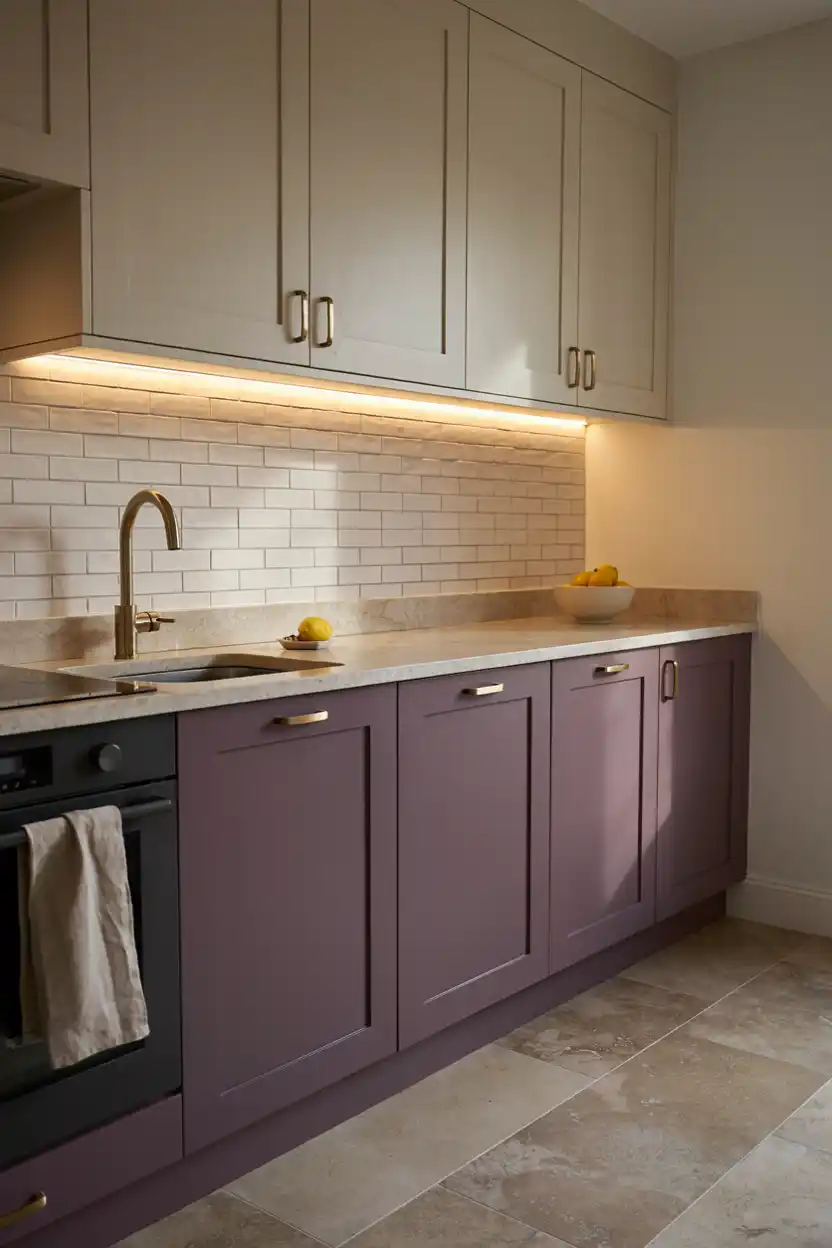
Keeping upper cabinets light and lower cabinets aubergine is a grounding technique that works in kitchens of almost any size. The eye reads the room as brighter overall since the darker tone stays low.
Cream is a gentler pairing than stark white, keeping the palette warm and slightly softer, which suits farmhouse, transitional, and traditional kitchens alike. Ideal for anyone renovating on a budget, since only the lower run needs new paint or doors, while uppers can often be refreshed rather than replaced.
4. High-Gloss Aubergine Cabinetry for a Modern Kitchen
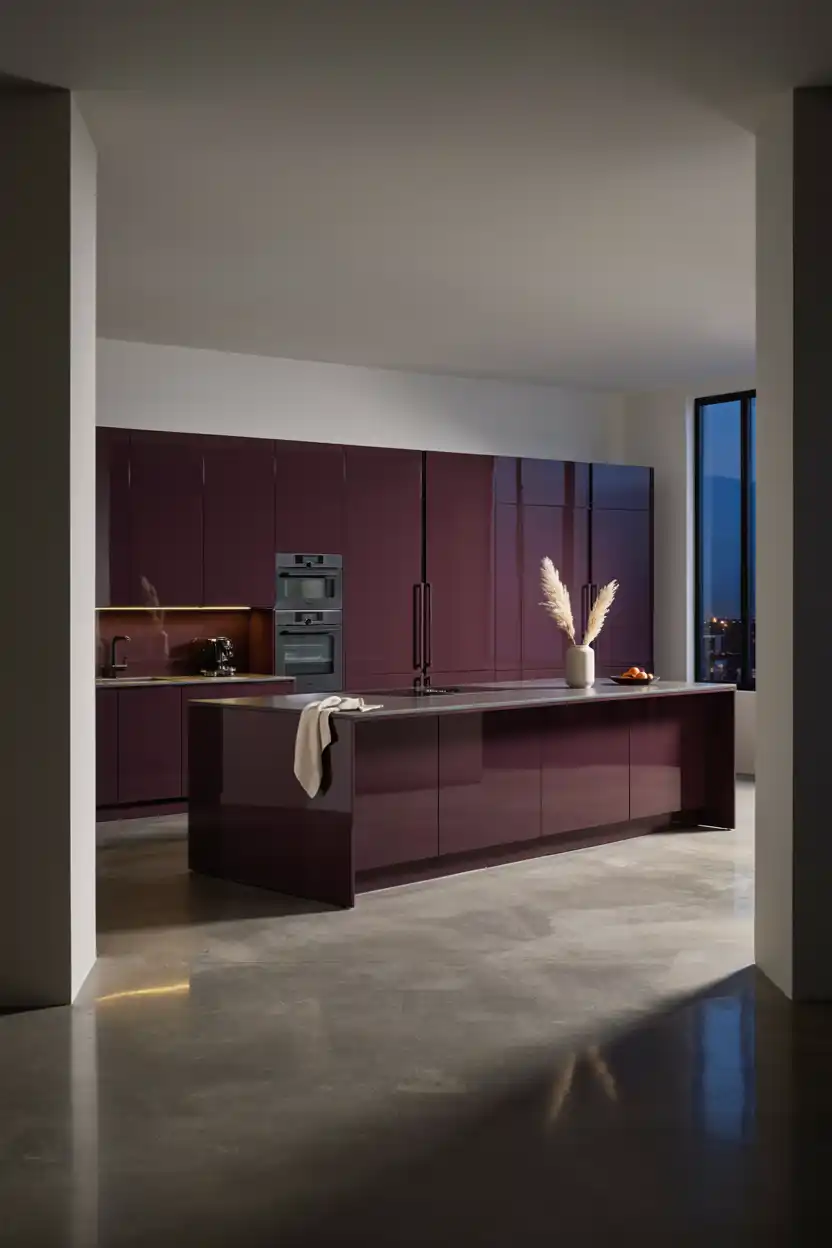
A lacquered, high-gloss finish turns aubergine into a genuinely contemporary statement. The reflective surface plays with light throughout the day, shifting from soft plum to near-black depending on the angle.
Handleless doors and integrated appliances keep the look streamlined, letting the colour do all the talking rather than competing with visible hardware. Best for design-forward homeowners in newer builds or full gut renovations, since gloss lacquer cabinetry is typically a custom order rather than a stock option.
5. Aubergine Kitchen Paired with a Terrazzo Backsplash
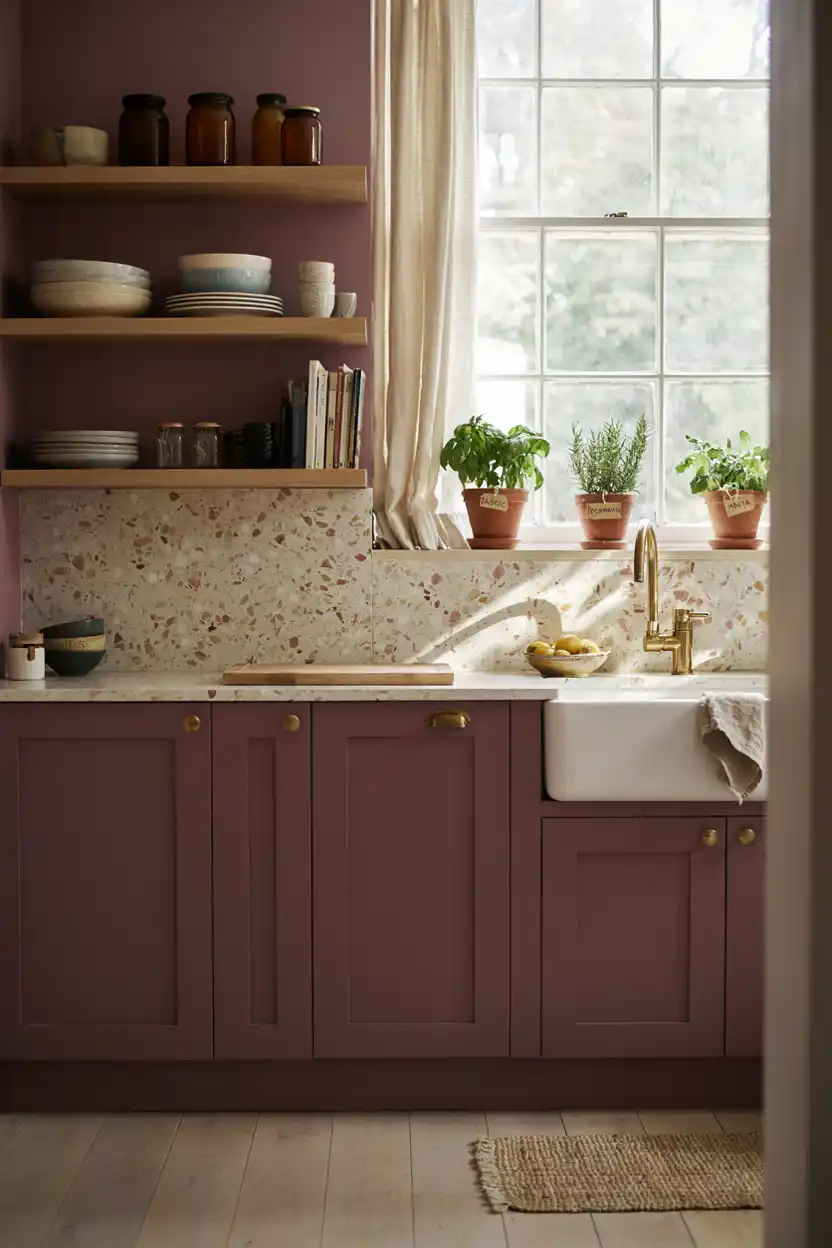
Terrazzo brings playful texture to an aubergine kitchen, softening what could otherwise feel like a very serious, moody palette. The flecks of colour pick up on the purple without repeating it exactly.
This pairing feels fresh and slightly retro at once, appealing to homeowners who want personality without going fully maximalist. Well suited to kitchens that already have simple, quiet cabinetry, since the backsplash becomes the star and aubergine plays a supporting role.
6. Aubergine and Sage Green Colour Pairing
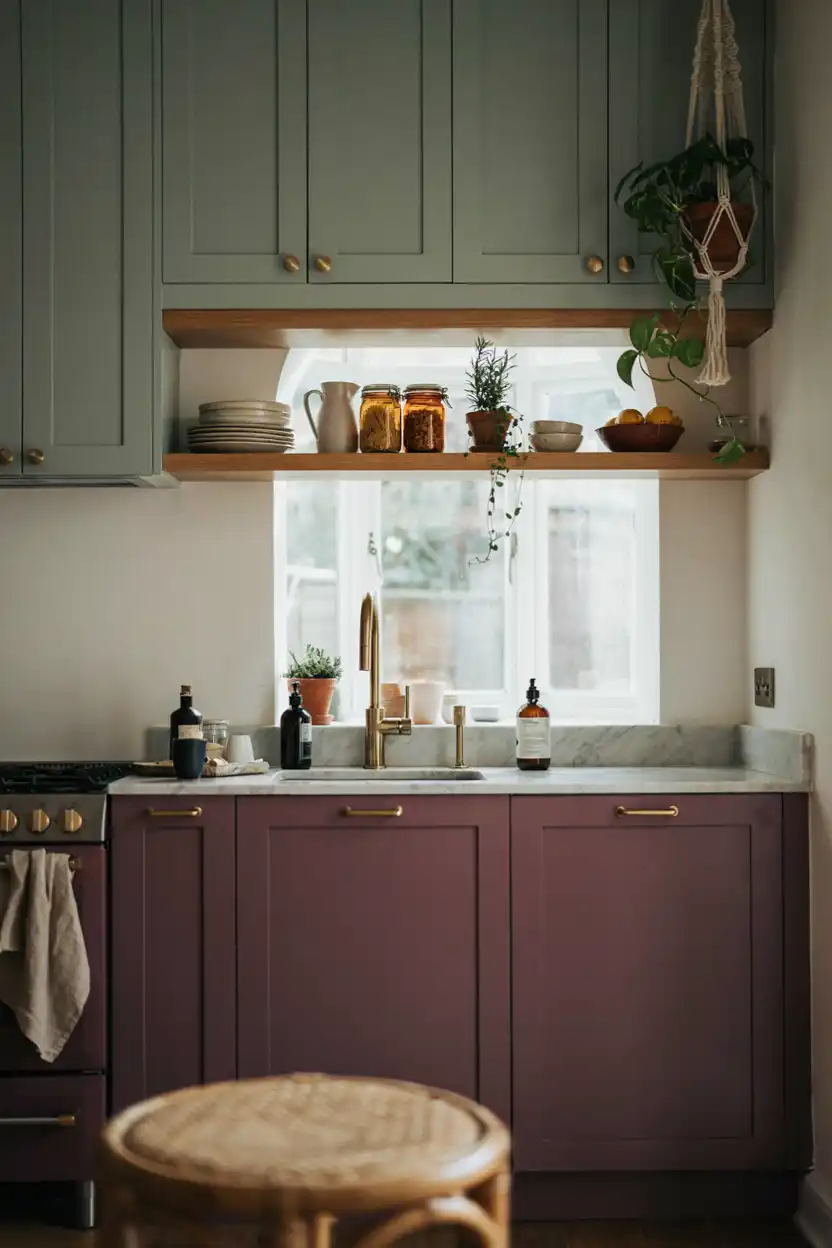
Both aubergine and sage sit on the cooler, muted side of the colour wheel, which is why they read as a considered, garden-inspired pairing rather than clashing. Used together, they give a kitchen an English-cottage or botanical feel, especially when paired with brass and natural wood accents. A good option for homeowners who love colour but want something that still feels calm and livable day-to-day, rather than high-contrast or bold.
7. Aubergine Kitchen Island as a Freestanding Statement Piece
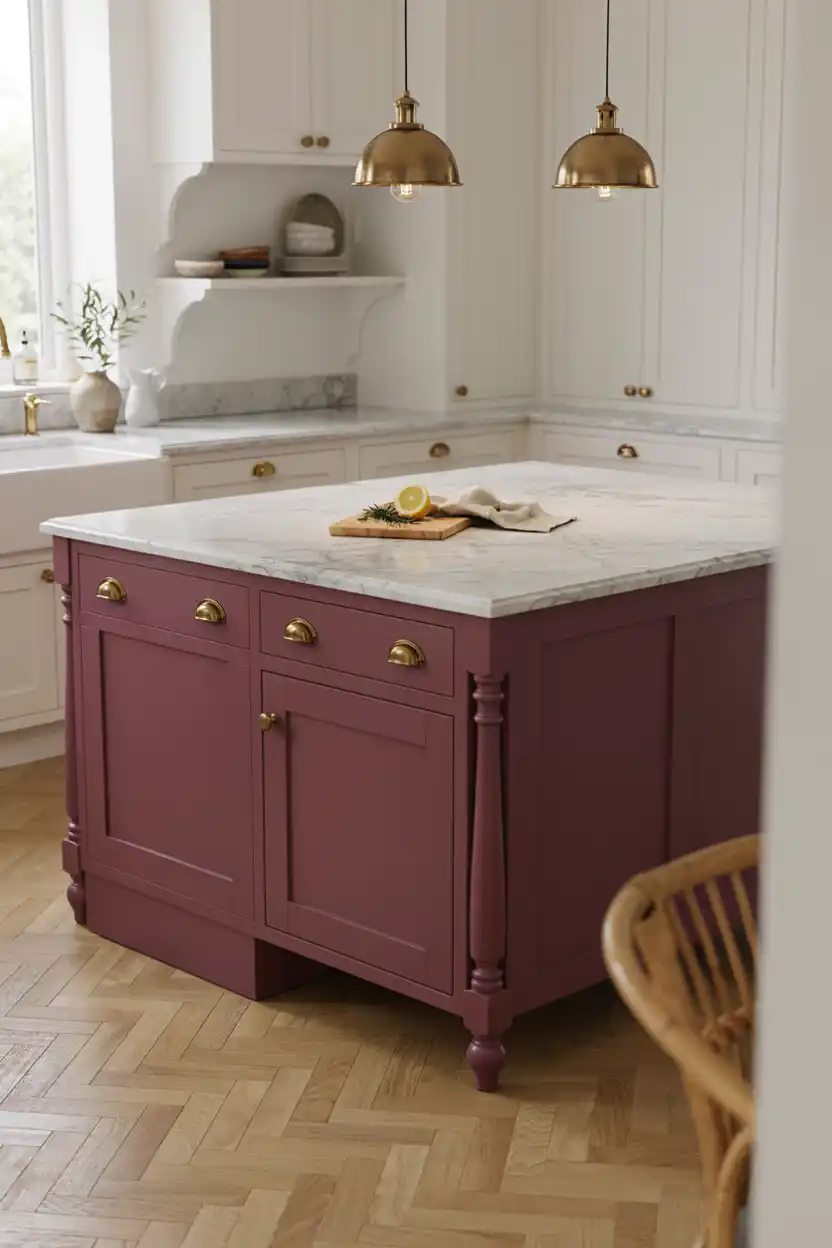
A freestanding island, rather than a built-in one, lets aubergine feel like furniture instead of fixed cabinetry. Turned legs and traditional detailing reinforce that furniture-like quality.
This is one of the lowest-commitment ways to try aubergine, since a freestanding piece can be moved, repainted, or replaced without touching the rest of the kitchen. Especially good for renters or anyone hesitant to paint built-in cabinets permanently, since the whole piece can leave with you.
8. Aubergine Open Shelving with Warm Wood Accents
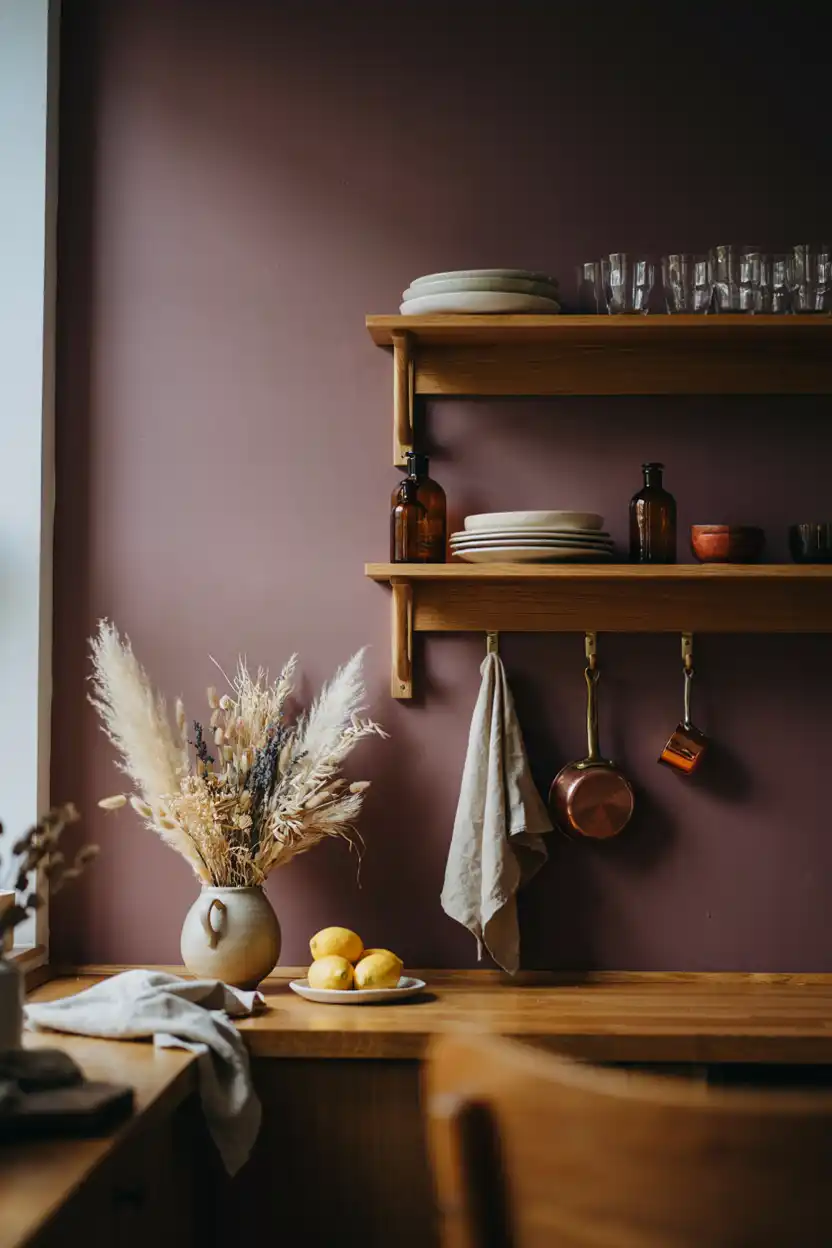
Open shelving against an aubergine wall creates a gallery-like backdrop for dishware, letting everyday items double as decor. The dark backdrop makes white ceramics and glassware pop.
Warm wood shelving brackets and countertops balance the coolness of the purple tone, keeping the space feeling grounded rather than cold. Best suited to smaller kitchens where full upper cabinetry would feel heavy, since open shelving keeps sightlines open even against a dark wall colour.
9. Aubergine Kitchen with Black Steel-Framed Windows
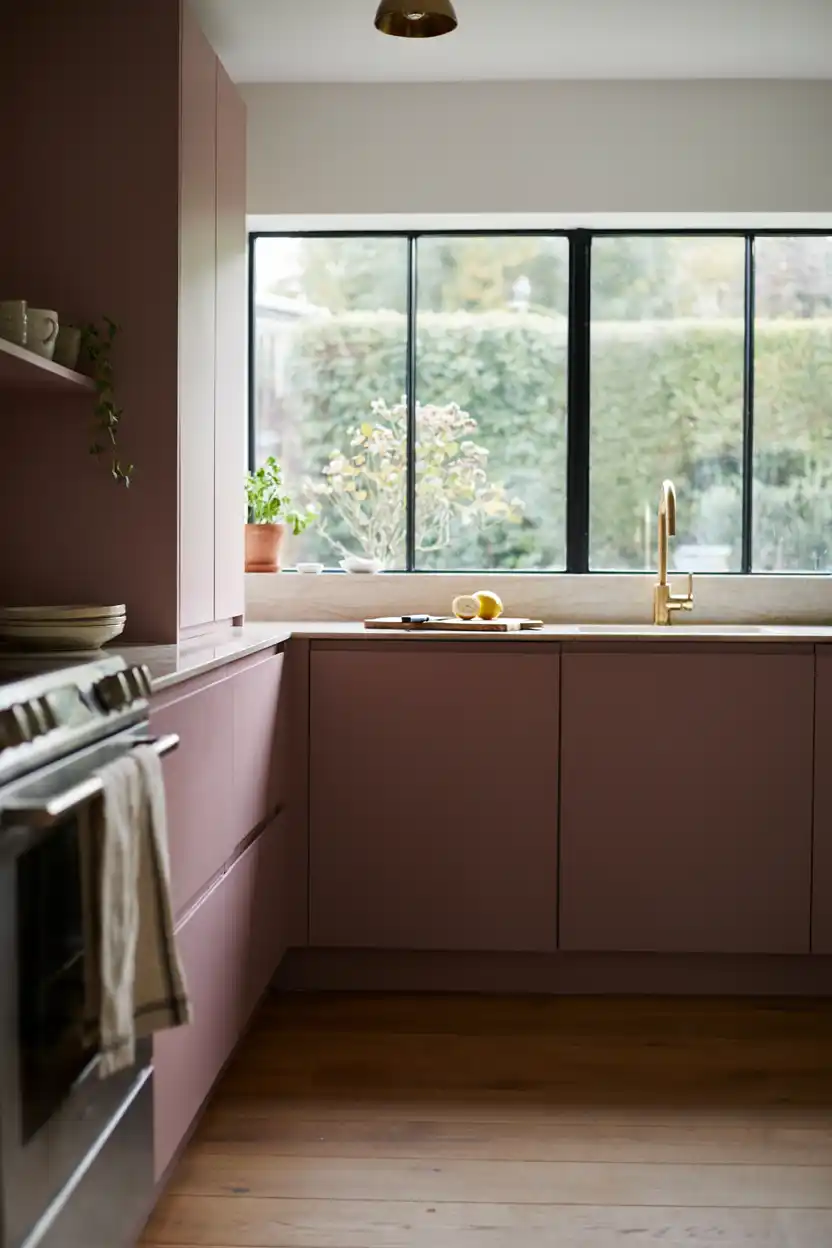
Black steel window frames add architectural structure that complements aubergine’s depth instead of competing with it. The combination feels industrial yet warm.
This pairing works especially well in kitchens with garden or courtyard views, since the black frames create a strong graphic outline around greenery outside. Ideal for new-build or extension projects where window frames are being chosen alongside cabinetry, since this look is easiest to plan from the ground up.
10. Aubergine Kitchen Peninsula for Small Spaces
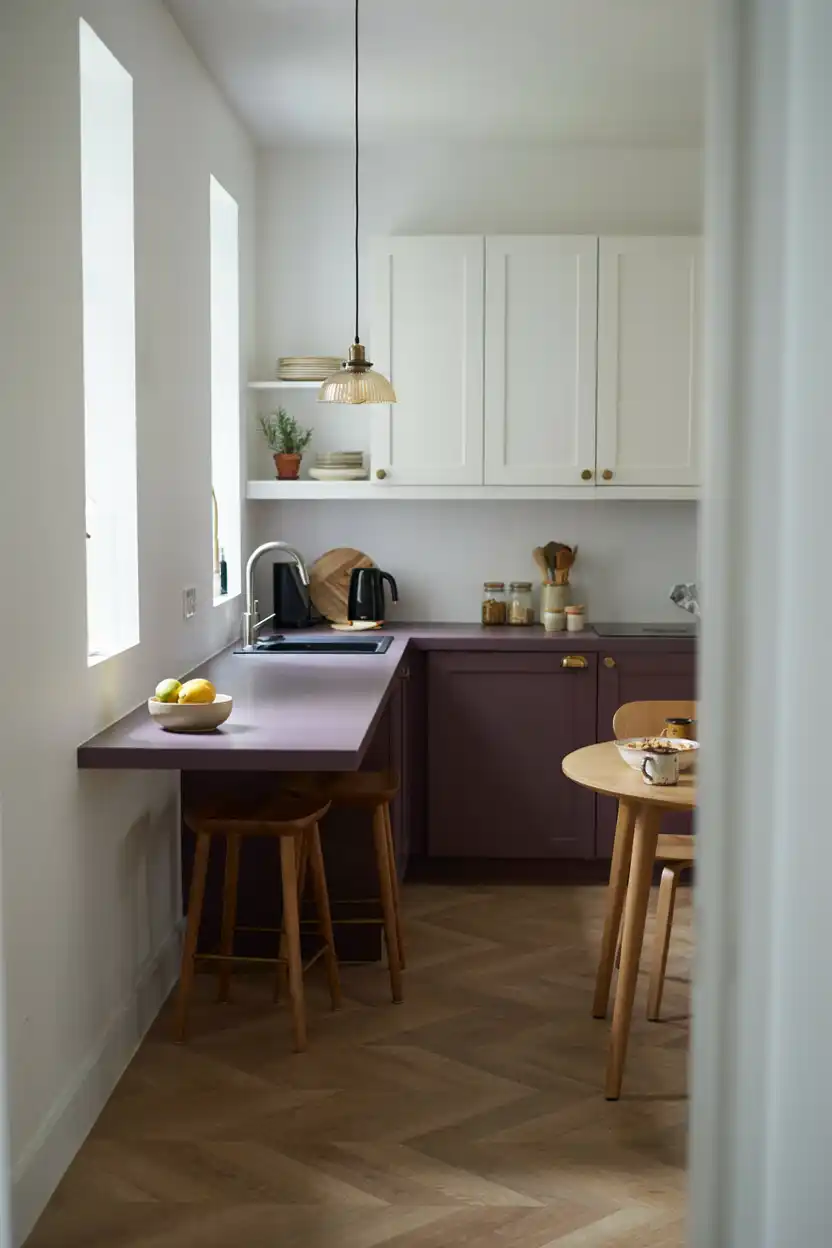
A peninsula lets small kitchens use colour strategically. Painting just the peninsula aubergine adds definition to the layout without darkening the whole room.
It also creates a natural seating or serving edge, useful in apartments or open-plan homes where a full island isn’t practical. Best for smaller footprints where every surface needs to multitask, since the peninsula can double as a breakfast bar, prep space, and visual anchor.
11. Aubergine and Gold Accent Kitchen
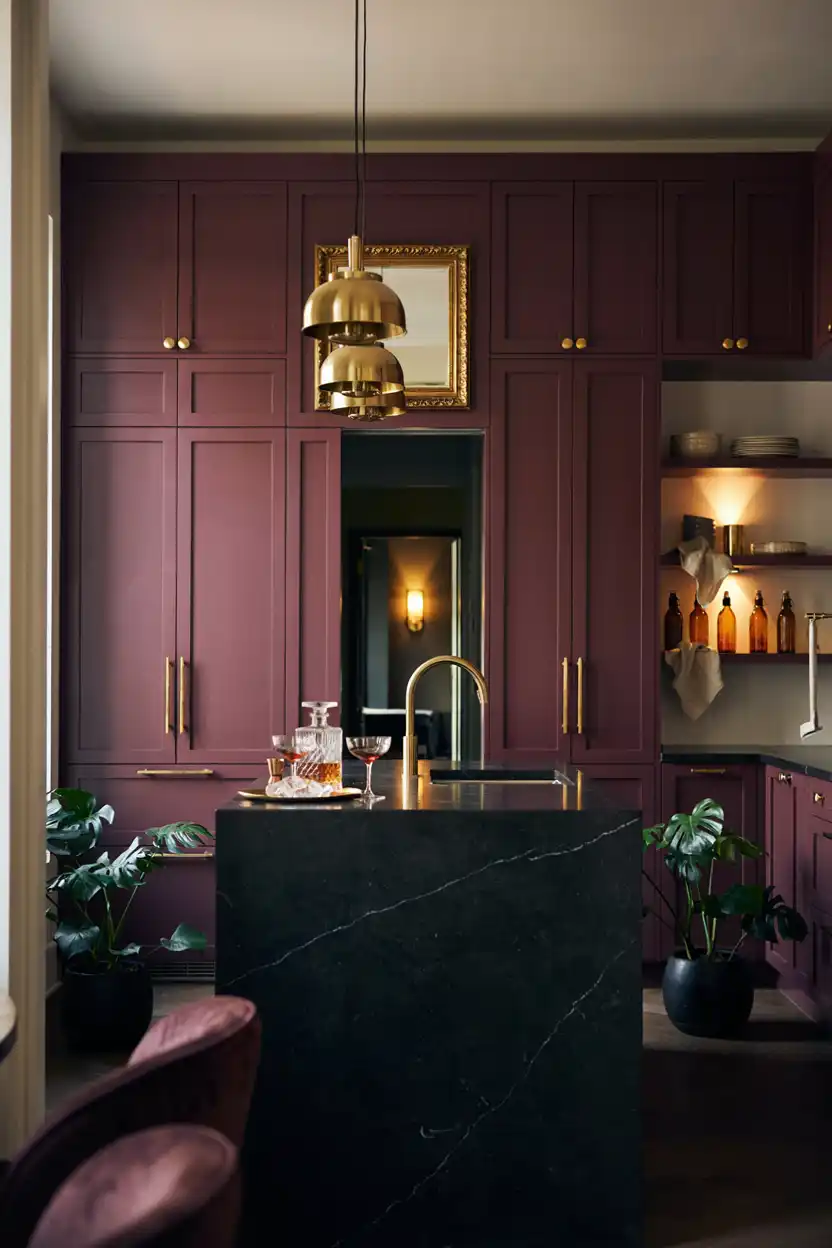
Polished gold, rather than brushed brass, pushes aubergine cabinetry toward a more glamorous, jewel-toned look. It reads as dressier and works well in kitchens meant for entertaining. Small doses of gold, such as faucet fixtures or cabinet pulls, are enough; too much can make the room feel more like a hotel bar than a home kitchen. Suited to homeowners who lean toward maximalist or eclectic interiors and want their kitchen to feel like a considered, styled room rather than a purely functional one.
12. Aubergine Panelled Kitchen in an English Country Style
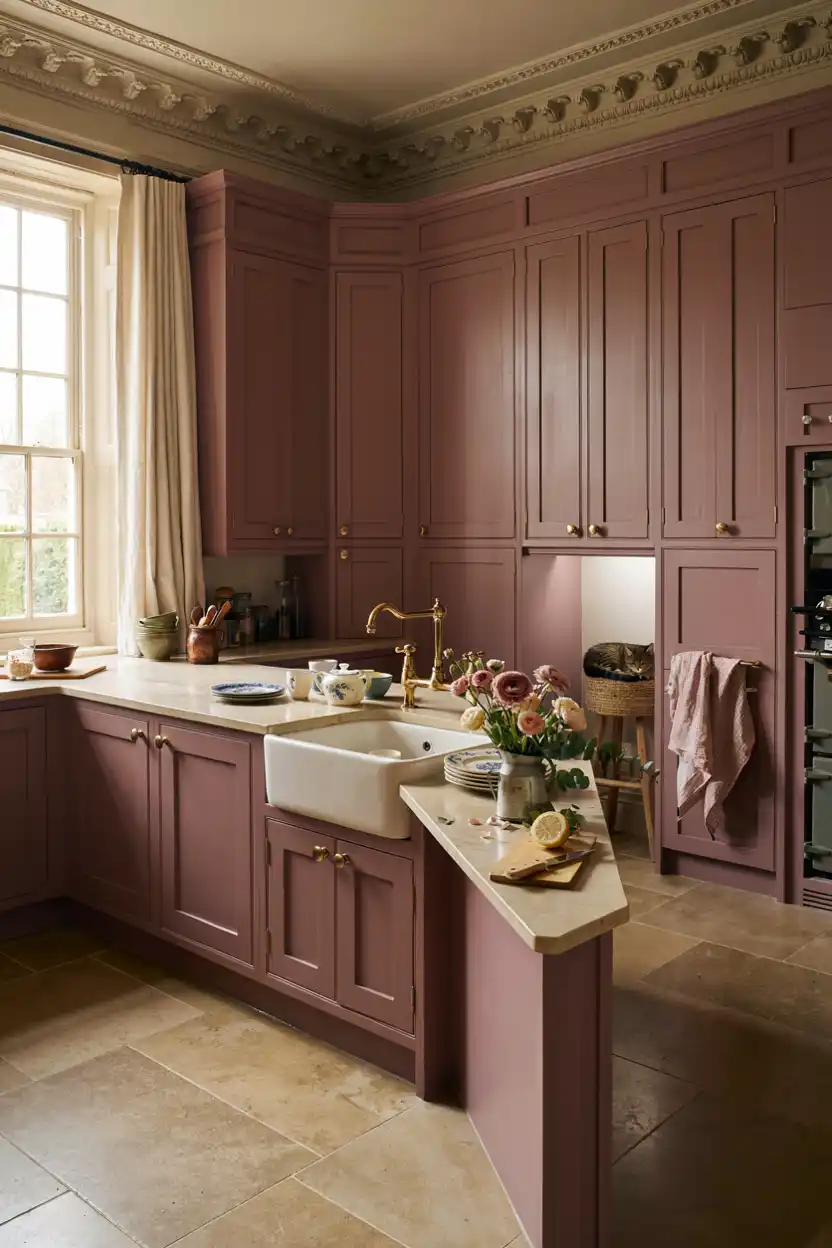
Traditional panelled or in-frame cabinetry brings out the richness of aubergine in a country-house style kitchen, especially when paired with a butler’s sink and brass taps. The deep colour feels intentional rather than trendy in this context, since it echoes historic paint colours used in older homes. Well-suited to period properties or anyone wanting a kitchen that feels collected over time rather than freshly installed.
13. Aubergine Kitchen with a Marble Waterfall Countertop
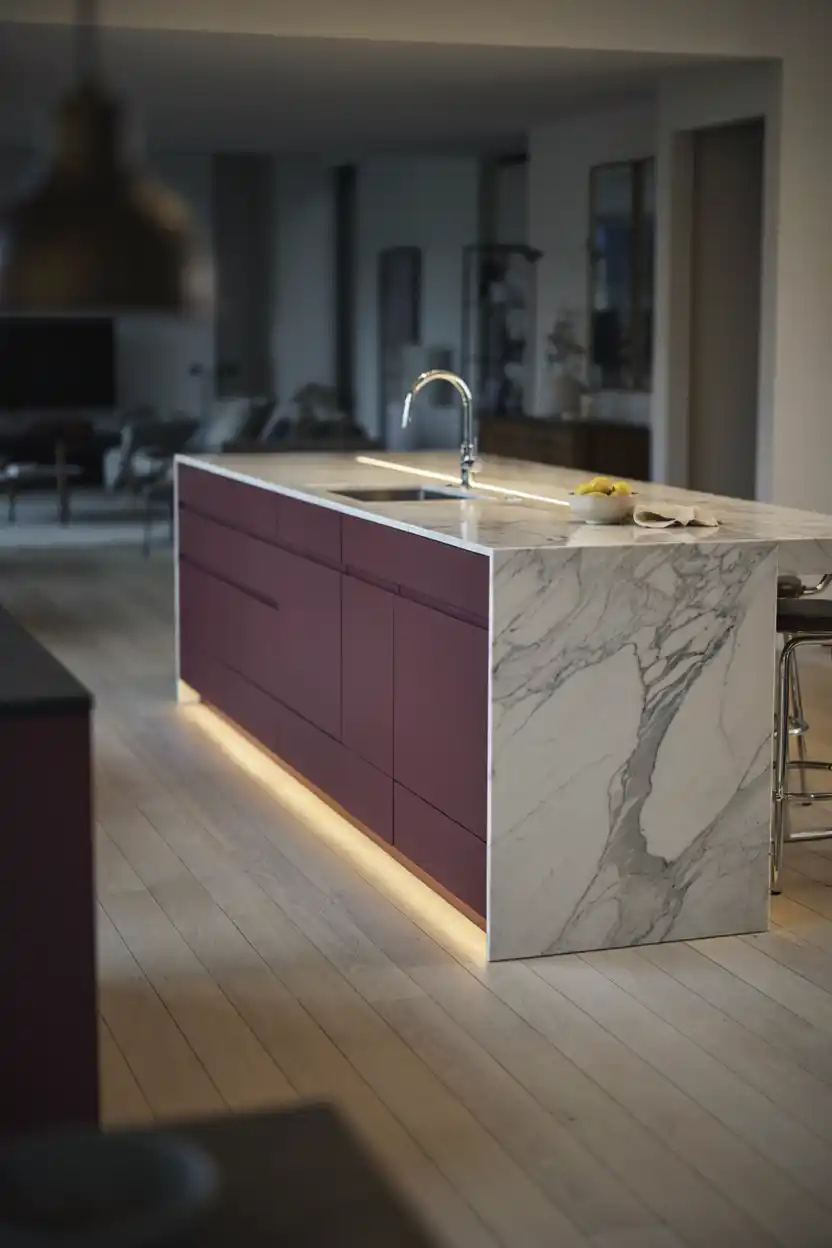
A waterfall countertop, where the stone wraps down the sides of the island, turns aubergine cabinetry into a sculptural centrepiece rather than just storage. The marble veining against the dark cabinet colour creates a strong visual contrast that photographs beautifully and reads as high-end. Best for larger kitchens with a generous island footprint, since waterfall edges need enough slab material and floor space to look proportional.
14. Aubergine Kitchen with Textured Wall Tile
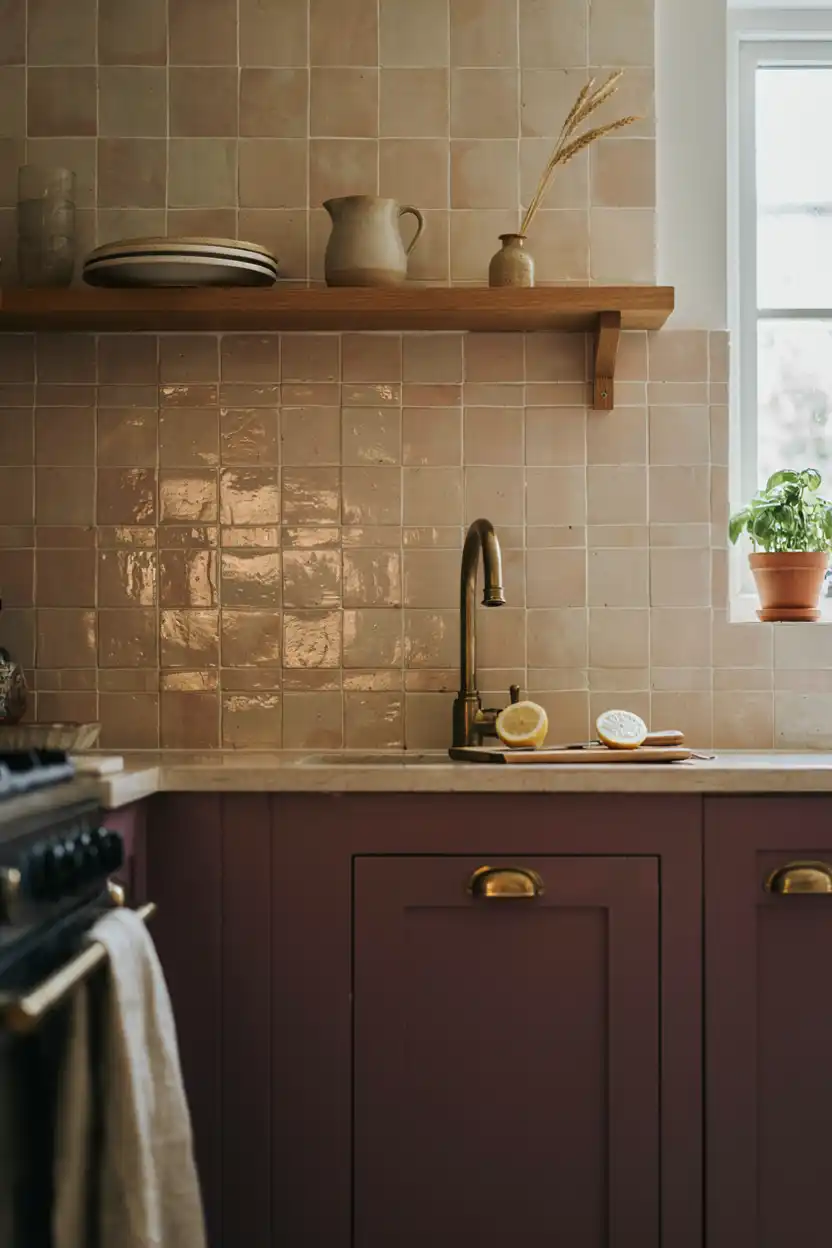
Handmade or textured tile adds tactile interest to an aubergine kitchen, catching light differently across each tile for a subtly varied, artisanal look. Choosing a backsplash tile in a tonal or complementary shade keeps the palette cohesive rather than competing with the cabinetry colour. A strong choice for anyone who wants a kitchen with visible craftsmanship and depth, particularly in Mediterranean or modern-organic interior styles.
15. Aubergine Kitchen with Vintage-Inspired Brass Fixtures
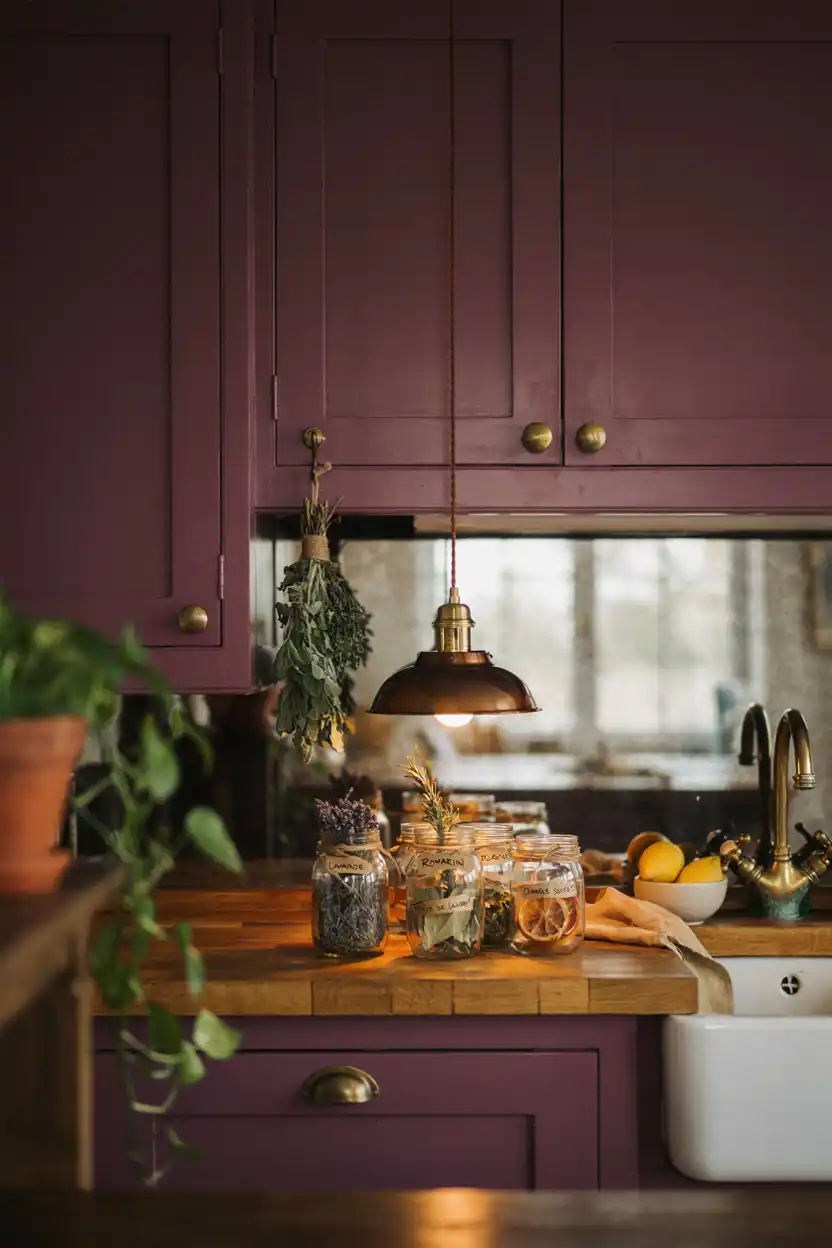
Unlacquered brass fixtures develop a natural patina over time, which pairs beautifully with aubergine’s old-world richness and only improves with age. This look leans into a lived-in, collected aesthetic rather than a showroom-fresh one, which suits people who enjoy antiques and vintage finds. Ideal for homeowners planning to stay long-term, since the patina process takes years and rewards patience rather than a quick refresh.
16. Handleless Aubergine Kitchen with Concealed Appliances
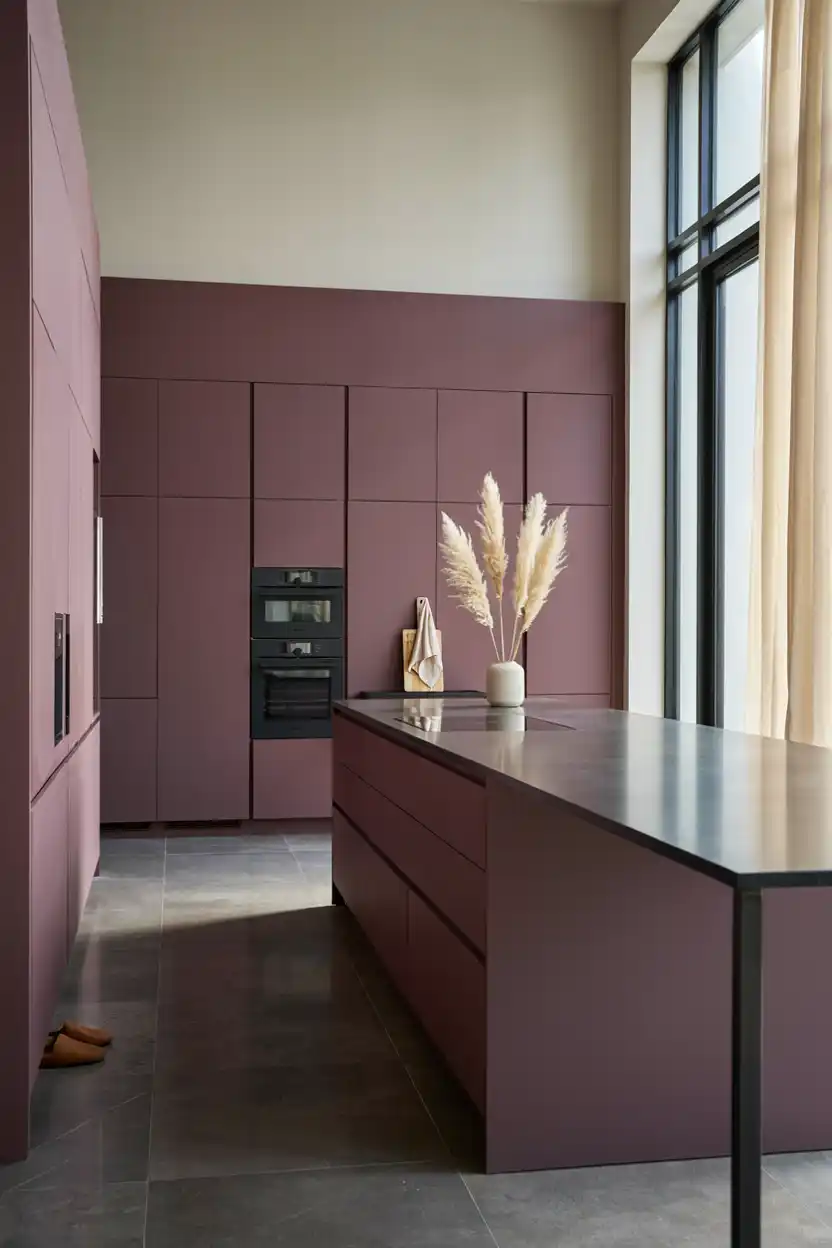
Concealing appliances behind colour-matched panels lets the aubergine cabinetry read as one uninterrupted, sculptural block, which suits very clean, minimalist interiors. Push-to-open mechanisms eliminate the need for visible hardware, letting the colour and cabinet lines carry the design on their own. Best suited to newer, higher-budget renovations, since integrated appliance panels and push-latch systems typically cost more than standard cabinetry.
17. Aubergine Kitchen with a Statement Pendant Light
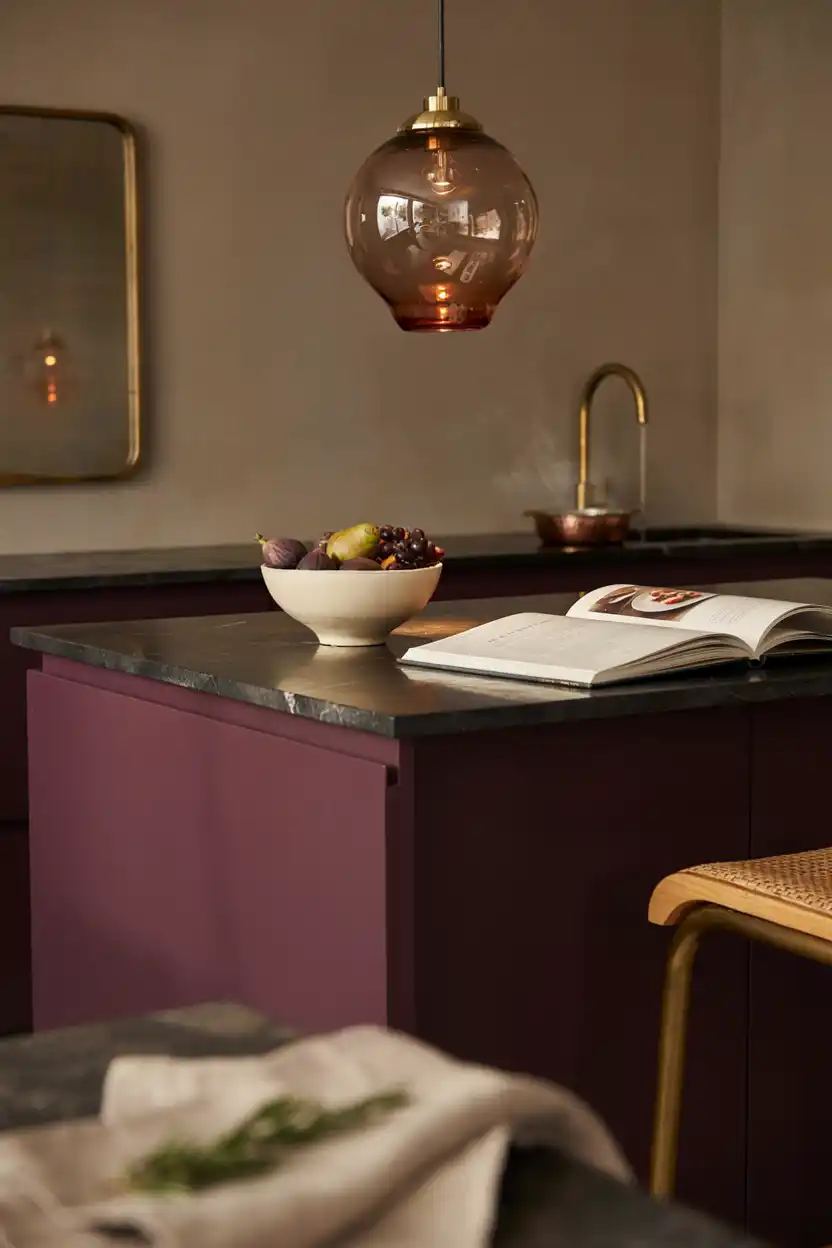
A single oversized pendant over the island gives the eye somewhere to land and adds warmth through amber or smoked glass tones that echo the cabinetry’s depth. Lighting like this does double duty, functioning as both task lighting for the island and as a piece of sculptural decor in its own right. Great for kitchens that are otherwise fairly simple, since one strong lighting choice can elevate the whole room without any other major changes.
18. Aubergine Kitchen with Natural Stone Flooring
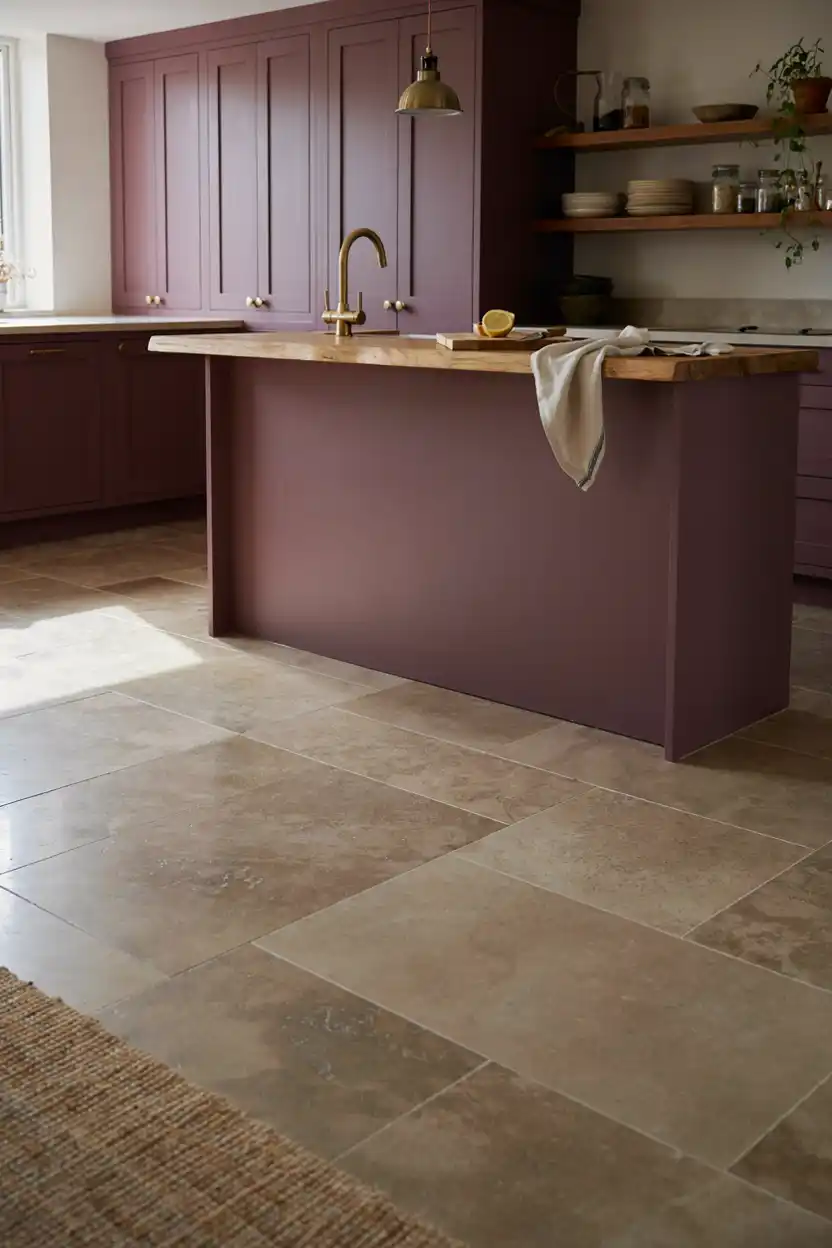
Honed natural stone flooring in a warm neutral tone grounds an aubergine kitchen, keeping the overall palette from feeling too cool or heavy underfoot. The subtle variation in natural stone adds texture at floor level, balancing the flatter, more uniform colour of painted or lacquered cabinetry above. A good long-term investment for homeowners planning a full renovation, since stone flooring typically outlasts several rounds of cabinet colour changes.
19. Aubergine Kitchen with a Bold Contrasting Rug or Runner
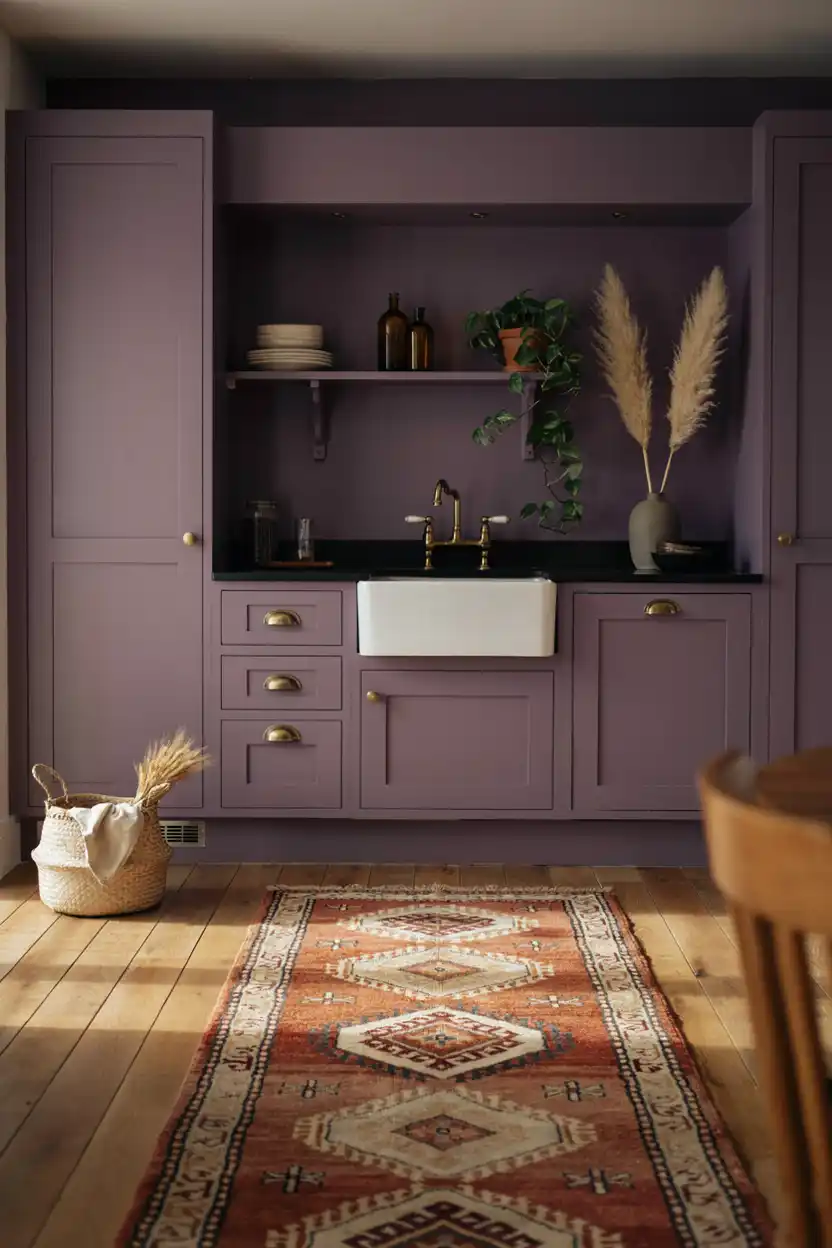
A patterned rug or runner is one of the easiest, lowest-cost ways to soften an aubergine kitchen and introduce a secondary colour palette underfoot. Warm tones like terracotta, rust, or cream tend to work best, since they echo the warmth of brass fixtures without competing with the cabinetry. Perfect for renters or anyone wanting to test how they feel about the colour story before committing to anything more permanent.
Is Aubergine Right for You?
Before committing to a colour this rich, it’s worth weighing the practical trade-offs alongside the aesthetic appeal.
Pros: Aubergine hides everyday fingerprints, splashes, and scuffs noticeably better than white or pale cabinetry. It reads as sophisticated and timeless rather than trend-driven, since it’s rooted in natural, earthy pigments. It also pairs well with an unusually wide range of materials, including brass, wood, marble, and stone, making it easy to personalise.
Cons: Used across every surface in a small or dark room, aubergine can make the space feel more closed in without deliberate lighting choices. Custom cabinet colours typically cost more than stock neutral finishes, and while resale impact is generally mild, very dark, all-over palettes can be more polarising to some buyers than neutral kitchens.
Overall, aubergine tends to work best when it’s balanced with lighter surfaces somewhere in the room, whether that’s countertops, walls, or upper cabinetry, rather than used as the only colour from floor to ceiling.
Planning and Buying Tips
Before choosing a specific aubergine kitchen idea, think through the practical side of the project so the finished result actually fits your space and daily routine.
Space and Layout Considerations
Dark, saturated colours like aubergine read differently depending on room size and natural light. In smaller kitchens, use aubergine on a single element, such as an island or lower cabinets, rather than the entire room, and keep sightlines toward a window or open doorway clear. In larger, brighter kitchens, a full aubergine cabinet run tends to feel intentional rather than overwhelming.
Installation and Setup
If you’re painting existing cabinets, budget time for proper prep: doors typically need to be removed, cleaned, lightly sanded, primed, and painted with a cabinet-grade enamel to withstand daily use. If you’re ordering new cabinetry in a factory aubergine finish, expect a lead time of four to ten weeks, depending on the manufacturer, and always request a physical paint or finish sample under your own kitchen’s lighting before finalising the colour.
Structural and Technical Factors
Darker cabinetry shows dust, water spots, and grease more visibly in a matte finish under strong overhead light, so plan for a mix of ambient, task, and accent lighting rather than relying on a single ceiling fixture. If you’re adding a waterfall countertop or a large island, confirm your contractor accounts for the extra structural support these heavier stone installations require.
Standard Sizing and Specs to Shop For
Base cabinets typically run 24 inches deep and 34.5 inches tall before the countertop; upper cabinets are usually 12 to 15 inches deep. Kitchen islands generally need at least 42 inches of clearance on all sides for comfortable movement, and 36 inches minimum if the space is tight. When shopping for cabinet paint, look for a cabinet-and-trim enamel rated for high-traffic, high-moisture areas rather than standard wall paint.
Cost Breakdown
Costs vary widely depending on whether you’re painting existing cabinetry, ordering new stock cabinets, or going fully custom.
Budget ($800 – $2,500)
This typically covers DIY or professionally painted existing cabinets in a matte aubergine finish, paired with stock hardware and no structural changes. Best for a refresh rather than a full renovation.
Mid-Range ($3,000 – $9,000)
This range covers new stock or semi-custom aubergine cabinetry, upgraded brass or gold hardware, a new backsplash, and moderate countertop upgrades such as quartz. Installation labour is typically included in this range for a standard-sized kitchen.
Luxury / Premium ($10,000 – $25,000+)
This covers fully custom cabinetry in lacquer or hand-painted finishes, natural stone waterfall countertops, integrated appliance panels, and designer lighting. Installation costs increase here due to the complexity of stone fabrication, custom millwork, and any structural adjustments required for a larger island.
Materials and Options Comparison
Here’s how the most common aubergine cabinet materials and finishes compare on cost, durability, and best use case.
| Material / Finish | Avg. Cost (per linear ft, installed) | Durability | Best For |
| Painted MDF (matte aubergine) | $150 – $300 | Good; touch-ups needed over time | Budget-conscious full-colour changes |
| Solid Wood Shaker (painted) | $300 – $550 | Very good; repaintable indefinitely | Long-term homeowners wanting quality doors |
| Lacquered High-Gloss Cabinetry | $400 – $700 | Good, but shows scratches/fingerprints | Modern, design-forward kitchens |
| Laminate (aubergine-toned) | $100 – $200 | Fair; can chip at edges | Rentals or quick, budget refreshes |
| Veneer with Aubergine Stain | $250 – $450 | Good; natural wood grain shows through | Warmer, more organic-leaning kitchens |
Maintenance Tips
Wipe down matte or painted aubergine cabinets with a soft, damp microfiber cloth and a mild, non-abrasive soap; avoid harsh degreasers, which can dull painted finishes over time. For high-gloss lacquer, use a dedicated non-streak cleaner and a microfiber cloth to avoid fine scratches that show more visibly on shiny surfaces.
Address chips or scuffs on painted cabinets quickly with matched touch-up paint before moisture or grease gets into the exposed wood or MDF underneath. Keep brass hardware dry after cleaning, and if you want it to develop a natural patina, avoid polishing, as it removes the aged look many aubergine kitchens are designed around.
Common issues to avoid: using steel wool or abrasive sponges on any painted or lacquered surface, letting standing water sit around a sink cabinet edge, and skipping a proper primer coat when repainting, which is the most common cause of premature chipping and peeling.
Frequently Asked Questions
Is aubergine a good colour for a kitchen?
Yes. Aubergine works well in kitchens because it’s a deep, warm-leaning neutral rather than a true bright purple, so it pairs easily with wood, brass, marble, and white. It also tends to hide everyday marks better than pale colours, making it a practical choice for busy kitchens.
Does aubergine make a kitchen feel smaller?
It can, if used on every surface in a room with little natural light. To avoid this, many homeowners use aubergine only on lower cabinets or an island, keep upper cabinets or walls lighter, and add good task and ambient lighting to prevent the space from feeling closed in.
What colours go best with an aubergine kitchen?
Warm neutrals like cream and soft white, natural wood tones, brass and gold metals, and muted greens like sage all pair well with aubergine. These combinations soften the colour’s coolness and keep the kitchen feeling warm and livable rather than heavy.
How much does it cost to paint kitchen cabinets aubergine?
Professional cabinet painting typically runs $150 to $300 per linear foot, depending on cabinet material, condition, and the number of coats needed. DIY painting is significantly cheaper, usually $200 to $500 in total supplies for an average kitchen, but requires proper prep and a durable cabinet-grade paint.
Will an aubergine kitchen affect resale value?
A well-executed aubergine kitchen with good lighting and a balanced palette is unlikely to hurt resale value, especially in higher-end markets that favour bold colour. That said, very dark, all-over colour schemes can be more polarising to buyers than neutral kitchens, so some sellers choose to keep the colour on an island or lower cabinets only for broader appeal.
How to Choose the Right Aubergine Kitchen Idea for You
The right approach comes down to matching the idea to your space, budget, and lifestyle rather than picking whatever looks best in a photo. If you’re working with a smaller or darker kitchen, lean toward an island, peninsula, or lower-cabinet application paired with plenty of light-reflecting surfaces. If you have a larger, brighter space and a bigger budget, a full cabinet run in lacquer or a custom stone waterfall island can make a much bigger design statement.
Think about how you actually use your kitchen, too: households that cook and entertain often benefit from durable, easy-to-clean finishes like painted shaker cabinets. At the same time, design-focused homeowners with lower daily wear may prefer a higher-maintenance gloss or unlacquered brass look.


- Be Respectful
- Stay Relevant
- Stay Positive
- True Feedback
- Encourage Discussion
- Avoid Spamming
- No Fake News
- Don't Copy-Paste
- No Personal Attacks
- Be Respectful
- Stay Relevant
- Stay Positive
- True Feedback
- Encourage Discussion
- Avoid Spamming
- No Fake News
- Don't Copy-Paste
- No Personal Attacks
