18 Bedroom Cooling Ideas to Beat the Heat and Sleep Cool All Night
Published: 19 Aug 2026
If your bedroom turns into a sauna the moment the sun goes down, you are not alone. Bedroom temperature is one of the biggest hidden factors behind restless, sweaty nights, and small fixes rarely solve the problem on their own. Bedroom cooling ideas work because they attack heat from every angle at once, from airflow and bedding to insulation and window treatments, so the room stays comfortable without a sky-high energy bill.

This guide walks through 18 practical bedroom cooling ideas ranging from five-dollar swaps to bigger installed upgrades, plus planning tips, real cost ranges, a side-by-side comparison table, maintenance advice, and answers to the most common questions people search for when their bedroom just will not cool down. Whether you rent a small apartment or own a top-floor bedroom that traps heat, there is an idea here sized to fit.
1. Reverse-Rotation Ceiling Fan for Whole-Room Airflow
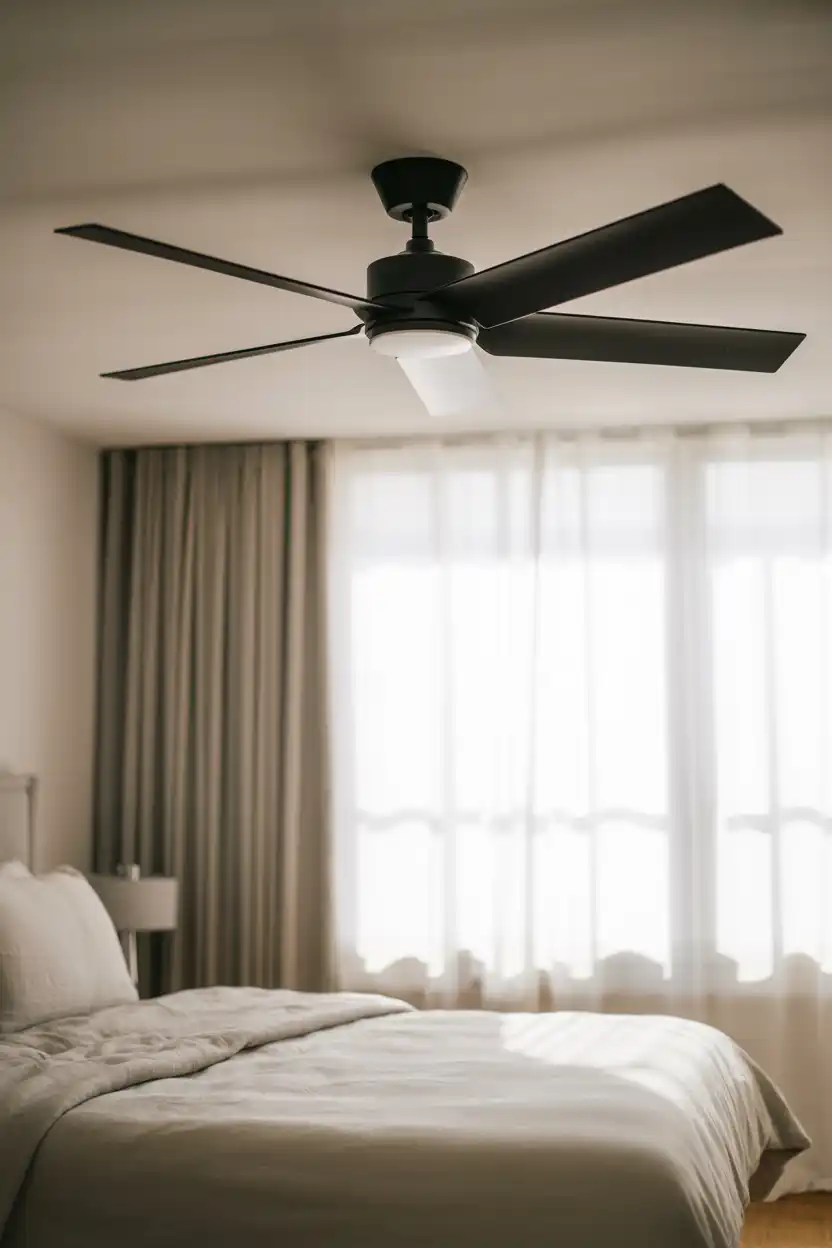
A ceiling fan set to spin counterclockwise in the summer pushes air straight down, creating a wind-chill effect that makes a room feel several degrees cooler without lowering the actual temperature. It is one of the most affordable, energy-efficient upgrades available for a warm bedroom, since fans use a fraction of the electricity an air conditioner does.
For best results, pair a fan with a low-profile or flush-mount design in rooms with standard eight-foot ceilings, and choose a blade span suited to the room’s square footage. This idea works well for renters and homeowners alike, since many models can be installed on existing electrical boxes without rewiring.
It is best suited to anyone who wants a low-cost, always-on cooling layer that also improves air circulation for a stuffy or poorly ventilated bedroom.
2. Blackout Thermal Curtains to Block Solar Heat
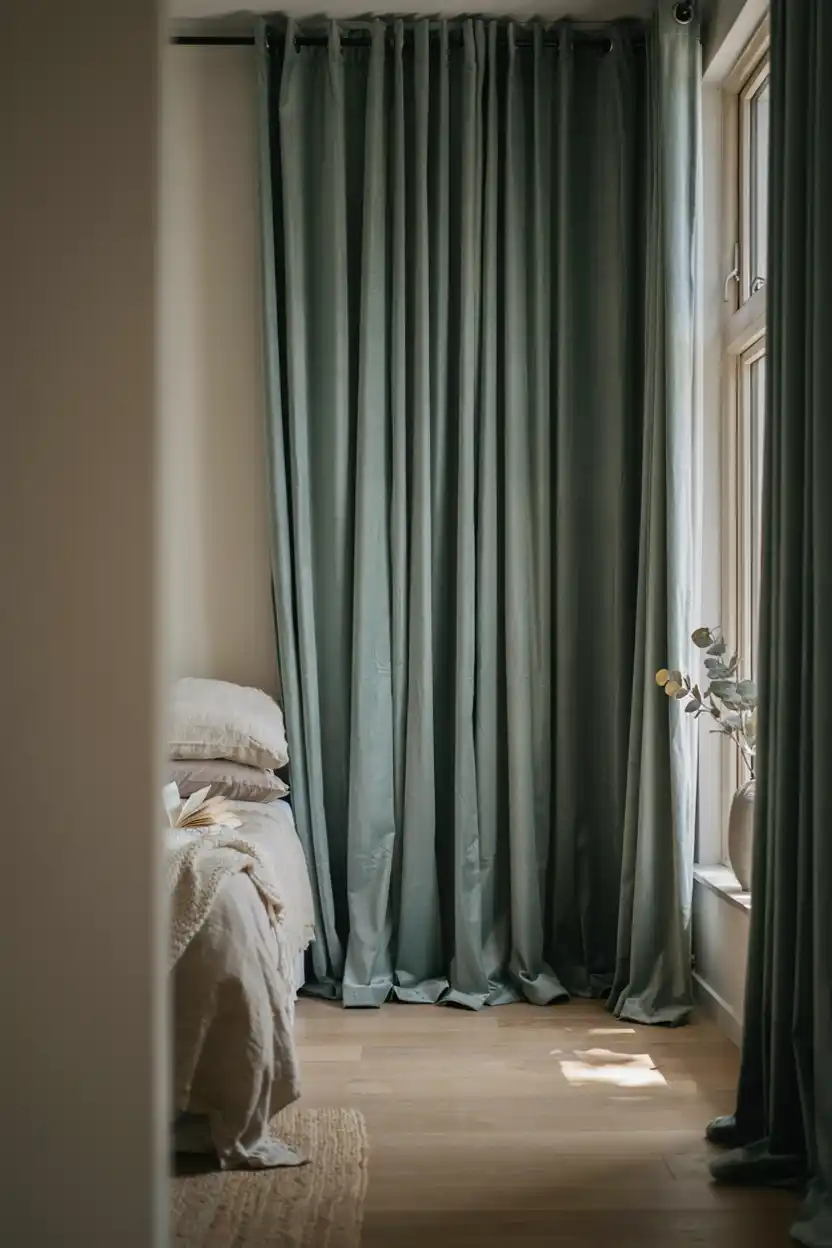
Windows are one of the biggest sources of unwanted heat gain in a bedroom, especially on west- or south-facing walls that catch direct afternoon sun. Thermal-lined blackout curtains reflect and absorb solar heat before it enters the room, which can noticeably reduce daytime temperature buildup.
Look for curtains with a triple-weave or foam-backed thermal lining, and hang them on a rod that extends a few inches beyond the window frame so the fabric fully covers the glass and blocks light leakage on the sides. Closing them during peak sun hours and opening them once the sun has moved keeps the room from trapping heat overnight.
This idea is ideal for bedrooms with large or unshaded windows and for anyone who also wants better sleep in a darker room.
3. Gel-Infused Memory Foam Mattress Topper
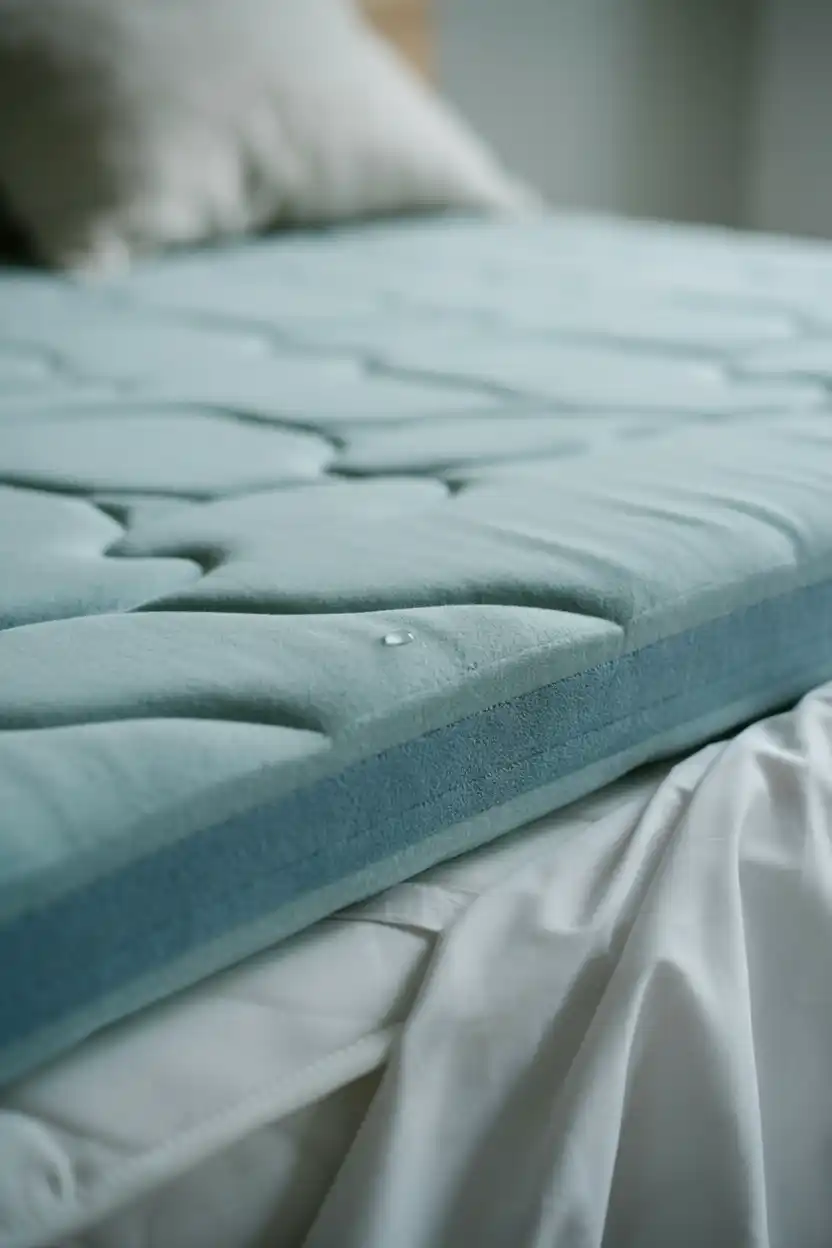
Traditional memory foam mattresses trap body heat, which can make a warm bedroom feel even hotter overnight. A gel-infused topper is designed to draw heat away from the body and disperse it, so sleepers stay noticeably cooler without needing to replace the entire mattress.
Choose a topper between two and three inches thick for the best balance of cooling and support, and look for an open-cell foam structure that promotes airflow rather than a dense, heat-retaining foam. A breathable cotton or bamboo cover adds an extra layer of temperature regulation.
This upgrade is best suited to hot sleepers who already own a mattress they like and want a budget-friendly way to cool it down, rather than buying a new one.
4. Breathable Linen or Bamboo Bedding Set

Bedding fabric has a direct impact on how hot or cool a bed feels. Linen and bamboo-derived viscose are both naturally moisture-wicking and far more breathable than standard cotton-polyester blends, allowing air to circulate through the weave instead of trapping heat and humidity against the skin.
A lightweight percale or linen sheet set with a thread count between 200 and 400 offers the crispest, coolest hand feel, since overly high thread counts often result in a denser, warmer weave. Pairing sheets with a lighter-weight duvet insert, or a cotton blanket instead of a heavy comforter, extends the cooling effect through all seasons of hot sleep.
This idea works well for anyone in a warm climate or for hot sleepers who wake up sweaty regardless of the room’s air temperature.
5. Portable Evaporative Air Cooler
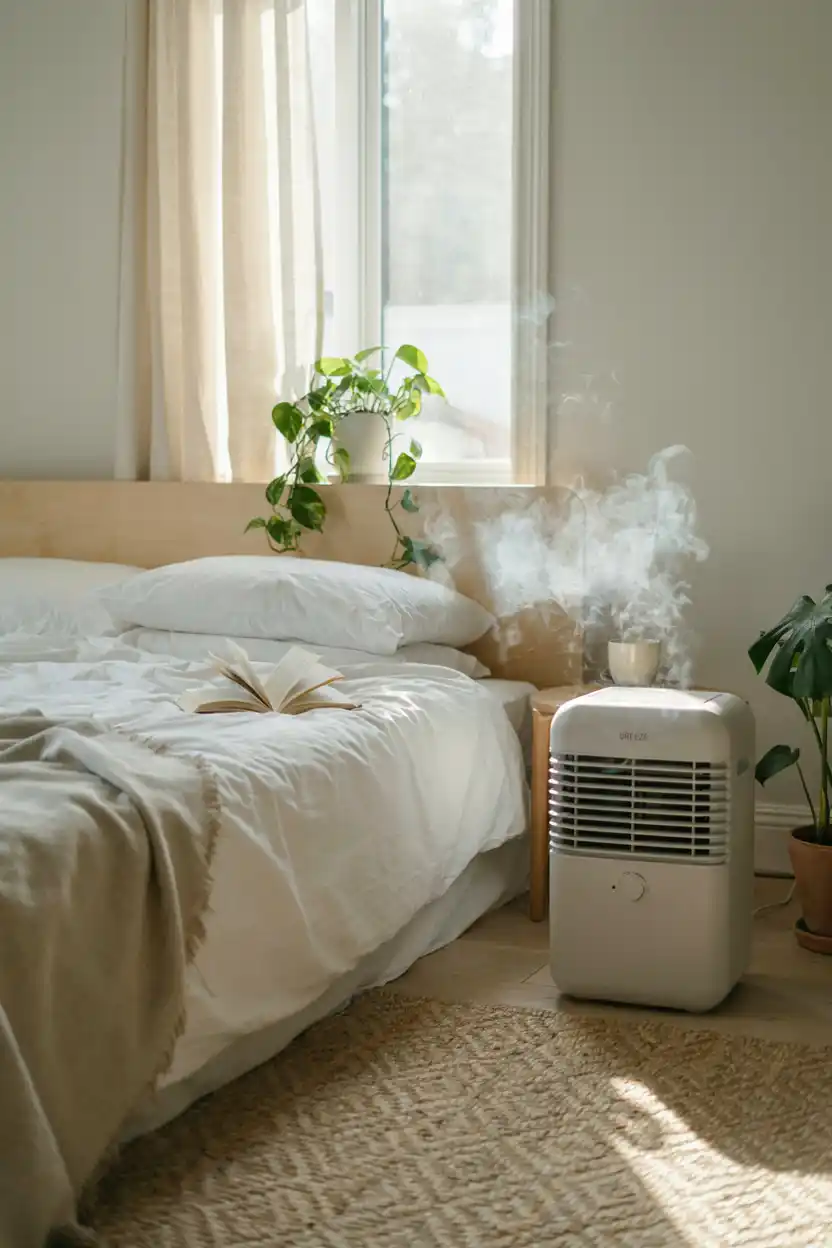
Evaporative coolers, sometimes called swamp coolers, pull warm air through a water-saturated pad and release cooler, humidified air into the room. They use significantly less electricity than a refrigerant-based air conditioner and work especially well in dry climates where added humidity is a bonus rather than a drawback.
Place the unit near a partially open window or door to allow fresh air to keep cycling through, since evaporative coolers work best with some airflow rather than in a fully sealed room. Refill the water tank daily during heavy use, and it will keep the space several degrees cooler within minutes.
This option suits renters, dry-climate households, and anyone who wants a portable, low-energy alternative to a window or split air conditioner.
6. Reflective Window Film for Heat Deflection

Reflective or low-E window film is applied directly to the glass and reflects a portion of incoming solar radiation before it heats the room, while still allowing natural light through. It is a nearly invisible upgrade that works around the clock, unlike curtains that must be manually closed.
Professional installation ensures a bubble-free, even application, though many peel-and-stick versions are DIY-friendly for a single standard window. Films are rated by their heat-rejection percentage, and a mid-range film typically blocks 45 to 60 per cent of solar heat without noticeably darkening the room.
This idea is best for homeowners with south- or west-facing bedroom windows who want a permanent, low-maintenance heat barrier.
7. Cross-Ventilation Window Layout

Cross-ventilation uses the natural pressure difference between two open windows on opposite or adjacent walls to pull a continuous breeze through the room. It costs nothing beyond opening the right windows at the right time and can dramatically lower a room’s temperature during cool evening and early morning hours.
For the strongest effect, open windows just before sunset once the outdoor air drops below the indoor temperature, and close them again in the morning to trap the cooler air inside. Positioning a fan facing outward in one window pulls warm air out faster and draws in a stronger cross-breeze from the other side.
This approach is ideal for homes in climates with a meaningful day-to-night temperature swing and for bedrooms with windows on more than one wall.
8. Smart Thermostat with Bedroom Zoning
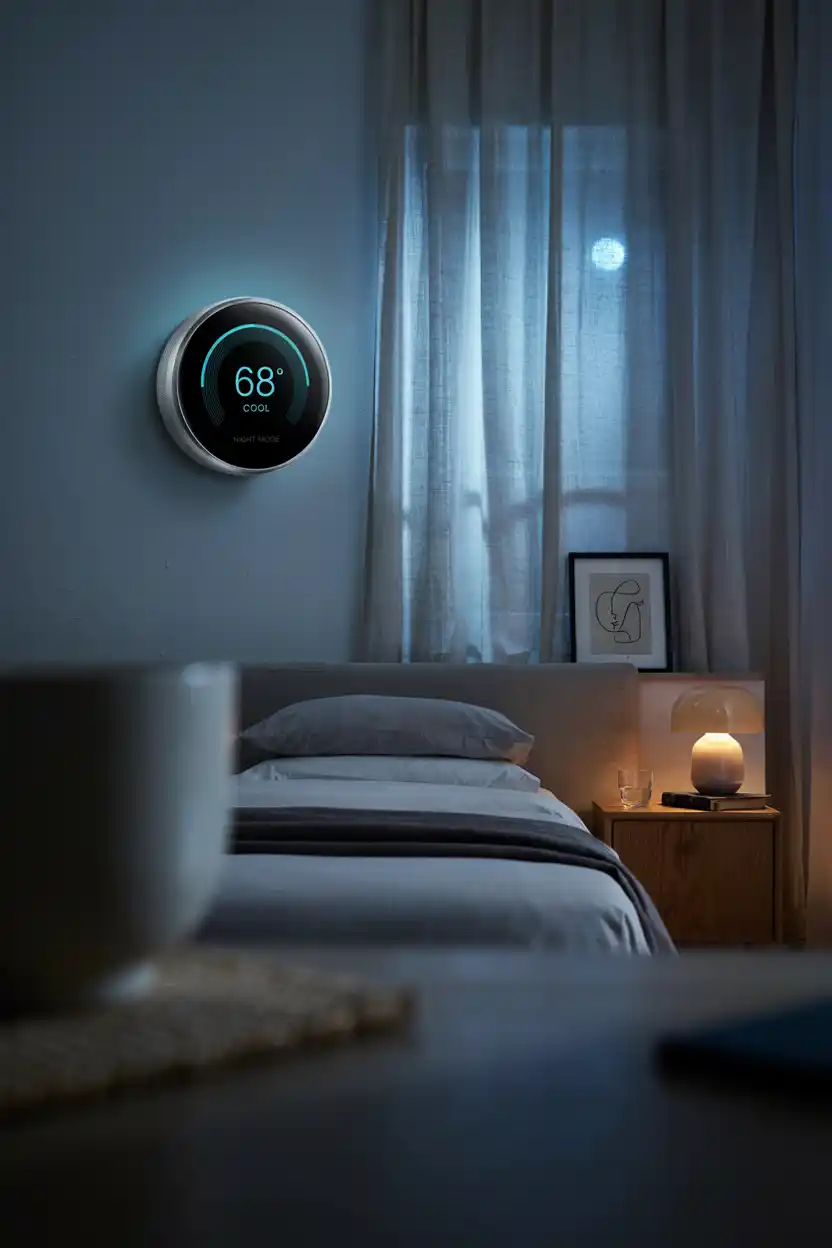
A smart thermostat with zoning capability lets a bedroom run cooler at night than the rest of the house automatically, rather than cooling the whole home evenly around the clock. Scheduled overnight temperature drops, paired with motion or occupancy sensing, can meaningfully reduce cooling costs while maintaining high sleep quality.
Zoning requires either a multi-zone HVAC system with dampers or a smart thermostat paired with smart vents in the bedroom, so it is a bigger project than most items on this list. Once installed, most systems allow app-based scheduling to pre-cool the bedroom about 30 minutes before bedtime.
This upgrade suits homeowners who already have central air and want a more efficient, targeted way to keep the bedroom cool without overcooling the entire house.
9. Cooling Gel Pillow with Breathable Mesh Cover
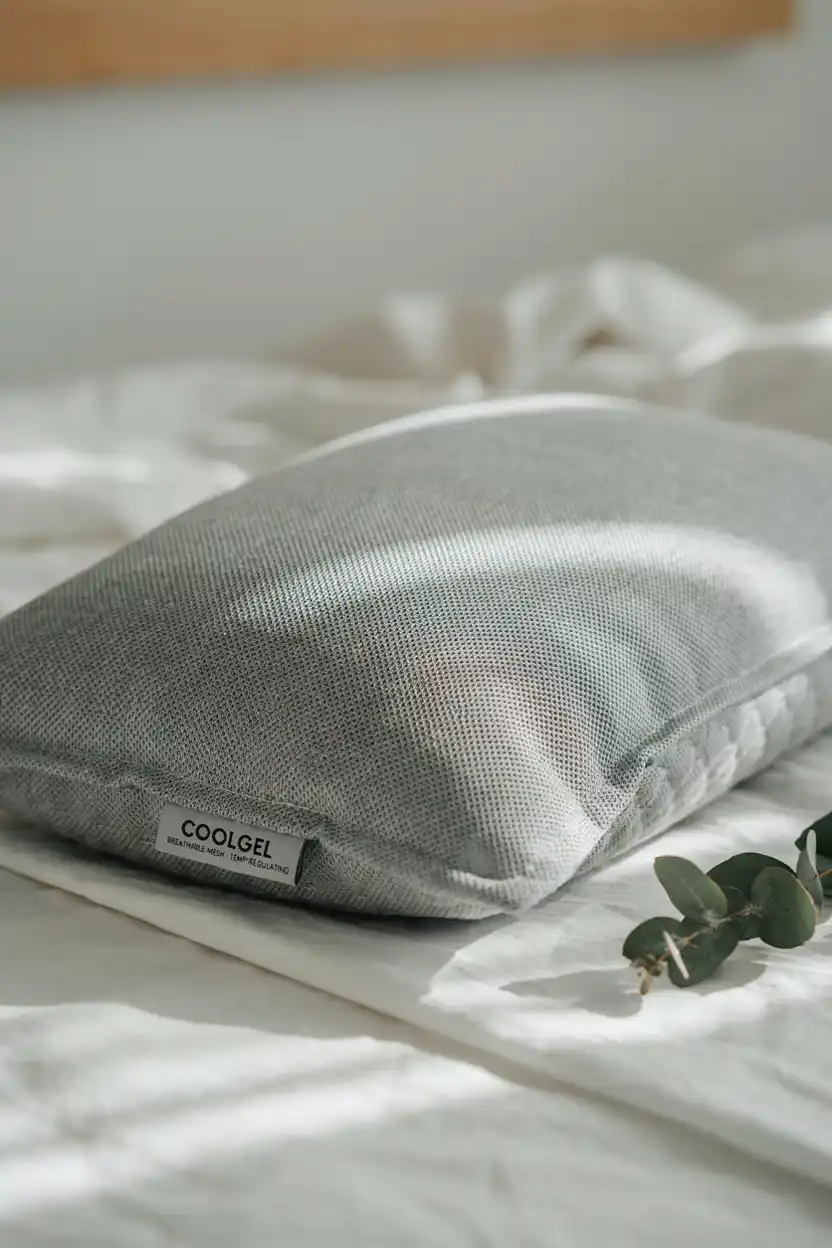
A hot pillow is often the first thing to disrupt sleep on a warm night, since the head and neck quickly generate and retain heat. Cooling gel pillows use a gel-infused layer or a phase-change cover material that actively pulls heat away rather than absorbing and retaining it, as traditional foam does.
Look for a pillow with a breathable knit or mesh cover in addition to the gel layer, since the cover fabric affects cooling as much as the fill. Adjustable-fill models allow sleepers to fine-tune loft and firmness while still benefiting from the cooling technology.
This idea is a small, affordable fix best suited to hot sleepers who wake up flipping their pillow to the cool side throughout the night.
10. Oscillating Tower Fan with Nighttime Mode
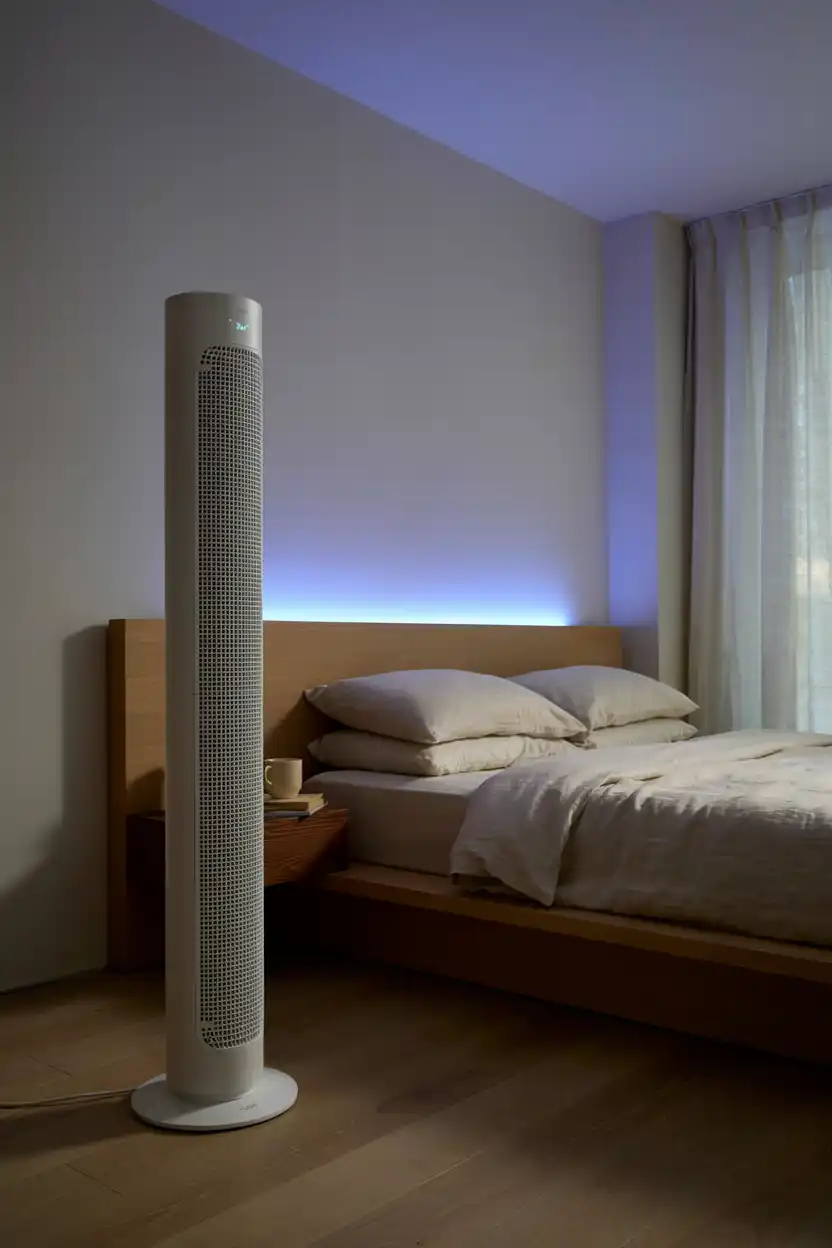
A tower fan delivers a wide, even spread of airflow across the room in a slim footprint, making it a practical choice for smaller bedrooms where a bulky pedestal fan would get in the way. Many models include a dedicated sleep or night mode that gradually reduces fan speed and dims control lights to avoid disrupting rest.
Placing the fan a few feet from the bed on oscillate, rather than pointed directly at the sleeper all night, distributes airflow more evenly and avoids the dryness that comes from a constant direct breeze. Quiet-rated models under 50 decibels on their lowest setting are worth prioritising for light sleepers.
This option is best for apartment dwellers, smaller bedrooms, and anyone who wants a compact, quiet airflow solution that does not require installation.
11. Compact Dehumidifier for Humid Climates
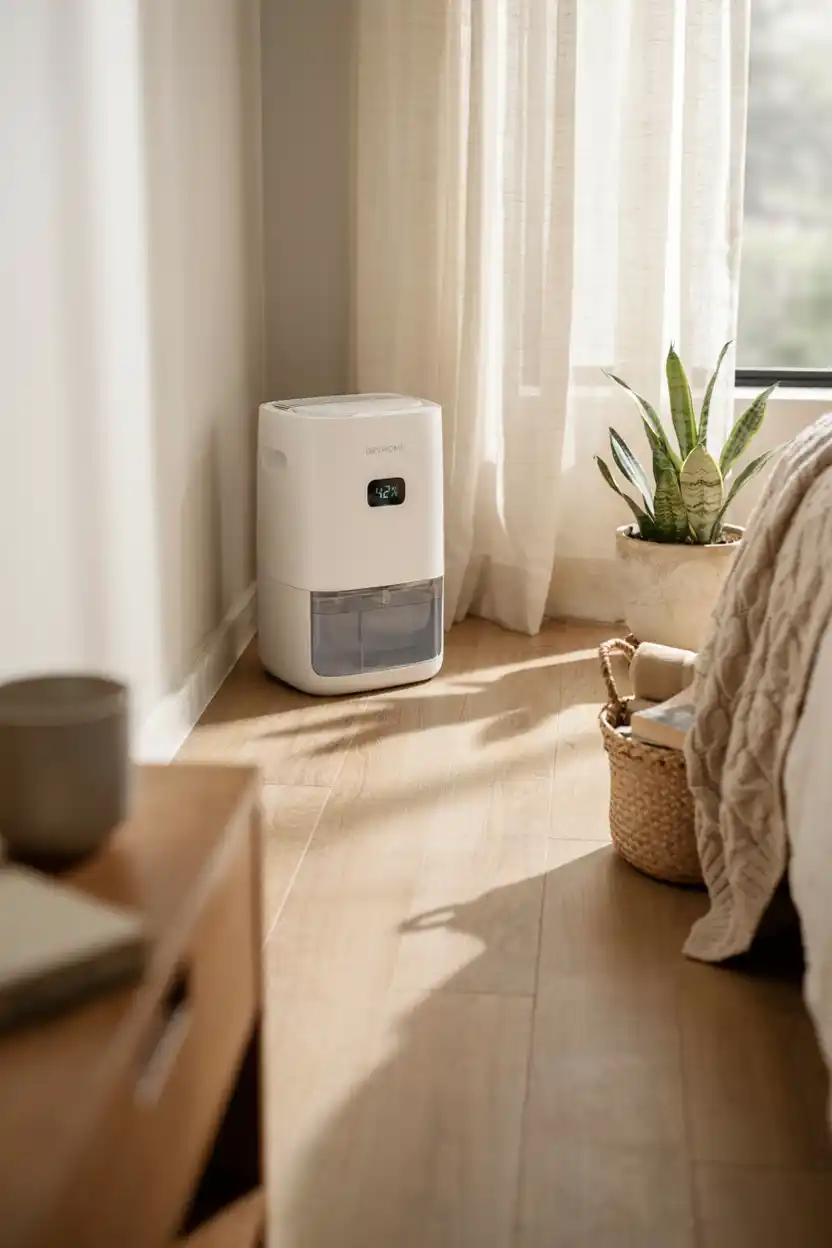
High humidity makes a bedroom feel warmer than the thermometer suggests, because sweat cannot evaporate efficiently from the skin in damp air. A compact dehumidifier removes excess moisture from the air, improving both comfort and the perceived effectiveness of any fan or air conditioner already in the room.
A unit rated for 20 to 30 pints per day suits most standard bedrooms in humid climates, and continuous-drain models eliminate the daily tank-emptying hassle during peak summer humidity. Running it for a few hours before bedtime keeps the room from feeling muggy overnight.
This idea is especially useful in coastal or humid regions and for anyone who has noticed mustiness, condensation, or a heavy feeling in the bedroom air.
12. Light, Breathable Wall Paint Palette
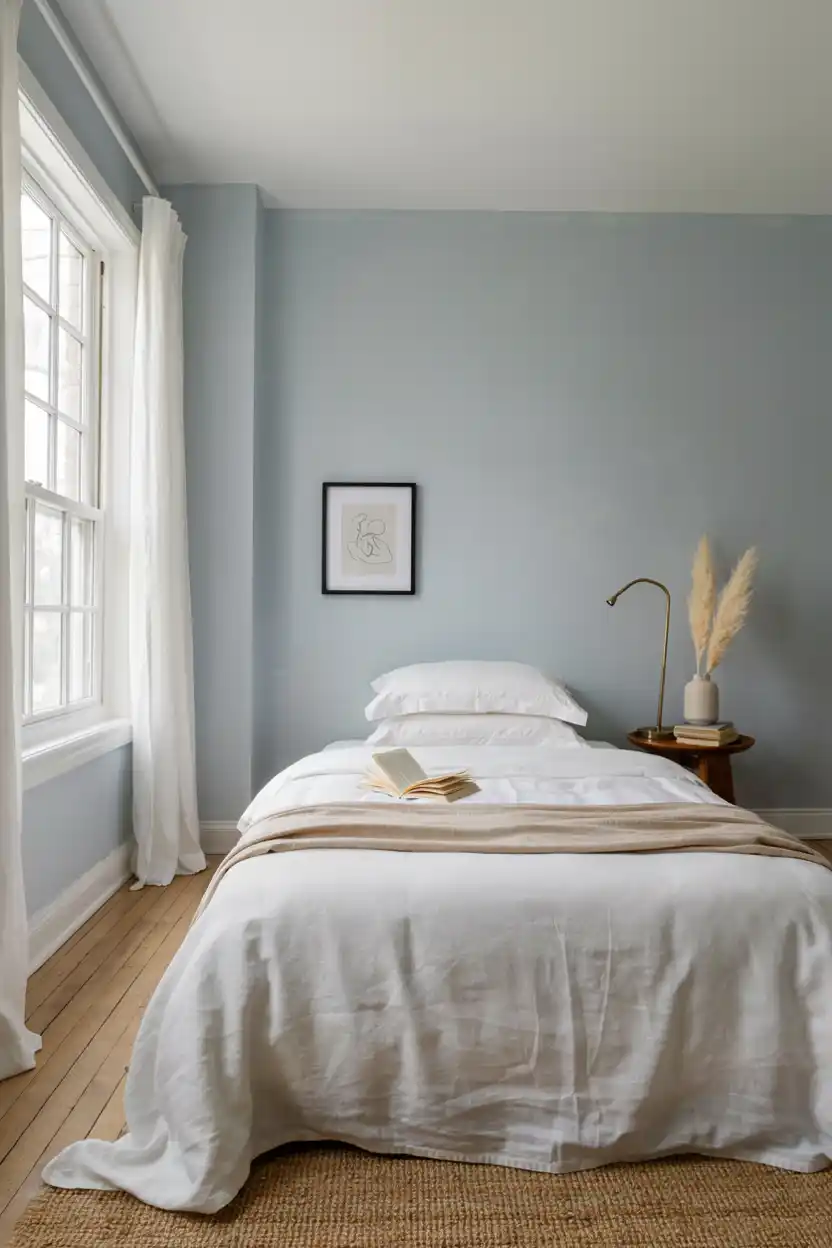
Dark wall colours absorb more heat and light, which can make a room feel warmer even when the air temperature is unchanged. Repainting a bedroom in a pale, cool-toned shade such as soft blue, sage, or warm white reflects more light and creates a visually cooler, airier space.
Matte or eggshell finishes in cool undertones tend to read as the calmest and most temperature-neutral, while glossy dark finishes can visually intensify heat and glare from sunlight. This is a purely cosmetic fix, so it works best paired with an actual airflow or insulation upgrade rather than as a standalone solution.
This idea suits anyone already planning to repaint who wants their color choice to double as part of a cooler, more calming bedroom environment.
13. Moisture-Wicking Sleepwear and Bedside Storage
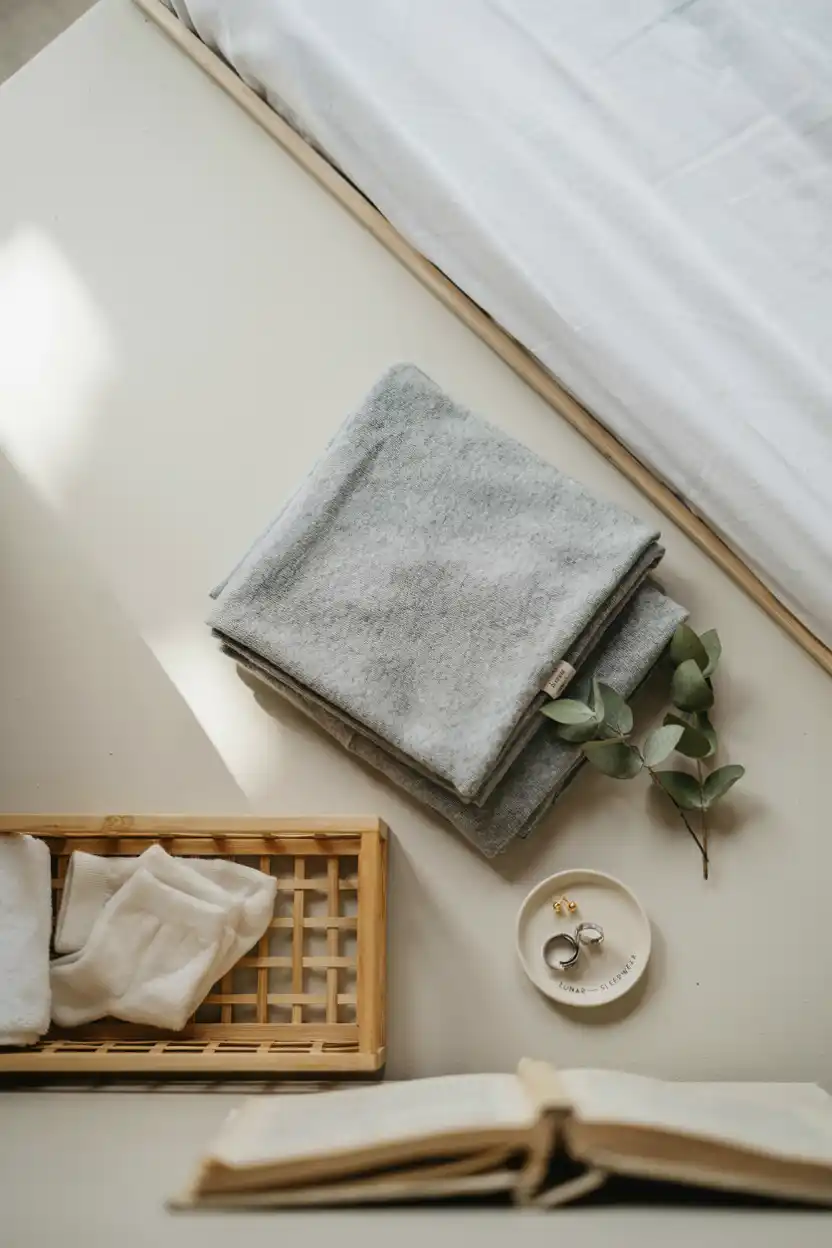
What a sleeper wears to bed affects overnight temperature regulation as much as the bedding itself. Lightweight, moisture-wicking sleepwear made from bamboo, modal, or technical cotton blends pulls sweat away from the skin instead of trapping it, which helps prevent the clammy overheating that heavier cotton or fleece pajamas can cause.
Keeping a small open basket or drawer of breathable sleepwear within reach of the bed makes it easy to swap into something cooler mid-summer without digging through a full dresser. Loose-fitting cuts also allow more air circulation against the skin than fitted styles.
This idea is a low-cost, easy swap best suited to anyone who already owns cooling bedding but still overheats due to what they are wearing.
14. Air-Purifying Cooling Houseplants
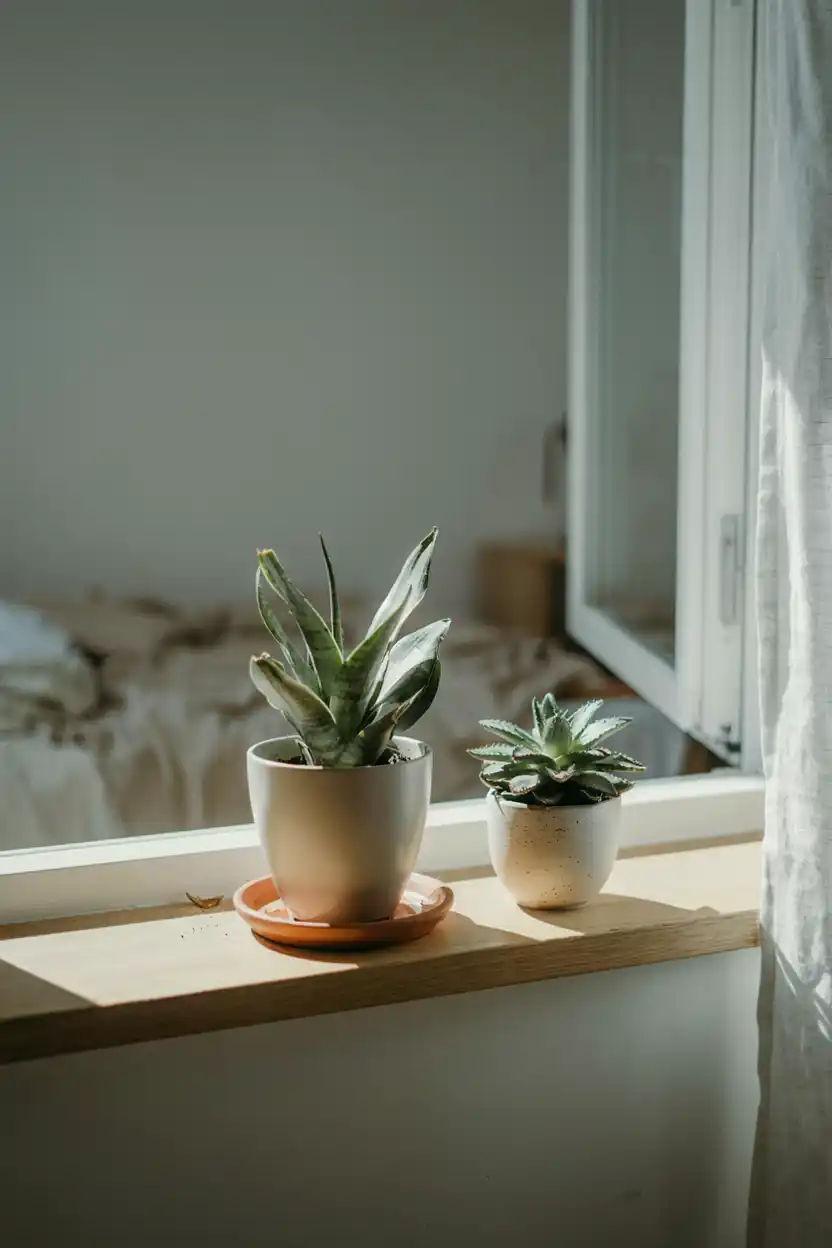
Certain houseplants, such as snake plants and aloe vera, release oxygen and absorb carbon dioxide overnight rather than the reverse, and their soil moisture provides a very mild natural humidifying and cooling effect on the surrounding air. While plants alone will not meaningfully lower room temperature, they contribute to a fresher, less stagnant feeling space.
Two or three medium potted plants placed near a window where they get indirect light are enough to notice a subtle improvement in air freshness without overcrowding the room. Low-maintenance varieties are best for a bedroom, since they tolerate irregular watering and lower light better than tropical species.
This idea is best suited to anyone looking for a decorative, low-effort complement to an existing cooling setup rather than a primary cooling method.
15. Attic and Wall Insulation Upgrade
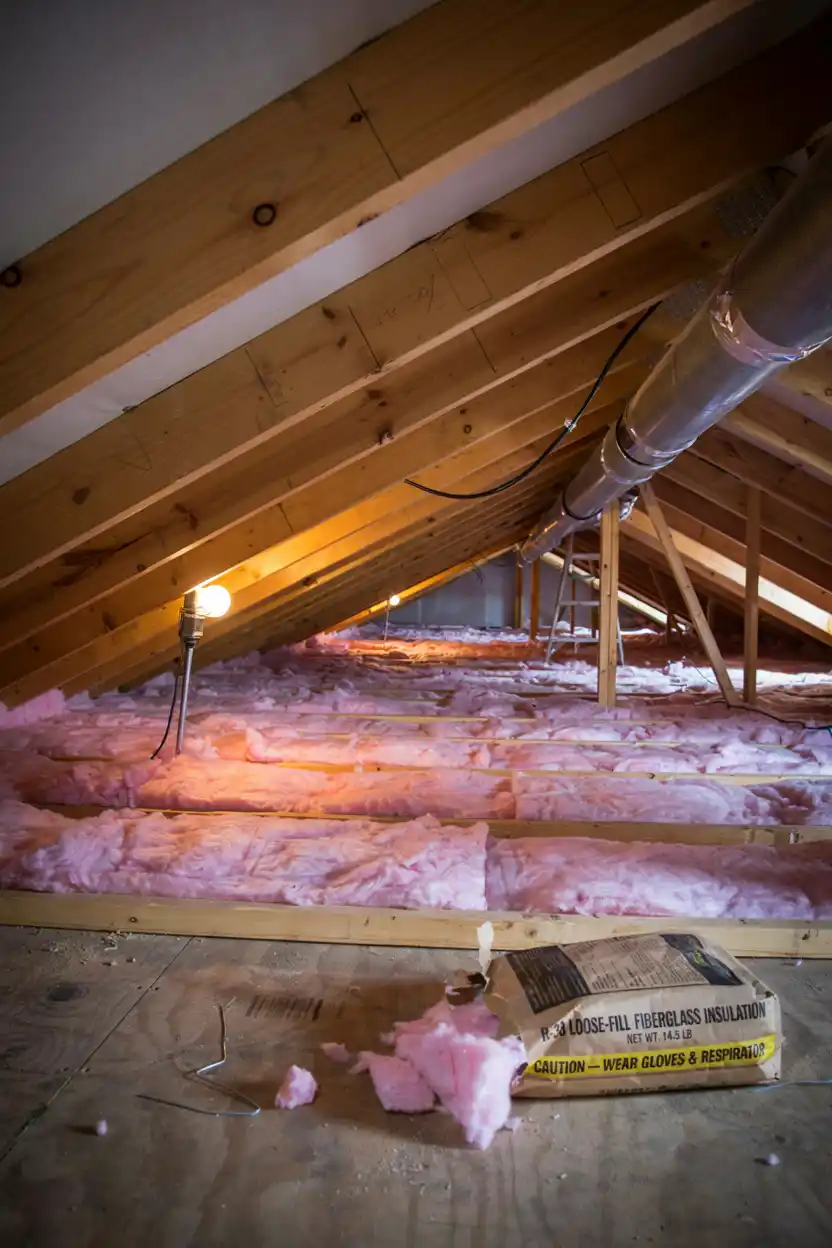
Poor insulation is one of the most overlooked reasons a bedroom stays hot long after the sun goes down, since heat absorbed by the roof and walls during the day radiates back into the room at night. Upgrading attic insulation above a bedroom, especially on a top floor, can meaningfully reduce heat radiation.
Blown-in cellulose or fiberglass batts rated for the local climate zone are the most common upgrades, and a radiant barrier installed under the roof deck adds another layer of heat reflection for particularly hot climates. This is a bigger, less visual project than the others on this list, typically handled by a professional insulation contractor.
This idea is best suited to homeowners with a persistently hot top-floor or attic-adjacent bedroom who have already tried fans and curtains without enough relief.
16. Ductless Mini-Split Air Conditioner
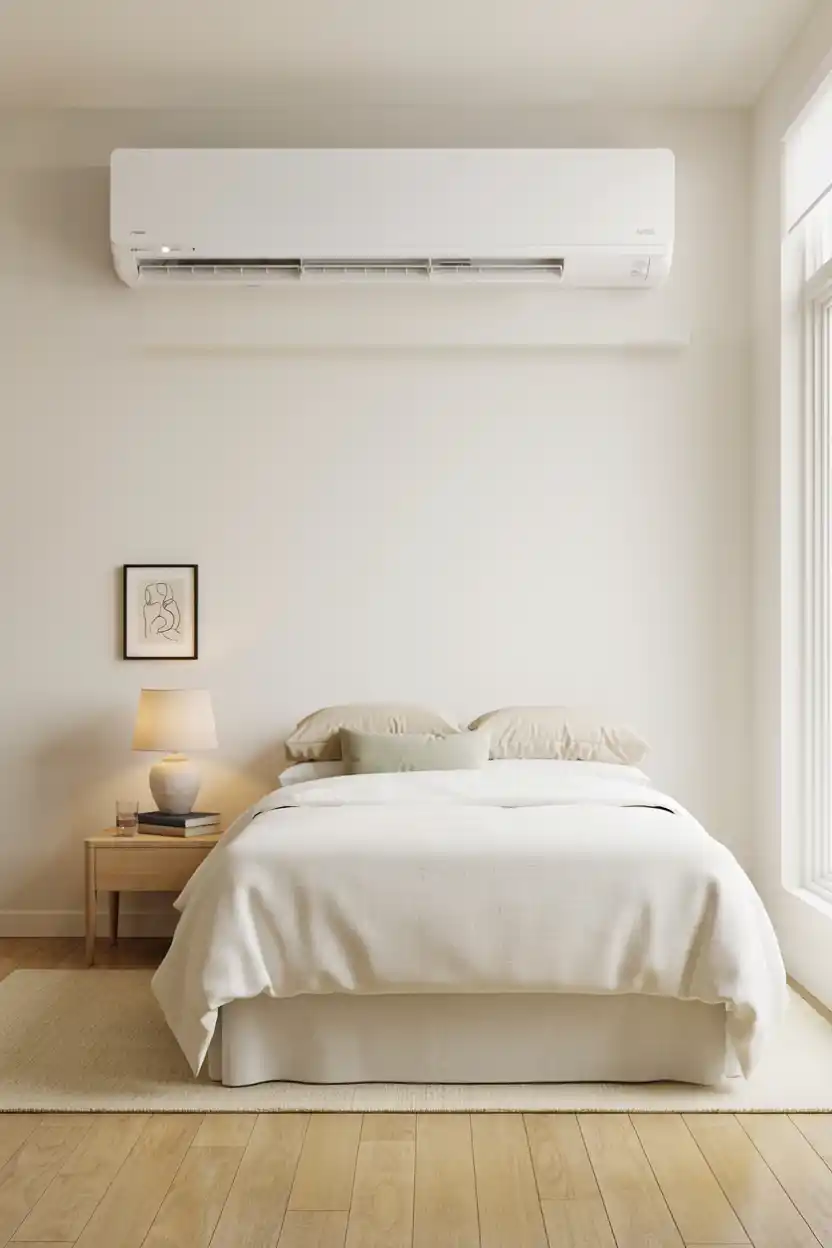
A ductless mini-split delivers targeted, whisper-quiet cooling directly to a single bedroom without the ductwork a central system requires, making it one of the most effective options for a room that consistently runs hotter than the rest of the house. Modern units are also highly energy-efficient compared to older window units.
Installation involves mounting an indoor air-handling unit high on a wall and connecting it through a small wall penetration to an outdoor compressor, which typically requires a licensed HVAC technician for the refrigerant line and electrical work. Sizing is based on the room’s square footage and ceiling height, so a professional load calculation prevents an oversized or undersized unit.
This option is best suited to homeowners who want central-air-level cooling in one specific room, such as a converted attic bedroom or an addition without existing ductwork.
17. Breathable Cooling Throw Blanket
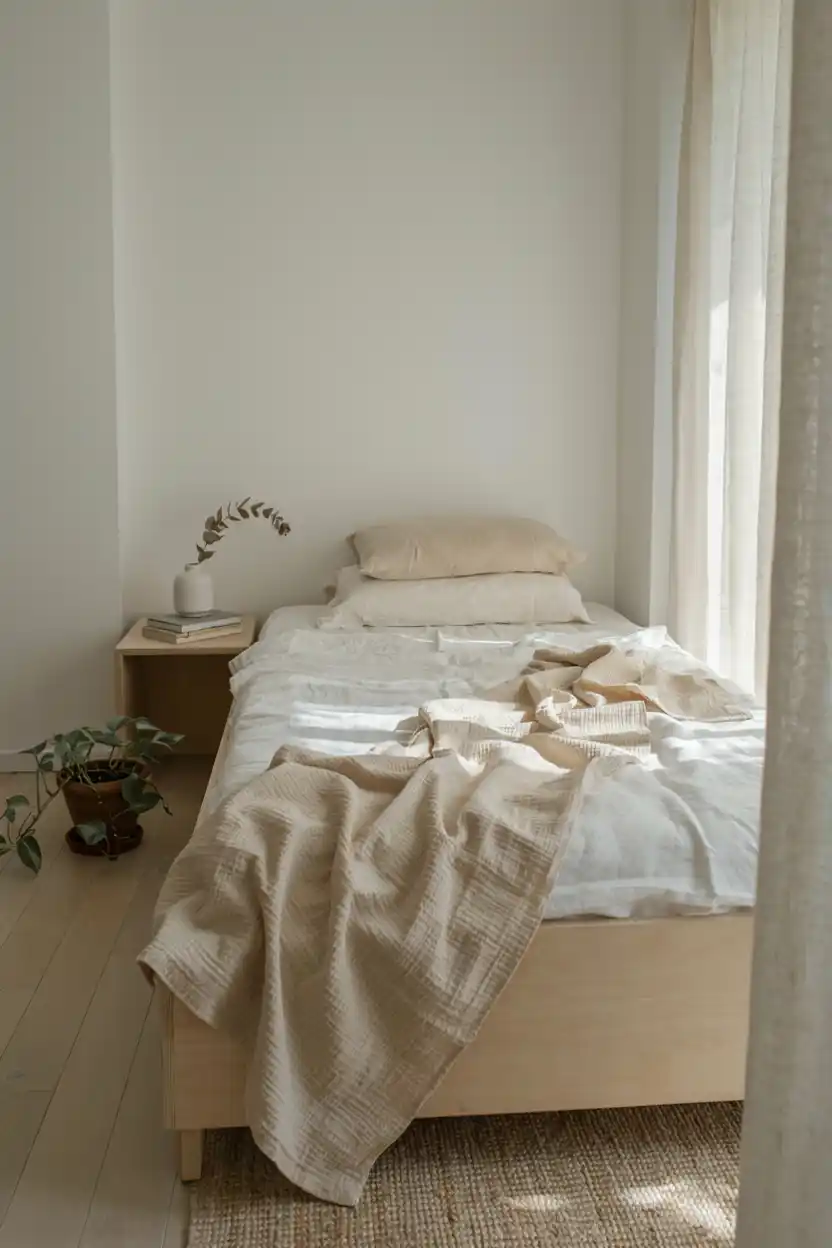
A lightweight, breathable throw blanket gives sleepers a lower-warmth alternative to a heavier comforter on hot nights while still providing the light pressure and coziness many people want at bedtime. Waffle-weave cotton and certain technical fabrics are designed specifically to stay cool to the touch and wick away moisture.
Layering a breathable throw over a lighter fitted sheet, rather than a thick duvet, lets sleepers adjust warmth throughout the night by simply pushing it aside without fully uncovering. It also gives a bedroom a seasonal styling refresh at a very low cost.
This idea suits anyone who still wants some bedcover for comfort but overheats under a traditional comforter, including couples with mismatched temperature preferences.
18. Exterior Window Awnings or Shades
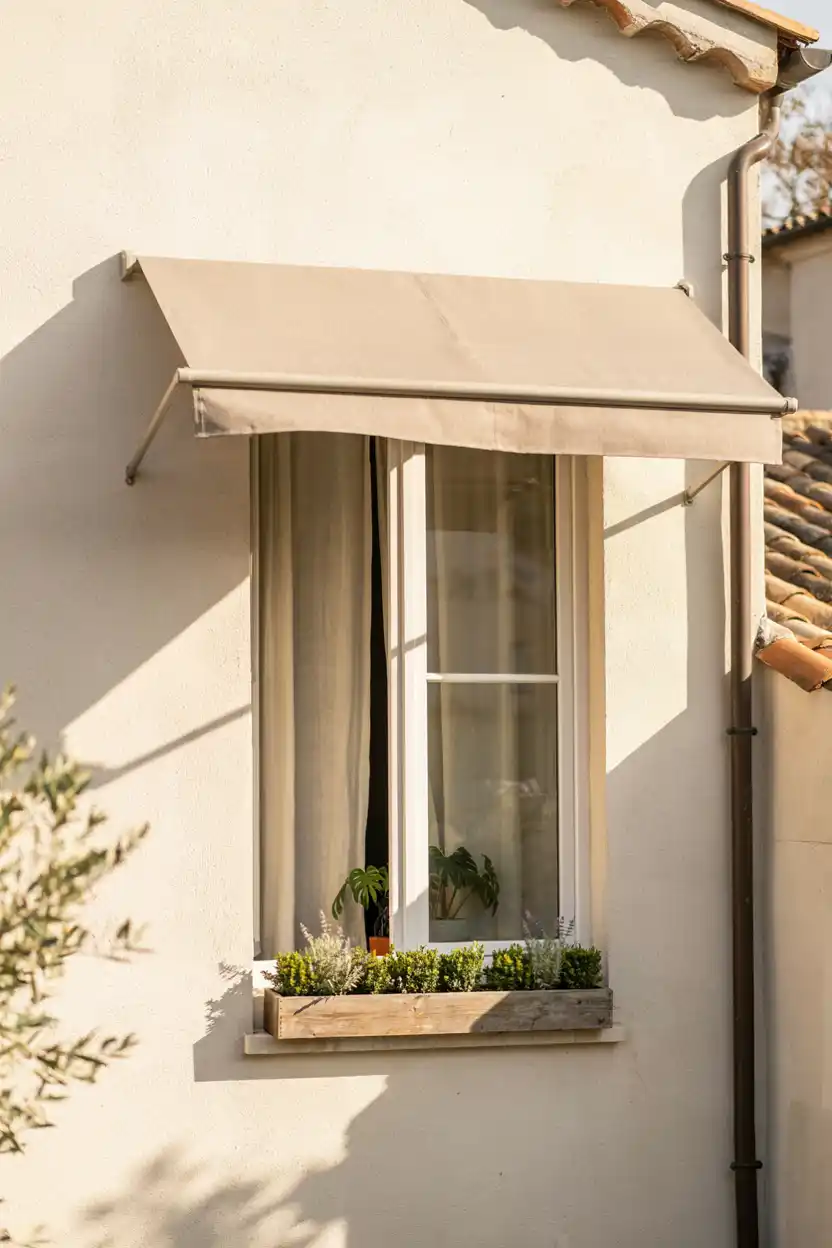
Blocking heat before it ever reaches the glass is more effective than blocking it after it enters the space, which is why exterior awnings and shades are among the highest-impact upgrades on this list. A well-placed awning can block 65 to 77 per cent of solar heat gain on a sun-facing window.
Retractable fabric awnings offer the most flexibility, since they can be extended during peak summer sun and retracted in cooler months to let more light and warmth back in. Fixed exterior shades or louvred shutters are a lower-maintenance, permanent alternative for climates with consistently intense sun exposure.
This idea is best suited to homeowners with unobstructed, sun-facing bedroom windows who are willing to invest in an exterior upgrade for year-round heat control.
Planning and Buying Tips for Bedroom Cooling
Before buying any cooling product, a little planning prevents wasted money on the wrong size or type of equipment for the room.
Room Size and Layout
Measure square footage before shopping for a fan, portable cooler, or mini-split, since undersized units will run constantly without keeping up and oversized units waste energy and can leave humidity uncomfortably high. As a rough guide, a bedroom under 150 square feet suits a standard tower or ceiling fan alone, 150 to 300 square feet benefits from an evaporative cooler or window unit, and anything larger with poor insulation is a strong candidate for a ductless mini-split.
Window Orientation and Sun Exposure
A bedroom with west- or south-facing windows absorbs far more afternoon heat than a north-facing room, which should push window film, blackout curtains, or exterior shading higher on the priority list. East-facing rooms that only catch morning sun often get more relief from ventilation and fan-based solutions alone.
Electrical Capacity and Installation Requirements
Portable fans and evaporative coolers plug into a standard outlet, but window units, mini-splits, and dehumidifiers draw more power and may require a dedicated circuit, especially in older homes. Mini-split installation also requires a small exterior wall penetration for the refrigerant line, so renters should confirm landlord approval before committing to that option.
Structural and Technical Factors
Ceiling fans need adequate ceiling height, generally at least eight feet, and a joist or fan-rated electrical box capable of supporting the fan’s weight and rotational torque. Attic insulation upgrades depend on existing insulation depth and attic accessibility, which a contractor can assess quickly during a home energy audit.
Standard Sizing and Specs to Shop For
- Ceiling fans: 44 to 52-inch blade span for rooms under 225 sq ft, 52 to 60 inches for larger rooms
- Tower and pedestal fans: airflow rated in CFM (cubic feet per minute); look for 500+ CFM on high
- Portable evaporative coolers: tank capacity of 3 to 5 gallons for an average bedroom
- Dehumidifiers: 20 to 30 pint capacity for a standard bedroom, more in very humid climates
- Mini-split units: sized in BTUs, roughly 20 BTU per square foot as a starting estimate before a professional load calculation
Cost Breakdown: Budget, Mid-Range, and Luxury Options
Bedroom cooling upgrades span a wide price range, and installation costs vary just as much as the products themselves.
Budget (Under $75)
This tier covers a basic tower or box fan, a set of blackout curtains, a cooling gel pillow, or a lightweight linen sheet set. These are all no-installation, plug-and-play, or drop-in solutions that a renter can take with them when they move.
Mid-Range ($75 to $400)
This range includes a quality ceiling fan with professional installation, a portable evaporative cooler, a compact dehumidifier, a gel-infused mattress topper, or reflective window film for one or two windows. Ceiling fan installation on an existing electrical box typically runs $100 to $250 in labor if not done as a DIY project.
Luxury or Premium ($400 to $3,500+)
At the top end sits a ductless mini-split system, which typically costs $1,500 to $3,500 installed for a single-zone bedroom unit,t depending on unit capacity and installation complexity, plus attic insulation upgrades that can run $1,500 to $4,000 for a full attic,ic depending on square footage. Retractable exterior awnings generally fall between $250 and $1,200 installed, depending on width and motorization.
Bedroom Cooling Methods Comparison
| Cooling Method | Price Range | Durability | Noise Level | Best For |
|---|---|---|---|---|
| Ceiling fan | $60 – $300 + install | 10+ years | Low | Whole-room airflow, low ongoing cost |
| Tower/pedestal fan | $30 – $150 | 3 – 7 years | Low to moderate | Small rooms, no installation needed |
| Evaporative cooler | $100 – $350 | 5 – 8 years | Moderate | Dry climates, renters |
| Dehumidifier | $150 – $400 | 5 – 8 years | Moderate | Humid climates, musty rooms |
| Window/portable AC | $200 – $600 | 8 – 12 years | Moderate to high | Renters needing real AC power |
| Ductless mini-split | $1,500 – $3,500 installed | 12 – 20 years | Very low | Single hot rooms, top-floor bedrooms |
| Cooling bedding/pillow | $25 – $200 | 1 – 3 years | Silent | Hot sleepers, low-budget fixes |
| Window film / awnings | $50 – $1,200 | 5 – 15 years | Silent | Sun-facing windows, passive heat control |
Maintenance Tips
Most bedroom cooling upgrades lose effectiveness over time without a little routine upkeep.
- Dust ceiling and tower fan blades every two to four weeks; built-up dust reduces airflow and can trigger allergies
- Wash or rinse evaporative cooler pads monthly during heavy use to prevent mineral buildup and odor
- Empty and clean dehumidifier tanks weekly, and wipe the coils to prevent mold growth
- Wash cooling bedding, pillow covers, and throws every one to two weeks to maintain breathability and prevent buildup of oils and sweat
- Replace or clean mini-split and window AC filters every one to three months during peak season
- Check window film edges annually for lifting or bubbling and reseal or replace as needed
- Common issue to avoid: running a fan in a fully sealed room with no air exchange, which just recirculates warm air instead of cooling it
- Common issue to avoid: oversized dehumidifiers or air conditioners that cycle on and off too quickly, leaving humidity high even as the room feels cold
Frequently Asked Questions
What is the best way to cool a bedroom without air conditioning?
Combining a reverse-rotation ceiling fan or tower fan with blackout thermal curtains and breathable linen bedding gives the biggest temperature improvement without AC. Adding cross-ventilation during cooler evening hours and a dehumidifier in humid climates rounds out a no-AC cooling strategy.
Does a ceiling fan actually lower the temperature of a room?
A ceiling fan does not lower the actual air temperature; it creates a wind-chill effect on the skin that can make a room feel three to four degrees cooler. Fans should be turned off when no one is in the room, since they cool people, not the space itself.
What temperature is best for sleeping?
Most sleep experts recommend keeping a bedroom between 65 and 68 degrees Fahrenheit for optimal sleep quality. A room that runs above 72 degrees overnight is commonly associated with more frequent waking and lighter sleep.
Do cooling mattress toppers and pillows really work?
Gel-infused and phase-change cooling products genuinely help by drawing heat away from the body faster than standard foam, though the effect is most noticeable in the first few hours of sleep. They work best combined with breathable bedding and adequate room airflow rather than as a standalone fix for a very hot room.
Is a ductless mini-split worth it for just one bedroom?
For a bedroom that consistently runs hotter than the rest of the house, such as a converted attic or an addition without ductwork, a single-zone mini-split is often worth the upfront cost because of its efficiency and quiet, targeted cooling. For a bedroom that is only occasionally too warm, less expensive fan and bedding upgrades usually solve the problem first.
How to Choose the Right Bedroom Cooling Ideas for You
The right combination of bedroom cooling ideas depends on three things: the size and layout of the room, the budget available, and how much of a lifestyle or aesthetic shift feels reasonable. A small, sun-exposed apartment bedroom on a tight budget gets the most value from curtains, a tower fan, and cooling bedding, while a top-floor bedroom that stays hot no matter what deserves a bigger investment like a mini-split or attic insulation. Humid climates should prioritize a dehumidifier alongside airflow, while dry climates get more benefit from an evaporative cooler.
Start with the lowest-cost, easiest changes, like bedding and curtains, and layer in bigger upgrades only if the room still runs hot. Ready to stop tossing and turning through summer nights? Pick one idea from this list and put it to work in your bedroom this week.


- Be Respectful
- Stay Relevant
- Stay Positive
- True Feedback
- Encourage Discussion
- Avoid Spamming
- No Fake News
- Don't Copy-Paste
- No Personal Attacks
- Be Respectful
- Stay Relevant
- Stay Positive
- True Feedback
- Encourage Discussion
- Avoid Spamming
- No Fake News
- Don't Copy-Paste
- No Personal Attacks
