18 Bedroom Rug Ideas to Instantly Warm Up Your Floor and Your Style
Published: 19 Aug 2026
Bedroom rug ideas solve a problem almost every bedroom has: cold, bare, or visually flat flooring that makes the whole room feel unfinished. A well-chosen rug does more heavy lifting than almost any other single decor purchase, adding warmth underfoot, softening hard surfaces, and tying together bedding, furniture, and wall color in one move.
The right rug also affects how a bedroom actually functions day to day, from how cozy it feels stepping out of bed in winter to how easy it is to keep clean if you have kids or pets. That makes size, material, and placement just as important as color and pattern when narrowing down your options.
This guide covers 18 bedroom rug ideas for a range of styles, budgets, and room sizes, followed by sizing and placement guidance, real cost ranges, a material comparison table, maintenance tips, and answers to the most common bedroom rug questions.
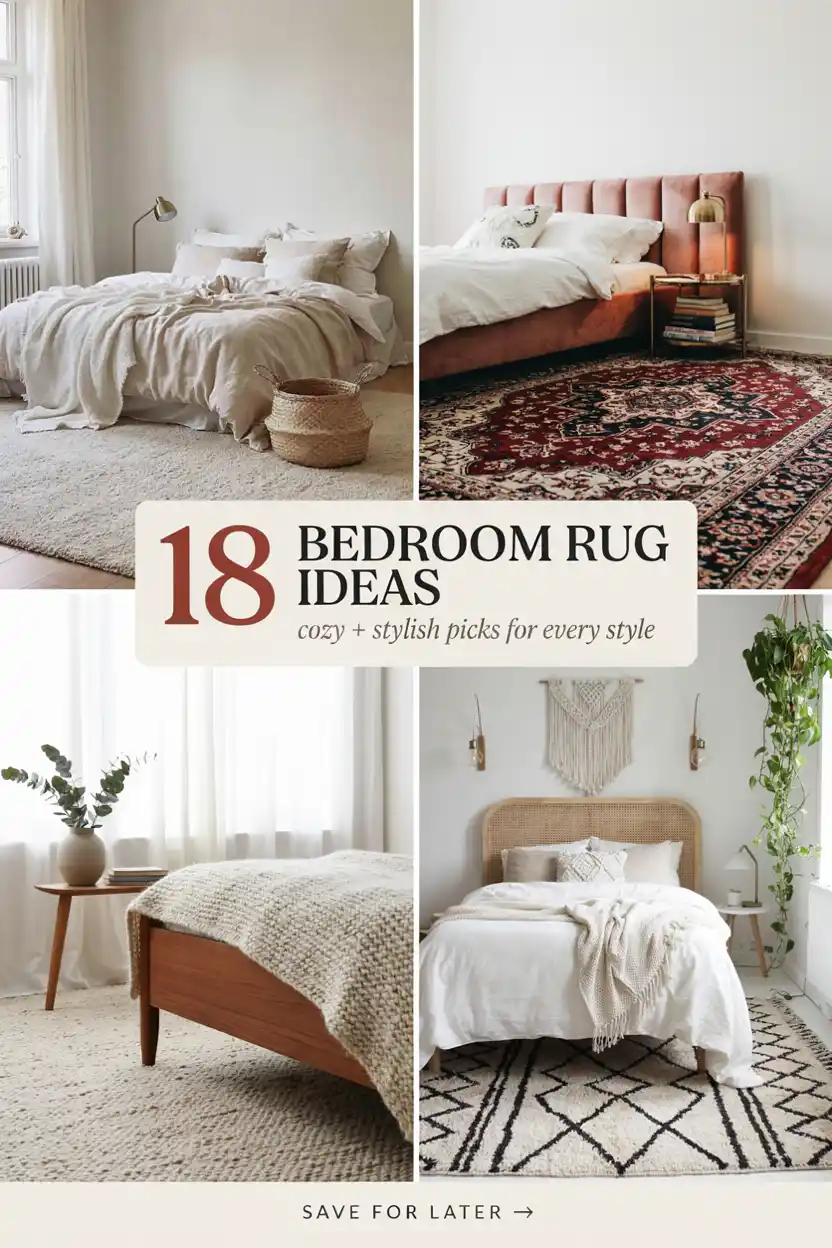
Are New Bedroom Rugs Right for You?
A rug update is one of the lowest-risk bedroom changes you can make, but it’s worth weighing a few factors first.
Reasons it’s a good fit:
- Relatively low cost compared to flooring replacement or furniture, typically 60 to 600 dollars depending on size and material
- Instant visual and comfort impact, with no installation downtime for most styles
- Easy to update seasonally or as your style evolves, since most rugs can be rolled up and swapped
- Good long-term value with wool or well-made synthetic rugs, which can last 7 to 15 years with proper care
Things to consider first:
- Large, high-pile, or wool rugs require a bigger upfront investment than smaller accent pieces
- Small bedrooms need careful sizing, since an undersized rug can make the whole room look smaller and less finished
- Light-colored or high-pile rugs need more frequent cleaning, especially with kids, pets, or allergies in the household
- Rugs on top of carpet require a different pad setup than rugs on hardwood or tile
1. Layered Rug Duo
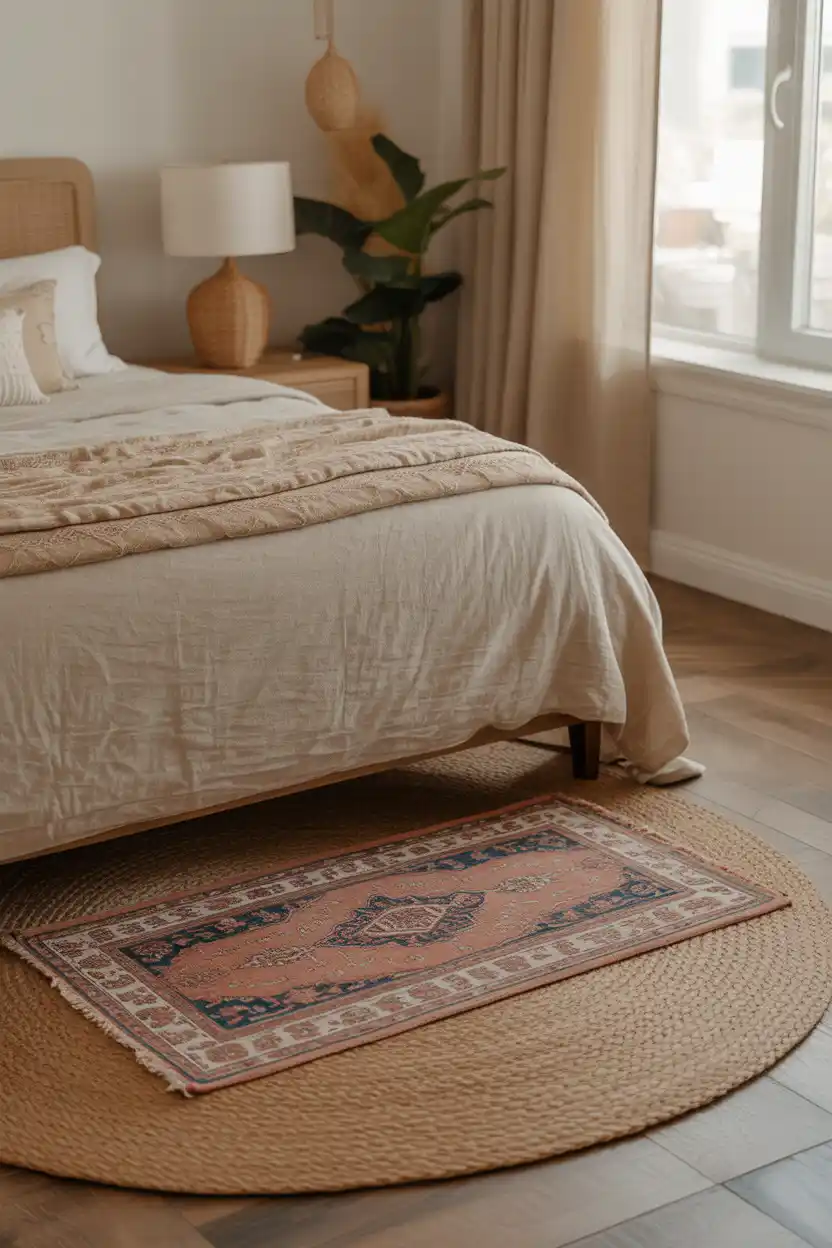
Layering a smaller patterned or vintage rug on top of a larger natural-fiber rug is one of the easiest ways to add visual depth to a bedroom floor. The base rug grounds the room and covers more floor space affordably, while the top rug introduces color, pattern, or texture right where your feet land first.
This approach works especially well when the base rug is a neutral jute or sisal and the top layer is a smaller wool or vintage-style piece with more personality. It also solves a common budget problem, since a full-size patterned rug is often far more expensive than a small accent layered over an affordable natural rug.
Layered rugs suit bedrooms with hardwood or cold tile floors, and they’re a favorite for anyone who wants a curated, collected-over-time look rather than a single matched set.
2. Oversized Area Rug Under the Whole Bed
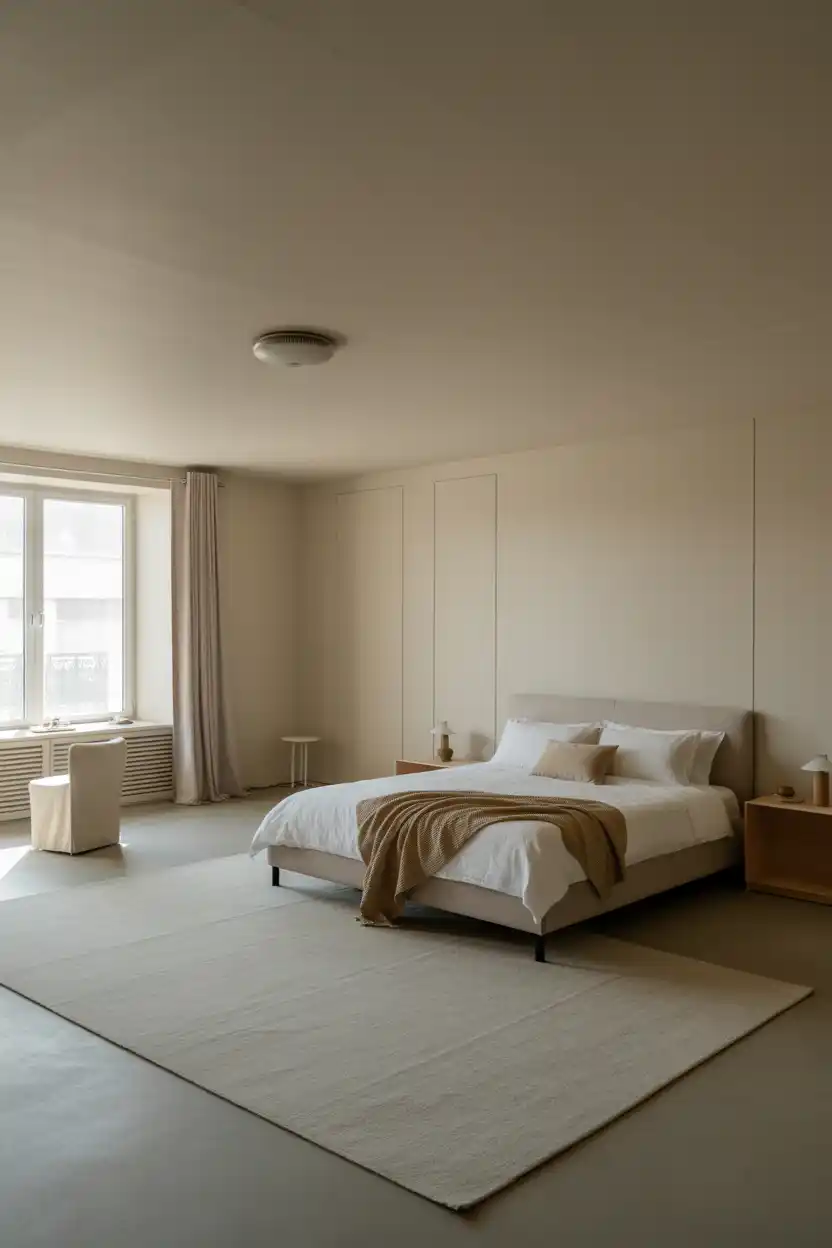
Sizing a rug so it extends at least 18 to 24 inches beyond the bed on all sides creates a polished, hotel-like look and keeps feet off cold flooring no matter which side you get out of bed. This is the go-to approach for primary bedrooms with enough square footage to support a large rug.
Because the rug reads as one continuous surface, it tends to make a room feel larger and more finished than smaller rugs placed only at the sides. Neutral tones work best at this scale, since a bold pattern spread across the entire floor can start to feel overwhelming.
This layout suits larger bedrooms, primary suites, and anyone who wants their floor space to feel intentional and cohesive rather than pieced together.
3. Moroccan Beni Ourain Style Rug
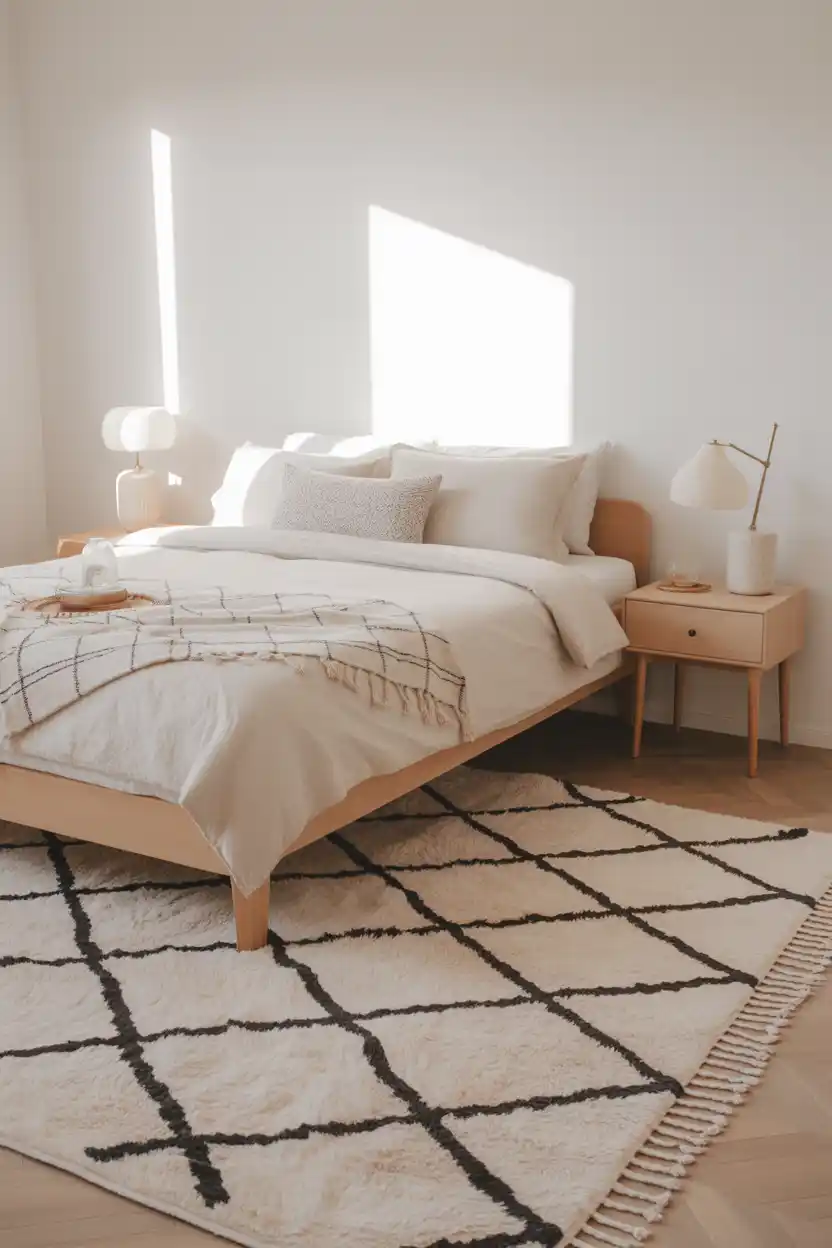
A Beni Ourain-style rug, with its cream background and geometric black or brown diamond pattern, has become a design staple because it bridges modern and bohemian styles so effortlessly. The high pile also adds genuine warmth and softness underfoot, which matters in a room you walk into barefoot every morning.
This rug pairs naturally with light wood furniture, linen bedding, and a mostly neutral palette, letting the rug’s pattern serve as the room’s main visual statement. Authentic wool versions are an investment, but more affordable machine-made interpretations are widely available at a range of price points.
This style suits bedrooms with a minimalist or Scandinavian base that could use one graphic, textural element to keep the space from feeling too plain.
4. Runner Rugs on Each Side of the Bed
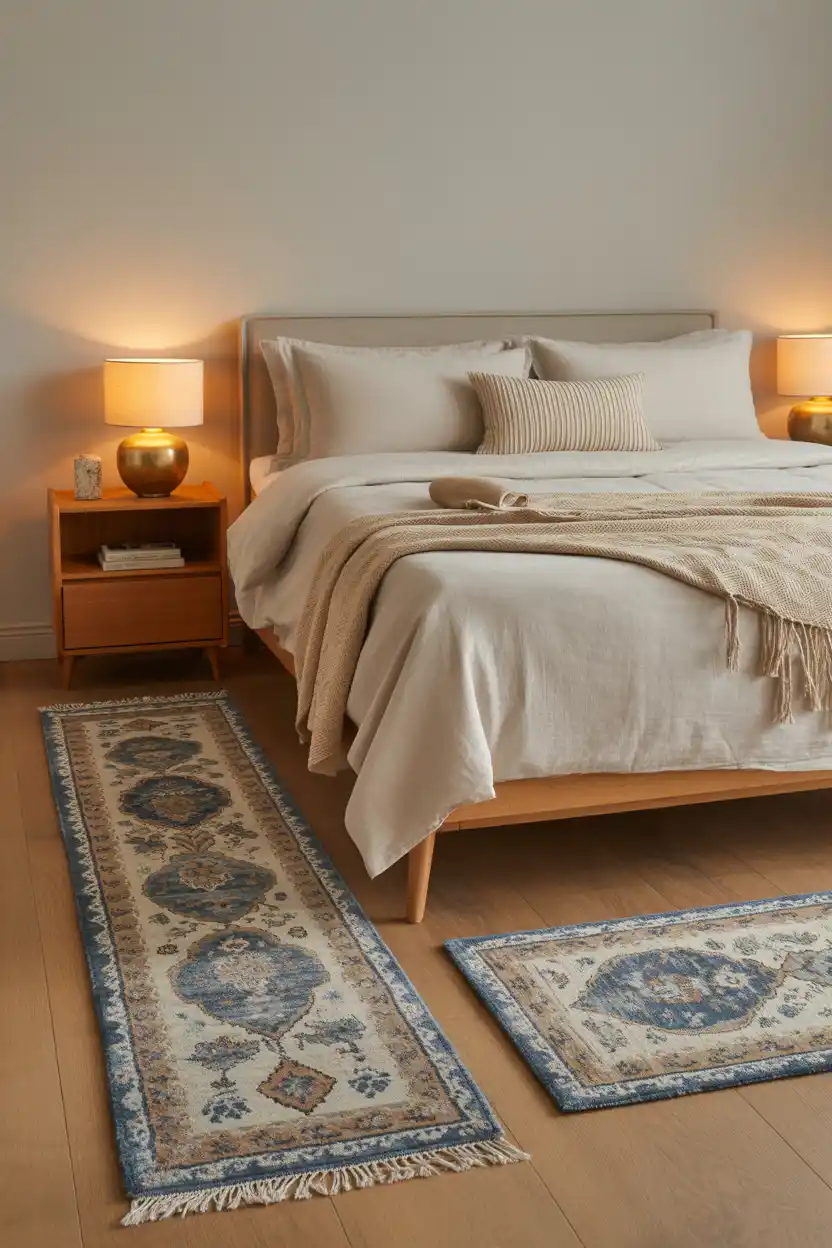
Placing a runner on each side of the bed is a practical, budget-friendly alternative to one large area rug, especially in smaller bedrooms where a full-size rug would overwhelm the floor plan. This layout puts a soft landing spot exactly where you need it most.
Matching runners create a clean, symmetrical look, while mismatched or complementary patterns can add a more relaxed, eclectic feel. Runners are also easier to rotate, clean, or replace individually if one side wears faster than the other.
This idea suits smaller bedrooms, guest rooms, or anyone furnishing on a tighter budget who still wants a considered, layered floor.
5. Round Rug at the Foot of the Bed
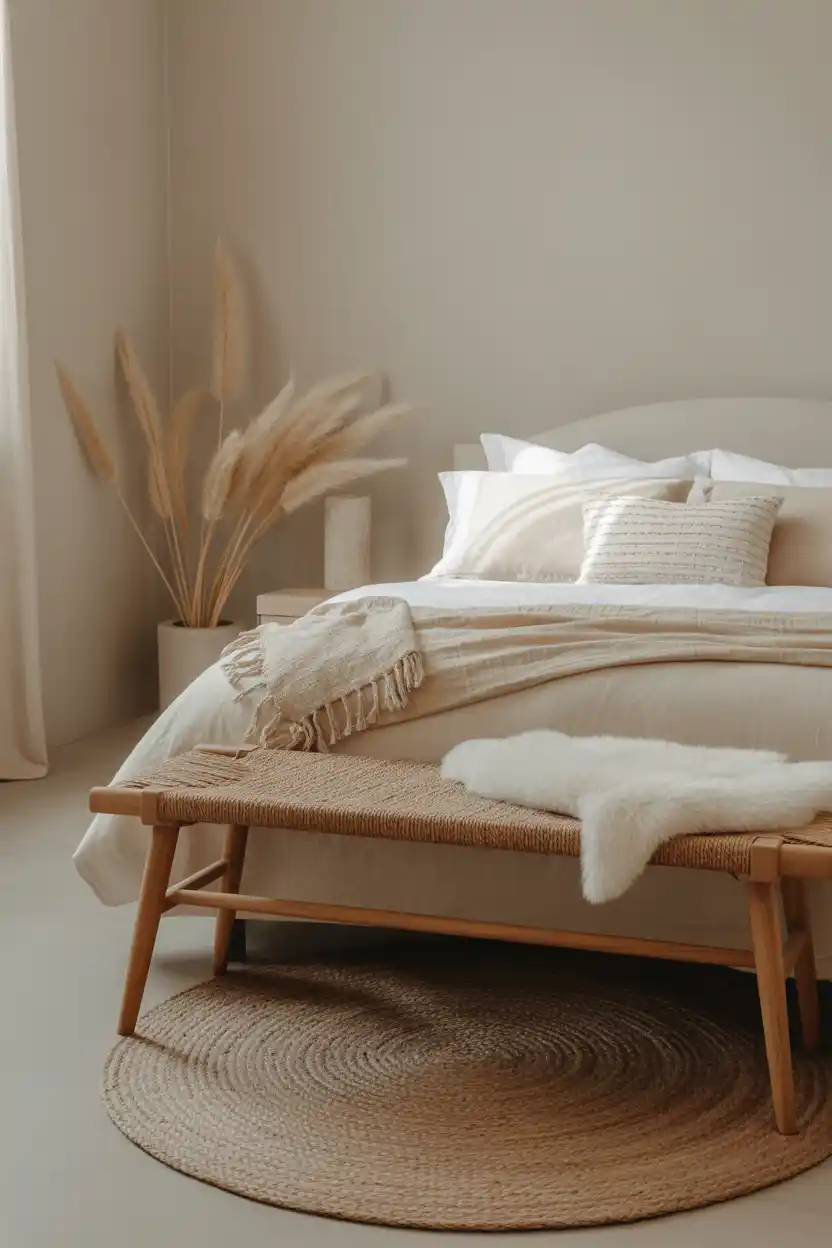
A round rug at the foot of the bed softens the straight lines of a typical bedroom layout and creates a natural landing spot for getting dressed or reading in a chair. It’s a small styling choice that adds noticeable visual interest without much cost or effort.
This works particularly well in bedrooms that already have a lot of rectangular shapes, like a platform bed, dresser, and nightstands, since the round rug breaks up the repetition. Textured, high-pile options add the most impact underfoot in this placement.
This idea suits bedrooms with a bench or reading chair at the foot of the bed, and it’s an easy update for renters who cannot commit to a full room-size rug.
6. Natural Jute or Sisal Rug
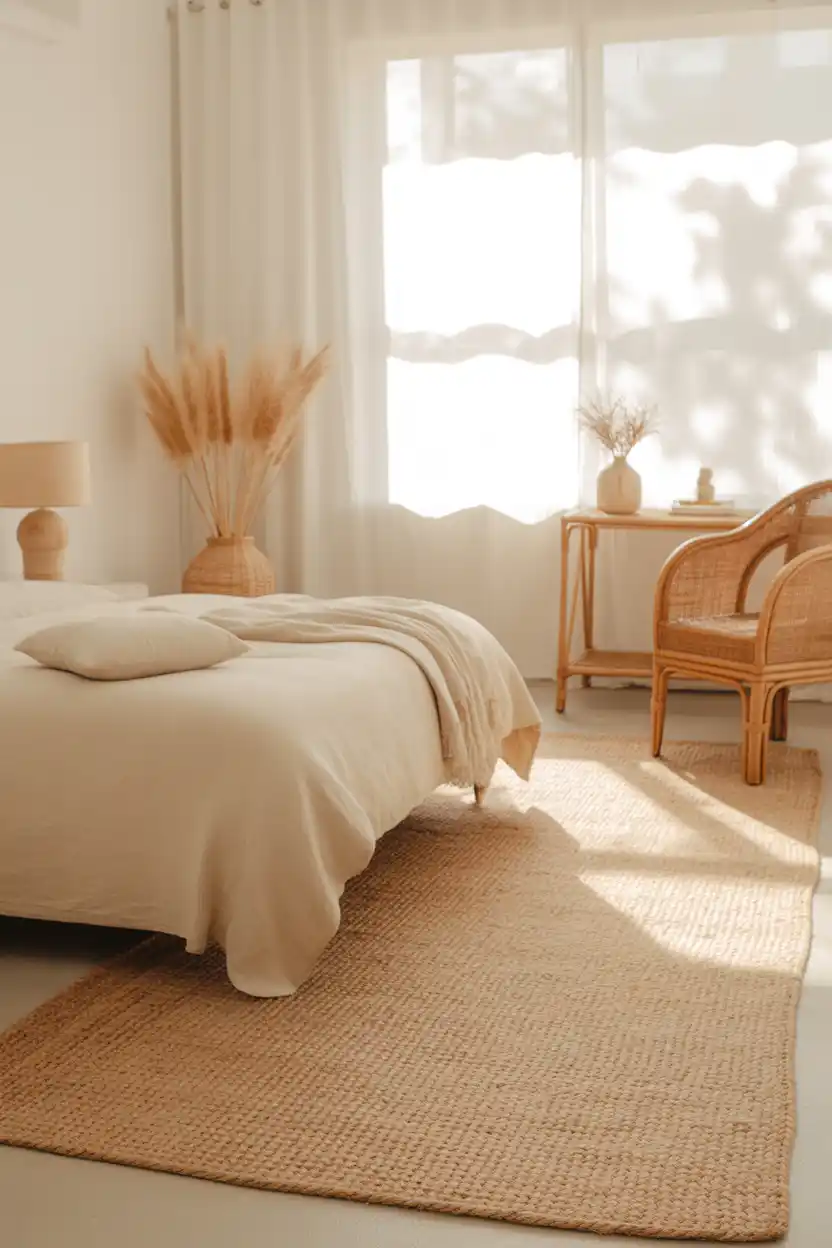
Natural fiber rugs like jute and sisal bring an organic, textural base to a bedroom without introducing color or pattern that competes with other decor. Their neutral, woven look works in almost any style, from coastal to modern minimalist.
These rugs are also among the most breathable and allergy-friendly options, since they don’t trap moisture the way synthetic fibers can. The trade-off is a coarser texture underfoot, which is why many people pair them with a smaller, softer rug layered on top near the bed.
Natural fiber rugs suit budget-conscious buyers, bedrooms with a lot of pattern elsewhere, and anyone drawn to an earthy, texture-forward look.
7. Plush Shag Rug
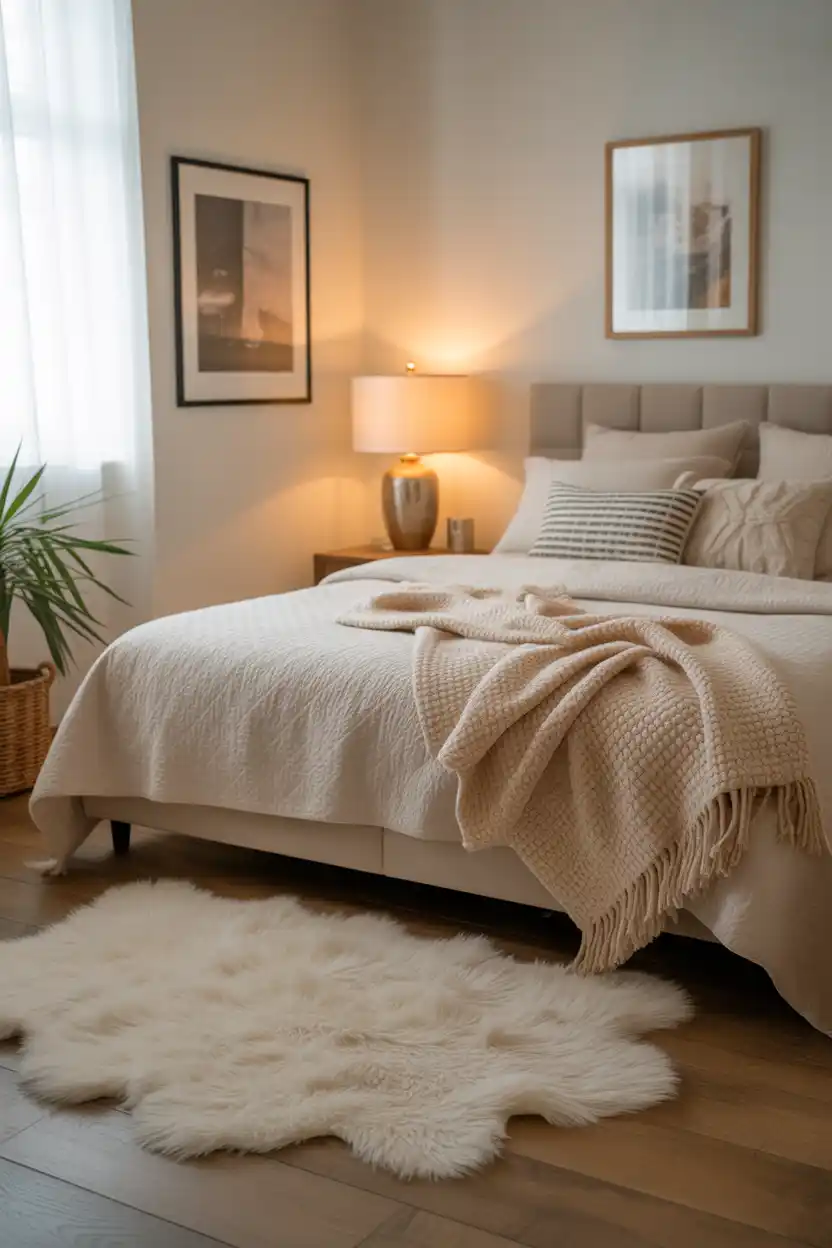
A plush shag rug is the most comfortable option underfoot, making it a favorite for anyone who prioritizes feel over pattern. Stepping onto a deep pile rug first thing in the morning is a small but genuinely noticeable comfort upgrade.
Shag rugs work best in solid, neutral tones so the texture itself becomes the focal point rather than competing with a busy print. They do require more frequent vacuuming with a setting designed for high-pile rugs, since dust and debris settle deeper into the fibers.
This style suits bedrooms in colder climates or on hard flooring, and it’s especially popular when placed beside the bed rather than under furniture, where the deep pile could get compressed.
8. Vintage Distressed Rug
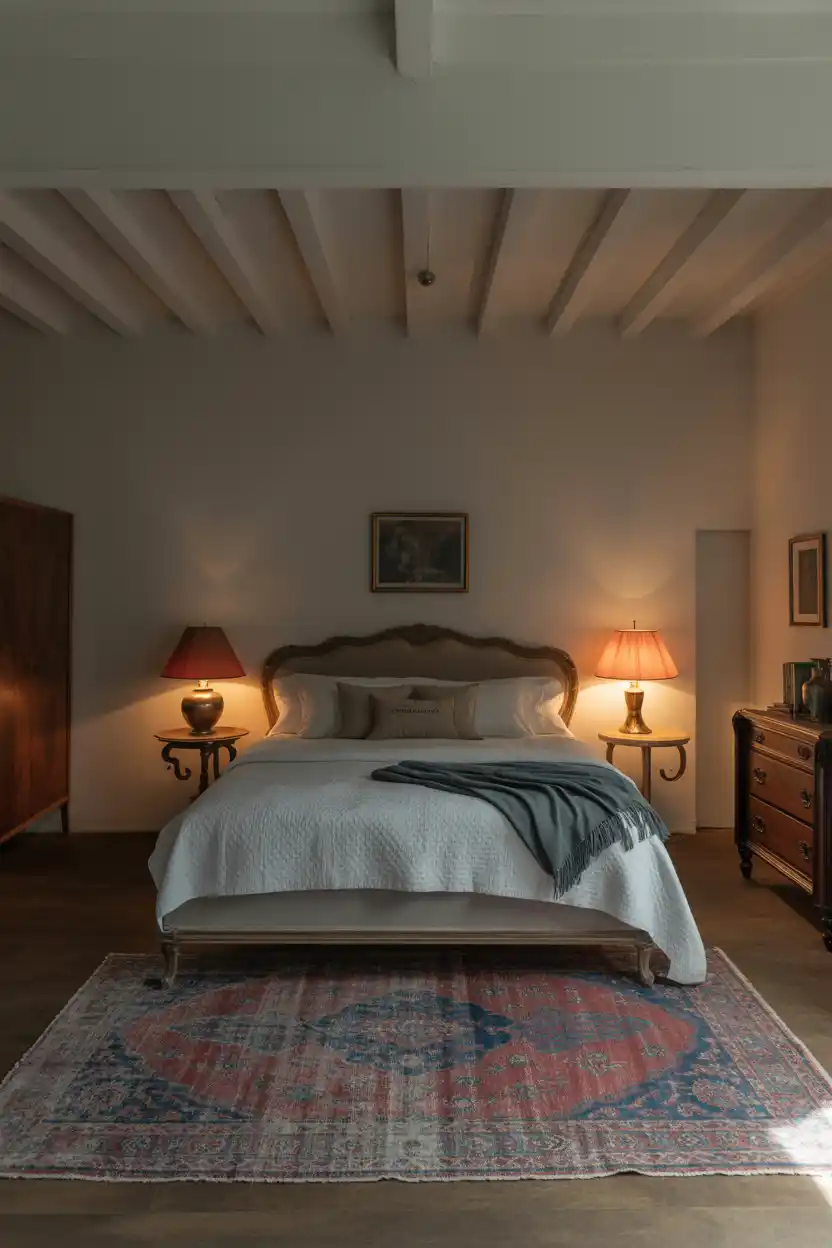
A vintage or vintage-inspired distressed rug adds instant character and history to a bedroom, especially one that otherwise leans modern or minimal. The faded, worn-in pattern reads as collected rather than newly purchased, which is part of the appeal.
These rugs pair well with mixed metals, antique or vintage furniture pieces, and a slightly more eclectic overall style. Because the pattern is already busy, it’s best to keep bedding and walls simple so the rug has room to be the standout element.
This style suits people who want their bedroom to feel personal and layered over time rather than matched as a set, and it works in both traditional and modern bedrooms as a grounding contrast.
9. Faux Fur Accent Rug
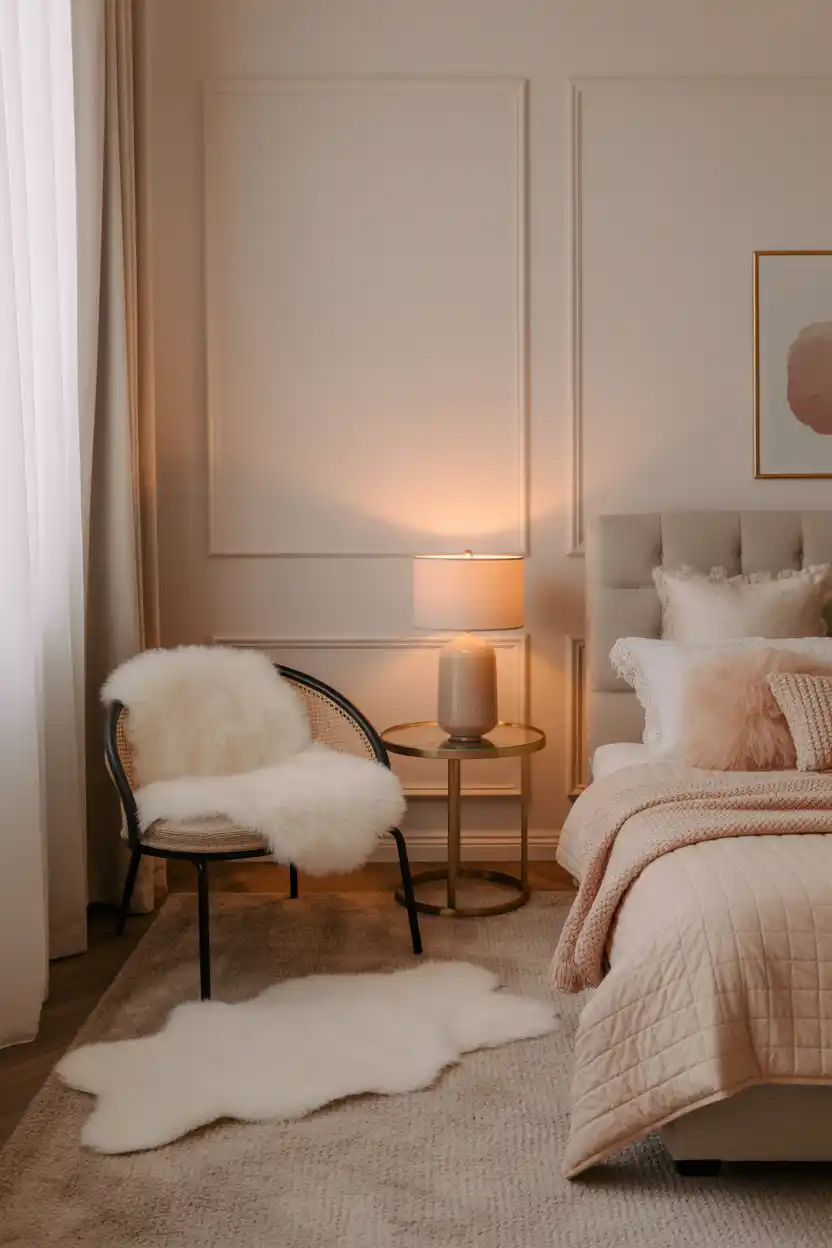
A faux fur accent rug is less about covering floor space and more about adding a small, tactile luxury moment, usually beside a bed or reading chair. It’s an easy way to introduce softness and a touch of glamour without redoing the whole room.
These work best as a smaller accent piece rather than a full-size area rug, since faux fur can look overdone at a larger scale and is trickier to keep looking fresh underfoot for daily walking. Cream, blush, and gray tones tend to look the most timeless.
This idea suits bedrooms that already have a neutral, textured base and want one indulgent detail, and it’s a popular choice for a reading nook or vanity area within the bedroom.
10. Bold Geometric Rug
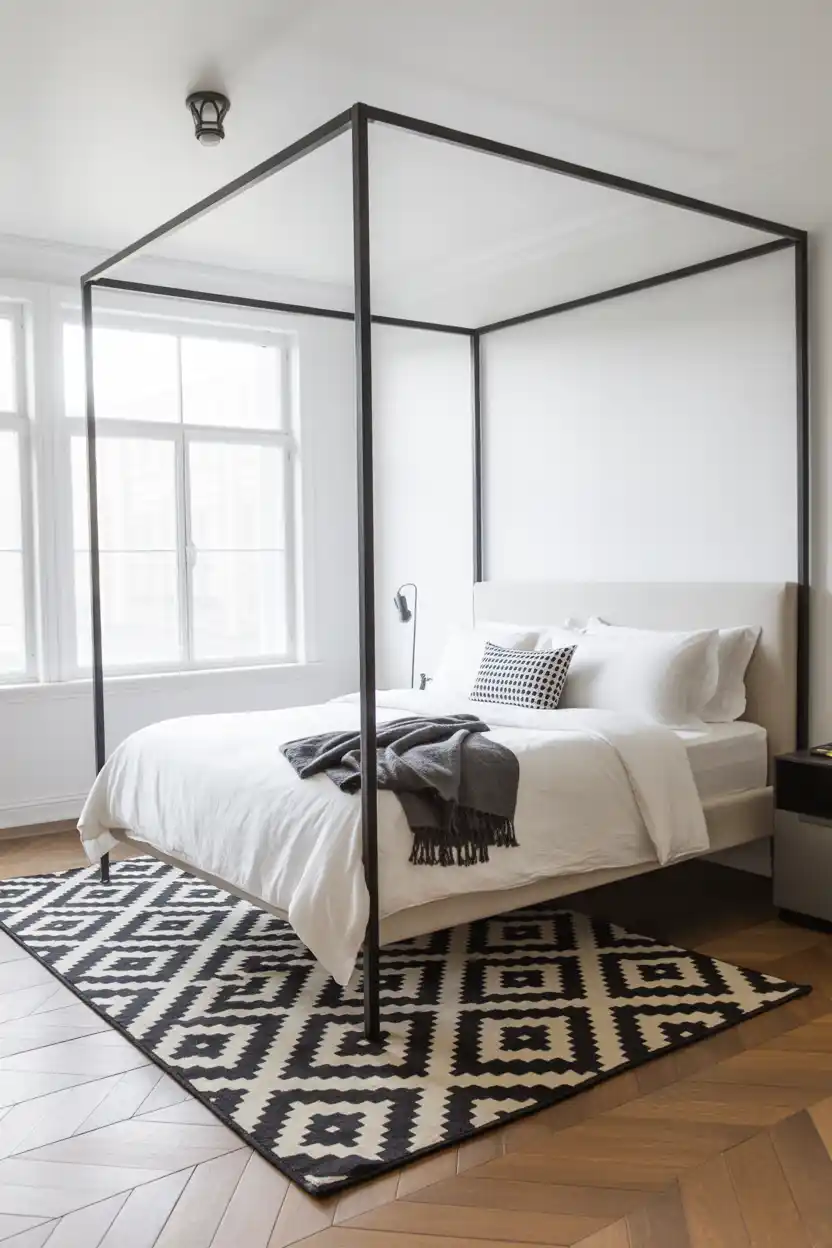
A bold geometric rug gives an otherwise neutral bedroom a strong graphic anchor, and it works particularly well in modern or contemporary spaces that could use more visual energy at floor level. High-contrast patterns, like black and white or navy and cream, tend to age the best.
Because the pattern does most of the visual work, geometric rugs pair best with simpler bedding and furniture so the room doesn’t feel too busy. This is a good option for bedrooms where the walls and furniture are already fairly neutral and need one confident design moment.
This style suits people who want a distinctly modern, design-forward bedroom, and it photographs especially well against light wood or white flooring.
11. Soft Pastel Rug
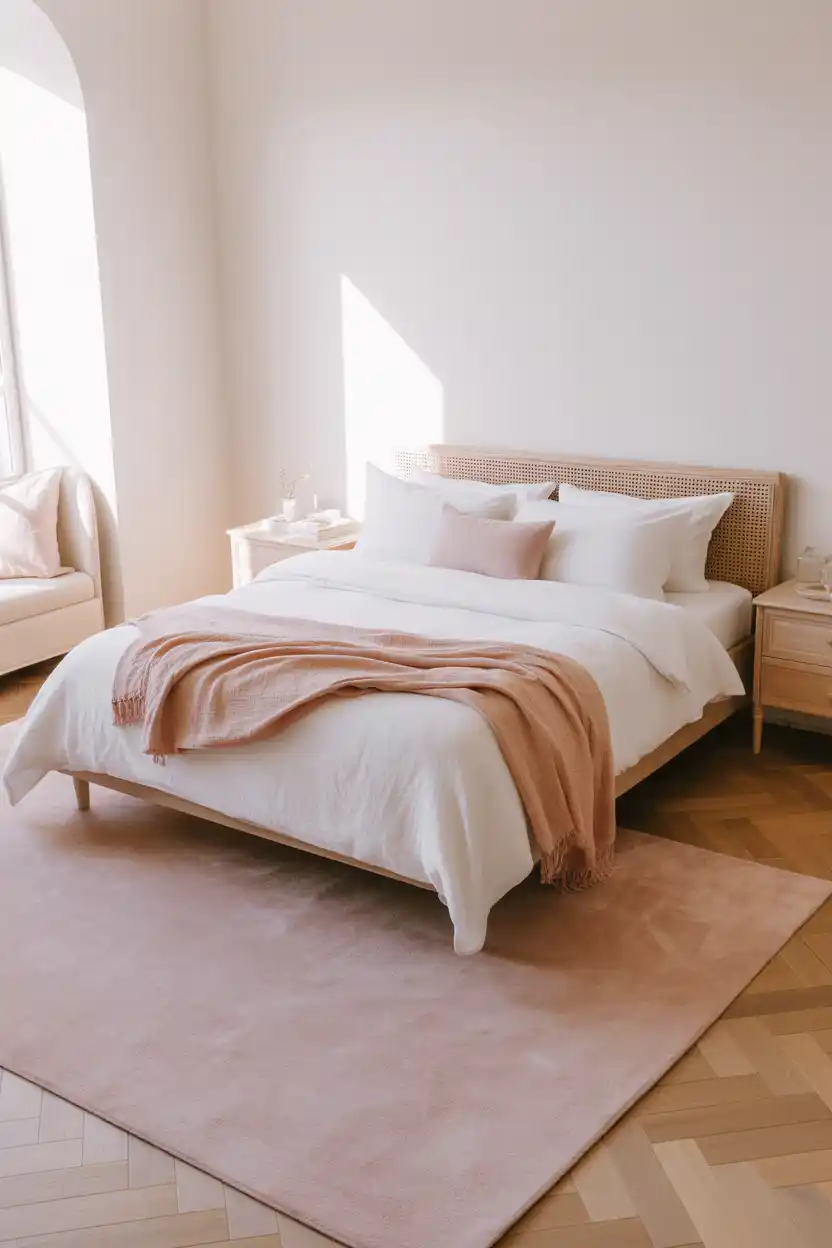
A soft pastel rug in a shade like blush, sage, or pale blue introduces color at floor level in a gentle, easy-to-live-with way. Unlike bold patterns, pastels tend to recede rather than dominate, making them a safe choice for bedrooms that already have a lot going on.
These rugs pair especially well with white or cream bedding and light wood furniture, reinforcing a soft, calm overall palette. A solid pastel also makes it easy to change other decor elements later without the rug clashing.
This idea suits bedrooms aiming for a soft, romantic, or gently feminine aesthetic, and it works well in both adult primary bedrooms and bedrooms transitioning out of a child’s room.
12. Striped Rug
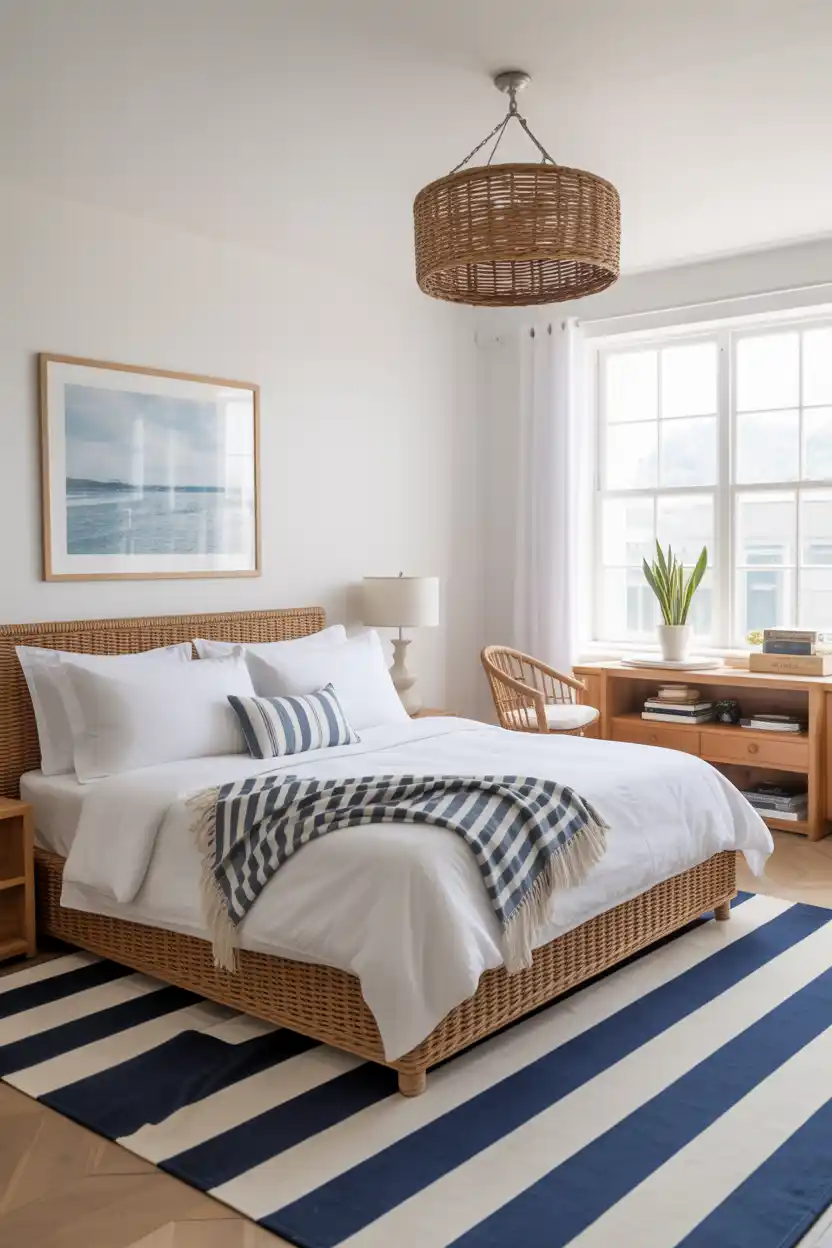
A striped rug, especially in navy and white or a similarly classic combination, brings a clean, structured pattern that works in coastal, traditional, and transitional bedrooms alike. Stripes read as more restrained than florals or bold geometrics, making them easy to commit to.
This style pairs naturally with white or navy bedding, natural wood tones, and simple, uncluttered furniture. Because the pattern is directional, orienting the stripes to run the length of the room can make a narrow bedroom feel visually longer.
Striped rugs suit bedrooms with a classic or coastal-inspired style, and they’re a dependable choice for anyone who wants pattern without a strong trend commitment.
13. Dark Moody Patterned Rug
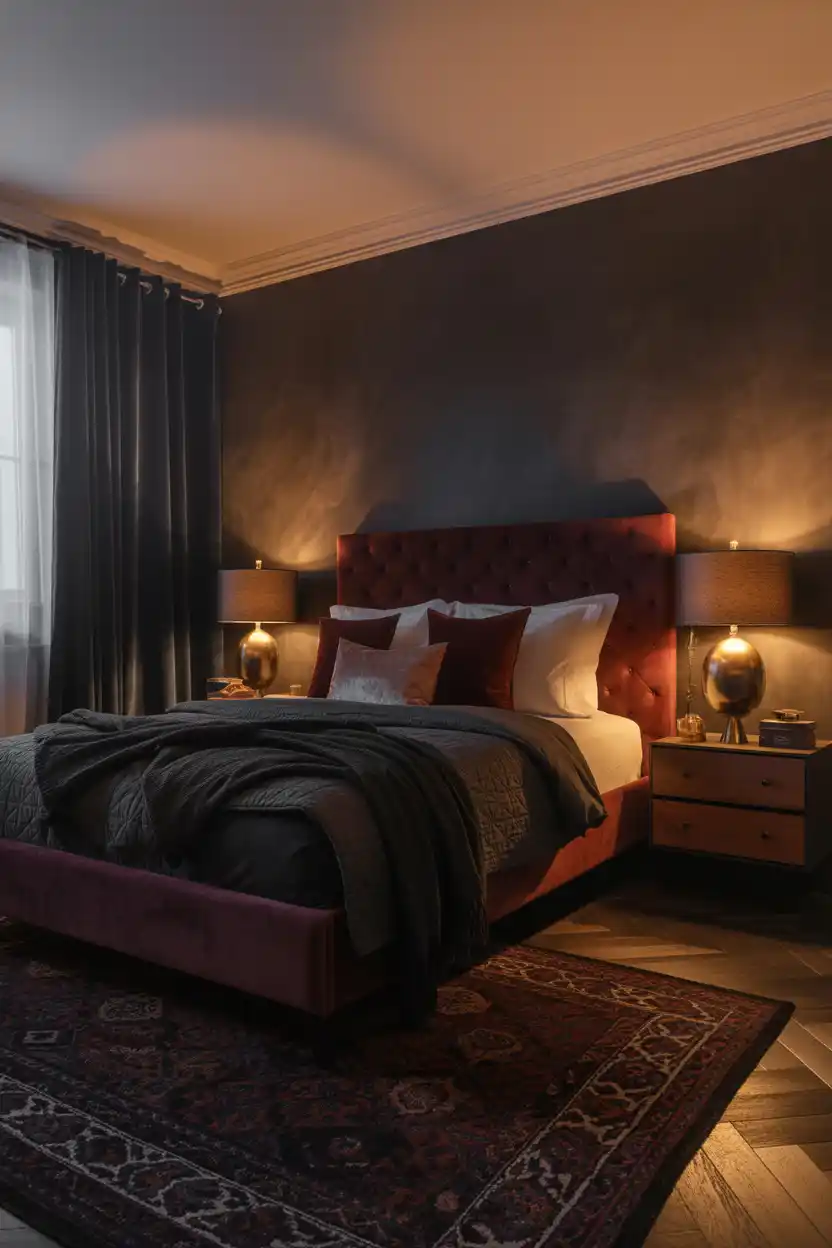
A dark, richly patterned rug in tones like burgundy, deep green, or charcoal adds warmth and drama to a bedroom without requiring dark paint on the walls. It’s an effective way to bring moody styling into a room while keeping the option to repaint or redecorate more easily later.
These rugs also hide stains and wear better than lighter colors, making them a practical choice for daily use. Pair a dark patterned rug with warm metallics and velvet or wool textiles to lean fully into the moody aesthetic, or balance it with lighter walls and bedding to keep the room from feeling too heavy.
This style suits bedrooms used mainly in the evening, primary suites going for a hotel-like feel, and anyone who wants a lower-maintenance rug for a high-traffic bedroom.
14. Washable Rug for Kids’ or Pet Bedrooms
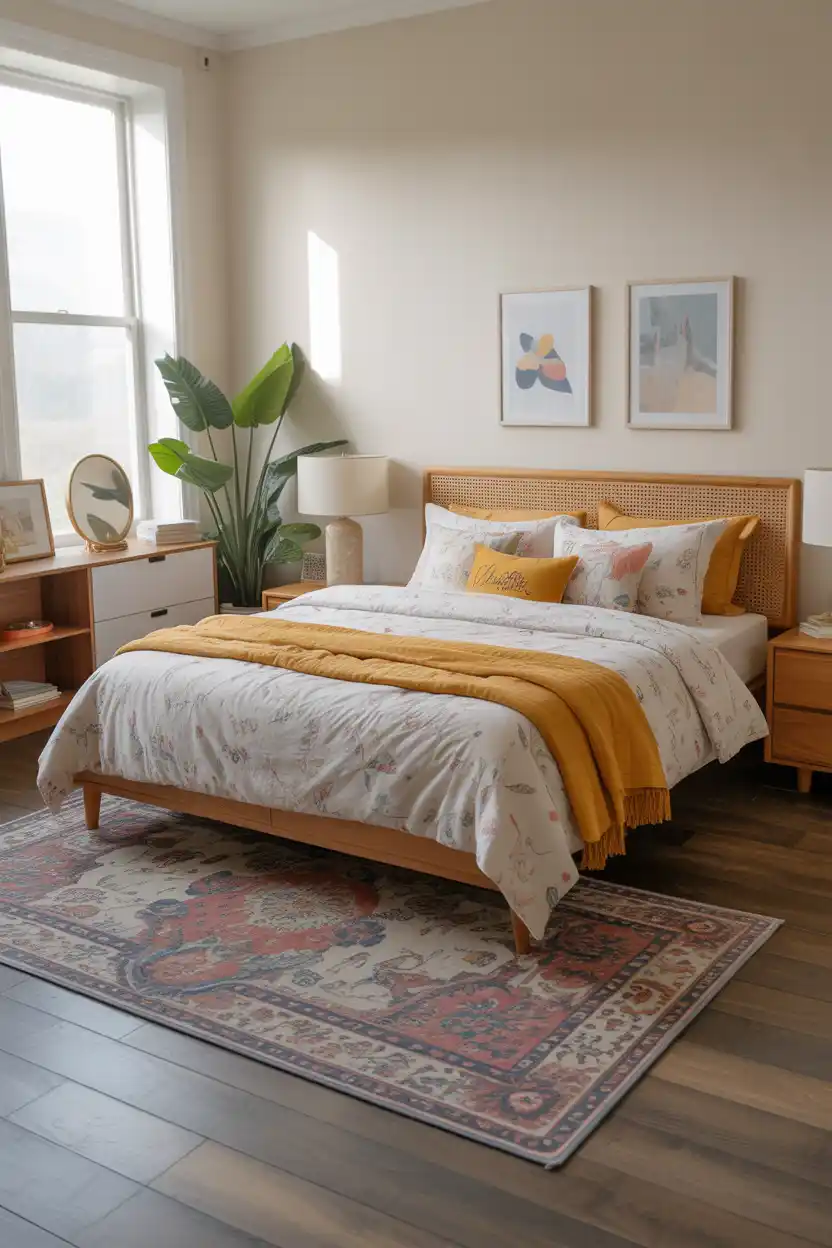
A machine-washable rug is a practical, style-conscious solution for kids’ bedrooms, guest rooms shared with pets, or any bedroom prone to spills and accidents. Modern washable rugs come in a wide range of patterns and colors, so practicality no longer means sacrificing design.
These rugs typically use a low-pile, synthetic construction that dries quickly and resists staining, and most fold down small enough to wash in a standard home washing machine. Look for a non-slip backing or pair the rug with a grip pad to keep it in place on hard flooring.
This option suits families, pet owners, and anyone who wants the visual benefits of a patterned rug without the maintenance concerns of wool or natural fiber.
15. Color-Block Rug
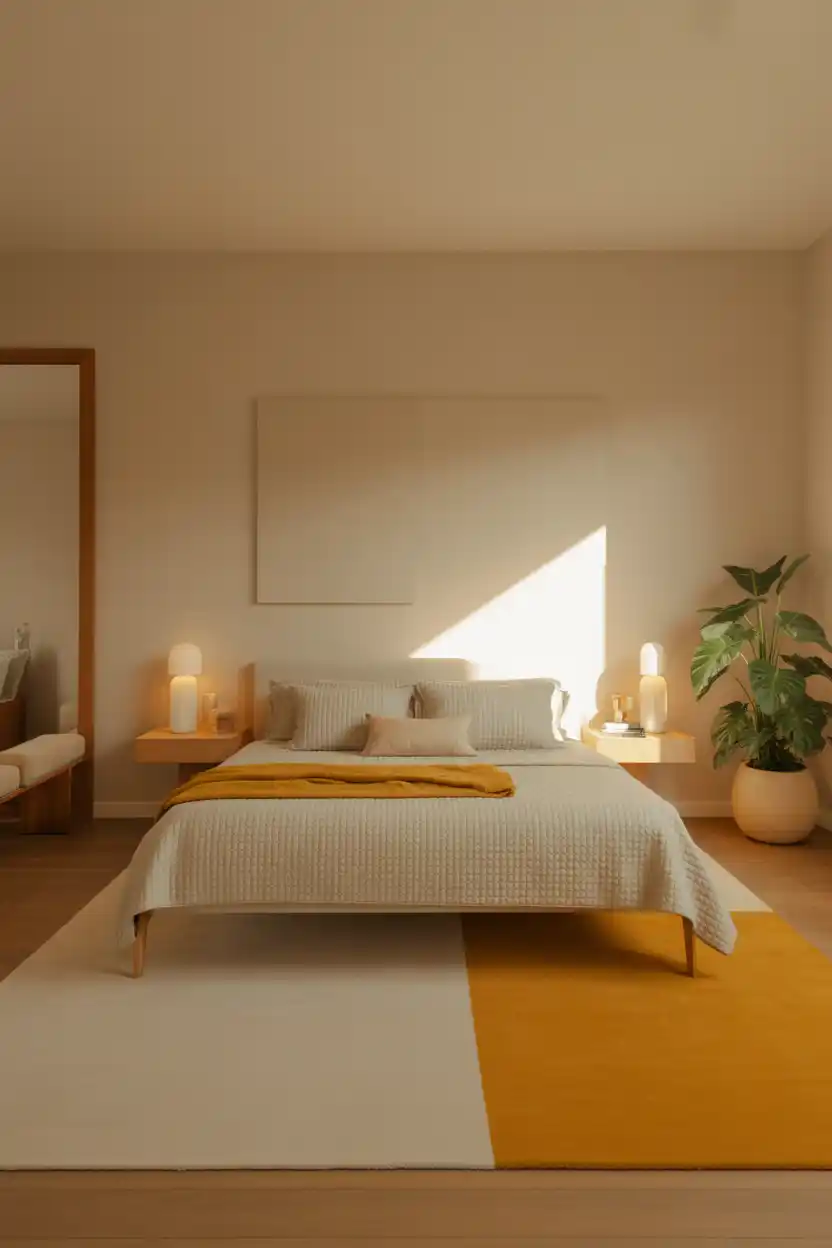
A color-block rug, with large solid sections of contrasting or complementary color, gives a bedroom a confident, modern focal point without the busyness of an intricate pattern. It works especially well in rooms with a lot of clean lines and minimal furniture.
This style pairs best with simple, solid-colored bedding so the rug’s color blocking doesn’t compete with a print elsewhere in the room. Warm tones like mustard and rust feel cozy, while cooler combinations like navy and sage feel more contemporary.
This idea suits bedrooms with a modern or Scandinavian-modern aesthetic, and it’s a good option for anyone who wants a statement rug that still feels clean and uncluttered.
16. Textured Wool Rug
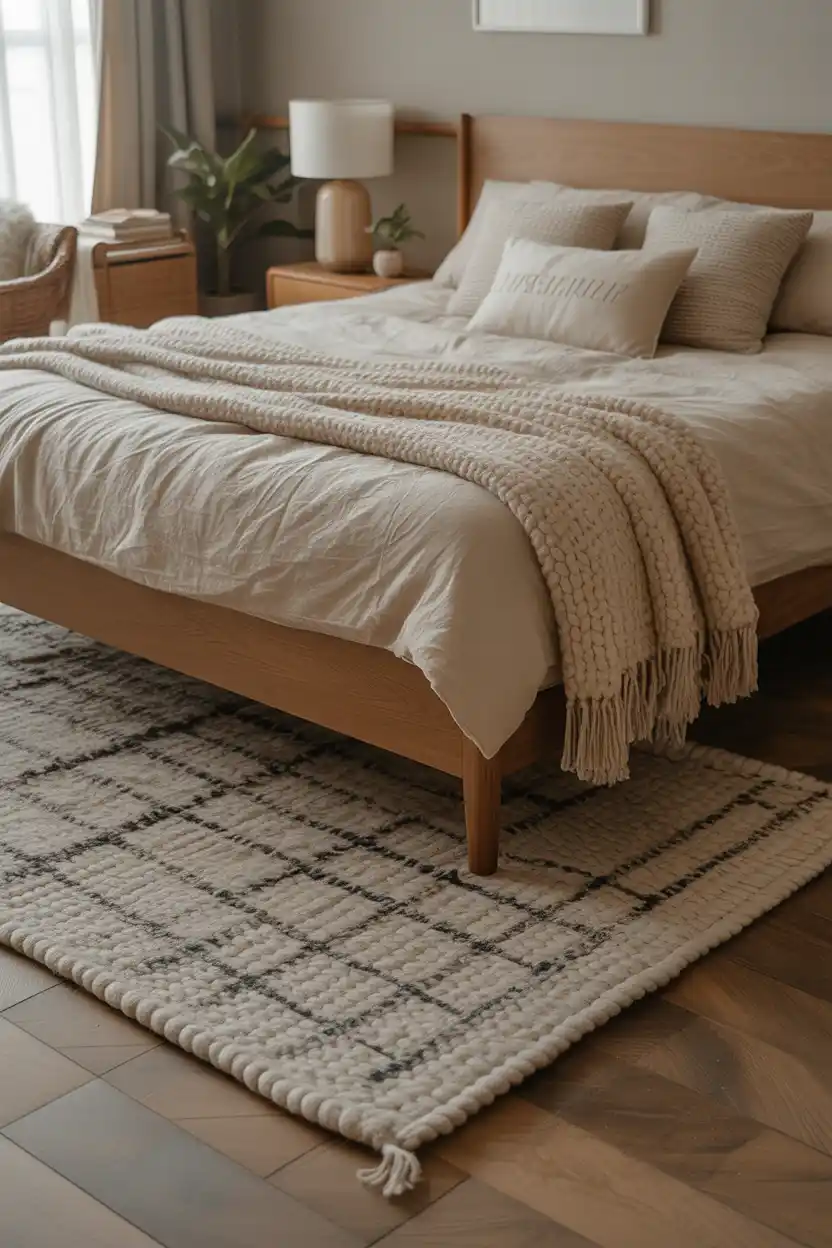
A textured wool rug in a solid, neutral tone offers a middle ground between a plain flat-weave and a bold patterned rug, adding visual interest through texture rather than color or print. Wool is also naturally durable, stain-resistant, and warm underfoot, making it one of the most practical premium materials for a bedroom.
This rug style pairs with almost any bedroom aesthetic, since a neutral, textured wool rug reads as sophisticated without pulling focus from furniture or artwork. It’s also one of the longer-lasting options on this list when properly cared for.
This idea suits anyone investing in a rug meant to last many years, and it works especially well as the single biggest textile investment in an otherwise simply furnished bedroom.
17. Boho Patchwork Rug
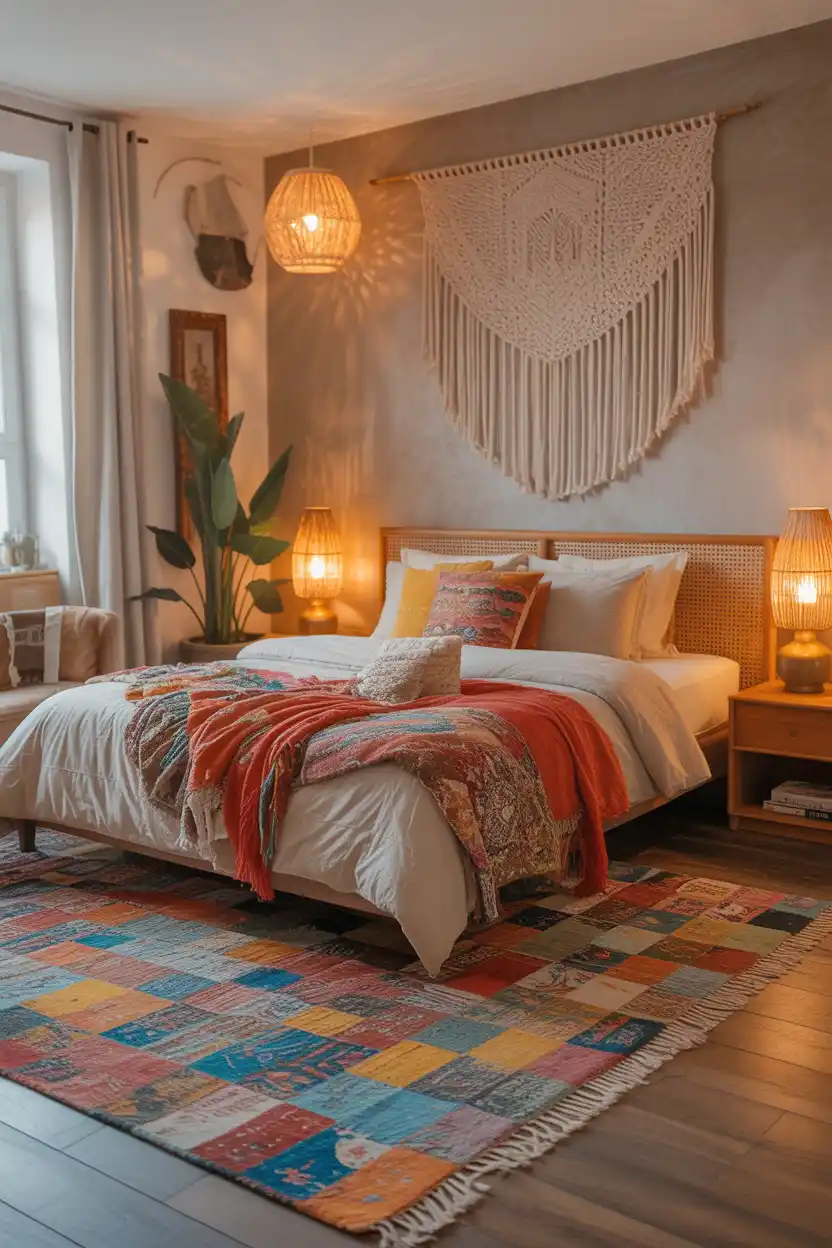
A patchwork or vintage kilim-style rug, pieced together from multiple patterns and colors, is the go-to choice for a fully embraced bohemian bedroom. Its irregular, handmade look adds personality and warmth that a single-pattern rug can’t replicate.
This style thrives in bedrooms already layered with other maximalist elements, like macrame, plants, and mixed textiles, since it’s designed to be part of a larger collected look rather than a quiet background piece. Pair it with warm wood tones and plenty of soft lighting to keep the overall effect cohesive rather than chaotic.
This idea suits confident decorators who want a bedroom full of color and pattern, and it works particularly well as the anchor piece in an otherwise eclectic room.
18. Tile-Look Printed Rug
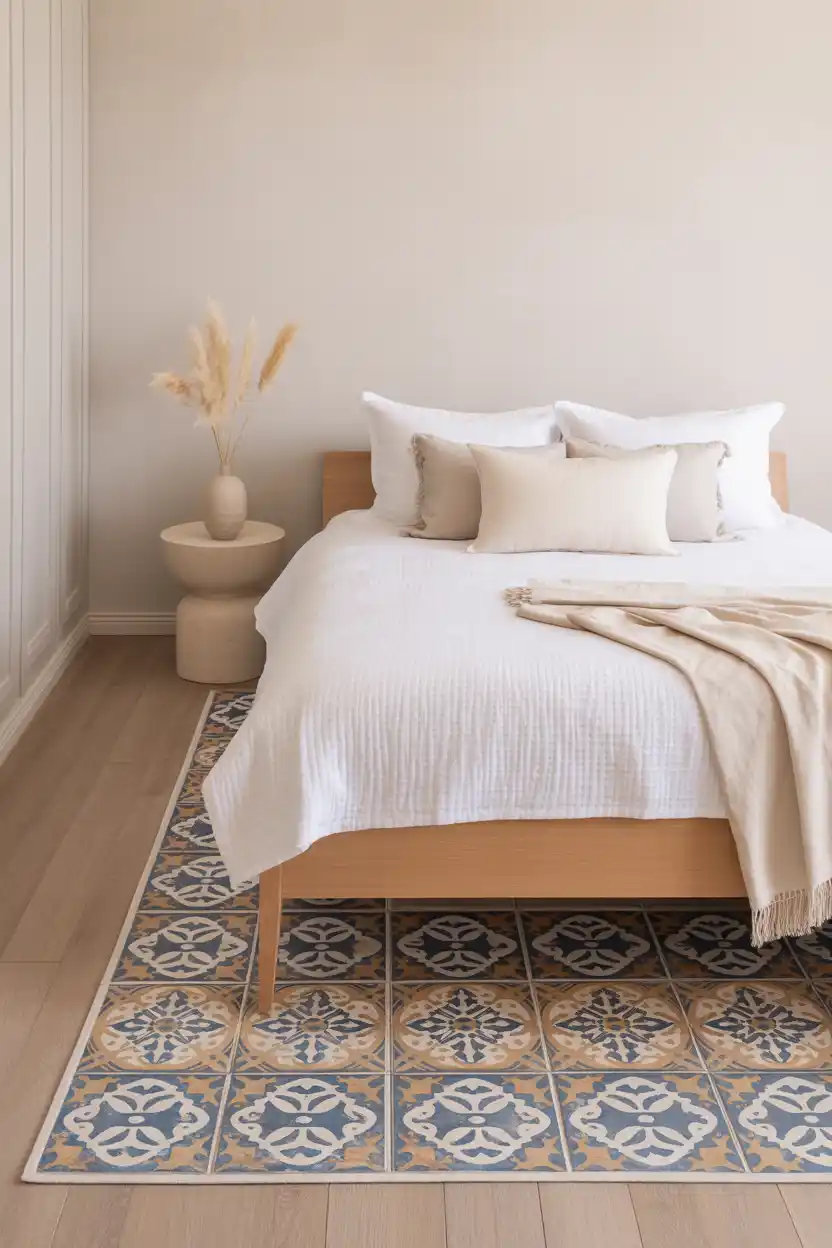
A printed rug designed to mimic encaustic cement tile brings a Mediterranean or vintage European feel to a bedroom without the cost or permanence of actually installing tile flooring. It’s a popular choice for renters who want a distinctive floor look they can take with them when they move.
These rugs work particularly well over plain hardwood or basic builder-grade flooring, instantly making the space feel more designed and specific. Because the pattern is quite graphic, keeping walls and bedding relatively simple helps the rug read as intentional rather than overwhelming.
This style suits renters, budget-conscious decorators wanting a high-impact floor update, and anyone drawn to a global or Mediterranean-inspired bedroom aesthetic.
Planning and Buying Tips
Getting the size and setup right matters more for rugs than almost any other bedroom purchase, since an ill-fitting rug is one of the most common styling mistakes.
Space and sizing
- Queen or king beds typically need an 8 by 10 foot rug; full or twin beds usually work with a 5 by 8 foot rug or runners
- Leave at least 18 to 24 inches of rug extending beyond the sides and foot of the bed for a balanced look
- In small bedrooms, prioritize a rug that reaches at least to the edges of the nightstands rather than one that floats in the middle of the floor
Setup and placement
- Use a rug pad underneath on both hardwood and carpet to prevent slipping and add extra cushioning
- On hardwood or tile, a non-slip pad also protects the floor finish from friction over time
- Rotate the rug every 6 to 12 months to even out sun fading and foot-traffic wear
Standard sizing and specs to shop for
- Common bedroom rug sizes: 5×8, 6×9, 8×10, and 9×12 feet, plus 2×8 or 2.5×8 foot runners for bedside placement
- Pile height ranges from low (under 0.5 inches, easiest to clean) to high-pile shag (over 1.5 inches, softest but harder to vacuum)
- Check weight and thickness specs if ordering online, since photos can make a thin rug look plusher than it is
Cost Breakdown
Rug prices vary widely based on size, material, and craftsmanship, with hand-knotted wool at the top end and machine-made synthetics at the more accessible end.
Budget (synthetic or small natural fiber, 5×8): 50 to 150 dollars
Covers machine-made synthetic or basic jute rugs in common sizes, plus a basic rug pad. A good option for renters, kids’ rooms, or a quick refresh.
Mid-range (wool blend or better synthetic, 8×10): 200 to 500 dollars
Includes wool-blend or higher-quality synthetic rugs in larger sizes, along with a quality non-slip rug pad. This range covers most of the styles featured in this guide at a full,l bedroom-appropriate sizeLuxury/premium
Luxury / premium (hand-knotted wool or silk blend, 9×12): 700 to 2,500+ dollars
Covers hand-knotted wool, vintage or antique rugs, and silk-blend options in larger sizes, plus premium rug pads and, in some cases, professional delivery and placement.
Rug Material Comparison
Material affects comfort, cleaning needs, and how long a rug will realistically hold up in a bedroom.
| Material | Best For | Price (5×8 rug) | Durability | Feel / Performance |
| Wool | Primary bedrooms, long-term investment | $150 – $500 | Very good | Soft, naturally stain-resistant, holds color well |
| Jute / Sisal | Natural, budget-friendly base layers | $60 – $150 | Moderate | Coarser texture, breathable, best layered with a softer rug |
| Cotton | Casual, easy-care bedrooms | $50 – $120 | Moderate | Lightweight, machine-washable versions widely available |
| Synthetic (polypropylene) | Kids rooms, high-traffic or budget spaces | $40 – $100 | Good | Affordable, stain-resistant, less plush underfoot |
| Shag / high-pile | Cozy accent placement beside the bed | $100 – $300 | Moderate | Extremely soft, needs more frequent vacuuming |
| Viscose / silk blend | Luxury, low-traffic accent areas | $200 – $600 | Low – delicate | Very soft sheen, prone to staining and crushing |
Maintenance Tips
- Vacuum weekly on a setting appropriate for pile height; use the beater bar sparingly on natural fiber or shag rugs
- Blot spills immediately with a clean cloth rather than rubbing, and test any cleaner on a small hidden corner first
- Rotate the rug every 6 to 12 months to prevent uneven fading and wear patterns near the bed
- Have wool or natural fiber rugs professionally cleaned every 12 to 18 months to remove embedded dust and allergens
- Keep natural fiber rugs like jute and sisal away from consistently damp areas, since moisture can cause mildew or fiber breakdown
- Use a rug pad to reduce slipping, prevent premature wear from friction, and add cushioning underfoot
Frequently Asked Questions
What size rug should you put in a bedroom?
For a queen or king bed, an 8 by 10-foot rug is the most common recommendation, positioned so it extends at least 18 to 24 inches beyond the sides and foot of the bed. For a full or twin bed, a 5-by-8-foot rug or two runner rugs on either side typically works better.
Should a rug go all the way under the bed?
It’s not required, but it’s the most polished option when the room is large enough. If a full-size rug isn’t practical, placing a rug so it extends from roughly under the mattress area to a couple of feet beyond the foot of the bed, or using runners on each side, both work well.
What is the best rug material for a bedroom?
Wool is generally considered the best all-around choice for bedrooms because it’s soft, durable, and naturally stain-resistant. Natural fibers like jute work well as a budget-friendly base layer, while synthetic or washable rugs are better suited to kids’ rooms or pet-friendly spaces.
Is a round or rectangular rug better for a bedroom?
Rectangular rugs are more common and practical under a bed frame, since they match the bed’s shape and cover more floor space evenly. Round rugs work best as an accent at the foot of the bed or beside a chair, where they add contrast to the room’s straight lines rather than serving as the main rug.
Can you layer two rugs in a bedroom?
Yes, layering a smaller patterned or textured rug over a larger natural-fiber base rug is a common styling technique that adds depth and is often more affordable than buying one large patterned rug. It works best when the two rugs have a clear size difference and a complementary, rather than competing, color palette.
How to Choose the Right Bedroom Rug for You
The best bedroom rug comes down to matching size and material to your actual room and lifestyle before worrying about color or pattern. Measure your bed and floor space first, decide whether a full-coverage rug or runners make more sense for the room, and choose a material that matches how the space gets used, whether that’s a durable wool for a primary bedroom or a washable synthetic for a kid’s room.
From there, budget and aesthetic can guide the rest. A neutral natural-fiber rug offers the most flexibility and value if you plan to change up your style over time, while a bold patterned or hand-knotted rug is worth the investment if you’re ready to build the room’s whole look around it.
Ready to find your fit? Measure your bed and floor space, pick two or three rug styles from this list that match your room’s light and traffic, and order swatches or samples before committing to a full-size rug.


- Be Respectful
- Stay Relevant
- Stay Positive
- True Feedback
- Encourage Discussion
- Avoid Spamming
- No Fake News
- Don't Copy-Paste
- No Personal Attacks
- Be Respectful
- Stay Relevant
- Stay Positive
- True Feedback
- Encourage Discussion
- Avoid Spamming
- No Fake News
- Don't Copy-Paste
- No Personal Attacks
